How Foods for Bone Density Can Help You to Strengthen Bones
Bone density depends on more than calcium. Here are the 10 foods research points to most consistently, the nutrients that make them work together, and how to build them into everyday meals.
Why the Foods You Eat Shape Your Bone Density
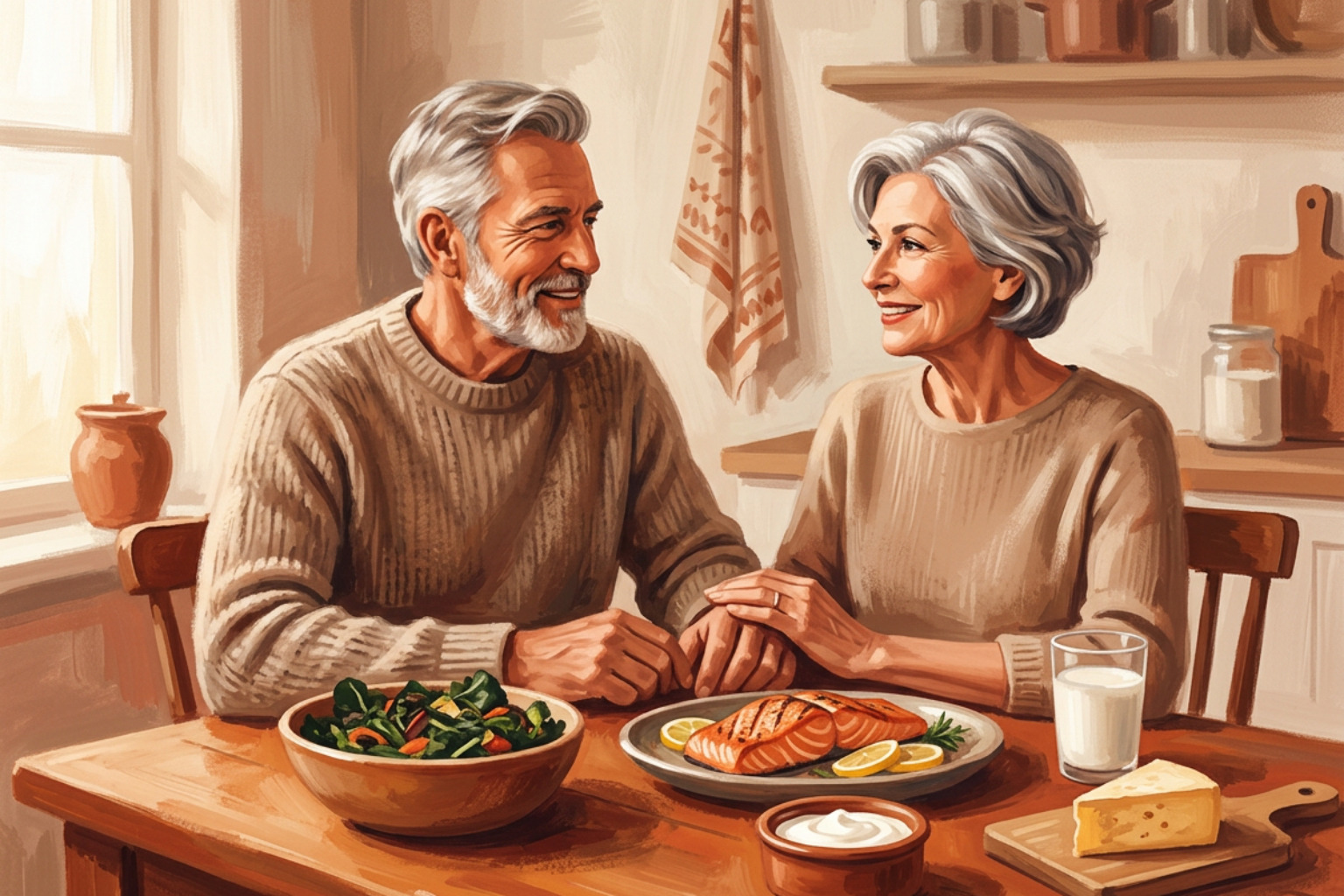
The right foods for bone density increases can make a real difference in how strong your bones stay as you age. Here is a quick look at the top foods research points to:
| Food | Key Bone-Supporting Nutrients |
|---|---|
| Milk, yogurt, cheese | Calcium, protein, vitamin D (fortified) |
| Canned salmon (with bones) | Calcium, vitamin D, omega-3s |
| Tofu (calcium-set) | Calcium, isoflavones, protein |
| Fortified plant milks | Calcium, vitamin D |
| White beans | Calcium, magnesium |
| Almonds and almond butter | Calcium, magnesium |
| Prunes | Vitamin K, potassium, anti-inflammatory compounds |
| Leafy greens (kale, collards) | Calcium, vitamin K |
| Green tea | Bone-protective polyphenols |
| Chia seeds | Calcium, omega-3s |
Bones are living tissue, not static structures. Every day, your body removes old bone and replaces it with new bone. Most people reach their highest bone mass around age 30. After that, the balance can slowly shift, with bone loss happening a bit faster than rebuilding. Over the years, that difference can add up, making bones weaker and more fragile.
For women, this process speeds up sharply after menopause. That is because estrogen—a hormone that regulates bone remodeling by keeping the cells that break down bone in check—drops significantly at that point. Without enough estrogen to shield your skeleton, bone breakdown begins to outpace the building of new bone. According to the Endocrine Society, this hormonal shift is one of the main reasons women are at higher risk of osteoporosis, a condition where bones become fragile enough to break from a minor fall or even everyday activity.
The good news is that what you eat has a real, measurable impact on how fast this process happens. Research suggests that getting the right nutrients, particularly calcium, vitamin D, and several other key players, can help slow bone loss and support your body's ability to build new bone.
This article walks through which foods are most supported by evidence, how they work, and how to build them into a realistic daily diet.
How Nutrition Actually Builds Bone
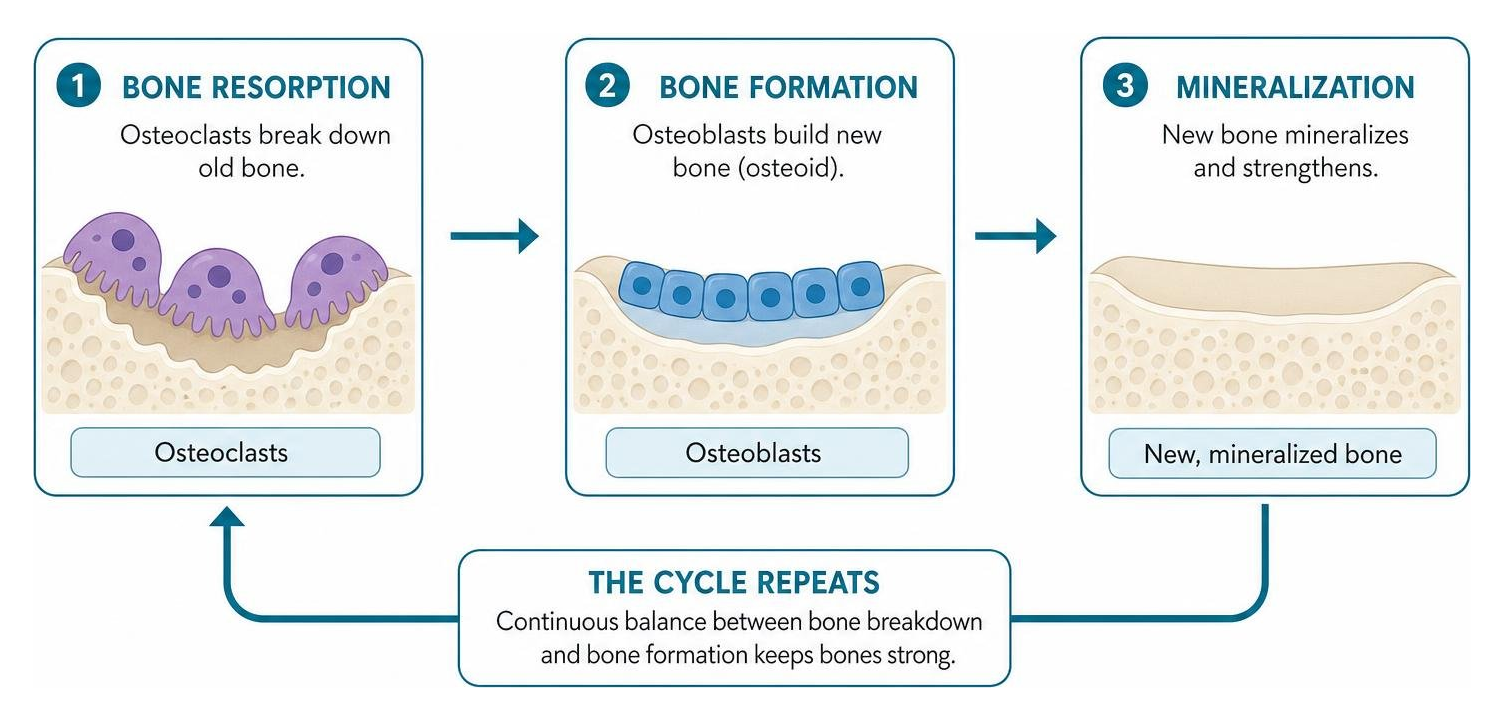
Your bones are living parts of your body that are always changing. They go through a continuous process called bone remodeling. During this cycle, your body constantly removes old bone and replaces it with new, healthy bone.
Two main types of cells do this work. First, osteoclasts (cells that break down old bone) dissolve worn-out bone tissue. Next, osteoblasts (cells that build new bone) lay down new minerals to fill in the gaps.
According to a review of bone biology and nutrition, keeping these two types of cells in balance is the key to maintaining strong bones as we age. When we eat a balanced diet, we provide the raw materials our osteoblasts need to keep our skeleton strong. You can read more about how this works in our guide on Nutrition for Bone Health.
How Calcium and Vitamin D Work Together
Calcium is the main mineral that makes up the hard structure of our bones. However, eating calcium-rich foods is only half the battle. Your body cannot use calcium properly without vitamin D.
Think of calcium as the bricks needed to build a house, and vitamin D as the delivery truck that brings those bricks to the construction site. If you eat calcium-rich foods without sufficient vitamin D levels, your body can only absorb about 10% to 15% of that calcium. When you have adequate vitamin D, your calcium absorption increases up to 40%. This is why these two nutrients must always work together. For more ways to help your body use this mineral, check out these Calcium Absorption Tips.
The Role of Magnesium, Vitamin K2, and Protein
While calcium and vitamin D are vital, other nutrients are also important. Magnesium acts as a helper for many chemical reactions in the body. It helps convert vitamin D into its active form so it can do its job. To learn more about this mineral, see our article on Magnesium for Bone Density.
Vitamin K2 is another critical nutrient. It helps activate a protein called osteocalcin, which binds calcium directly to your bone matrix. Without enough vitamin K2, calcium may be more likely to end up in your blood vessels instead of your bones. Read more about this process in our guide on Vitamin K2 for Bone Density.
Finally, protein is a major building block for the bone matrix. It helps your body produce collagen, which gives bones their flexibility so they do not snap easily. You can find out why this nutrient is so important in our article on Building Bones Why Protein Matters.
The Best Foods for Bone Density
When looking for the best foods for bone density increases, getting your nutrients from whole foods is generally better than relying on pills. Whole foods provide a natural mix of vitamins and minerals that work together to support your body. You can explore a variety of these options in our list of Bone Building Foods.
Dairy and Fortified Foods
Dairy products like milk, cheese, and yogurt are classic choices for bone health. They are naturally high in calcium and protein. In a 2025 trial published in Frontiers in Nutrition, drinking high-calcium milk helped postmenopausal women maintain bone strength.
Fermented dairy products, such as yogurt and kefir, may be especially helpful. In a randomized trial in Nutrients, enriched dairy foods stopped bone loss in high-risk menopausal women who were not on medication.
If you prefer non-dairy options, fortified plant milks like almond, soy, or oat milk are excellent alternatives. Some fortified brands can provide up to 300 mg to 450 mg of calcium per cup, which is similar to cow's milk. Always check the nutrition label to make sure the brand you choose is fortified. For more ideas on what to add to your grocery list, view our guide on Calcium Rich Foods or read about the best foods for bone density in midlife.
Plant-Based Sources of Calcium and Protein
You do not need to eat dairy to maintain a strong skeleton. There are many plant-based options that support bone health.
Tofu is another great option. A single 4-ounce serving of tofu can provide around 300 to 400 mg of calcium, depending on the brand and how it's prepared. Calcium-enriched versions can have even more. Tofu also contains soy isoflavones, which are natural plant compounds that may help slow down bone loss.
Nuts and seeds are also great additions to your meals. A quarter-cup of almonds has about 75 mg of calcium, while a 2-tablespoon serving of almond butter contains 111 mg of calcium. Chia seeds are another simple way to boost your intake, providing about 180 mg of calcium in just one ounce.
Do not forget about beans. Each cup of white beans, such as cannellini or navy beans, contains about 190 mg of calcium. These foods are also rich in magnesium and plant protein. To learn how to build these into your meals, read our guide on a Diet to Increase Bone Density.
Surprising Bone-Supporting Foods: Prunes, Figs, and Green Tea
Some foods support your bones in unexpected ways. For example, prunes are well-known for helping with digestion, but research shows they are also excellent for your skeleton. Studies on postmenopausal women who ate 5 to 6 prunes a day found that they maintained better bone mineral density in their hips. Prunes contain vitamin K, potassium, and antioxidants that help lower inflammation, which otherwise contributes to bone breakdown.
Dried figs are another sweet option, with two figs offering about 65 mg of calcium. Green tea is also gaining attention. It contains unique plant compounds called polyphenols that help protect bone cells from damage. To learn more about these surprising options, read about 9 Ways to Support Stronger Bones from a Nutritionist and explore the clinical evidence in a 2024 review in the International Journal of Women’s Health.
The Mediterranean Diet and the Gut-Bone Axis
In recent years, researchers have discovered a strong link between your digestive system and your skeleton, a pathway known as the gut-bone axis. The healthy bacteria in your gut help your body absorb minerals like calcium and magnesium. They also produce short-chain fatty acids, which are beneficial compounds that help slow down bone breakdown.
Eating an anti-inflammatory diet is one of the best ways to support your gut bacteria. In a 2026 npj Science of Food study on a bone-health-optimized dietary pattern (BHOD), researchers show how specific food groups can lower inflammation and protect your bones.
The Mediterranean diet is a great real-world example of this approach. It focuses on fruits, vegetables, beans, nuts, fish, and olive oil. This eating style helps lower systemic inflammation and supports a healthy gut, which in turn helps keep your bones strong. You can find out how to get started in our Ultimate Bone Density Diet Guide.
Beyond Diet: How Exercise and Lifestyle Build Bone Strength
While eating the right foods is essential, nutrition is only one part of the equation. Your lifestyle habits also play a major role in keeping your skeleton strong. For instance, getting safe sun exposure helps your body produce its own vitamin D naturally.
Physical activity is just as important as your diet. When you move, you apply physical force to your bones, which signals your body to make them stronger. To learn more about how lifestyle habits work together, check out our guide on Ways to Increase Bone Density Naturally.
Safe and Effective Exercises for Bone Loading
To make your bones stronger, you must place them under an osteogenic load. This means a physical load big enough to signal your osteoblasts to build new bone.
Light activities like walking, using light resistance bands, or gentle stretching are great for your heart and muscles, but they do not place enough load on your bones to make them denser. To truly strengthen your bones, you need progressive resistance training. This involves lifting heavier weights for a lower number of repetitions. Research suggests using weights that are about 75% to 85% of the maximum weight you can lift once.
To protect your hips and spine, you should focus on large compound movements. These are exercises that use multiple joints at the same time:
- Squats: These strengthen your hips and thighs.
- Lunges: These improve leg strength and balance.
- Hip hinges: These involve bending from your hips while keeping your back long and straight, rather than rounding your spine. An example is a Romanian deadlift.
Exercises that involve spinal extension, which means gently arching or straightening your upper back, are safe and help strengthen your spine. You should generally avoid loaded spinal flexion, which means rounding your back forward while holding a weight, because it can increase the risk of a spine fracture.
For some active adults, power-based movements like light hopping or jump squats can also help build bone, but these carry more risk and should always be cleared by a professional first. For a complete guide on how to pair movement with nutrition, read A Starter Guide for Movement Food.
Fall Prevention and Balance Training
Protecting your bones is not just about making them denser. It is also about preventing the accidents that cause them to break. According to CDC fall statistics, most hip fracture hospitalizations in older adults are caused by falls. In fact, about 9 in 10 hip fractures happen because of a fall.
Balance training is a highly effective way to lower your risk of falling. It is best to think of balance as a skill you can train and improve over time.
When you start, you will focus on static balance. This means holding your body steady in one position, such as standing on one leg. To stay safe, always use a stable support that is braced so it cannot slide or tip, such as a heavy kitchen counter or a solid chair placed flat against a wall. Never use a light chair that could slide away from you.
Once you can hold a static pose easily, you can progress to dynamic balance. This means staying steady while your body is moving, such as stepping forward or reaching for an object while balancing.
Frequently Asked Questions
How much calcium and vitamin D do I need daily?
Your daily needs depend on your age and sex. According to the National Academy of Medicine, women aged 50 and under should aim for 1,000 mg of calcium daily, while women aged 51 and older need 1,200 mg each day. For vitamin D, adults generally need 600 IU (15 micrograms) daily, which increases to 800 IU (20 micrograms) once you reach age 70. You can learn more about these guidelines in our article on The Recommended Daily Calcium Intake for Osteoporosis Prevention.
What are the risks of taking too many calcium supplements?
While getting enough calcium is important, more is not always better. Taking very high doses of calcium supplements can increase your risk of developing kidney stones. There is also some concern that excess calcium from pills can build up in your blood vessels, which may raise the risk of heart issues. This is why medical experts recommend focusing on a "food-first" approach, getting as much of your daily calcium as possible from whole foods. If you do need a supplement, you can read about the Best Calcium Supplement Form to make an informed choice.
Can I get enough bone-building nutrients on a vegan diet?
Yes, but it requires careful planning. Research shows that people who follow a vegan diet can have a higher risk of hip fractures compared to meat-eaters, especially if they have a lower body weight. However, this risk can be lowered by choosing calcium-rich plant foods like tofu, fortified milks, and white beans, and by using targeted supplements when needed. To learn more about managing your intake without dairy, read our guide on Calcium for Postmenopausal Women.
Building a Bone-Friendly Plate, One Meal at a Time
What you eat plays a fundamental role in keeping your skeleton strong and resilient. By focusing on foods for bone density increases—such as those rich in calcium, vitamin D, protein, and anti-inflammatory compounds—you provide the raw building blocks your body needs to build and protect bone strength. However, nutrition is only half of the equation; those nutrients need a physical signal to actually build stronger bone. That is where Groove Health's care model comes in. We pair your dietary efforts with personalized, targeted exercise plans designed specifically to stimulate bone growth, improve balance, and reduce fall and fracture risk. Our program connects you with a physical therapist who tailors safe, progressive resistance exercises to your exact needs, helping you build skeletal strength right from the comfort of your home. You can find more practical advice on how to eat for skeletal health by exploring Explore Groove Health's Nutrition Resources.
At Groove Health, we believe that nutrition and safe movement go hand in hand. To see if you qualify for our Medicare-covered program, visit groovehealth.com or start your journey today by signing up at my.groovehealth.com.
Works Cited
- Rizzoli, R., Chevalley, T. “Bone health: biology and nutrition.” Current Opinion in Clinical Nutrition and Metabolic Care, 2023.
- Zhao, Y., Li, X., Liu, Y., et al. “High-calcium milk improves osteoporosis in postmenopausal women by regulating intestinal flora and steroid hormone biosynthesis.” Frontiers in Nutrition, 2025.
- Morato-Martínez, M., López-Plaza, B., Santurino, C., Palma-Milla, S., Gómez-Candela, C. “A Dairy Product to Reconstitute Enriched with Bioactive Nutrients Stops Bone Loss in High-Risk Menopausal Women without Pharmacological Treatment.” Nutrients, 2020.
- Alabadi, B., Civera, M., Moreno-Errasquin, B., Cruz-Jentoft, A.J. “Nutrition-Based Support for Osteoporosis in Postmenopausal Women: A Review of Recent Evidence.” International Journal of Women’s Health, 2024.
- Zheng, Y., Li, Y., Gao, Y., et al. “BHOD: a bone health optimized dietary pattern designed for osteoporosis prevention.” npj Science of Food, 2026.
- Endocrine Society. “Osteoporosis.” Endocrine Library, 2025.
- Centers for Disease Control and Prevention. “Facts About Falls.” Older Adult Fall Prevention, 2024.
This content is for informational purposes only and does not constitute medical advice. Consult a qualified healthcare professional for diagnosis and treatment. If you are on Medicare and interested in a personalized bone health program, you can check your eligibility at groovehealth.com.