
Magnesium for Bone Density: The Missing Link in Your Skeletal Health
Magnesium is the mineral that helps your body use calcium and vitamin D, yet most older adults fall short. Here is how much you need, the best-absorbed forms, and the foods that deliver it.

Why Magnesium for Bone Density Deserves More Attention Than It Gets
Your bones need more than calcium and vitamin D to stay strong — magnesium for bone density may be the underrecognized piece many older adults are missing.
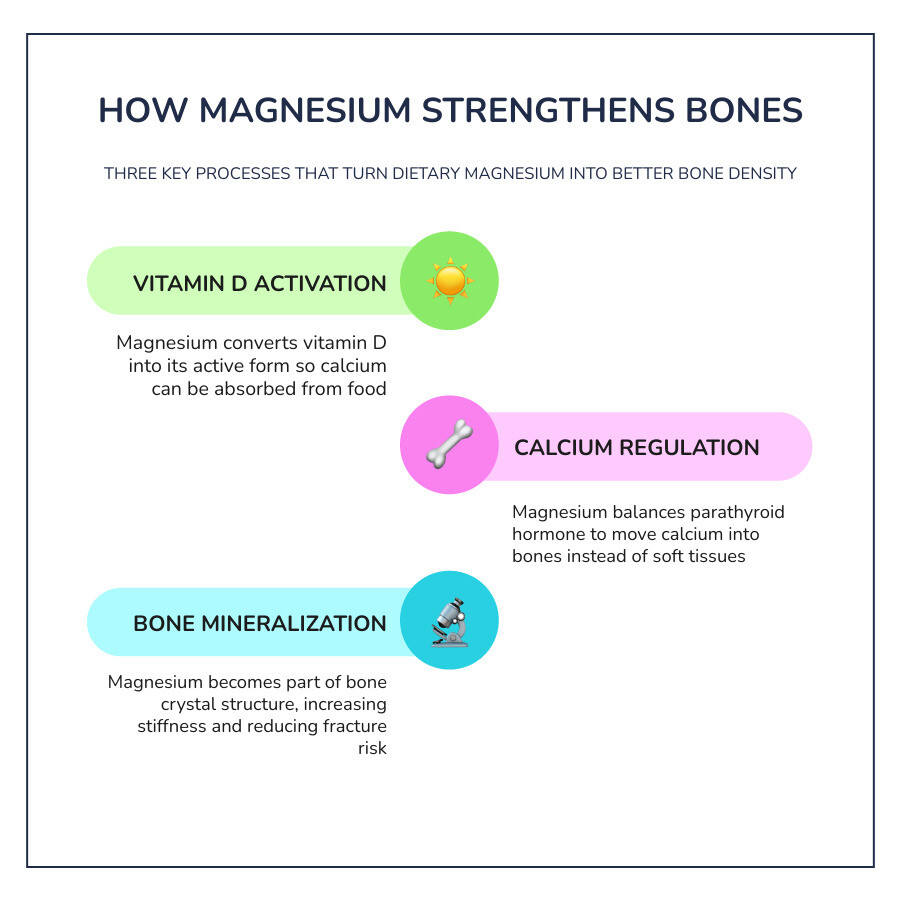
Calcium and vitamin D support strong bones, but they work best with enough magnesium. Magnesium helps activate vitamin D and guide calcium into bone tissue. Without it, your bone health routine may be less effective.
Here is a quick summary of how magnesium supports bone health:
- Activates vitamin D so your body can absorb calcium from food
- Supports bone mineralization — the process that makes bones hard and strong
- Regulates parathyroid hormone (PTH), a hormone that controls how much calcium your blood and bones hold
- Helps maintain the balance between the cells that build bone and the cells that break it down
- Makes up part of bone tissue itself — about 60% of your body's magnesium is stored in your bones
Low magnesium is more common than many people realize. One national survey found that nearly half of Americans do not get enough magnesium from their diet. For postmenopausal women, who already face a higher risk of bone loss, studies suggest that about 30% to 40% may be deficient.
Despite this, magnesium rarely gets the same attention as calcium or vitamin D in conversations about osteoporosis (bones that have become very thin and fragile) or osteopenia (weaker-than-normal bones that may worsen over time).
This guide breaks down what the research says about magnesium's role in bone health, how much you need, the best ways to get it, and when supplementation might make sense - especially for adults 65 and older who are managing bone density concerns.
How to Use Magnesium for Bone Density to Prevent Thinning Bones

To see why magnesium matters, it helps to know that your bones are alive and always changing. They are not fixed like stone. Your body is constantly breaking down old bone and building new bone in a process called bone remodeling.
During bone remodeling, two main types of cells do the heavy lifting. First, osteoclasts (the cells that break down old or damaged bone) clear away worn-out tissue. Next, osteoblasts (the cells that build new bone) lay down new mineral layers. These cells use calcium and phosphorus to create hydroxyapatite, which is the hard, crystal-like mineral structure that gives your bones their strength.
Magnesium plays a critical role in this process. When your body is low on magnesium, this delicate balance is thrown off. The cells that build bone become less active, while the cells that break down bone can increase. Over time, this leads to weaker, more brittle bones that are more likely to break.
How Magnesium Works with Calcium and Vitamin D
Many people take calcium and vitamin D supplements to protect their skeletons. However, taking these nutrients without enough magnesium is like trying to build a house with concrete but no water to mix it.
Your body needs magnesium to turn vitamin D into its active form. That active vitamin D then helps your intestines absorb calcium from food. Think of magnesium as the "on switch" that helps vitamin D do its job. When magnesium is too low, vitamin D may not work as well, even if you get enough of it. When calcium absorption drops, the body is forced to pull calcium out of its largest storage unit: your bones. Over time, this constant borrowing weakens your skeletal structure. You can learn more about this biological partnership in here: An update on magnesium and bone health - PMC - NIH.
Does Magnesium Really Prevent Broken Bones? What the Research Shows
The key question is not whether magnesium seems helpful for bones. It is whether it supports enough bone strength to lower fracture risk. Studies suggest magnesium intake is associated with bone density and the likelihood of breaks.
What Clinical Studies Say About Magnesium for Bone Density
Large-scale studies have consistently shown a positive link between magnesium intake and bone mineral density (BMD), which is the amount of mineral in your bones measured during a DEXA scan (an X-ray that measures how strong your bones are).
A large study of 73,684 women after menopause found a small but meaningful link between magnesium and stronger bones. Women who got more magnesium each day had slightly higher bone density in the hip and whole body than women who got much less. This means getting enough magnesium may help support bone strength, especially after menopause. You can review the full study here: Magnesium intake, bone mineral density, and fractures: results from the Women's Health Initiative Observational Study - PubMed
Higher magnesium intake has been linked with better bone mineral density, but that does not always mean fewer fractures in every study. In the Women’s Health Initiative, women with higher magnesium intake had stronger hip and whole-body BMD, yet wrist and arm fractures did not clearly drop. One likely reason: those women were also more physically active, which supports bone health but can raise fall exposure. The takeaway is simple: magnesium may help strengthen bones, but fracture prevention also depends on balance, muscle strength, vision, medications, and fall risk.
How Magnesium Deficiency Affects Your Hormones
When your magnesium levels get too low, your body has a harder time keeping calcium in balance. This can affect parathyroid hormone, or PTH, a hormone made by small glands in your neck that helps control calcium levels.
Normally, when calcium levels drop, PTH signals your body to absorb more calcium. If your magnesium is low, however, your parathyroid glands may not secrete enough PTH. Even worse, the bones and kidneys can become resistant to the PTH that is available. This double hit makes it much harder for your body to maintain normal calcium levels.
Furthermore, chronic low magnesium triggers low-grade inflammation throughout the body. This state of inflammation acts as an accelerator for the cells that break down bone, causing them to clear away bone tissue even faster. You can read more about how magnesium regulates these bone processes in the NIH's magnesium fact sheet for health professionals.
How to Get Enough Magnesium: Food vs. Supplements
Strong bones need a steady daily supply of magnesium. This table compares magnesium-rich foods with common supplement forms, so you can choose what fits your routine.
| Source or Supplement Form | Average Magnesium Content / Bioavailability | Best Used For |
|---|---|---|
| Pumpkin Seeds (1 oz) | About 156 mg | Excellent food source; also provides healthy fats |
| Chia Seeds (1 oz) | About 95-111 mg | Easy add-in for fiber, minerals, and meals |
| Cooked Spinach (1/2 cup) | About 78 mg | Nutrient-dense food; simple to add to meals |
| Magnesium Glycinate | Generally well tolerated; good absorption | Daily supplementation when stomach comfort matters |
| Magnesium Citrate | Well absorbed; can loosen stools | Supplementation, especially if constipation is also a concern |
| Magnesium Oxide | Lower absorption, but high elemental magnesium | Often used in lower-cost supplements; may cause GI effects |
The Best Food Sources of Magnesium
The safest and most effective way to support your bones is by eating a variety of magnesium-rich foods. Excellent plant-based options include:
- Seeds: Pumpkin seeds, chia seeds, and flaxseed are magnesium-rich choices.
- Leafy greens: Spinach and Swiss chard provide magnesium, especially when cooked.
- Whole grains: Brown rice, quinoa, oats, and whole wheat bread keep more minerals than refined grains.
- Legumes: Black beans, lentils, chickpeas, and edamame are reliable sources.
- Nuts: Almonds, cashews, Brazil nuts, and peanuts all add magnesium.
- Fruits: Avocados offer a useful amount; bananas provide smaller amounts.
Meeting your daily needs through food can be challenging in the modern food landscape. Highly processed foods lose much of their nutritional value. In fact, more than 80% of natural magnesium is removed during grain refining processes. Additionally, cooking foods can reduce how much magnesium your body is able to absorb from them.
Choosing the Best Form of Magnesium for Bone Density
If you cannot get enough magnesium from your diet alone, supplements can help bridge the gap. However, not all magnesium supplements are created equal. Different forms have different levels of bioavailability (how well your body absorbs the mineral).
Magnesium glycinate is bound to the amino acid glycine. It is highly absorbable and is very gentle on the digestive tract, making it a preferred option for older adults. Magnesium citrate is bound to citric acid. It is also well-absorbed, but it can have a mild laxative effect. Magnesium oxide contains a high amount of actual magnesium per pill, but your body absorbs only a small percentage of it. Even so, research suggests that consistent magnesium oxide supplementation may help support bone mineral content, as shown in: A Randomized Controlled Study of Effects of Dietary Magnesium Oxide Supplementation on Bone Mineral Content in Healthy Girls.
Recommended Daily Intake for Older Adults
The Recommended Dietary Allowance (RDA) for magnesium depends on your age and biological sex:
- Women aged 50 and older: 320 milligrams per day
- Men aged 50 and older: 420 milligrams per day
As we age, getting enough magnesium becomes even more critical. Older adults experience a natural decline in how well their intestines absorb nutrients. At the same time, the kidneys tend to excrete more magnesium in the urine as we get older, making dietary adequacy and smart supplementation key parts of a bone-protection plan.
Frequently Asked Questions About Magnesium and Bone Health
Can you take too much magnesium?
Yes, it is possible to take too much magnesium, especially from supplements. Healthy kidneys are highly efficient at filtering excess magnesium out of your blood. However, if you have chronic kidney disease, your kidneys cannot clear the mineral properly. This can lead to a dangerous buildup of magnesium in your blood and is always worth talking to your health care provider about specific recommendations.
For people with normal kidney function, taking too much supplemental magnesium usually causes digestive upset, such as diarrhea and abdominal cramping. The established upper limit for supplemental magnesium is 350 milligrams per day for adults. Getting more than this from pills can cause side effects, though there is no upper limit for magnesium consumed naturally through food.
Does magnesium help with muscle cramps and sleep?
Many people find that magnesium supplements help reduce muscle cramps and improve sleep quality. Magnesium plays a key role in muscle relaxation by opposing calcium, which causes muscles to contract. It also supports the parasympathetic nervous system, helping your body calm down and prepare for restful sleep. If you suffer from muscle spasms or poor sleep, these can be signs that your dietary magnesium intake is low.
Should I take magnesium and calcium at the same time?
Calcium and magnesium use the same pathways to be absorbed in your intestines. If you take very high doses of both at the exact same moment, they can compete with each other, reducing how much of each mineral your body actually absorbs. To get the most out of your supplements, try to space them out. For example, you might take your calcium supplement with breakfast and your magnesium supplement with dinner.
Making Magnesium Part of Your Bone Health Plan
Magnesium is a vital, active partner in keeping your skeleton strong. From activating vitamin D to balancing the cells that build and break down bone, this mineral provides the essential chemical foundation your body needs to prevent bone thinning.
Magnesium gives your bones important raw material, but nutrients alone are not enough. To encourage stronger, denser bone, your skeleton also needs regular mechanical stress. Weight-bearing movement and resistance training tell bone-building cells to use those nutrients, adapt to the load, and support healthier bone remodeling over time.
If you want to pair better nutrition with the strength and balance training your bones need, Groove Health can help. Groove Health supports people with osteopenia or osteoporosis through personalized bone health care plans, including professional guidance on safe, effective exercise. The goal is to combine the biological benefits of nutrients like magnesium with practical movement strategies that can help maintain bone strength, improve balance, and reduce fracture risk over time. To see if you qualify and get started, visit the Groove Health Signup.
Works Cited
- Rondanelli, M., et al.. "An update on magnesium and bone health." Biometals, 2021.
- Castiglioni, S., Cazzaniga, A., Albisetti, W., & Maier, J. A. M.. "Magnesium and Osteoporosis: Current State of Knowledge and Future Research Directions." Nutrients, 2013.
- Orchard, T. S., et al.. "Magnesium intake, bone mineral density, and fractures: results from the Women's Health Initiative Observational Study." American Journal of Clinical Nutrition, 2014.
- Carpenter, T. O., et al.. "A Randomized Controlled Study of Effects of Dietary Magnesium Oxide Supplementation on Bone Mineral Content in Healthy Girls." Journal of Clinical Endocrinology & Metabolism, 2006.
This content is for informational purposes only and does not constitute medical advice. Consult a qualified healthcare professional for diagnosis and treatment. If you are on Medicare and interested in a personalized bone health program, you can check your eligibility at groovehealth.com.