Practical Guide to Daily Movement for Low Bone Density
Walking alone isn't enough for thinning bones. Here's how to combine weight-bearing cardio, heavy strength work and balance drills into a safe weekly routine, and which movements to modify.
Daily movement that supports bone health
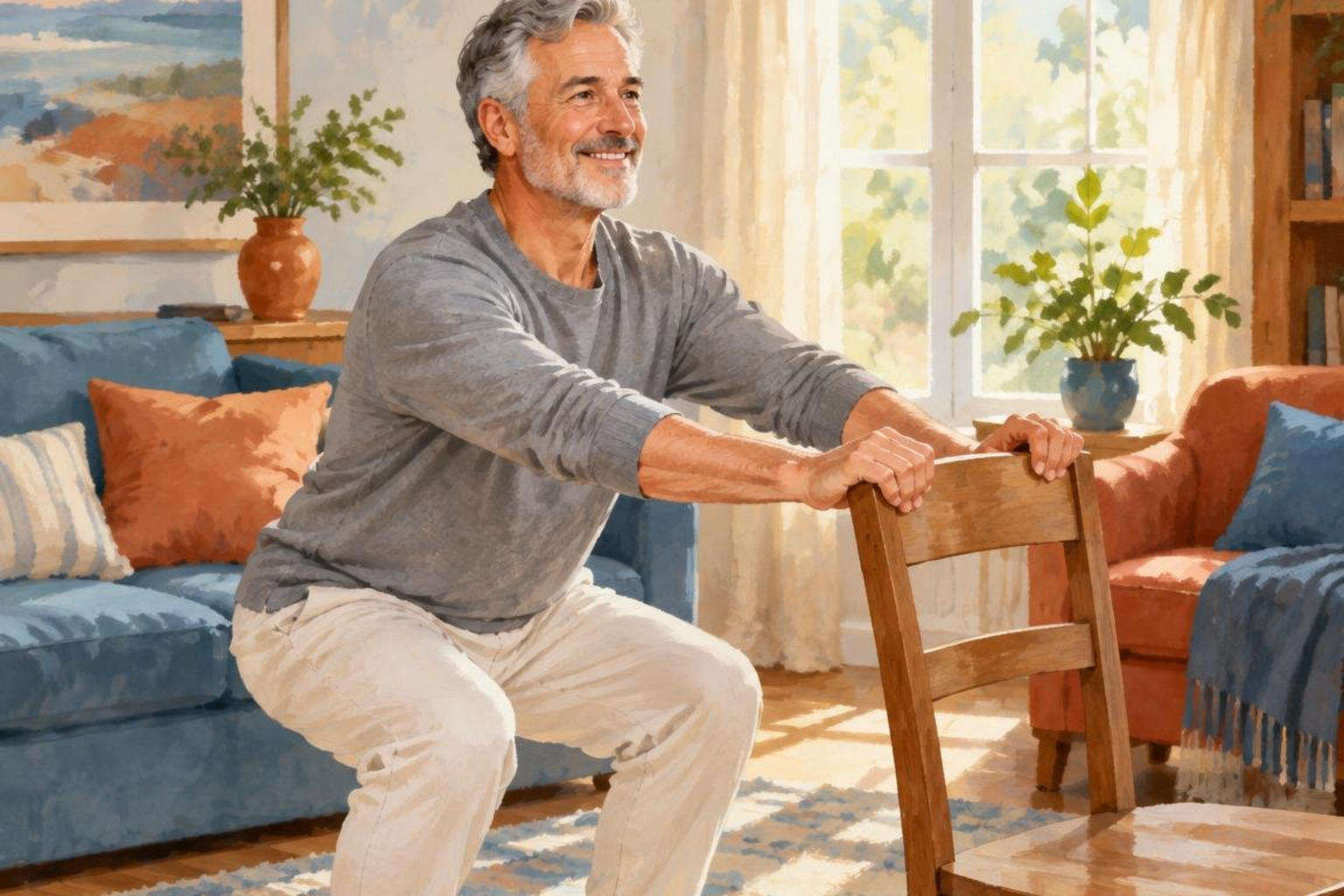
Looking for exercises that support bone health for osteopenia? Start with weight-bearing movement like brisk walking or stair climbing, strength exercises like sit-to-stands and rows, and balance practice such as standing on one leg beside a sturdy chair. Walk on most days, build strength at least twice a week, and practice balance regularly.
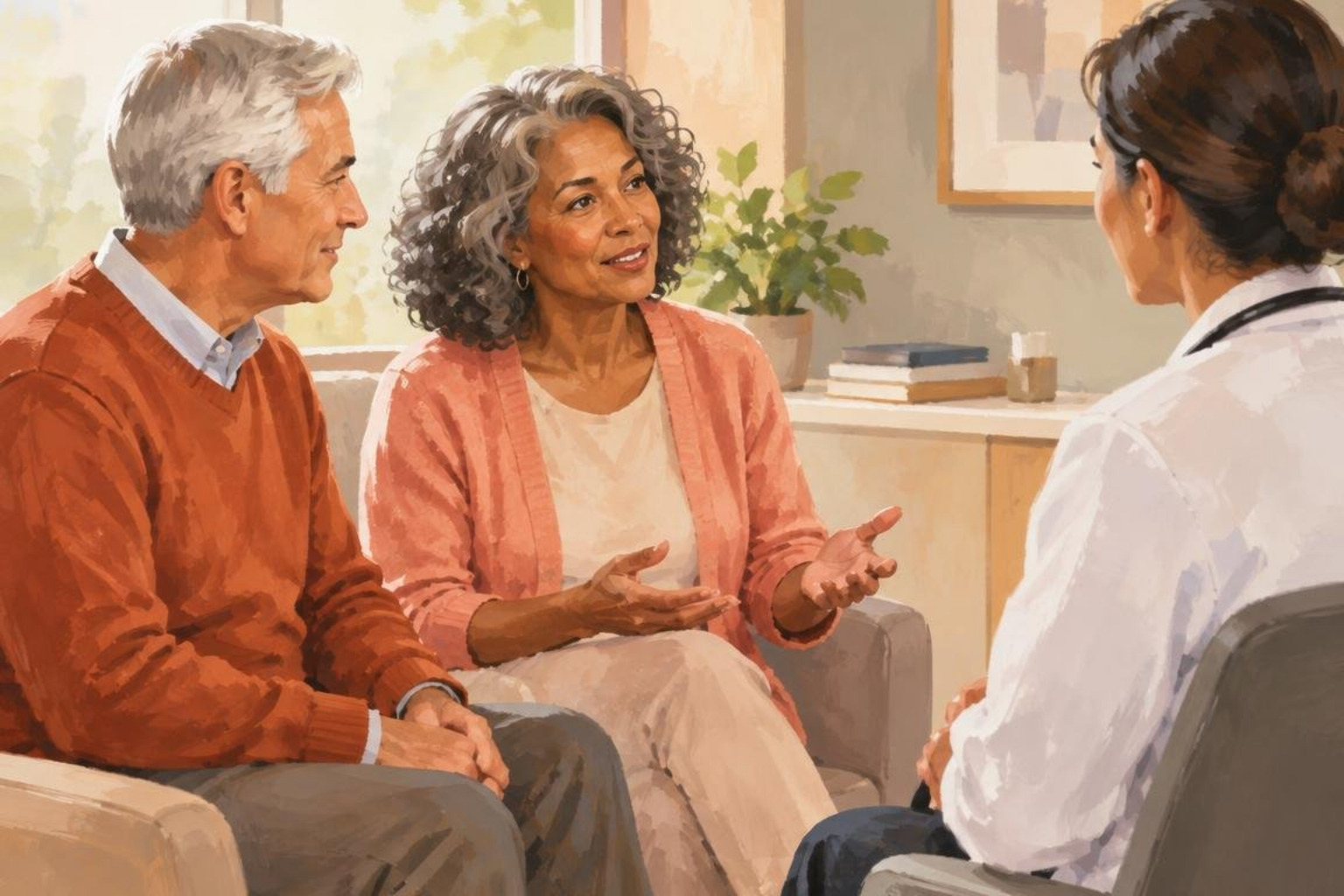
Osteopenia means your bones are less dense than expected, but not as thin as they are with osteoporosis. Exercise may help slow bone loss and lower your chance of falling. Walking helps, but it works better as part of a broader routine. If you have had a broken bone or are unsure which movements suit you, ask your clinician before adding impact or heavier weights.
For more guidance, you can also review balance exercises for osteoporosis.
Understanding Osteopenia and How Exercise Protects Bone Density
Exercise helps protect bone density by placing mechanical demands on the skeleton, which triggers the body to rebuild bone tissue. By about age 35, bone breakdown naturally begins to outpace new bone formation. Special cells called osteoclasts remove older bone, while cells called osteoblasts lay down fresh mineral tissue. According to guidance from the National Institute of Arthritis and Musculoskeletal and Skin Diseases, targeted physical activity helps replace old bone with new bone and prevents bone loss in adults.
Osteopenia vs Osteoporosis: Understanding T-Scores
Osteopenia is a state of thinning bones that sits between normal bone density and osteoporosis. A dual-energy X-ray absorptiometry scan (DEXA scan, an X-ray that measures how strong your bones are) provides a measurement called a T-score. A normal T-score is -1.0 or higher. A score between -1.0 and -2.5 indicates osteopenia, while a score of -2.5 or lower indicates osteoporosis. Because low bone density causes no outward symptoms, regular bone scans help identify bone thinning early, allowing you to take steps that lower the chance of a break.
The Science of Bone Remodeling and Mechanical Loading
Bones respond directly to physical forces through a biological process called mechanotransduction. When muscles pull against bone during exercise, mechanical signals tell osteoblasts to deposit new minerals. Understanding how exercise builds bones helps explain why the body needs dynamic, varied movement. High-intensity muscular contractions also support the release of osteocalcin, a bone-derived protein that aids in tissue mineralization and overall skeletal health.
Recommended Exercises for Osteopenia: Core Training Pillars
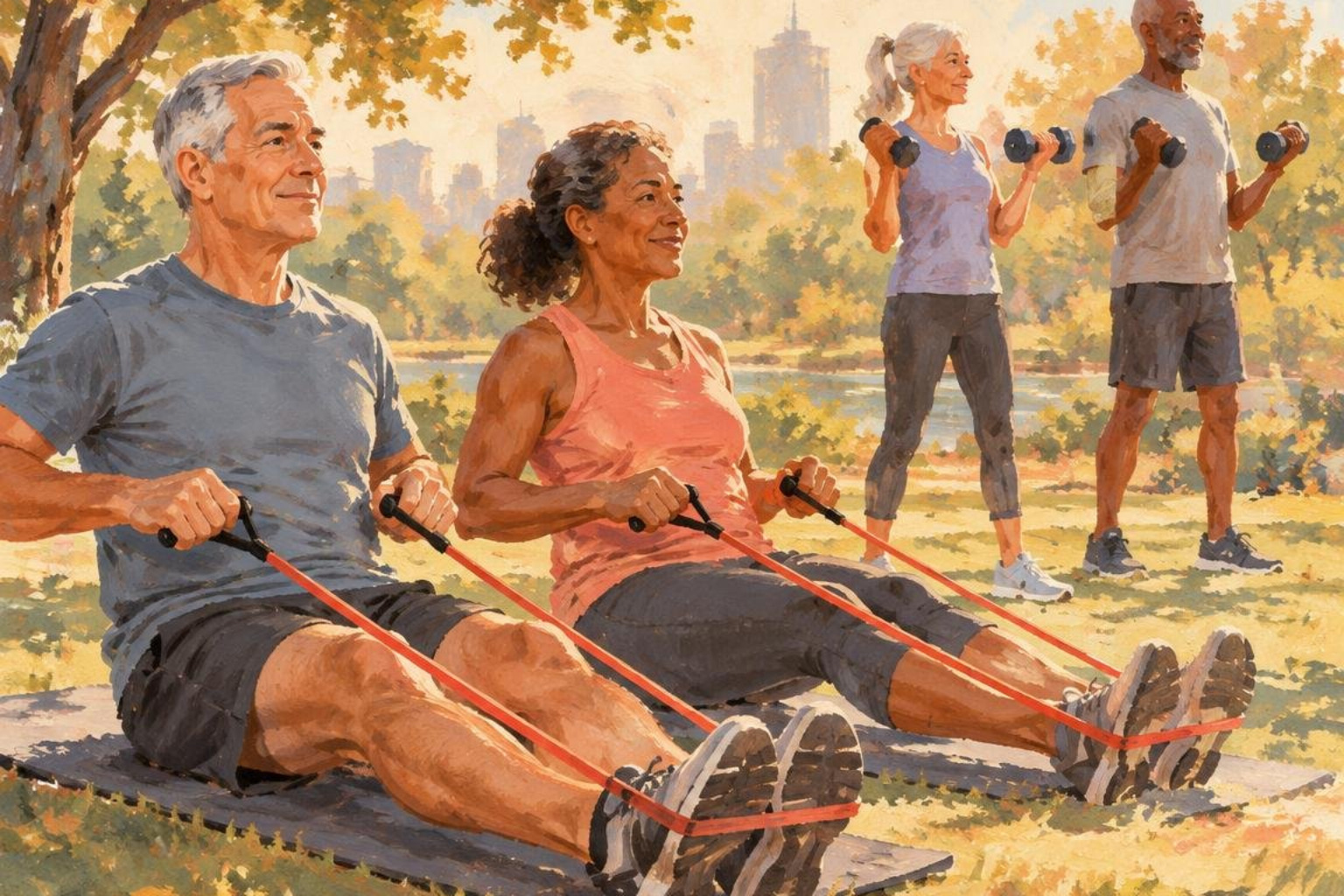
A well-rounded program for thinning bones combines three essential pillars: weight-bearing aerobic movement, heavy resistance training, and progressive balance work. Together, these elements deliver the necessary mechanical force to stimulate bone tissue while improving stability.
Weight-Bearing Aerobic Workouts
Weight-bearing aerobic activities require your body to work against gravity while staying upright. High-impact movements like jogging or brisk stair climbing generate stronger ground reaction forces than low-impact options like leisurely walking. While daily walking supports cardiovascular health and leg endurance, research suggests that walking is helpful but not enough alone to create the osteogenic load needed for significant bone gains.
| Exercise Category | Common Activities | Impact Level | Primary Bone Benefits |
|---|---|---|---|
| High-Impact Aerobic | Jogging, stair climbing, dance | Moderate to High | Stimulates hip and femoral neck density |
| Low-Impact Aerobic | Brisk walking, elliptical training | Low | Preserves lower-body mobility and muscle stamina |
| Heavy Resistance | Squats, deadlifts, overhead presses | High mechanical load | Strengthens lumbar spine, femoral neck, and wrists |
| Balance Training | Single-leg stands, tandem walking | Minimal impact | Enhances stability and lowers the chance of falls |
Resistance Training: How Strength Exercises Build Bone Density
Bone strengthening requires an osteogenic load to stimulate osteoblasts. In the LIFTMOR trial, this meant supervised heavy resistance training at more than 85% of each person's one-repetition maximum (1RM), performed for fewer repetitions and sets with proper technique. Light weights and high-repetition circuits help with general muscular endurance, but they do not deliver the mechanical strain needed to thicken bone tissue.
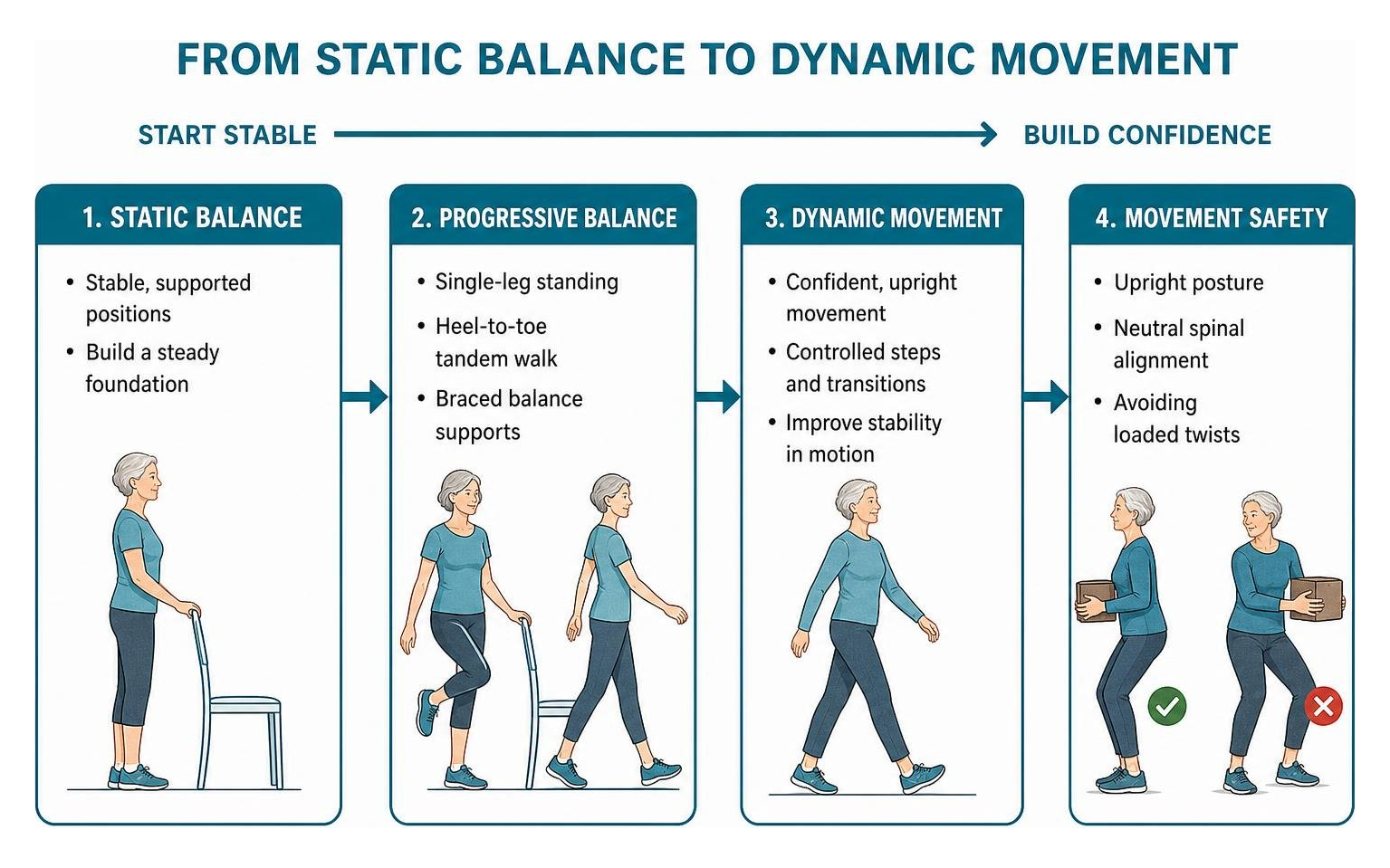
Focus on large compound movements that load the hips and spine, such as squats, lunges, and Romanian deadlifts (hip hinges). When lifting, prioritize a neutral spine while hinging at the hips, and avoid rounding your back under load. You can learn more about structured weight lifting in our guide on weight training for osteopenia.
Balance and Stability: Fall Prevention and Safety
Falls are the leading cause of bone breaks in older adults. Training your balance sharpens neuromuscular control and proprioception, which is your body's ability to sense its position in space. According to CDC fall prevention guidance, regular balance work significantly lowers the chance of falling.
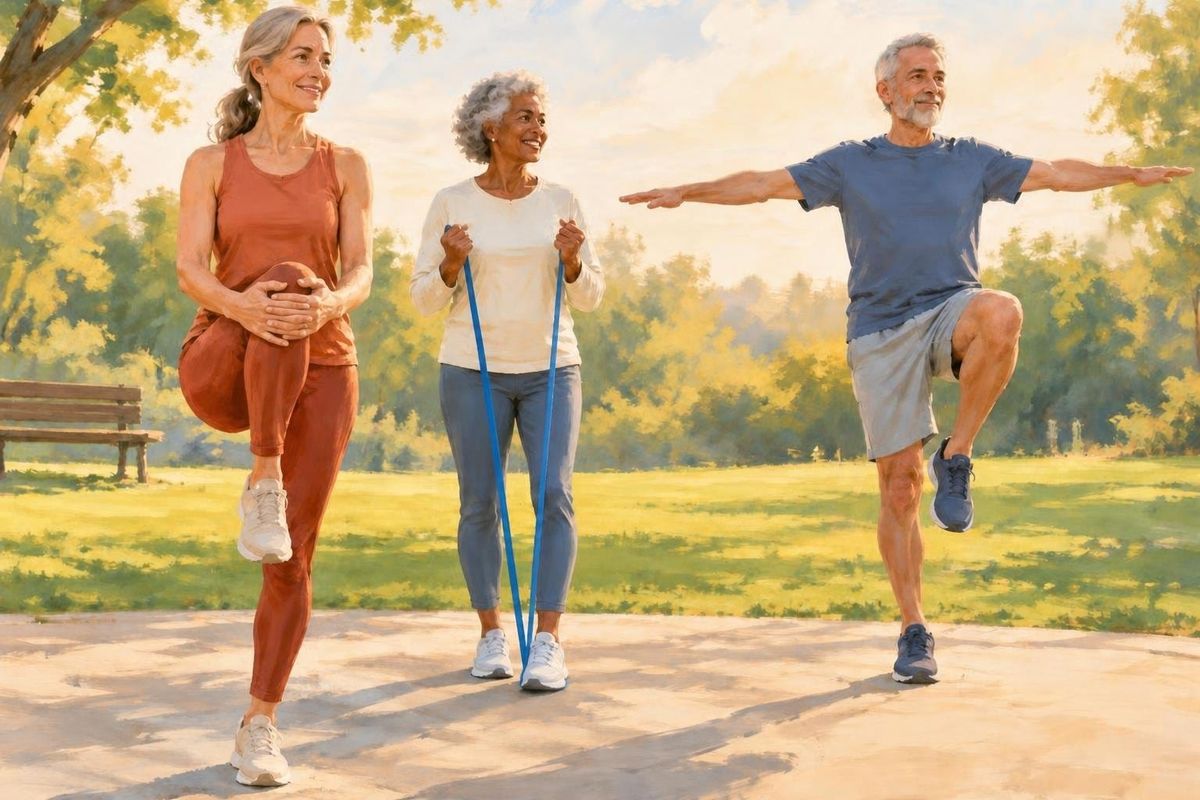
Begin with static balance exercises, such as a single-leg stand or heel-to-toe stance. Always position yourself next to a sturdy chair, counter, or wall that is braced so it cannot slip or tip. As your confidence grows, advance to dynamic balance exercises, like tandem walking along a straight line. Discover additional practical drills by exploring why exercise prevents falls.
Designing a Safe Weekly Routine: Frequency, Intensity, and Progression
Building stronger bones requires consistency and structured progression. A balanced routine combines regular aerobic activity with dedicated strength and stability sessions throughout the week.
Sample Weekly Exercise Schedule for Low Bone Density
Health organizations recommend that older adults complete at least 150 minutes of moderate-intensity exercise each week, along with muscle-strengthening activities 2 to 3 days with a rest day between. Daily balance drills can be easily integrated into your morning or evening routine.
- Monday: 30 minutes of brisk walking; 10 minutes of static and dynamic balance drills.
- Tuesday: Dedicated bone strengthening workouts (squats, hip hinges, rows, and overhead presses).
- Wednesday: 30 minutes of brisk walking or stair climbing; posture and mobility work.
- Thursday: Rest day or light leisurely walking; 10 minutes of balance practice.
- Friday: Resistance training focusing on major compound muscle groups.
- Saturday: 30 minutes of varied weight-bearing aerobic movement (such as dancing or hiking).
- Sunday: Rest day for muscular recovery and tissue regeneration.
Groove Health is a Medicare covered bone health program for adults 65 and older that pairs each member with a physician and a physical therapist who designs a personalized exercise plan to help achieve these goals.
Managing Progression and Avoiding Detraining Effects
Progressive overload means gradually increasing weight, resistance, or challenge as muscles and bones adapt. Short breaks are not a failure, but detraining can start earlier than many people expect: strength may begin to decline after about 2 to 3 inactive weeks, while bone-density gains tend to fade more slowly over months without regular loading. After any pause, restart gently, keep easy weight-bearing movement when possible, allow 48 hours between heavy lifting sessions, and use these recovery tips for bone training to support rest.
Movements and Exercises to Modify or Avoid
While exercise strengthens the skeleton, certain movements place undue stress on vulnerable bones. Modifying these exercises reduces your risk of injury while maintaining the benefits of your workout.
Protecting the Spine from Hyperflexion and Twisting
Loaded spinal flexion (bending forward at the waist while holding weights) places high compressive force on the front of the vertebral bodies. Similarly, rapid or loaded twisting of the torso can strain the spine. Instead, maintain a neutral spine during daily activities and lifting. You can practice vertebral fracture prevention exercises that emphasize back extension and core stability to protect your spine.
Low-Impact Alternatives to High-Risk Activities
Power-based movements, such as jump squats or light hopping, can provide beneficial impact loading for bone remodeling. However, these dynamic exercises should only be introduced after clearing them with a healthcare professional and progressing under supervision. Non-weight-bearing activities like swimming and cycling offer excellent cardiovascular benefits, but because water and bicycle frames support your body weight, they do not stimulate bone formation. Pair these activities with ground-based resistance training.
Supporting Bone Health with Nutrition and Lifestyle Factors
Exercise is supported by proper nutrition and healthy lifestyle choices. Nutrition supplies the essential raw materials required to rebuild the bone matrix.
Calcium, Vitamin D, and Nutritional Foundations
According to dietary guidelines from the NIH Office of Dietary Supplements, women age 51 and older and all adults age 71 and older should aim for 1,200 milligrams of calcium daily from food and supplements; men ages 51 to 70 need 1,000 milligrams. Vitamin D helps the intestines absorb calcium: NIH recommends 600 IU (15 micrograms) daily through age 70 and 800 IU (20 micrograms) daily after age 70, unless a clinician recommends a different dose. Adequate dietary protein also helps maintain muscle mass and supports collagen in the bone matrix. Limiting alcohol and avoiding smoking further support skeletal health.
Frequently Asked Questions About Exercising with Osteopenia
Can exercise reverse osteopenia back to normal bone density?
Exercise may help preserve existing bone density and often produces modest improvements in T-scores, but its one key value lies in preventing further thinning and improving muscle strength to lower fall risk.
Is walking enough exercise to strengthen bones with osteopenia?
While brisk walking supports heart health and maintains lower-body mobility, it does not provide the heavy mechanical force required to significantly build bone mineral density. Adding progressive resistance training is essential for comprehensive bone health.
How do exercise guidelines differ between osteopenia and osteoporosis?
Individuals with osteopenia generally tolerate moderate-to-high impact movements and broader resistance training, whereas those with established osteoporosis must avoid high-impact jumping and loaded or repeated forward spinal flexion to protect fragile vertebrae.
Putting Your Bone-Strengthening Routine Together
Managing osteopenia through daily physical activity is a valuable strategy for preserving your independence and protecting your skeleton. A balanced routine combines brisk weight-bearing aerobic movement, heavy resistance training that targets the hips and spine, and daily balance drills to prevent falls. By consistently applying mechanical strain to your bones, maintaining proper spinal posture, and fueling your body with adequate calcium and vitamin D, you can help slow age-related bone loss.
Taking a structured approach with a personalized plan designed by a physical therapist and physician can help you build strength and lower your chance of breaks. Working closely with healthcare experts allows you to tailor resistance levels, master proper movement mechanics, and maintain an active, independent life.
Works Cited
- National Institute of Arthritis and Musculoskeletal and Skin Diseases. "Bone Mineral Density Tests: What the Numbers Mean." National Institutes of Health, 2025.
- Watson SL, Weeks BK, Weis LJ, Harding AT, Horan SA, Beck BR. "High-Intensity Resistance and Impact Training Improves Bone Mineral Density and Physical Function in Postmenopausal Women With Osteopenia and Osteoporosis: The LIFTMOR Randomized Controlled Trial." Journal of Bone and Mineral Research, 2018;33(2):211-220.
- Sherrington C, Fairhall NJ, Wallbank GK, et al. "Exercise for preventing falls in older people living in the community." Cochrane Database of Systematic Reviews, 2019;1(1):CD012424.
- Centers for Disease Control and Prevention. "Older Adult Activity: An Overview." CDC, 2025.
- NIH Office of Dietary Supplements. "Calcium: Health Professional Fact Sheet." National Institutes of Health, accessed November 17, 2026.
- NIH Office of Dietary Supplements. "Vitamin D: Fact Sheet for Health Professionals." National Institutes of Health, accessed November 17, 2026.
This content is for informational purposes only and does not constitute medical advice. Consult a qualified healthcare professional for diagnosis and treatment. If you are on Medicare and interested in a personalized bone health program, you can check your eligibility at groovehealth.com.