
Why Bone Loss Reversal Is Possible for Older Adults
Your bones keep remodeling after 65, so density can still improve. Here is what nutrition, medication and daily habits can realistically do, and why preventing fractures matters as much as a better scan.

Why Bone Density Can Improve After 65
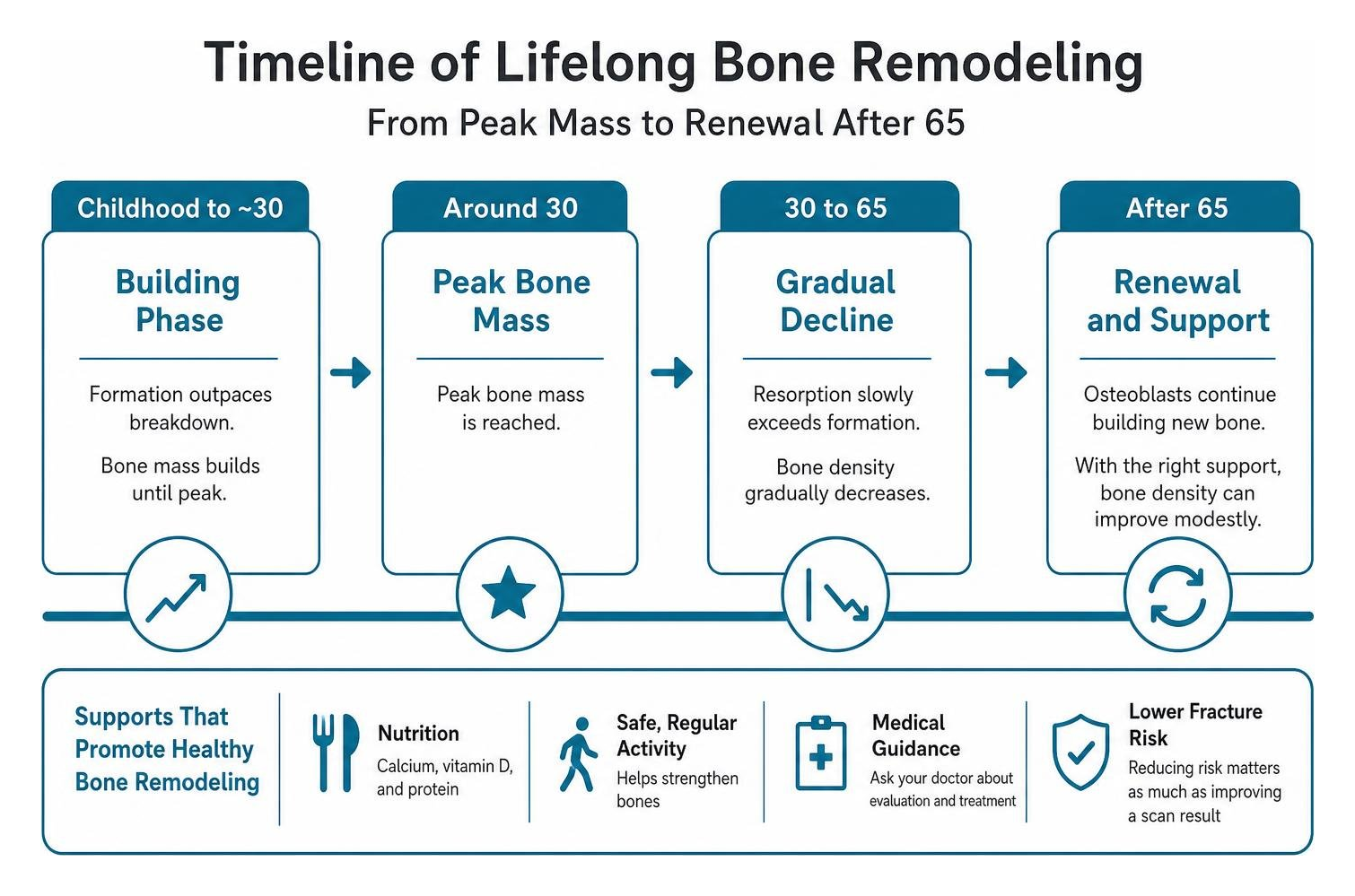
Yes, bone density can improve after 65. Bones keep replacing old tissue throughout life, though gains are often modest. To give your bones the support they need, eat enough calcium, vitamin D, and protein; stay active in ways that are safe for you; and ask your doctor whether you need treatment. Fully regaining lost bone is not guaranteed. Lowering your chance of a broken bone matters just as much as improving a scan result.
If your diagnosis or scan result is unclear, start with our guide to understanding osteoporosis to learn more about bone changes and what your numbers mean.
How Bone Remodeling Works After 65
Bone is living, active tissue that constantly renews itself through a process called remodeling. Specialized cells called osteoclasts break down old bone tissue, while builder cells called osteoblasts lay down new mineral layers. During childhood and young adulthood, bone formation outpaces breakdown until peak bone mass is reached around age thirty. After that point, resorption slowly exceeds formation.
Even after age 65, osteoblasts continue to form new bone when given the right cellular signals and nutritional support. The degree to which bone strength can improve depends on overall health, the severity of bone loss, and the underlying causes. Resources from the National Institute of Arthritis and Musculoskeletal and Skin Diseases explain that while age-related thinning is common, treatment aims to slow or stop bone loss and prevent fractures.
Assessing Bone Density: T-Scores and DXA Scans
Doctors evaluate bone strength (bone mineral density) using a dual-energy X-ray absorptiometry scan, commonly called a DXA scan. This specialized, low-dose X-ray measures the grams of mineral packed into segments of bone, most often the lumbar spine and the femoral neck of the hip.
The test produces a measurement known as a T-score, which compares bone mineral density to that of a healthy young adult. Reviewing a T-score meaning explained simply helps clarify these numbers:
- Normal bone density: T-score of -1.0 or higher.
- Osteopenia (thinning bone): T-score between -1.0 and -2.5.
- Osteoporosis: T-score of -2.5 or lower.
Tracking these values across routine screenings, often referenced on a T-score osteopenia range chart, allows healthcare providers to see how well bone mass is being maintained.
Osteopenia vs. Osteoporosis: Differences in Reversibility
The approach to managing bone health depends on whether low bone mass is categorized as osteopenia or osteoporosis.
| Condition | Diagnostic T-Score | Fracture Risk Level | Primary Treatment Goal |
|---|---|---|---|
| Osteopenia | Between -1.0 and -2.5 | Mild to Moderate | Slow bone loss, preserve mineral density, and prevent progression |
| Osteoporosis | -2.5 or lower | High | Increase bone density and strength, and reduce fracture risk |
With osteopenia, nutritional adjustments, supportive lifestyle habits, and a strong exercise routine may help stabilize bone mineral density and slow further decline. Bone-strengthening activity, balance work, and muscle-building movement can also reduce fall risk, which matters as much as the scan number. When a scan reveals a T-score below -2.5, the internal microarchitecture of the bone has become significantly more porous. While medication, nutrition, and consistent exercise can improve bone strength, the original internal structure may not fully return to youthful levels, so preventing falls and fractures remains the primary focus.
Nutrition and Supplementation for Rebuilding Bone Density

Nutrition provides the raw materials that osteoblasts need to build bone. Bones consist of a tough protein matrix hardened by calcium and phosphate crystals. A balanced diet supports this structure throughout life. For additional meal ideas, read our overview of nutrition for bone health.
Essential Nutrients: Calcium, Vitamin D, and Vitamin K2
Calcium serves as the primary mineral building block for the skeleton. According to fact sheets from the NIH Office of Dietary Supplements:
- Women over 50 and men over 70 should aim for 1,200 milligrams of calcium daily.
- Men between ages 51 and 70 should aim for 1,000 milligrams of calcium daily.
Obtaining calcium from bone-building foods like low-fat dairy, fortified plant milks, canned salmon, and leafy greens is generally preferred because foods provide companion nutrients.
Vitamin D helps the digestive tract absorb calcium effectively. The NIH Office of Dietary Supplements recommends 600 IU of vitamin D daily for adults ages 51 to 70 and 800 IU daily for adults over 70, though individual needs vary and should be discussed with a doctor. Vitamin K2 helps activate proteins involved in calcium use, but current evidence does not establish vitamin K2 alone as a standalone treatment for osteoporosis. When dietary intake falls short, targeted supplements for bone health can help fill the gap.
The Crucial Role of Dietary Protein
Protein is a major building block of bone. Dietary protein supplies the amino acids needed to build the flexible collagen framework that gives bone its resistance to breaking. Consuming adequate protein also helps maintain muscle mass, which protects joints and supports balance. Older adults can support bone strength by including lean meats, poultry, fish, eggs, beans, and tofu in their daily meals, which work alongside key nutrients discussed in our guide on what vitamins for bones are most helpful.
Medical Therapies and Clinical Treatments for Bone Density
When bone loss is significant, lifestyle changes alone may not be enough to rebuild bone density. Clinical guidelines outlined by the National Institute of Arthritis and Musculoskeletal and Skin Diseases (NIAMS) recommend medical evaluation to assess whether prescription therapy is appropriate. Learning when to start osteoporosis treatment helps individuals make informed choices with their physician.
Most initial treatments use antiresorptive medications, such as bisphosphonates. These therapies work by slowing down the osteoclasts that remove bone tissue. By reducing bone breakdown, the body has more time to fill in remodeling cavities, which helps stabilize or modestly improve bone mineral density over time.
Bone-Building (Anabolic) Medications for Severe Bone Loss
For individuals with severe bone loss or a history of fragility fractures, doctors may consider bone-forming medications known as anabolic agents. Medications such as teriparatide, abaloparatide, and romosozumab actively stimulate osteoblasts to build new bone tissue rather than just slowing down breakdown.
Studies indicate that anabolic therapies can lead to measurable increases in spine and hip bone mineral density over one to two years of treatment. Because these medications require daily or monthly injections and carry specific medical considerations, healthcare providers evaluate each person's health history and fracture risk to determine what is the best treatment for osteoporosis in their situation.
Medicare Coverage for Bone Density Management
Routine monitoring plays an important role in managing bone health after age 65. According to Medicare.gov, Medicare Part B covers bone mass measurements (such as DXA scans) once every 24 months for eligible individuals, or more frequently when medically necessary. There is zero out-of-pocket cost for the test when the healthcare provider accepts assignment, though specific coverage rules may vary by plan type. Review the official Medicare.gov coverage details to learn more about eligibility requirements.
Lifestyle Factors That Influence Bone Remodeling
Everyday habits directly influence how well bones maintain their strength:
- Tobacco cessation: Smoking interferes with calcium absorption and reduces blood flow to bone tissue, accelerating mineral loss.
- Alcohol moderation: Limiting alcohol intake helps protect bone-building cells and lowers the risk of unsteady balance.
- Weight maintenance: Maintaining a stable, healthy body weight protects bones; being underweight is associated with thinner bones and higher fracture risk.
- Fall risk mitigation: Practicing balance and reviewing home safety helps lower the chance of falls, which are the leading cause of bone breaks in older adults, as noted by the Centers for Disease Control and Prevention (CDC).
- Medication reviews: Regularly reviewing prescriptions with a doctor ensures that medications affecting bone turnover, such as long-term oral steroids, are properly monitored.
Physical activity also plays a valuable supporting role, and readers interested in exercise can learn more about strength training for bone health. Groove Health is a Medicare covered bone health program for adults 65 and older that pairs each member with a physician and a physical therapist who designs a personalized exercise plan.

Frequently Asked Questions About Bone Density After 65
How long does it take to see measurable improvements in bone density?
Bone tissue remodels slowly. Because the cellular cycle of bone breakdown and mineralization takes several months, follow-up DXA scans are usually done 12 to 24 months after starting or changing treatment.
What are the earliest warning signs that indicate a need for bone testing?
Osteoporosis is often called a silent condition because bone loss causes no pain on its own. Common warning signs that warrant medical evaluation include a loss of height of an inch or more, a forward curve in the upper spine (kyphosis), sudden back pain from an undiagnosed vertebral compression, or any bone break resulting from a minor fall.
Can walking alone rebuild bone density in older adults?
While regular walking offers important cardiovascular and mobility benefits, research indicates that gentle walking alone does not provide enough targeted strain on the skeleton to rebuild significant bone mineral density.
Your Next Steps for Stronger Bones After 65
Improving bone strength after age 65 is an achievable and worthwhile health goal. While fully restoring youthful bone mass is not guaranteed, adopting a nutrient-rich diet with adequate calcium, vitamin D, and protein provides the foundation your skeleton needs to remodel effectively. When lifestyle strategies are paired with clinical treatments, safe movement, and fall prevention, older adults can protect their bone density and lower their risk of serious fractures.
Taking proactive steps starts with discussing your DXA scan results with your doctor and establishing a personalized plan to build bone strength and reduce fracture risk through tailored exercise and daily habits. To take your next step, explore Groove’s Osteoporosis Starter Guide.
Works Cited
- NIH Office of Dietary Supplements. "Calcium: Health Professional Fact Sheet." National Institutes of Health, accessed November 16, 2026.
- NIH Office of Dietary Supplements. "Vitamin D: Fact Sheet for Health Professionals." National Institutes of Health, accessed November 16, 2026.
- LeBoff MS, Greenspan SL, Insogna KL, et al. "The clinician's guide to prevention and treatment of osteoporosis." Osteoporosis International, 2022;33(10):2049-2102.
- National Institute of Arthritis and Musculoskeletal and Skin Diseases. "Osteoporosis: Diagnosis, Treatment, and Steps to Take." National Institutes of Health, 2025.
- Medicare.gov. "Bone Mass Measurements." Centers for Medicare & Medicaid Services, accessed November 16, 2026.
- Centers for Disease Control and Prevention. "Facts About Older Adult Falls." National Center for Injury Prevention and Control, 2026.
This content is for informational purposes only and does not constitute medical advice. Consult a qualified healthcare professional for diagnosis and treatment. If you are on Medicare and interested in a personalized bone health program, you can check your eligibility at groovehealth.com.