
A Comprehensive Guide to Vitamin K2 for Bone Density
Vitamin K2 activates the proteins that bind calcium to your skeleton. Here is what the research says about dosage, pairing it with vitamin D3, and cutting fracture risk.

Why Vitamin K2 Matters for Your Bone Health
Vitamin K2 is a topic getting more attention from researchers and clinicians — and for good reason. Studies suggest this underappreciated nutrient plays a direct role in helping your bones hold onto calcium, which is the mineral that makes bones strong and resistant to breaks.
Here is a quick summary of what the research shows:
- What it does: Vitamin K2 helps activate osteocalcin, a bone protein that helps bind calcium into the bone matrix. It helps your body use calcium for bone-building, not just absorb it.
- Who it may help most: The strongest clinical evidence is still in postmenopausal women, a group at higher risk for faster bone loss, osteopenia, and osteoporosis.
- Key finding: A 2022 meta-analysis of 16 randomized clinical trials involving more than 6,400 postmenopausal women found that vitamin K2 improved lumbar spine bone mineral density compared with control groups. Effects at the hip and femoral neck were less consistent.
- Fracture risk: The same 2022 review found vitamin K2 was associated with fewer fractures in pooled analyses, though results varied across studies. After sensitivity analyses, fracture risk was reduced by roughly 57-62%.
- Bone health signal: Recent reviews, including 2024 research, suggest vitamin K may lower inactive osteocalcin, a blood marker that can show bones are using vitamin K more effectively.
- Safety: Clinical trials generally do not show a major increase in side effects versus placebo. However, people taking warfarin or other vitamin K-sensitive blood thinners should not take K2 unless supervised by their healthcare provider.
Most people think of calcium and vitamin D when they hear the phrase "bone health." Both are important, but vitamin K2 acts like a traffic director: it helps steer calcium into your bones rather than allowing it to drift into your arteries. Without enough K2, calcium may not end up where your body needs it most.
Despite this, vitamin K2 rarely appears on the short list of nutrients older adults are told to pay attention to. That gap is what this guide is designed to fill.
What is Vitamin K2 and How Does It Differ From Vitamin K1?

Many people think of vitamin K as one nutrient, but it is actually a family of fat-soluble vitamins. The two main forms in the diet are vitamin K1, also called phylloquinone, and vitamin K2, also called menaquinone.
Vitamin K1 is found mainly in green leafy vegetables like spinach and kale. It makes up about 90 percent of the vitamin K in a typical Western diet. Its primary job is helping the liver create the proteins needed for blood clotting.
Vitamin K2 is made by bacteria and found in fermented foods, cheeses, and animal products. Compared with K1, K2 stays in the bloodstream longer, giving bones and blood vessels more time to use it.
| Feature | Vitamin K1 (Phylloquinone) | Vitamin K2 (Menaquinone) |
|---|---|---|
| Main Sources | Spinach, kale, broccoli, vegetable oils | Natto (fermented soybeans), hard cheeses, egg yolks, grass-fed butter |
| Primary Role | Helps the liver create blood-clotting proteins | Directs calcium into bones and away from blood vessels |
| Time in Body | Cleared by the liver within hours | Remains in the blood for several days |
| Bone Impact | Minor direct impact | High direct impact via osteocalcin activation |
Vitamin K2 also comes in different subtypes, known as menaquinones. The two most common subtypes studied for bone health are MK-4 and MK-7. MK-4 is typically found in animal products like chicken and egg yolks, while MK-7 is found in fermented foods like natto and hard cheeses.
How Your Body Absorbs and Uses Vitamin K2 for Bone Density
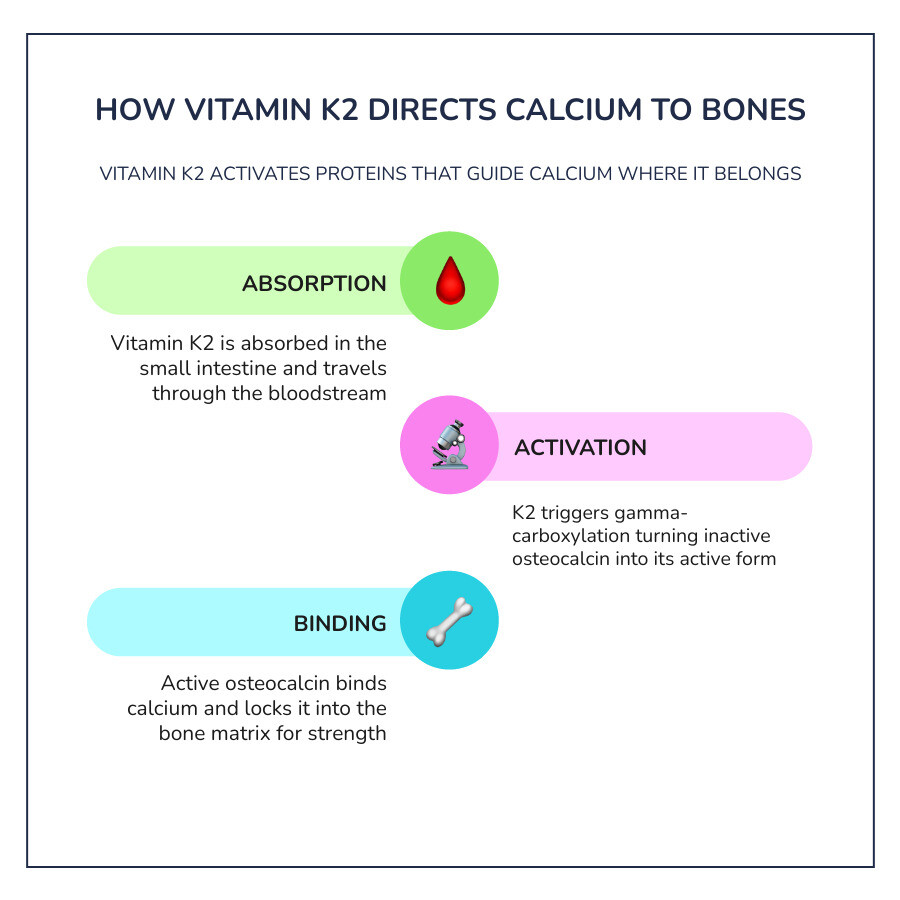
Because vitamin K2 is fat-soluble, the body absorbs it best when it is consumed with some dietary fat. Once absorbed in the intestines, vitamin K2 is packaged into cholesterol carriers and sent into the bloodstream.
While the liver grabs most of the vitamin K1 to help with blood clotting, vitamin K2 is left to circulate. This allows K2 to reach the bone matrix, which is the internal scaffolding of your bones. Here, K2 plays a vital role in bone mineralization, helping to deposit minerals into the bone to keep them dense and strong. At the same time, vitamin K2 helps support arterial health by keeping calcium from building up and hardening in your blood vessels.
How Vitamin K2 Works to Build Stronger Bones
To understand how vitamin K2 helps your bones, it is useful to understand how bones stay healthy. Your bones are not static. They are constantly being broken down and rebuilt in a process called bone remodeling.
Two main types of cells handle this process:
- Osteoclasts: These are cells that break down and remove old or damaged bone.
- Osteoblasts: These are the cells that build new, strong bone.
When you are young, your body builds bone faster than it breaks it down. But as you age, especially after menopause—when falling estrogen levels cause you to lose bone density more quickly—this balance shifts. Osteoclasts begin breaking down bone faster than osteoblasts can rebuild it, which can lead to thinning bones. Vitamin K2 helps support osteoblast activity, ensuring the bone-building process can keep up.
Vitamin K2 helps protect bones by activating osteocalcin, a protein made by bone-building cells that binds calcium and helps place it into your bone structure. But it needs vitamin K2 to “turn on.” Without enough K2, more osteocalcin stays inactive. That means calcium from food or supplements may not be used as effectively for bone mineralization. In short: calcium supplies the building material, and vitamin K2 helps your body put it where it belongs.
What is the Right Dosage of Vitamin K2 for Bone Density?
The ideal dosage of vitamin K2 depends heavily on the specific form you are taking. The two main forms used in supplements are MK-7 and MK-4.
- MK-7: This form is highly effective at lower doses because it stays in the body longer. Clinical studies show that doses of 90 mcg to 180 mcg per day are highly beneficial for reducing bone loss in postmenopausal women.
- MK-4: This form is cleared from the body quickly, so much higher doses are required. In the US, the FDA has not validated or approved any specific form of Vitamin K2 for osteoporosis treatment, and guidelines for Vitamin K intake are set only to prevent blood-clotting deficiencies (90–120 mcg). However, U.S. practitioners often adapt international research and expert guidance for bone health protocols like Japan, where a high dose of 45 mg per day is approved as a prescription treatment for osteoporosis.
For general bone support, many experts recommend starting with a standard daily dose of 90 mcg to 180 mcg of the MK-7 form.
Does Vitamin K2 Reduce Fracture Risk?
While maintaining bone density is important, the ultimate goal of any bone health program is to prevent bone breaks. This is where vitamin K2 truly shines.
Some studies suggest vitamin K2 may reduce fracture risk, even when bone density gains are modest, but findings are mixed. One reason is that stronger bones are not just denser bones. Bone quality, turnover, and structure also play important roles.
Research suggests vitamin K2 may help preserve bone geometry, not just bone density. In a three-year randomized trial by Knapen et al. in Osteoporosis International (2013), postmenopausal women taking MK-7 maintained femoral neck width and showed better hip strength indices than placebo. A 2022 meta-analysis by Ma et al. also found vitamin K2 was linked with lower overall fracture risk after sensitivity analysis.
Safe Dosages and Potential Side Effects of Vitamin K2
For the vast majority of people, vitamin K2 has an excellent safety profile. Since it is a natural nutrient, the body tolerates it very well. Clinical trials using both low-dose MK-7 and high-dose MK-4 have reported no significant differences in side effects between the vitamin K2 groups and the placebo groups.
Unlike other fat-soluble vitamins like vitamin A or D, vitamin K2 does not easily build up to toxic levels in the body because it is metabolized and excreted relatively quickly.
Safety Precautions and Blood Thinner Interactions
Though vitamin K2 is generally safe, there is one major exception. If an individual is taking traditional blood-thinning medications like warfarin, they must exercise extreme caution.
Because vitamin K plays a central role in blood clotting, taking a vitamin K2 supplement can counteract the effects of these medications, making the blood thinner less effective and increasing the risk of blood clots. Anyone taking anticoagulants should consult their healthcare provider before changing their vitamin K intake or starting a supplement.
Additionally, those with severe kidney disease or other complex medical conditions should always seek medical supervision before starting a new supplement regimen.
Frequently Asked Questions About Bone Health
Can I get enough vitamin K2 from my diet alone?
It is possible, but it can be challenging for those eating a standard Western diet. The richest dietary source of vitamin K2 (specifically MK-7) is natto, a traditional Japanese dish made from fermented soybeans. Natto contains nearly 1,000 mcg of vitamin K2 per 100 grams. However, natto has a very strong flavor and sticky texture that many people find difficult to eat.
Other good sources of vitamin K2 include:
- Hard cheeses (like Gouda or Jarlsberg)
- Egg yolks
- Butter from grass-fed cows
- Organ meats
If these foods are not a regular part of the diet, a high-quality supplement may help bridge the gap.
Should I take vitamin K2 if I am already taking osteoporosis medication?
Research suggests that vitamin K2 can be safely combined with common osteoporosis medications, such as bisphosphonates (like alendronate). In fact, some clinical trials have shown that combining vitamin K2 with these medications can have an additive effect, leading to better improvements in bone density at the femoral neck than using the medication alone. Always discuss any new supplements with a doctor to ensure they align with the overall treatment plan.
Does vitamin K2 work better when paired with vitamin D3?
Yes, vitamin K2 and vitamin D3 work together as a team. Vitamin D3 helps your body absorb calcium from the food you eat. Once that calcium is in your bloodstream, vitamin K2 activates the proteins needed to direct that calcium into your bones. Taking high doses of vitamin D without enough vitamin K2 can lead to elevated calcium levels in the blood, which may contribute to calcium deposits in the arteries. Pairing them together helps ensure calcium is utilized safely and effectively.
Putting Vitamin K2 to Work for Your Bones
Vitamin K2 is a crucial piece of the bone health puzzle. By activating osteocalcin, K2 ensures that the calcium you consume is actually built into your bones, helping to maintain bone density from the inside. However, keeping your skeleton strong and preventing fractures also requires physical force. Weight-bearing exercise and targeted movement signal your bone-building cells to work harder, complementing the calcium-directing benefits of vitamin K2.
Groove Health offers a personalized, online osteoporosis program covered by Medicare that helps you build a practical plan for stronger bones. The program pairs adults with a physician-led care team and exercise plans designed by physical therapists to help build bone strength, improve balance, and reduce the falls that can lead to fractures. By combining smart nutrient support with a tailored, bone-focused exercise plan, you can support your bones from the inside and the outside. To see if this program is available to you, check your eligibility for Groove Health today.
Works Cited
- Plaza, S. M., & Lamson, D. W.. "Vitamin K2 in Bone Metabolism and Osteoporosis." Alternative Medicine Review, 2005.
- Ma, M. L., et al.. "Efficacy of vitamin K2 in the prevention and treatment of postmenopausal osteoporosis: A systematic review and meta-analysis of randomized controlled trials." Frontiers in Public Health, 2022.
- Xie C, Gong J, Zheng C, et al.. "Effects of vitamin K supplementation on bone mineral density at different sites and bone metabolism in the middle-aged and elderly." Bone & Joint Research, 2024.
This content is for informational purposes only and does not constitute medical advice. Consult a qualified healthcare professional for diagnosis and treatment. If you are on Medicare and interested in a personalized bone health program, you can check your eligibility at groovehealth.com.