Bone Density Diet 101: What to Eat and What to Skip
A bone density diet goes beyond calcium. Learn which foods, nutrients, and eating patterns protect your skeleton — and which ones quietly weaken it.

What a Bone Density Diet Is — and Why It Matters for Fracture Prevention
A bone density diet is a structured approach to eating that prioritizes nutrients proven to support skeletal strength, slow age-related bone loss, and reduce the risk of fractures — particularly in adults over 50.
At a glance: the core principles of a bone density diet
| Priority | What to Do |
|---|---|
| Calcium | Aim for 1,000–1,200 mg daily from food first |
| Vitamin D | Get 600–800 IU daily; supports calcium absorption |
| Protein | Target ~1.2 g per kg of body weight for older adults |
| Key foods | Dairy, fatty fish, leafy greens, tofu, prunes, fortified foods |
| Limit | High-sodium foods, excess caffeine, alcohol, sugary sodas |
| Avoid | Pairing high-oxalate or high-phytate foods with calcium sources |
The stakes are high. Osteoporosis affects about 1 in 2 women and 1 in 5 men over age 50, and many women in this age group will experience a hip, wrist, or spine fracture in their lifetime. The encouraging news is that bone health is not fixed: research suggests that a 10% increase in peak bone mass may lower osteoporotic fracture risk later in life by up to 50%.
Diet is one of the most modifiable factors in that equation.
Bones are living tissue. They are constantly broken down and rebuilt through bone remodeling, a process led by osteoblasts, which build bone, and osteoclasts, which remove old bone. What you eat directly affects how well this system works and how much it changes with age.
The research is clear: no single food or nutrient works in isolation. Calcium cannot effectively reach bone without adequate vitamin D. Vitamin D cannot be properly metabolized without magnesium. Vitamin K is needed to synthesize osteocalcin, the protein that actually binds calcium into bone tissue. This nutrient synergy is what separates a genuinely bone-protective diet from simply drinking more milk.
This guide explains the evidence behind bone density nutrition: what to eat, what to limit, and how to use diet as part of a broader plan to help lower fracture risk.
The Biological Mechanisms of Bone Remodeling and Peak Mass
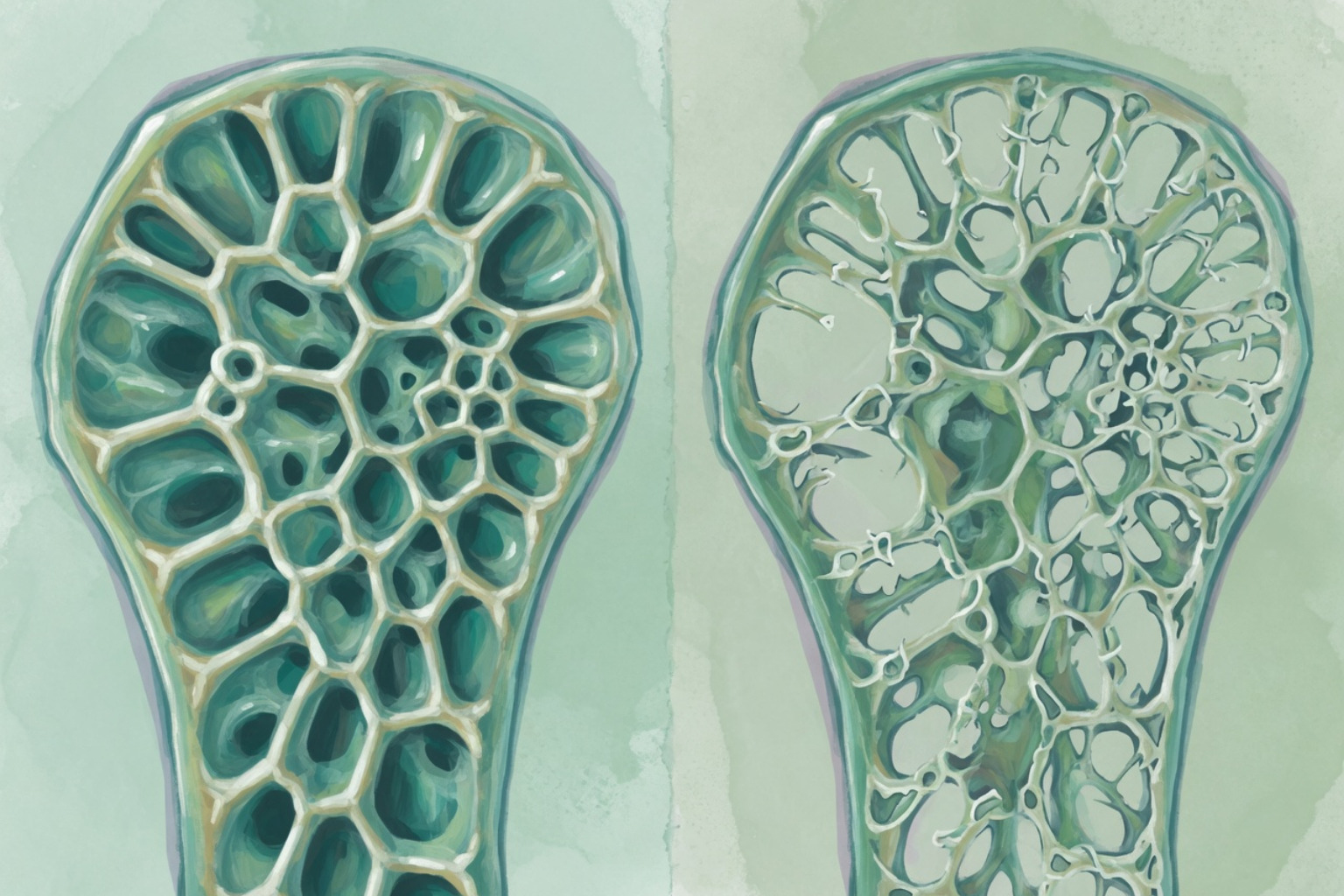
To understand why a bone density diet is effective, one must understand the biological "bank account" of the skeleton. Bone is not a static structure; it is a dynamic organ undergoing constant bone remodeling. Two primary cell types govern this process: osteoblasts, which are responsible for bone formation, and osteoclasts, which break down and resorb old bone tissue.
In a healthy skeleton, these two processes stay in balance. But with aging, especially after menopause, osteoclast activity often exceeds osteoblast activity. The result is a gradual drop in bone mineral density (BMD). Bone strength also depends on hydroxyapatite, a mineral made mainly of calcium and phosphorus, which hardens and supports the collagen framework.
The Significance of Peak Bone Mass in Fracture Prevention
Peak bone mass is the maximum amount of bone tissue an individual attains, typically reached by age 30. While approximately 60–80% of peak bone mass variance is determined by genetic factors, the remaining 20–40% is influenced by environmental factors, most notably nutrition and physical activity.
Clinical research indicates that achieving a 10% higher peak bone mass can delay the onset of osteoporosis by approximately 13 years. For those already past age 30, the focus shifts from accumulation to preservation. In older adults, nutritional interventions aim to slow the rate of resorption and maintain the microarchitecture of the bone to prevent fragility fractures.
Essential Micronutrients for Skeletal Integrity
A successful bone density diet requires a spectrum of minerals and vitamins that work in tandem. While calcium is the most abundant mineral in the body and the primary component of bone salts, it cannot maintain the skeleton alone.
| Nutrient | Bone Function | Best Sources |
|---|---|---|
| Calcium | Structural rigidity; hardens bone | Dairy, sardines, fortified plant milks, tofu |
| Vitamin D | Increases intestinal calcium absorption | Fatty fish, sunlight, fortified cereals |
| Vitamin K2 | Activates osteocalcin to bind calcium to bone | Fermented dairy (cheese, yogurt), leafy greens |
| Magnesium | Regulates Vitamin D; supports bone crystal quality | Nuts, seeds, whole grains, spinach |
How to Get More Calcium From the Foods You Eat
According to the National Academy of Medicine, women over 50 and men over 70 need 1,200 mg of calcium per day. Younger adults ages 19 to 50, along with men ages 51 to 70, generally need 1,000 mg daily. But as nutrition and osteoporosis prevention explains, calcium intake is only part of the story. What really matters is fractional absorption, or how much calcium your body can actually absorb and put to work.
The body absorbs calcium most efficiently when consumed in smaller doses (500 mg or less) throughout the day rather than in one large bolus. For example, the calcium in a glass of milk (approx. 300 mg) is more bioavailable than the calcium in a high-dose supplement taken once daily.
Why Calcium, Vitamin D, and Magnesium Work as a Team
Vitamin D acts as the "gatekeeper" for calcium. Without a serum level of vitamin D (600–800 IU daily is the standard recommendation), the digestive tract cannot effectively transport calcium into the bloodstream.
Furthermore, magnesium serves as a critical cofactor in the activation of vitamin D. Vitamin K2 is equally vital; it helps synthesize osteocalcin, a protein that ensures calcium is deposited in the bones rather than in the arterial walls. Lastly, Vitamin C is essential for collagen synthesis, providing the "flexible" framework that prevents bones from becoming brittle.
Evidence-Based Foods to Prioritize in a Bone Density Diet
Clinical studies consistently highlight specific food groups that offer superior protection against bone loss. Surprising foods that boost bone health include more than just milk; they encompass a variety of functional foods.
- Fermented Dairy: Yogurt and kefir are often more effective than plain milk. The fermentation process introduces probiotics that may improve the "gut-bone axis," and yogurt is often enriched with extra milk solids, providing 50% more calcium than liquid milk.
- Fatty Fish with Bones: Canned sardines and salmon are nutritional powerhouses. Because they contain tiny, soft, edible bones, a 3-ounce serving can provide nearly as much calcium as a glass of milk, along with vitamin D and omega-3 fatty acids.
- Leafy Greens: Collard greens, kale, and bok choy provide calcium and vitamin K without the high oxalate levels found in spinach (which can block absorption).
For those navigating a new diagnosis, more info about osteoporosis management can help bridge the gap between dietary theory and daily practice.
Functional Foods: The Clinical Evidence for Prunes and Soy
Recent research has cast a spotlight on dried plums (prunes). A 2022 study found that consuming five to six prunes daily helped postmenopausal women preserve bone mineral density in the hips. Prunes contain phenolic acids and flavonoids that may reduce inflammatory markers that trigger bone breakdown.
Soy products, such as tofu (specifically firm tofu set with calcium) and tempeh, contain isoflavones. These plant-derived compounds are structurally similar to estrogen and may help slow bone resorption in postmenopausal women.
Dietary Inhibitors and Factors Contributing to Bone Loss
Just as certain foods build bone, others act as "thieves," leaching minerals from the skeleton. BHOF: Osteoporosis nutrition guidelines often focus on sodium and caffeine.
- Sodium: Excessive salt intake is a major contributor to bone loss. For every 2,300 mg of sodium (about one teaspoon of salt) excreted by the kidneys, approximately 40 mg of calcium is lost in the urine. Most clinical guidelines suggest limiting sodium to under 2,300 mg daily.
- Caffeine and Colas: While moderate coffee consumption (2–3 cups) is generally safe if calcium intake is adequate, heavy caffeine use can interfere with calcium absorption. Colas are particularly concerning due to phosphoric acid, which can create a phosphorus-calcium imbalance that triggers bone demineralization.
Managing Absorption Inhibitors: Oxalates and Phytates
Certain healthy foods contain "anti-nutrients." Oxalates (found in spinach and rhubarb) and phytates (found in beans and 100% wheat bran) bind to calcium in the digestive tract, preventing its absorption.
To mitigate this, one should not count spinach as a primary calcium source. For beans, soaking them for several hours and cooking them in fresh water can significantly reduce phytate levels, making the minerals more bioavailable.
The Impact of Protein and Dietary Patterns on Fracture Risk
There is a persistent myth that high protein intake causes bone loss by "acidifying" the blood. Modern clinical evidence has largely debunked this. In fact, for older adults, a higher protein intake, approximately 1.2 grams per kilogram of body weight, is associated with higher BMD and a lower risk of hip fractures, provided calcium intake is also sufficient.
Bone-Healthy High-Protein Snacks:
- Greek yogurt (15–20g protein per serving)
- Canned sardines on whole-grain crackers
- Edamame or roasted chickpeas
- Almonds or pumpkin seeds
The Mediterranean diet, rich in olive oil, fish, fruits, and vegetables, is frequently cited as the gold standard for bone health. Olive oil contains polyphenols that stimulate osteoblast activity, while the overall anti-inflammatory nature of the diet protects the bone microarchitecture. More info about bone health programs can provide guidance on how to adapt these dietary patterns into a sustainable lifestyle.
The Gut-Bone Axis and Fermented Foods
Emerging research into the "gut-bone axis" suggests that the health of our intestinal microbiota influences bone density. Beneficial bacteria produce short-chain fatty acids, such as butyrate, which have been shown in animal models to stimulate bone formation. A diet high in prebiotic fiber (from leeks, onions, and asparagus) and fermented foods (like sauerkraut or kimchi) supports this internal ecosystem.
Clinical Integration: Exercise, Screening, and Medical Oversight
Diet alone is rarely enough to manage osteoporosis or severe osteopenia. It must be paired with clinical screening and physical intervention. The DEXA scan is the gold standard for measuring BMD; it provides a T-score that compares an individual's bone density to that of a healthy young adult.
Furthermore, weight-bearing exercise and resistance training are essential. While a bone density diet provides the raw materials (calcium, protein), exercise provides the mechanical signal that tells the osteoblasts to build more bone. Groove Health’s program frequently pairs these dietary strategies with personalized physical therapy to ensure that patients are building muscle strength to prevent falls—the leading cause of osteoporotic fractures.
Frequently Asked Questions about Bone Health Nutrition
Can diet alone prevent osteoporosis?
While a nutrient-dense diet is a cornerstone of prevention, it is not always sufficient. Genetics, hormonal changes (like the drop in estrogen during menopause), and certain medications can cause bone loss that diet cannot fully counteract. A holistic approach including exercise and, in some cases, FDA-approved medications is often necessary.
Is a vegan diet safe for long-term bone density?
Research, including the EPIC-Oxford study, suggests that vegans may have a higher risk of fractures if they do not carefully manage their intake of calcium, vitamin D, and protein. However, a vegan diet can support bone health if it includes fortified plant milks (aim for 120mg of calcium per 100mL), calcium-set tofu, and adequate protein from legumes and nuts.
How does sodium intake directly affect bone mineral density?
Sodium and calcium share a transport pathway in the kidneys. When the body works to excrete excess sodium, calcium is "pulled" along with it. If dietary calcium is low, the body will rob the skeleton to maintain necessary blood calcium levels, leading to a gradual decrease in BMD over time.
Your Next Steps Toward Stronger Bones
Maintaining skeletal health requires more than just an occasional calcium supplement. It demands a synergistic bone density diet that balances minerals, vitamins, and protein while minimizing inhibitors like excessive sodium. By focusing on fermented dairy, fatty fish, and a "rainbow" of produce, individuals can provide their "living" bones with the nutrients required for constant repair.
Groove Health supports this journey by offering Medicare-covered, personalized care plans that bridge the gap between clinical research and daily life. Through evidence-based nutrition and targeted physical activity, it is possible to build a more resilient foundation for the years ahead.
Works Cited
- Rizzoli, R., Biver, E., and Brennan-Speranza, T.C. "Nutritional intake and bone health." The Lancet Diabetes & Endocrinology, 2021.
- Bone Health & Osteoporosis Foundation. "Food and Your Bones — Osteoporosis Nutrition Guidelines." Bone Health & Osteoporosis Foundation, 2024.
- Rizzoli, R., and Chevalley, T. "Nutrition and Osteoporosis Prevention." Current Osteoporosis Reports, 2024.
- Harvard Health Publishing. "Surprising foods that boost bone health." Harvard Health, 2023.
- National Institute of Arthritis and Musculoskeletal and Skin Diseases. "Calcium and Vitamin D: Important for Bone Health." NIAMS, 2025.
- Cleveland Clinic. "Osteoporosis Diet: What Foods To Eat and Avoid." Cleveland Clinic Health Essentials.
This content is for informational purposes only and does not constitute medical advice. Consult a qualified healthcare professional for diagnosis and treatment. If you are on Medicare and interested in a personalized bone health program, you can check your eligibility at groovehealth.com.