
Calcium Rich Foods: 7 Quick and Easy Ways to Add More
Most adults need 1,000-1,200 mg of calcium a day, yet many fall short. From dairy and calcium-set tofu to leafy greens and fortified milks, here are seven simple ways to get more and protect your bones.

Why Getting Enough Calcium Matters for Bone Health
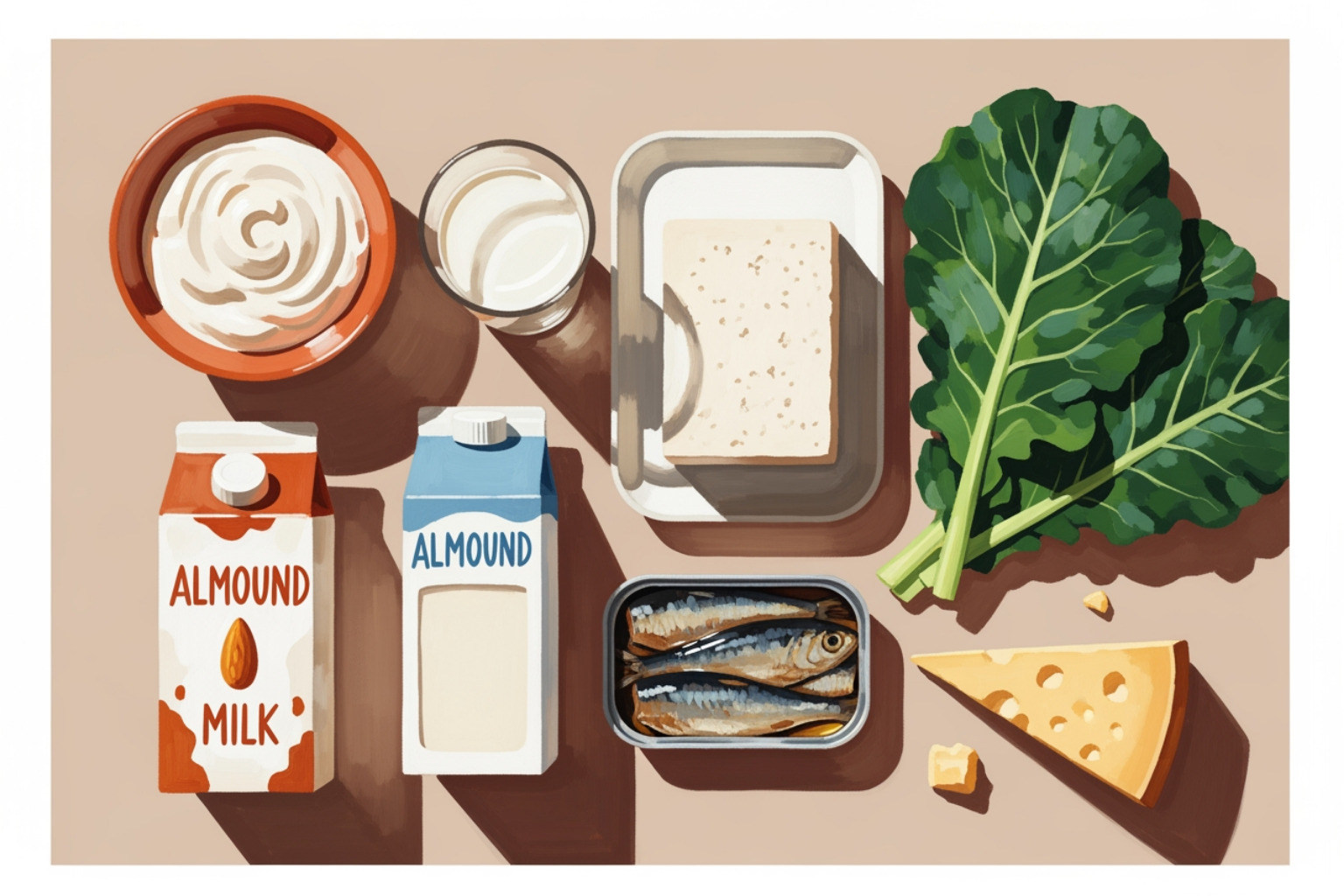
Calcium rich foods are one of the most important parts of a bone-healthy diet, especially for adults over 50. Here is a quick look at some of the best sources:
| Food | Serving Size | Calcium Content |
|---|---|---|
| Plain nonfat yogurt | 8 oz | ~488 mg |
| Low-fat milk | 8 oz | ~300 mg |
| Sardines (canned with bones) | 3 oz | ~325 mg |
| Tofu (made with calcium sulfate) | 1/2 cup | ~434 mg |
| Cooked collard greens | 1 cup | ~268 mg |
| Fortified almond milk | 1 cup | ~442 mg |
| Parmesan cheese | 1 oz | ~242 mg |
Most adults need between 1,000 and 1,200 mg of calcium per day. Yet research shows that over 40% of Americans above age 2 consume less than the recommended amount. For women over 19, that number climbs to 60%.
That gap matters. Bone is living tissue. Your body constantly pulls calcium from your skeleton to keep your heart, muscles, and nerves working. If you are not eating enough calcium, your bones quietly pay the price over time.
The good news: milk is far from the only option. Dairy, leafy greens, canned fish, tofu, and fortified beverages can all help you hit your daily target, and most people can get there through food alone.
Why Your Body Needs Calcium Rich Foods
Calcium is the most abundant mineral in your body. About 99% of it is stored in your bones and teeth, where it provides strength and structure. Think of your skeleton as a "calcium bank." If you do not have enough calcium in your blood, your body "withdraws" it from your bones to keep other systems running.
According to Harvard Health, calcium is vital for more than just bone density. It plays a key role in:
- Muscle function: Your muscles, including your heart, need calcium to contract and relax properly.
- Nerve signaling: Calcium helps carry messages from your brain to every part of your body.
- Blood clotting: This mineral is essential for helping your blood clot when you have an injury.
- Heart rhythm: It helps maintain a steady, healthy heartbeat.
Because your body cannot produce its own calcium, you must get it from the foods you eat. If the "withdrawals" from your bone bank happen too often without enough "deposits" from your diet, your bones can become thin and brittle. This leads to conditions like osteopenia (thinning bones) or osteoporosis (a disease where bones become weak and likely to break).
How Much Calcium Do You Need Daily?
Your calcium needs change as you get older. The Current Dietary Guidelines suggest that most adults need at least 1,000 mg per day. However, certain groups have higher requirements to help prevent bone loss.
As of May 2026, the recommended daily amounts are:
- Adult men (ages 19–70): 1,000 mg
- Adult women (ages 19–50): 1,000 mg
- Women over age 50: 1,200 mg
- Men over age 70: 1,200 mg
For women, the need for calcium increases after menopause because the body absorbs less calcium as estrogen levels drop. Men also experience a decline in absorption as they age, typically after 70.
When looking at food labels, you can use the Percent Daily Value (% DV) as a guide. In the United States, the % DV for calcium is based on 1,300 mg. If a label says a food provides 20% DV, it contains about 260 mg of calcium. A food with 20% or more is considered an "excellent source" of calcium.
7 Ways to Add More Calcium to Your Diet
Meeting your daily goal does not have to be difficult. By choosing a variety of Calcium rich foods, you can ensure your body gets the nutrients it needs. For more tailored advice, you can explore more info about nutrition for bone health on our blog.
Best Dairy Sources of Calcium
Dairy products are often the most concentrated sources of calcium. They are also generally easy for the body to absorb.
- Yogurt: Plain, nonfat yogurt is a reliable calcium-rich choice. One 8-ounce serving can provide approximately 300-450 mg of calcium, depending on the brand and how it is made.
- Milk: Whether you choose whole, low-fat, or skim, a single cup of cow's milk offers about 300 mg of calcium.
- Cheese: Hard cheeses like Parmesan are especially high in calcium. One ounce of Parmesan typically contains about 330-340 mg. Ricotta and Swiss cheese are also excellent choices, as noted by UCSF Health.
Plant-Based Calcium Sources for Every Meal
If you prefer to avoid dairy or follow a vegan diet, there are plenty of plant-based options that are just as effective.
- Calcium-Set Tofu: One of the best vegan calcium-rich foods is tofu made with calcium sulfate. Check the label for "calcium-set" tofu. According to the Bone Health & Osteoporosis Foundation, a half-cup serving of firm tofu can provide more than 400 mg of calcium.
- Leafy Greens: Some greens do a better job than others. Collard greens, kale, and bok choy are strong choices because your body can absorb their calcium well. One cup of cooked collard greens provides about 268 mg.
- Fortified Plant Milks and Juice: Fortified soy milk, almond milk, and orange juice can make it much easier to reach your daily calcium goal. Some fortified plant milks provide around 300 to 450 mg per cup, depending on the brand, so it pays to read the nutrition label.
- Seeds and Beans: Chia seeds, tahini, and white beans can help add more calcium across the day. Try chia in oatmeal, tahini in dressings, or white beans in soups and salads for an easy plant-based boost.
Factors That Help or Hurt Calcium Absorption
It is not just about how much calcium you eat; it is also about how much your body actually uses. Several factors influence this process.
The Vitamin D Connection
Vitamin D helps your body absorb calcium more efficiently. Without enough vitamin D, your body absorbs calcium less well, even if you eat plenty of calcium rich foods. Many women — particularly postmenopausal women — have suboptimal vitamin D levels, especially with limited sun exposure. You can get vitamin D from sunlight, fatty fish, fortified foods, and egg yolks, though some older adults may need a supplement.
Oxalates and Phytates Some plants contain compounds called oxalates that can interfere with calcium absorption. For example, spinach is high in calcium, but it is also very high in oxalates. This means your body only absorbs about 5% of the calcium in spinach. In contrast, low-oxalate greens like kale, collard greens, and bok choy have much higher absorption rates.
Age and Lifestyle Calcium absorption naturally declines as we age. High sodium (salt) intake can also cause your body to lose calcium through your urine. To keep your bones strong, it is best to spread your calcium intake throughout the day. Your body absorbs calcium best in doses of 500 mg or less at one time.
Frequently Asked Questions
Can I get enough calcium if I am lactose intolerant?
Yes. Many people with lactose intolerance can still enjoy aged cheeses like Swiss or cheddar, which are naturally lower in lactose. You can also choose lactose-free milk, which has about the same calcium content as regular milk. Plant-based options like fortified soy milk and low-oxalate leafy greens, such as kale or collard greens, can also help you meet your needs without dairy.
Are calcium supplements better than food?
Most experts, including those at the International Osteoporosis Foundation, recommend getting calcium from food first. Foods provide a package of nutrients—like protein and magnesium—that work together for bone health. Supplements can sometimes cause side effects like constipation or kidney stones if taken in high doses. Only take supplements if your doctor recommends them because you cannot meet your needs through diet alone.
Does spinach count as a good calcium source?
While spinach is a very healthy vegetable, it is not the best source of calcium. Because of its high oxalate content, the calcium in spinach is not well-absorbed. You are better off choosing collard greens, turnip greens, or kale if your goal is to increase your calcium levels.
Putting It All Together for Stronger Bones
Building strong bones is a lifelong journey, but it is never too late to start focusing on Calcium rich foods. By including a mix of dairy, fortified plants, and leafy greens in your meals, you can help protect your skeleton and maintain your independence as you age.
At Groove Health, we understand that managing bone health can feel overwhelming. That is why we offer a Medicare-covered program that pairs you with a dedicated team, including a physician and a physical therapist. We focus on personalized, home-based care to help you improve bone density and prevent fractures. Whether you are navigating a new diagnosis of osteoporosis or looking to strengthen your bones, we are here to help.
Check your eligibility for Groove Health today to see how we can support your bone health journey.
Works Cited
- Harvard Health. "Calcium-rich foods: How to boost your intake of this important mineral". Harvard Health, 2023.
- U.S. Department of Agriculture. "Food Sources of Calcium". Dietary Guidelines for Americans, 2020-2025.
- UCSF Health. "Calcium Content of Foods". Patient Education, 2024.
- Bone Health & Osteoporosis Foundation. "A Guide to Calcium-Rich Foods". BHOF, 2024.
- Office of the Surgeon General (US). "Table 7-2, Selected Food Sources of Calcium". Bone Health and Osteoporosis: A Report of the Surgeon General, 2004.
- International Osteoporosis Foundation. "Calcium content of common foods". IOF, 2024.
This content is for informational purposes only and does not constitute medical advice. Consult a qualified healthcare professional for diagnosis and treatment. If you are on Medicare and interested in a personalized bone health program, you can check your eligibility at groovehealth.com.