
How to Start Osteoporosis Treatment in 5 Easy Steps
Not sure when osteoporosis treatment is right for you? This 5-step guide covers bone density screening, FRAX risk scores, medication options, and lifestyle changes to help you decide with your doctor.
When to Start Osteoporosis Treatment: What You Need to Know First
When to start osteoporosis treatment depends on a few key factors your doctor will look at together.
Here is a quick summary:
| Situation | General Guidance |
|---|---|
| T-score of -2.5 or lower | Treatment is typically recommended |
| T-score between -1.0 and -2.5 (mild bone thinning) | Treatment depends on fracture risk score |
| 10-year hip fracture risk 3% or higher | Treatment is usually advised |
| 10-year major fracture risk 20% or higher | Treatment is usually advised |
| Broken bone from a minor fall at any age | Prompt treatment is strongly recommended |
| Taking steroid medications long-term | Early bone protection is often recommended |
Osteoporosis is often called a silent disease because bones can become dangerously thin without pain or warning signs. Groove Health offers a personalized bone health program to help you understand your risk and next steps. Start your assessment today to see what support may be right for you.
The good news: there are clear, evidence-based steps for figuring out when treatment should begin and what that treatment should look like. According to guidelines from the Bone Health and Osteoporosis Foundation, the decision to start treatment is based on your bone density scan results, your personal fracture risk, and other health factors specific to you.
This article walks through those five steps in plain language, so you can go into your next doctor's visit feeling informed and ready to ask the right questions.
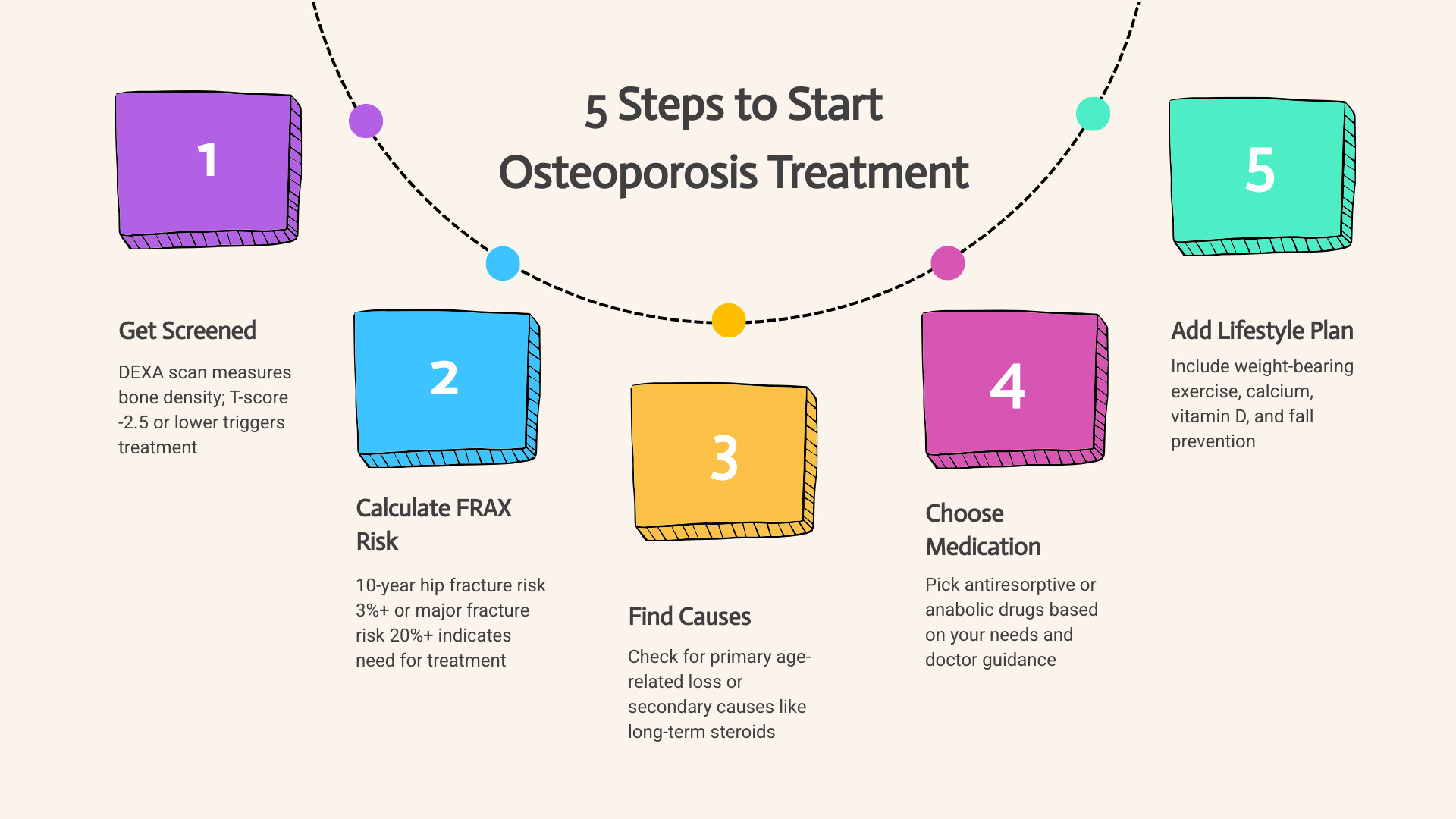
Step 1: Get Screened and Understand Your Bone Density Scores
A bone density test is the first step in knowing if you need treatment. The most common test is a DEXA scan (an X-ray that measures how strong your bones are). This test measures your bone mineral density, which tells you how packed your bones are with calcium and other minerals.
Medical guidelines recommend that certain groups get screened regularly. Experts suggest screening for all women over 65 and men over 70. You can read more about these recommendations in The clinician’s guide to prevention and treatment of osteoporosis.
What Your T-Score Means for Treatment
Your DEXA scan results will give you a T-score. A T-score compares your bone density to that of a healthy young adult. It shows how many steps (known as standard deviations) your bone density is below normal.
If your T-score is between -1.0 and -2.5, you have osteopenia (mild bone thinning). This means your bones are weaker than normal, but not yet osteoporotic. An osteoporosis diagnosis is made when your T-score is -2.5 or lower.
Knowing when start osteoporosis treatment is clear-cut if you have a T-score of -2.5 or lower. At this point, your bones are fragile enough that treatment is highly recommended to prevent future breaks.
Step 2: Calculate Your Fracture Risk with the FRAX Tool
A bone density score is only part of the story. Your doctor will also look at your overall risk of breaking a bone. To do this, they use the FRAX tool (a calculator that estimates your chance of breaking a bone over the next ten years).
This tool gives your doctor a 10-year fracture probability. It combines your bone density score with several clinical risk factors to paint a complete picture of your bone health.
How the FRAX Tool Guides the Treatment Decision
The FRAX tool is incredibly helpful for deciding when start osteoporosis treatment if you have mild bone thinning (osteopenia). Even if your T-score is not quite -2.5, your doctor may recommend starting medication if your FRAX scores show high risk.
Specifically, treatment is usually advised if your 10-year hip fracture risk is 3% or higher, or if your 10-year major osteoporotic fracture risk is 20% or higher. The tool calculates this by looking at your age, sex, family history of hip fractures, and lifestyle factors like smoking or drinking alcohol.
Step 3: Identify Primary and Secondary Causes of Bone Loss
Before starting any medication, your doctor will want to know why your bones are thinning. There are two main types of bone loss.
Primary osteoporosis is age-related bone loss. It happens naturally as people get older and hormone levels change. For women, estrogen acts like a shield, slowing down the cells that break down bone. When estrogen drops after menopause, bone loss speeds up.
Secondary osteoporosis is bone loss caused by medical conditions or medications. Your doctor will typically order a laboratory workup, which includes simple blood and urine tests, to rule out these secondary causes.
How Steroid Medications Affect Your Bones
Certain medications can cause rapid bone loss. The most common culprits are glucocorticoids (steroid medications like prednisone, often used for arthritis or asthma).
These medications interfere with how your body builds bone. Because steroids can cause rapid bone loss in a short period, early intervention is key. If you must take steroids for more than a few months, your doctor will discuss early treatment timing to provide immediate bone protection.
Step 4: Choose the Right Medication with Your Doctor
If lifestyle changes are not enough, your doctor may recommend prescription medications. There are two main categories of osteoporosis drugs.
Antiresorptive drugs are medications that slow down bone loss. They help your body hold onto the bone it already has. Anabolic drugs are medications that help build new bone. They stimulate the cells that make new bone tissue.
Common choices include bisphosphonates, denosumab, and parathyroid hormone analogs. To learn more about how doctors choose these drugs, you can look at the clinical guidelines in the E16. Pharmacological Management of Osteoporosis in Postmenopausal Women report.
Here is a quick look at how these medications compare:
| Drug Type | How It Works | Common Examples |
|---|---|---|
| Antiresorptive | Slows down the cells that break down bone | Bisphosphonates (alendronate), Denosumab |
| Anabolic | Rebuilds bone by stimulating bone-forming cells | Teriparatide, Abaloparatide |
Treatment Duration and Drug Holidays
Osteoporosis medication timelines vary. Some people take breaks after several years, while others need ongoing treatment and regular monitoring.
In very rare cases, taking certain bone medications for a long time can lead to unusual side effects. These include atypical femur fractures (unusual thigh bone breaks) and osteonecrosis of the jaw (delayed healing of the jawbone).
To avoid these rare risks, your doctor might suggest a drug holiday (a temporary break from medication). This is a planned break where you stop taking the drug for a few years while your doctor continues to monitor your bones. The timing of this break depends on your treatment sequencing and how stable your bone density is.
Step 5: Build a Long-Term Plan with Lifestyle Changes and Fall Prevention
Medication is only one part of a good bone health plan. To truly protect your bones, you need a daily routine that supports bone strength and prevents falls.
First, build an exercise plan that challenges your bones and lowers your fall risk. Walking is good for general health, but it usually is not enough to build bone. People with osteoporosis often need progressive strength training, heavier resistance work, balance practice, and safe impact exercises, such as supervised step-downs, heel drops, or small jumps when appropriate.
Second, make sure your body has the building blocks it needs. This means getting enough calcium intake through foods like yogurt and leafy greens, and taking vitamin D3 to help your body absorb that calcium.
Finally, fall prevention is one of the most important things you can do. Simple changes like removing loose rugs, improving lighting, and working on your balance can keep you on your feet.
Frequently Asked Questions About Osteoporosis Treatment
Should I start treatment immediately after a broken bone?
Yes. If you experience a fragility fracture (a broken bone from a minor fall), you are at a very high risk for another break. This period is known as a time of imminent fracture risk.
Prompt treatment is highly recommended to start the healing process and prevent a second break. This is known as secondary prevention, and it is one of the most critical times to start therapy.
How long do I need to take osteoporosis medications?
Your treatment duration depends on the specific drug you are taking and your overall risk. Some medications, like bisphosphonates, can be paused after three to five years.
Other medications, like denosumab, cannot be stopped without a transition plan. Stopping denosumab suddenly can cause a rebound effect, where bone density drops quickly. Regular monitoring with your doctor will help determine when it is safe to adjust your treatment.
Does Medicare cover osteoporosis screening and treatment?
Yes. Medicare covers bone mass measurement scans once every 24 months for eligible individuals, and more often if medically necessary. Medicare prescription drug plans also cover many common osteoporosis medications. You can check the official rules directly on medicare.gov to see if you meet the eligibility criteria for these preventive services.
Your Next Step Toward Stronger Bones
Deciding when start osteoporosis treatment is a personal decision made with your healthcare team. Whether you are starting prescription medication or focusing on early prevention, a comprehensive treatment plan must include targeted physical activity to build bone density and prevent falls.
This is where Groove Health can help. Groove Health offers a personalized, home-based bone health program designed to fit seamlessly into your treatment plan. By pairing you with a dedicated physical therapist and physician, the program delivers customized exercise plans and physical therapy directly to your home. These tailored plans focus on building bone strength, improving balance, and preventing the falls that lead to fractures—giving you the practical, daily support you need the moment you decide to start protecting your bones.
Ready to take the next step? Sign up for Groove Health's bone health program today to check your eligibility.
Works Cited
- Eastell, R., et al. "Pharmacological Management of Osteoporosis in Postmenopausal Women: An Endocrine Society Clinical Practice Guideline". Journal of Clinical Endocrinology & Metabolism, 2019.
- LeBoff, M.S., et al. "The Clinician's Guide to Prevention and Treatment of Osteoporosis". Osteoporosis International, 2022.
- National Osteoporosis Foundation. "Clinician's Guide to Prevention and Treatment of Osteoporosis". National Osteoporosis Foundation, 2014.
- Adami S, Idolazzi L, Fracassi E, et al. "Osteoporosis Treatment: When to Discontinue and When to Re-start". Bone Research, 2013.
This content is for informational purposes only and does not constitute medical advice. Consult a qualified healthcare professional for diagnosis and treatment. If you are on Medicare and interested in a personalized bone health program, you can check your eligibility at groovehealth.com.