Step-by-Step Guide to Comparing Osteoporosis Treatment Options
There is no single best osteoporosis treatment. The right medication depends on your fracture risk, kidney health, and whether you can take a weekly pill, an annual infusion, or a daily injection.

Choosing the Right Osteoporosis Treatment Starts With Fracture Risk
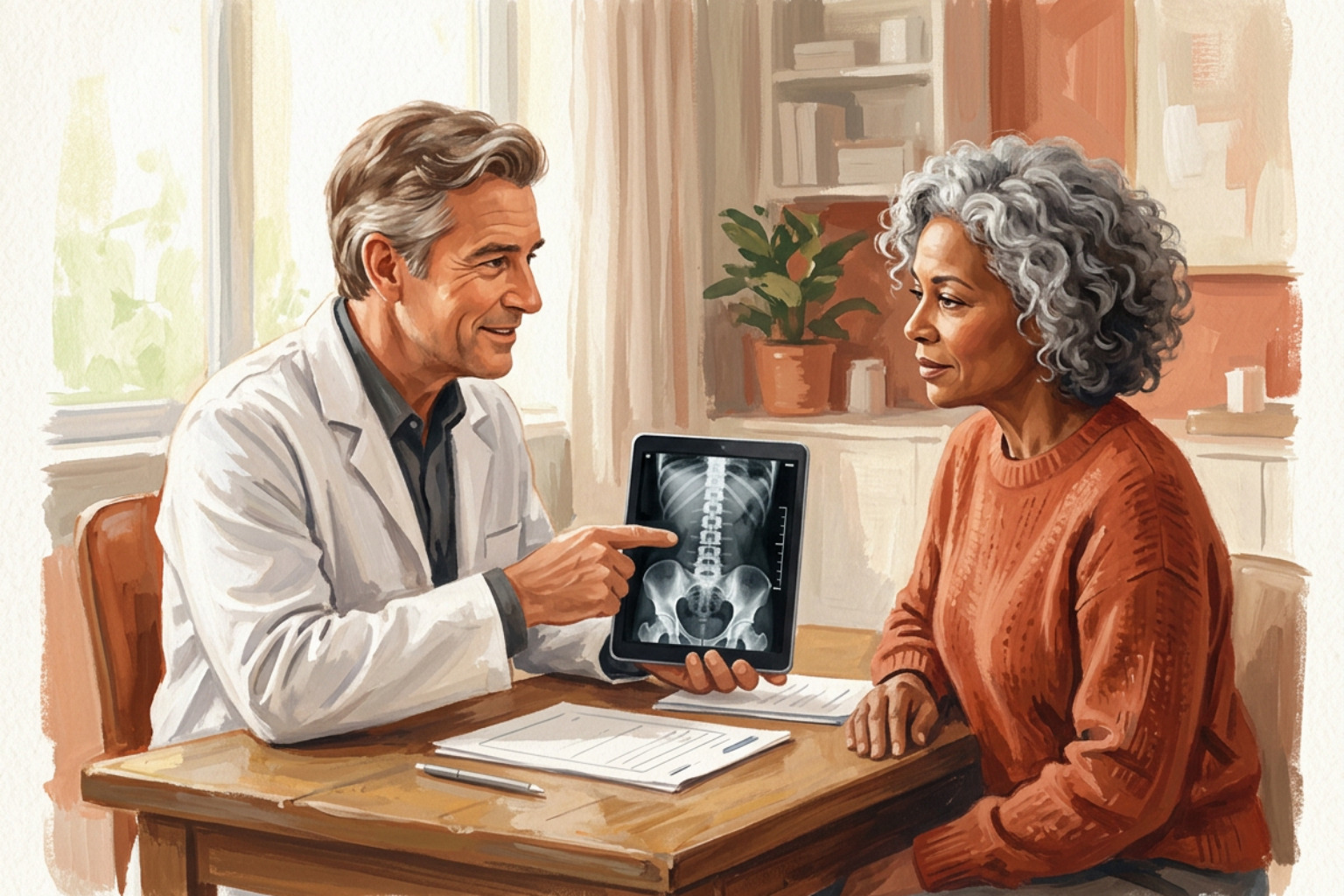
There is no single answer to what is the best treatment for osteoporosis because effective care depends entirely on your personal risk of breaking a bone. For many adults age 65 and older, a bone-protecting bisphosphonate is a common first medication, while individuals with severe bone loss or recent breaks often start with a bone-building drug. Doctors also consider kidney function, digestive tolerance, and daily routines when tailoring your therapy.
A clinician will usually look at your:
- Dual-energy X-ray absorptiometry (DEXA) scan T-score, which measures bone mineral density, and fracture-risk estimate
- Past fractures, especially a recent hip or spine fracture
- Age, kidney health, and other medical conditions
- Ability to take a pill correctly, attend infusions, or keep up with injections
Exercise, enough calcium and vitamin D, and fall prevention matter for everyone. But when fracture risk is high, they support medication rather than replace it.
Ready to take the next step? Check your eligibility for Groove Health to see whether a Medicare-covered bone health program with physician involvement and a physical therapist-designed exercise plan may be a fit for you.
What Is the Best Treatment for Osteoporosis?
Finding an effective treatment for osteoporosis begins with a personalized care plan based on your individual risk of breaking a bone. There is no single medication that fits every person. Your doctor will choose a treatment by looking at your bone density scores, fracture history, overall health, and personal preferences.

According to the Bone Health and Osteoporosis Foundation, about 10 million adults in the United States have osteoporosis. This condition causes bones to become weak and brittle over time. To find the right approach, doctors start with Understanding Osteoporosis and how bone remodeling works.
Bone is living tissue that constantly breaks down and rebuilds. Specialized cells called osteoclasts remove old bone, while cells called osteoblasts build new bone. In osteoporosis, bone breakdown happens faster than bone creation, which lowers bone strength.
How Doctors Assess Your Fracture Risk
To decide on the right treatment, doctors assess your total fracture risk using several standard tools:
- Dual-energy X-ray absorptiometry (DEXA scan): This specialized, low-dose X-ray measures bone mineral density (BMD), usually at your hip and spine. The result is given as a T-score. A T-score of -2.5 or lower indicates osteoporosis.
- Fracture Risk Assessment Tool (FRAX): This calculator estimates your 10-year probability of having a major bone break or hip fracture based on your bone density and clinical risk factors.
- Prior fractures: A history of a recent break, especially after age 50 from a minor fall, signals a high risk for another break.
- Overall health factors: Your age, kidney health, stomach conditions, and family history all help shape the treatment path.
Knowing your numbers helps clarify When to Start Osteoporosis Treatment and which medication class offers the greatest protection.
When Lifestyle Changes Are Not Enough
Healthy habits like nutrition and physical activity are essential for bone health, but they are often not enough on their own for individuals with severe bone loss. When a DEXA scan shows a T-score of -2.5 or lower, or when your 10-year fracture risk is elevated, clinical guidelines from major bone health organizations recommend starting prescription medication.
Medications directly alter the bone remodeling process to reduce the risk of serious breaks. Lifestyle habits build a strong foundation, while medical therapies provide the necessary strength to protect fragile bones.
Comparing the Main Classes of Osteoporosis Medications
Osteoporosis medications fall into two main categories: antiresorptive drugs, which slow down the breakdown of bone, and anabolic drugs, which stimulate the body to build new bone.
| Medication Class | Common Examples | How It Works | How It Is Given |
|---|---|---|---|
| Bisphosphonates | Alendronate, Risedronate, Ibandronate, Zoledronic Acid | Slows bone breakdown (antiresorptive) | Weekly or monthly oral pill, or annual intravenous (IV) infusion |
| Targeted Antiresorptives | Denosumab | Blocks signals that activate bone-removing cells | Subcutaneous injection every 6 months |
| PTH / PTHrP Analogs | Teriparatide, Abaloparatide | Stimulates bone-building cells to form new bone | Daily subcutaneous injection |
| Sclerostin Inhibitors | Romosozumab | Increases bone building while slowing bone breakdown | Monthly subcutaneous injection in a clinic |
| SERMs | Raloxifene | Mimics estrogen in bone tissue to preserve bone density | Daily oral pill |
First-Line Antiresorptive Therapies: Bisphosphonates and Denosumab
Bisphosphonates are the most common first-line medicines for osteoporosis. They bind to bone surfaces and slow down osteoclasts, which helps preserve bone density. Oral pills like alendronate and risedronate are taken weekly or monthly. For people with digestive issues or difficulty swallowing pills, zoledronic acid is given as a once-yearly intravenous infusion.
Denosumab works differently by blocking a specific natural protein signal that bone-removing cells need to survive. It is given as a simple injection under the skin every six months. Denosumab is often recommended for patients with reduced kidney function or those who cannot tolerate bisphosphonates.
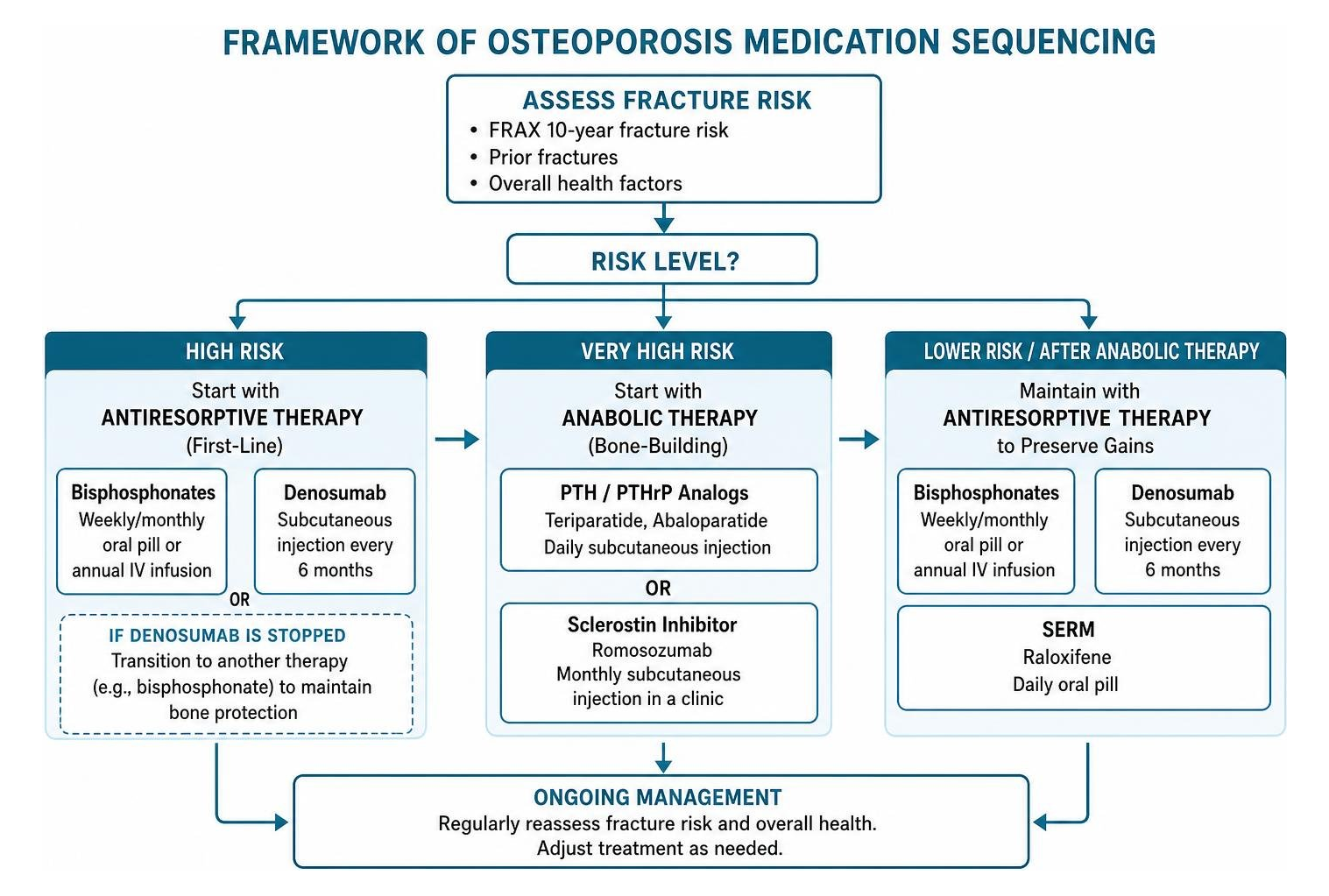
It is important to know that stopping denosumab can cause a rapid rebound in bone loss. If you ever stop this medication, your doctor must transition you to another therapy, such as a bisphosphonate, to keep your bones protected.
Bone-Building Anabolic Agents for Very High Risk
For people at very high risk of breaking a bone, such as those with multiple spinal fractures, very low T-scores, or a recent hip break, anabolic agents may be a recommended starting choice. These medications rebuild bone architecture faster than antiresorptive medicines.
- Teriparatide and Abaloparatide: These mimic parathyroid hormone, a natural hormone that controls calcium levels, to stimulate osteoblasts to make new bone. They are taken as self-administered daily injections for up to two years.
- Romosozumab: This antibody blocks sclerostin, a protein that naturally limits bone growth. It provides a dual effect: it builds new bone while also slowing breakdown. It is given as monthly injections for one year.
Because bone-building medications have time limits, treatment is always sequential. After finishing an anabolic drug, patients transition to an antiresorptive medication, like a bisphosphonate, to maintain the newly formed bone.
Selective Estrogen Receptor Modulators and Hormone Therapy
Selective estrogen receptor modulators (SERMs), such as raloxifene, act like the hormone estrogen on bone tissue to slow bone loss. At the same time, they block estrogen actions in breast tissue. Raloxifene is taken as a daily pill and is typically considered for younger postmenopausal women who want to protect their spine and may have a personal risk profile where breast protection is also desired. It does not protect against hip fractures as effectively as bisphosphonates and carries risks of blood clots.
How to Choose the Right Medication Format and Schedule
Choosing the format of your medicine depends on your health conditions, daily routine, and comfort with pills or needles.
Oral bisphosphonates must be taken first thing in the morning with a full glass of plain water on an empty stomach. You must remain fully upright for at least 30 to 60 minutes to prevent heartburn and esophageal irritation. If you have severe acid reflux or trouble sitting upright, an annual IV infusion or an injection every six months may be a safer, more convenient choice.
Cost and coverage are also practical factors. According to Medicare.gov and CMS guidelines, Medicare Part B and Part D cover various osteoporosis treatments, though exact coverage and out-of-pocket costs vary by plan type and whether the medication is self-administered or given in a clinic. For more details on benefits, read our guide on Medicare Bone Health Coverage.
Supporting Your Medical Treatment with Nutrition and Exercise
Prescription medications do the heavy lifting, but lifestyle habits provide the essential raw materials and mechanical stimulation needed for healthy bones.
According to the National Institutes of Health (NIH) Office of Dietary Supplements, calcium and vitamin D needs change with age:
- Calcium: The recommended daily amount is 1,200 mg for women 51 and older and for all adults 71 and older, and 1,000 mg for men 51 to 70. Good sources include dairy products, fortified plant milks, and leafy greens. Check out our Supplements for Bone Health and Bone Density for details on balancing food and supplements.
- Vitamin D: The recommended daily amount is 600 IU for adults up to age 70 and 800 IU from age 71, to help your intestines absorb calcium properly.
Exercise must be targeted to make a difference in your bones. Light activities like casual walking, gentle stretching, and light resistance bands support mobility, movement quality, and muscle capacity, but they do not provide an osteogenic stimulus to build bone density.
Stimulating bone adaptation requires osteogenic loading through heavy resistance training with lower repetitions. Safe compound movements that load the hips and spine, such as squats, lunges, and hip hinges, should prioritize upright posture and spinal extension while avoiding loaded spinal flexion or twisting.
Fall prevention is equally important for avoiding fractures. Practice progressive balance training using stable, braced supports, such as a sturdy chair placed firmly against a wall or a fixed countertop, never movable objects. Learn more about effective routines in our Best Osteoporosis Exercises guide and review broader Fracture Prevention Strategies for Seniors.
Groove Health is a Medicare covered bone health program for adults 65 and older that pairs each member with a physician and a physical therapist who designs a personalized exercise plan.
Frequently Asked Questions About Osteoporosis Treatment
How Long Does Osteoporosis Treatment Typically Last?
Most osteoporosis treatments are planned in multi-year blocks rather than being taken forever. Antiresorptive pills and infusions are commonly used for three to five years before your doctor reassesses your bone density and overall risk. Anabolic medications have strict limits of one to two years and are always followed by an antiresorptive drug. Your doctor will monitor your progress with a repeat DEXA scan every one to two years to see how your bones are responding.
What Is a Bisphosphonate Drug Holiday?
A drug holiday is a temporary break from taking a bisphosphonate medication. Because bisphosphonates bind tightly to bone mineral, their bone-protective benefits remain present for several years even after you stop taking them. If your bone density is stable and you have not had any recent fractures after three to five years of treatment, your doctor may suggest pausing the medication. This break lowers the already rare risk of long-term side effects while your bones stay protected.
What Questions Should I Ask My Doctor?
When discussing your options, consider asking these questions:
- What do my DEXA scan T-score and FRAX score say about my risk of breaking a bone?
- Based on my medical history, is a bone-slowing or a bone-building medicine the right starting point for me?
- What are the common side effects of this medication, and how will we monitor my progress over time?
Building Your Plan With Medication and Movement
Finding the right osteoporosis treatment is an ongoing, personalized process. While medications protect and rebuild bone tissue, they are most effective when paired with structured physical activity to preserve functional strength. Groove Health reinforces medical therapy by connecting you with a physician and a physical therapist who designs a personalized, home-based exercise plan to help build bone strength, improve balance, and prevent fractures. To start building your personal bone health plan, click here!
Works Cited
- LeBoff MS, Greenspan SL, Insogna KL, et al. “The clinician’s guide to prevention and treatment of osteoporosis.” Osteoporosis International, 2022.
- Shoback D, Rosen CJ, Black DM, et al. “Pharmacological Management of Osteoporosis in Postmenopausal Women: An Endocrine Society Guideline Update.” The Journal of Clinical Endocrinology & Metabolism, 2020.
- Bone Health and Osteoporosis Foundation. “The ‘silent’ disease of osteoporosis affects 10 million Americans.” Bone Health & Osteoporosis Foundation, 2023.
- National Institutes of Health, Office of Dietary Supplements. “Calcium: Fact Sheet for Consumers.” NIH Office of Dietary Supplements, 2022.
- National Institutes of Health, Office of Dietary Supplements. “Vitamin D: Fact Sheet for Consumers.” NIH Office of Dietary Supplements, 2022.
This content is for informational purposes only and does not constitute medical advice. Consult a qualified healthcare professional for diagnosis and treatment. If you are on Medicare and interested in a personalized bone health program, you can check your eligibility at groovehealth.com.