Beginner's Guide to Safe and Effective Osteoporosis Exercises
Walking alone will not rebuild bone. Here is what a safe osteoporosis exercise program actually includes - heavy resistance training, controlled impact, and balance work - plus the movements to avoid.
What a Well-Rounded Osteoporosis Exercise Program Includes
A well-rounded exercise program for osteoporosis combines strength training, weight-bearing movement, balance practice, and posture-focused exercise, adjusted for your bone strength and risk of breaking a bone.
Osteoporosis means bones have become less dense and more likely to break. Osteopenia means bone density is lower than normal but not yet in the osteoporosis range. Exercise cannot cure either condition, but research and clinical guidelines suggest the right mix of movement may help maintain bone strength, build muscle, improve balance, and lower the chance of a fall.
A good plan is not just walking. Walking can support general health, but bones and muscles usually need added challenge from resistance exercise and balance work. High-impact moves, deep forward bends, and forceful twisting may not suit everyone, especially people with spinal fractures, severe bone loss, pain, or recent falls.
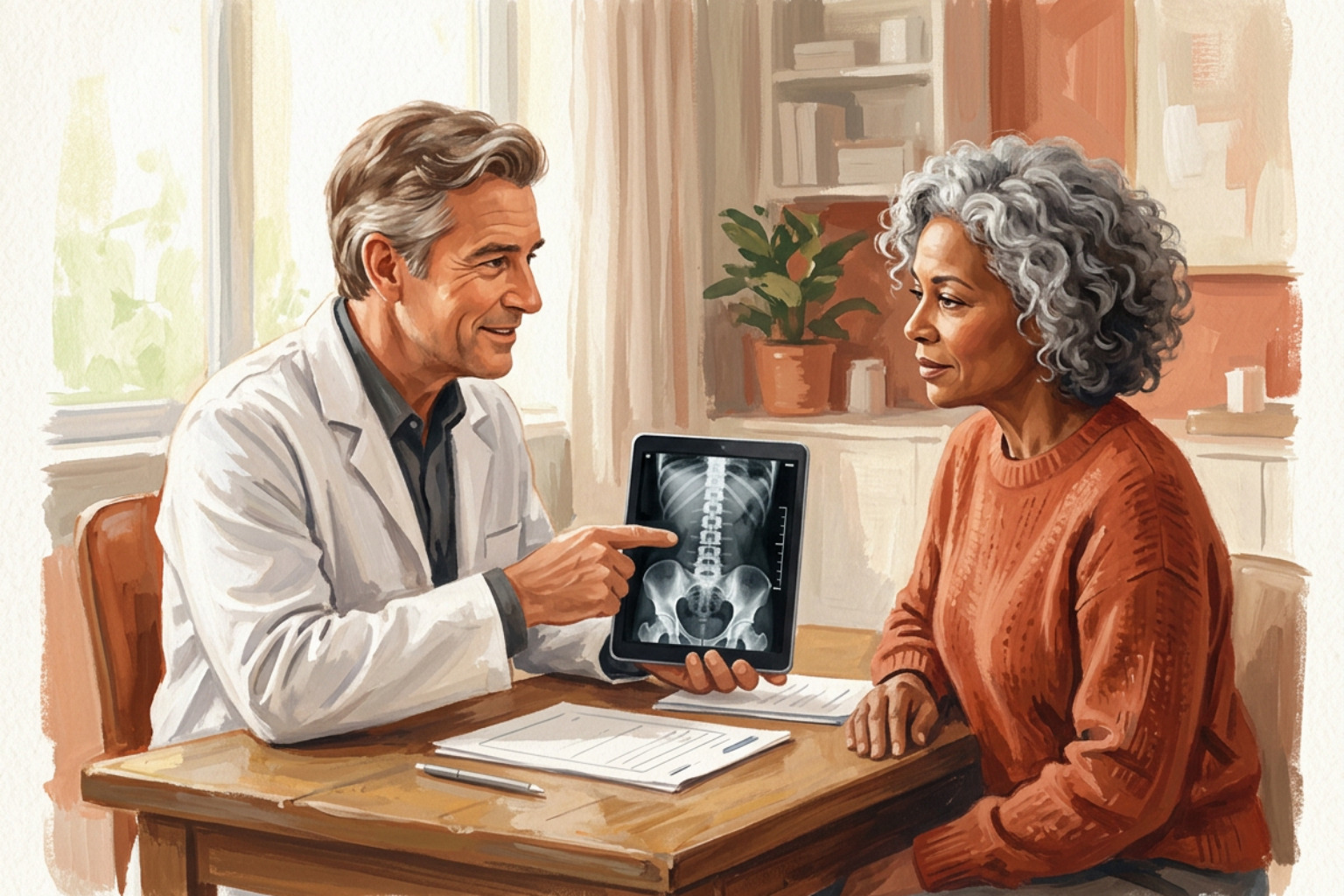
Your starting point matters. A physician can help you understand your bone density scan and overall fracture risk. At Groove Health, members work with a physician and a physical therapist who designs their personalized exercise plan.
The Core Pillars of Bone-Building Exercise
Building stronger bones requires giving your skeleton a clear signal to adapt. Clinical guidelines and the broader exercise science literature help explain why specific types of movement are necessary.
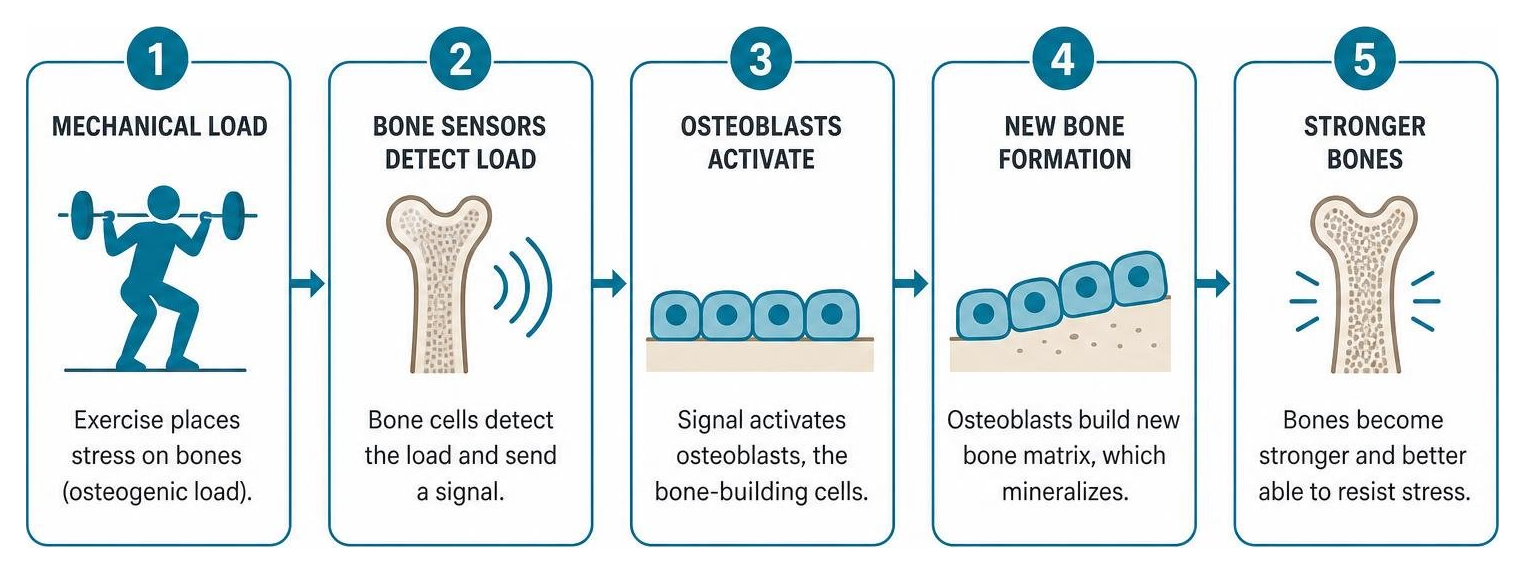
Bone is living tissue. When heavy resistance or physical strain put stress on bones, it creates an osteogenic load (a mechanical force that triggers bone building). This load alerts special bone-building cells called osteoblasts to lay down new bone tissue.
To trigger this bone-building process, clinical guidelines recommend following core training principles:
- Specificity: Exercises must load the specific bones you want to strengthen, such as the hips and spine.
- Progressive Overload: Resistance must gradually increase over time so bones continue to adapt.
- Adequate Load: Light activity supports muscle health, but heavier weights create a strong mechanical stimulus for bone mass.
Resistance Training: How Heavy, How Often
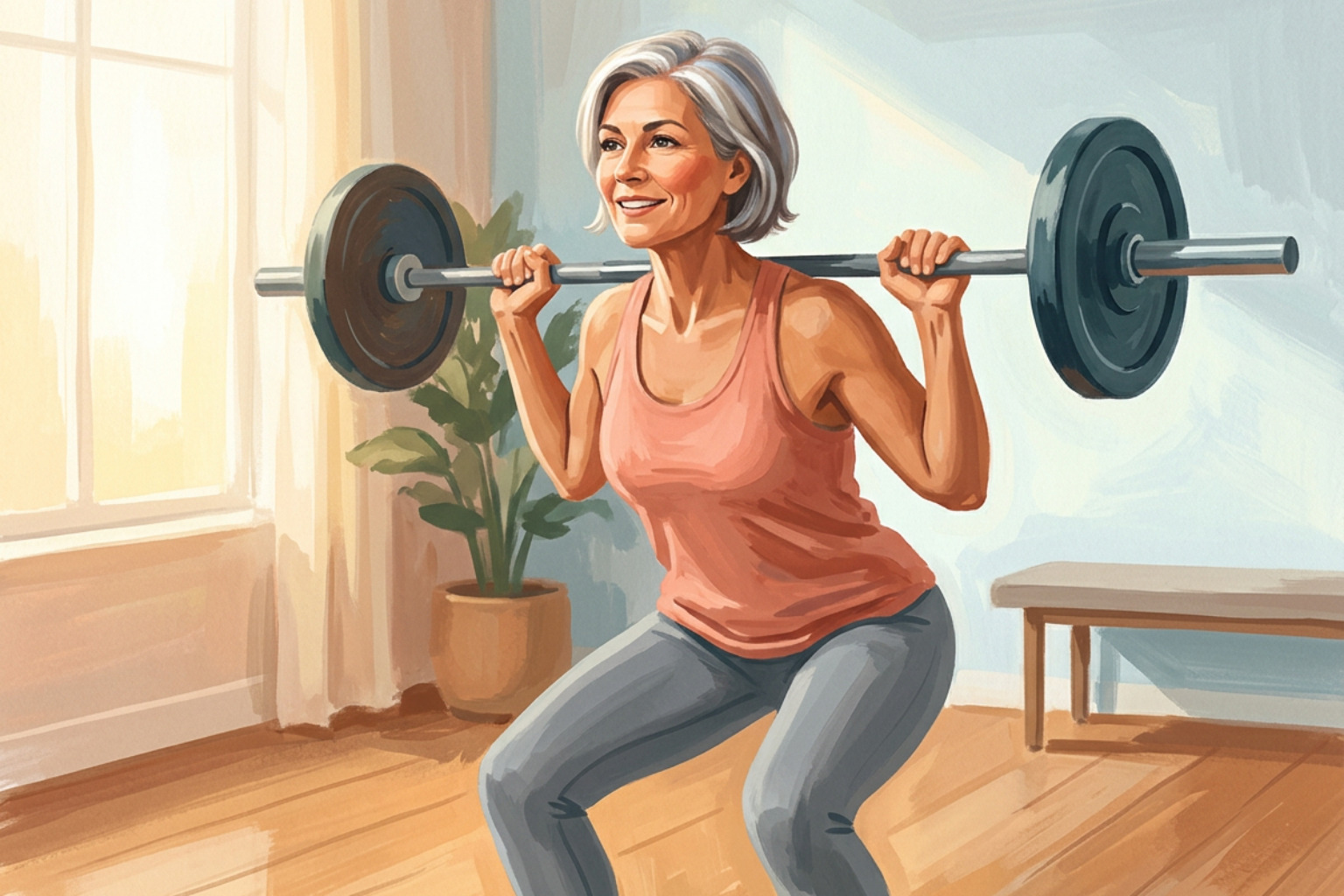
To stimulate bone strength in older adults aged 65 and older, building bone requires heavy resistance training with heavy weights and low reps. Specifically, working at 75% to 85% of your 1-repetition maximum (1RM, which is the maximum weight you can lift once with proper form) creates the osteogenic load needed to activate osteoblasts.
Focusing on large compound exercises loads the hips and spine directly:
- Squats: Strengthening the thighs and hips while loading the lower spine.
- Lunges: Building leg strength and single-leg stability.
- Hip Hinges: Exercises like Romanian deadlifts where you bend from the hips rather than rounding the back.
Any movement carrying a risk of fall or injury should start within your current physical ability and progress gradually with a professional. At Groove Health, members work with a physician and a physical therapist who designs their personalized exercise plan to safely build toward these bone-loading exercises and reduce fall risk.
Safe Impact and Weight-Bearing Aerobic Options
Weight-bearing aerobic activity means exercising on your feet so your bones support your body weight. While walking is helpful for general stamina, walking alone is not enough to build significant bone mass.
Controlled mechanical impact, such as firm stomping, small jumping routines, or heel drops, sends quick forces through the body to encourage bone formation. Power-based movements like jump squats, hopping, or bounding are not safe for everyone. These power moves require professional clearance and gradual progression to avoid joint strain or fractures.
For adults who can tolerate low or moderate impact, combining controlled impact with progressive heavy resistance training provides strong support for skeletal health.
Fall Prevention, Balance Training, and Alternative Modalities
Strengthening bones is only half of the equation for older adults aged 65 and up. Preventing falls is equally critical because most bone breaks in older adults occur during a fall.
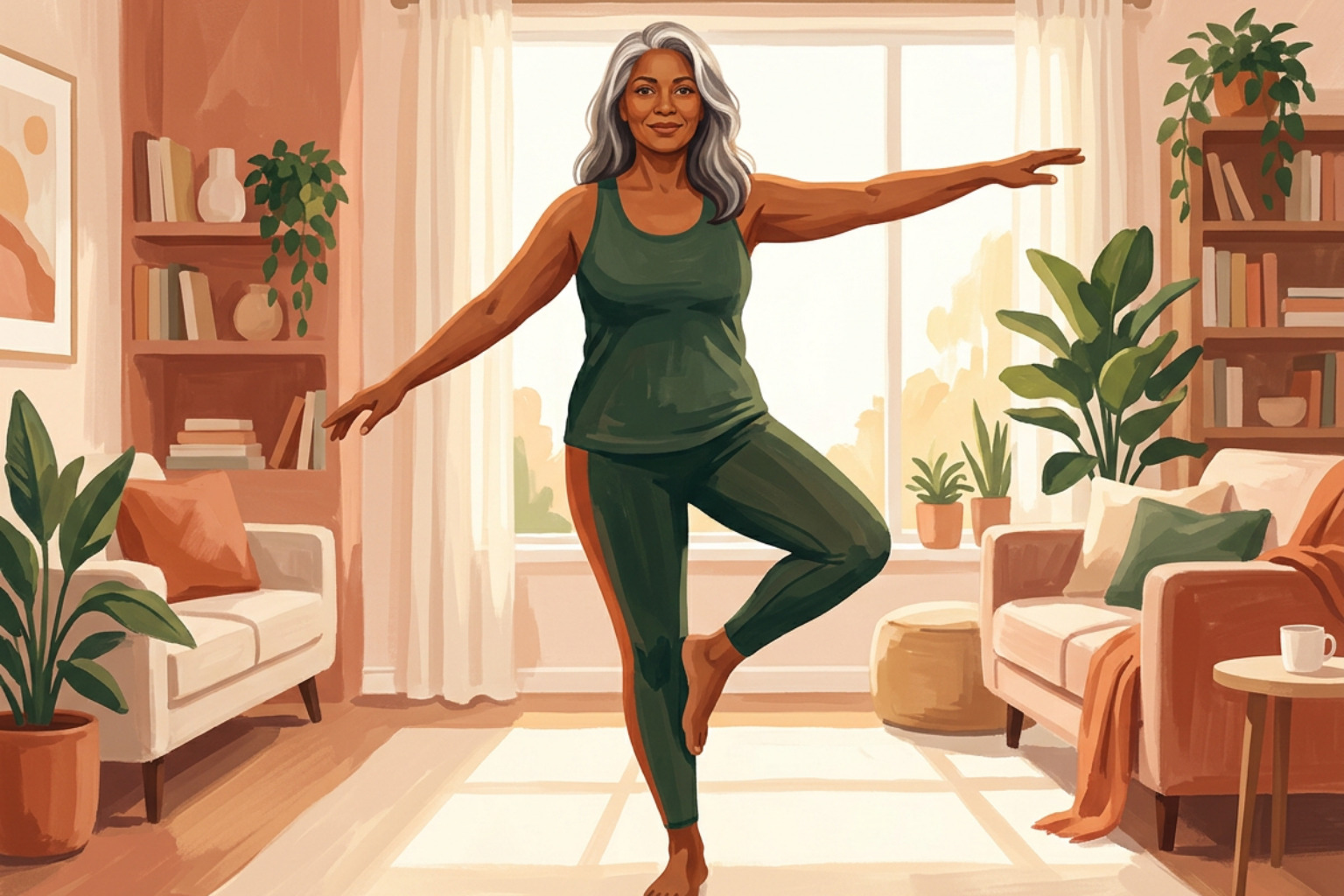
Balance training helps improve postural stability (your ability to maintain control over your center of gravity) and gait speed (how steadily and comfortably you walk). Simple exercises include single-leg stance practice, tandem walking (stepping heel-to-toe), or controlled side stepping.
When practicing balance exercises at home, always stand near a stable support, such as a sturdy kitchen counter or heavy chair braced firmly against a wall so it cannot slide or tip. Never use a support that could move.
Gentle physical activities like Tai Chi also help improve posture, body awareness, and leg strength, offering a valuable addition to standard exercise plans.
Comparing Dynamic Multicomponent Exercise and Targeted Resistance Training
Different types of exercise offer unique benefits for physical function, balance, and muscle strength.
| Exercise Type | Main Focus | Functional Benefits | Bone Density Impact |
|---|---|---|---|
| Targeted Resistance Training | Heavy lifting (75%-85% 1RM) targeting hips and spine | Increases back extensor endurance and leg strength | Direct osteogenic loading to stimulate bone growth |
| Dynamic Multicomponent Exercise (DME) | Combined circuit training, agility, and balance drills | Improves gait speed, balance, and general mobility | Supporting role for muscle strength and dynamic movement |
Clinical research suggests that dynamic multicomponent programs are excellent for improving walking speed and single-leg balance. Meanwhile, targeted heavy resistance training remains essential for direct bone strength. Combining both approaches gives older adults comprehensive support for daily movement.
Movements to Avoid and How to Individualize Your Routine
Protecting fragile bones requires knowing which movements present a higher risk of injury. People with low bone density or a history of spine fractures should pay close attention to posture and alignment.
Safe exercise programs encourage gentle spinal extension (strengthening the back muscles to keep the spine upright and straight). In contrast, loaded spinal flexion (bending forward at the waist or rounding the back against resistance) places high stress on the front of the spinal bones and increases the risk of vertebral compression fractures (small breaks in the spine).
Movements to avoid with osteoporosis:
- Deep forward bending at the waist (such as sit-ups, crunches, or toe touches).
- Rapid or forceful waist twisting (such as unassisted golf swings or twisting torso machines).
- High-impact jumps without prior physical assessment and professional guidance.
- Exercises using heavy weights performed with rounded posture.
Instead of relying on low-effort posture moves like shoulder squeezes, focus on posterior chain strengthening (working the muscles on the back of the body, including the glutes, hamstrings, and back muscles) to hold the spine in safe alignment.
Individualizing Plans Based on Fracture Risk and T-Scores
Your exercise plan should match your specific bone health status. A Dual-Energy X-Ray Absorptiometry (DEXA) scan measures bone density and generates a T-score:
- Normal bone density: T-score of -1.0 or higher.
- Osteopenia: T-score between -1.0 and -2.5.
- Osteoporosis: T-score of -2.5 or lower.
A lower T-score or past fracture means exercise must be modified for safety. Progression should be gradual, starting with bodyweight or light weights before advancing toward higher resistance.
For medical evaluation, visit Medicare.gov directly to learn about coverage for DEXA bone density scans and clinical visits, keeping in mind that coverage may vary by plan type.
At Groove Health, members work with a physician and a physical therapist who designs their personalized exercise plan based on their DEXA scan and health history.
Frequently Asked Questions about Osteoporosis Exercises
Is Walking Enough Exercise to Improve Bone Density?
While walking is a great activity for heart health and physical endurance, evidence shows that walking alone is not enough to increase or maintain bone density significantly. Bones require heavier loads than standard daily steps to trigger new bone creation. Walking serves a helpful supporting role for general mobility, but it should be paired with heavy progressive resistance training and balance practice.
How Often Should Beginners Work Out for Bone Health?
Most guidelines suggest performing resistance training 2 to 3 days per week on non-consecutive days. This gives muscles and bones time to recover and adapt. Balance practice can be done 2 to 3 days per week or integrated into daily habits while standing near a braced, sturdy support. Beginners should start slowly under professional guidance and progress over time.
Are High-Impact Exercises Safe for Everyone with Osteoporosis?
No, high-impact exercises like running or heavy jumping are not safe for everyone. People with severe bone loss, low T-scores, or past spinal fractures face a higher risk of injury from sudden impacts. High-impact or power-based movements require professional clearance and careful progression. Low-impact choices, such as controlled heel drops or stair stepping, may offer safe options when appropriate.
Building a Routine You Can Stay With
A well-designed physical activity routine is a key strategy for supporting bone strength, building muscle, and preventing falls in older adults aged 65 and older. By combining heavy progressive resistance training, controlled weight-bearing movement, posterior chain strengthening, and safe balance practice, you can protect your spine and maintain your long-term physical independence.
Executing the best exercise program for osteoporosis requires guidance tailored to your specific bone density and fracture risk. Groove Health directly supports your journey with a care model centered on personalized, home-based physical therapy and exercise plans designed to safely build bone strength and prevent fractures from the comfort of your home. Members work directly with a physician and a physical therapist who craft an individualized program aligned with their unique DEXA results and physical capabilities.
To explore medical coverage for bone health evaluations, check Medicare.gov directly, noting that coverage may vary by plan type.
Ready to take the next step toward stronger bones and safer movement? Start Your Journey with Groove Health today.
Works Cited
- Watson, Steven L., et al. High-Intensity Resistance and Impact Training Improves Bone Mineral Density and Physical Function in Postmenopausal Women With Osteopenia and Osteoporosis: The LIFTMOR Randomized Controlled Trial. Journal of Bone and Mineral Research, 2018.
- Harding, Amy T., et al. A Comparison of Bone-Targeted Exercise Strategies to Reduce Fracture Risk in Middle-Aged and Older Men with Osteopenia and Osteoporosis: LIFTMOR-M Semi-Randomized Controlled Trial. Journal of Bone and Mineral Research, 2020.
- Giangregorio, Lora M., et al. Too Fit To Fracture: exercise recommendations for individuals with osteoporosis or osteoporotic vertebral fracture. Osteoporosis International, 2014.
- Sinaki, Mehrsheed, and Beth A. Mikkelsen. Postmenopausal spinal osteoporosis: flexion versus extension exercises. Archives of Physical Medicine and Rehabilitation, 1984.
- Howe, Tracey E., et al. Exercise for preventing and treating osteoporosis in postmenopausal women. Cochrane Database of Systematic Reviews, 2011.
- Chen, Wei, et al. Tai Chi for fall prevention and balance improvement in older adults: a systematic review and meta-analysis of randomized controlled trials. Frontiers in Public Health, 2023.
Disclaimer: This article is for informational purposes only and does not constitute medical advice. Consult a healthcare professional before starting any new exercise program. Check your Medicare eligibility for Groove Health at Groove Health's website.