How to Do Balance Exercises for Osteoporosis the Right Way
Balance is a trainable skill — and for anyone with osteoporosis, the most direct way to prevent the falls that cause fractures. Six safe exercises, from supported static holds to dynamic heel-to-toe walks.
Why Balance Training Is Crucial for Fall Prevention
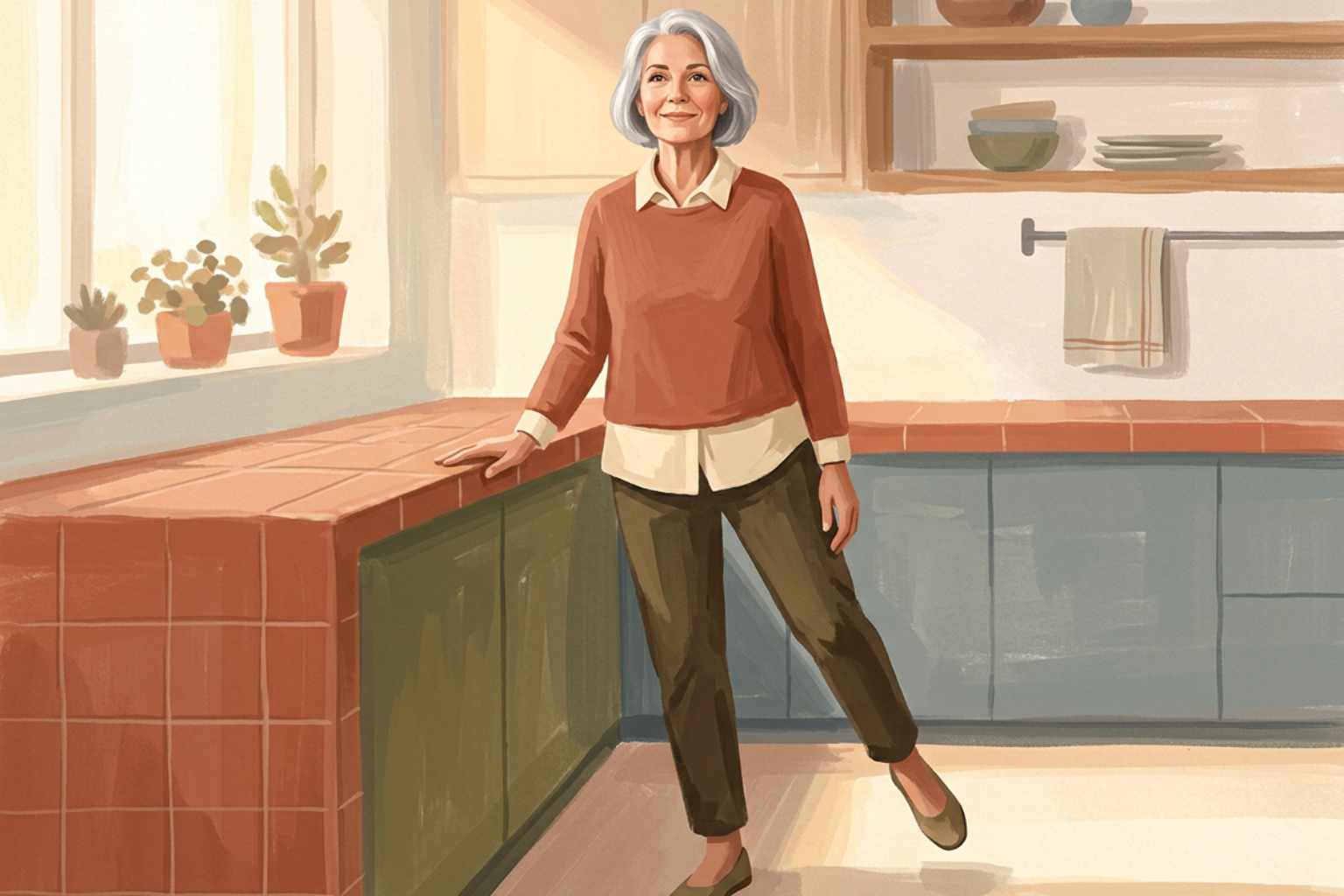
Balance exercises for osteoporosis are one of the most practical things you can do right now to lower your risk of a serious fall and the broken bones that often follow.
Here are a few balance exercises for people with osteoporosis:
- Single-leg stand - Stand near a counter and lift one foot stand on a single leg for 10 to 30 seconds per side. You can progress to standing on an unsteady surface like a sturdy pillow over time
- Tandem stance - Stand with one foot directly in front of the other, heel touching toe, and hold
- Heel-to-toe walk - Walk slowly in a straight line, placing each heel directly in front of the opposite toes
- Single-leg stand with head turns - Stand near a counter and lift one foot stand on a single leg for 10 to 30 seconds per side. Slowly turn your head from one side to the next.
- Stepping over objects - Step slowly over imaginary lines or very low obstacles near a wall for support
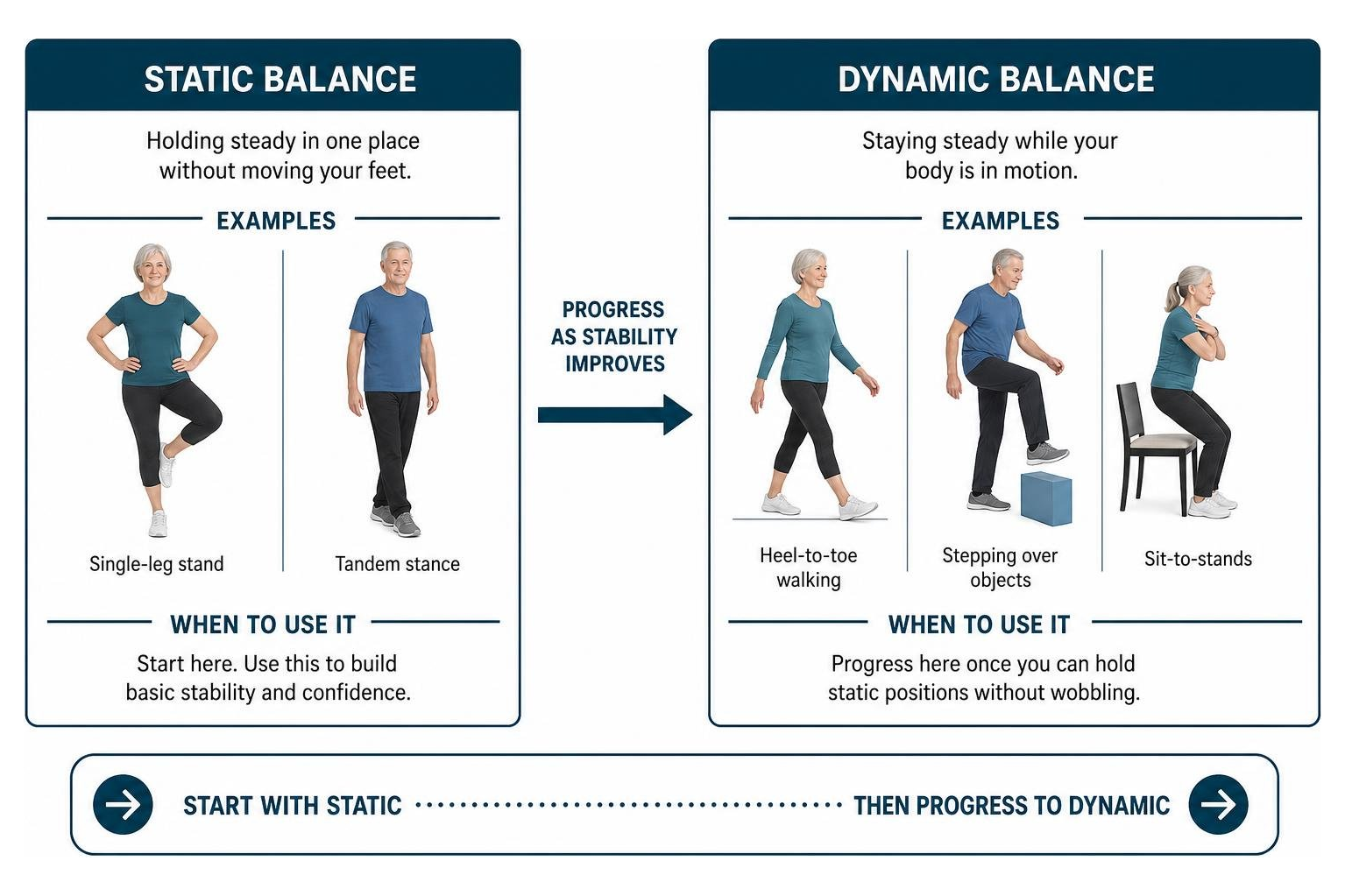
Start with static exercises (holding still) and progress to dynamic exercises (moving while balancing) as your stability improves. Aim for daily balance practice. If that feels like too much at first, start with 2 to 3 days per week and build up from there.
Osteoporosis means your bones have become thinner and less resilient than they should be. A healthy bone may handle a stumble without issue. A bone affected by osteoporosis may need more protection. That is why fall prevention matters so much for people with this condition. Even a low-level fall, the kind many people shrug off, can sometimes lead to a break.
The good news is that balance is a trainable skill. It is not something you simply have or do not have. With the right exercises practiced consistently, most people can meaningfully reduce their risk of falling.
This guide walks you through how to do that safely, starting with the basics and building toward more challenging movements. You will learn the difference between static balance (holding steady in one place, like standing on one leg) and dynamic balance (staying steady while moving, like stepping or reaching). Understanding that difference matters, because the two types train your body in different ways and the smartest approach starts with one before moving to the other.
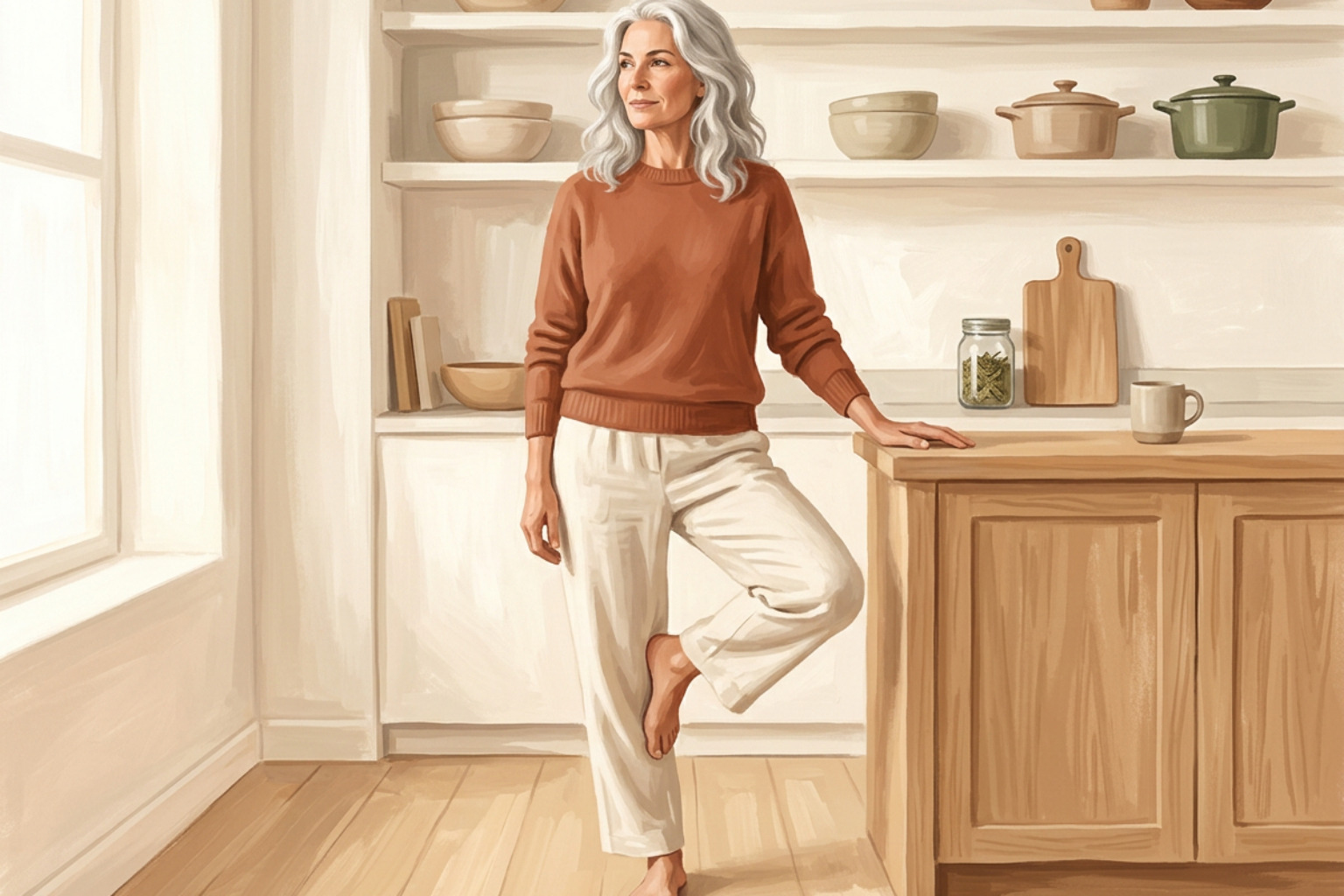
When bones thin, a simple trip on a rug or a slip on a damp sidewalk can change your life in an instant. The link between falling and breaking a bone is direct and serious.
According to the Centers for Disease Control and Prevention (CDC), falls cause 88 percent of hip fracture hospitalizations in older adults. A hip fracture often requires major surgery and can lead to a long loss of independence.
Many people who learn they have osteoporosis begin to limit their movements because they are afraid of falling. This fear of falling can actually make the problem worse. When you stop moving, your muscles grow weaker, your joints stiffen, and your balance gets worse. This makes a fall more likely, not less.
Practicing targeted Fall Prevention Bone Exercises helps break this cycle. By training your body to stay steady, you build physical stability and regain the confidence to enjoy your daily life. Knowing how to move safely is key to staying active, which is why organizations like the Mayo Clinic emphasize that using your muscles is one of the best ways to protect your bones. You can read more about safe activity guidelines in the Mayo Clinic's guide, Exercising with osteoporosis: Stay active the safe way.
The Science of Balance and How to Safely Progress
To improve your balance, it helps to understand how your body stays upright. Your brain constantly combines information from three different systems:
- The visual system: Your eyes tell your brain where your body is compared to your surroundings.
- The vestibular system: This is the fluid-filled balance organ inside your inner ear. It senses head movements and changes in direction.
- The proprioceptive system (body position sense): This is your body's "space sense." Tiny sensors in your muscles, joints, and feet tell your brain where your limbs are without you having to look at them.
When you have osteoporosis, you want to challenge these systems safely to make them stronger. A safe and effective way to do this is by following a progressive ladder, starting with static balance and moving to dynamic balance.
| Balance Type | What It Means | Examples | When to Use It |
|---|---|---|---|
| Static Balance | Holding steady in one place without moving your feet. | Single-leg stand, tandem stance. | Start here. Use this to build basic stability and confidence. |
| Dynamic Balance | Staying steady while your body is moving or changing direction. | Heel-to-toe walking, side steps, stepping over small objects. | Progress here once you can hold static positions without wobbling. |
Safety is the absolute priority when starting these exercises. Always perform your exercises near a sturdy support object, such as a heavy kitchen counter or a solid chair placed against a wall. Make sure the floor is completely clear of clutter, loose rugs, or cords.
For a complete look at safe movement standards, Osteoporosis Canada's booklet Too Fit to Fracture provides excellent, evidence-based guidelines on how to keep your balance training safe and effective.
Practical Balance Exercises for Osteoporosis
When performing balance exercises, pay close attention to your posture. Keep your spine long and tall. If you need to bend or reach, hinge at your hips. Hinging means bending from the hips while keeping your back straight, rather than rounding your spine forward. Rounding the back forward under pressure can put too much stress on weakened spinal bones.
To get the most out of your routine, pair these movements with exercises that strengthen your legs, hips, and back. You can find a complete list of these movements in our guide to the Best Osteoporosis Exercises.
Static Balance Exercises: Your Starting Point
These exercises build the foundation of your balance. Aim to hold each position for 10 to 30 seconds.
- Tandem Stand: Stand beside your support. Place one foot in front of the other, so the heel of the front foot touches big toe of the back foot. Keep weight evenly shared between both feet. Hold for 10 to 30 seconds, then switch feet.
- Single-Leg Stand: Stand tall next to a counter. Hold on with one or both hands. Slowly lift one foot a few inches off the floor. Keep your standing knee soft, not locked. Hold for 10 to 30 seconds, then switch sides. As you improve, use lighter hand support.
- Single-Leg Stand on a Pillow: Stand tall next to a counter with your foot on a sturdy pillow. Hold on with one or both hands. Slowly lift one foot a few inches off the floor. Keep your standing knee soft, not locked. Hold for 10 to 30 seconds, then switch sides. As you improve, use lighter hand support.
The science shows these simple movements work. A clinical study published in Clinical Interventions in Aging evaluated the effects of a basic exercise program on postmenopausal women with osteoporosis. The researchers found that doing simple balance and strength exercises using basic equipment improved static balance by 21 percent and dynamic balance by 36 percent. You can read the study details on PubMed: The effectiveness of a basic exercise intervention to improve strength and balance in women with osteoporosis.
Dynamic Balance Exercises: The Next Challenge
Once you can hold static positions with minimal hand support, you are ready to progress to dynamic movements. These exercises train your body to react to real-world stumbles.
- Heel-to-Toe Walk (Tandem Walking): Stand next to a long, clear wall. Place one foot directly in front of the other, heel to toe. Take a slow step forward, placing your back heel directly in front of your front toes. Look straight ahead rather than down at your feet. Take 10 steps forward, turn around, and walk back. Keep your hand close to the wall in case you need to touch it.
- Stepping Over Objects: Imagine small obstacles on the floor, like a rolled-up towel or a small book. Stand near your support. Slowly lift your knee and step forward over the imaginary object, placing your foot down with control. Step backward to return to the start. Repeat 5 to 10 times per leg.
- Head Turns: Stand tall near a counter or sturdy chair, with your feet hip-width apart. Keep your spine long and your eyes looking forward. Slowly turn your head to the right, return to center, then slowly turn your head to the left. Move only as far as feels comfortable and steady. Repeat 5 to 10 times per side, using hand support as needed.
Dynamic training is highly effective. Research indicates that dynamic, multi-component exercise programs that combine balance, coordination, and movement are superior for improving physical function and walking speed in older women. A 2026 randomized controlled trial showed that women who did dynamic multi-component training twice a week saw significantly greater improvements in one-leg standing balance than a comparison group using a once-weekly, machine-based program. You can view this research on PubMed: Effects of OsteoStrong vs. dynamic multicomponent exercise on physical function in older women.
Combining Balance with Strength and Power Training
While balance exercises are excellent for preventing falls, they do not do much to build bone density on their own. To make your bones stronger, you must apply an osteogenic load. This is a physical load heavy enough to signal your osteoblasts (the specialized cells that lay down new bone) to build stronger bone tissue.
It is important to know that light weights, high-repetition circuits, and light resistance bands do not create enough load to build bone. They are great for warming up, improving muscle endurance, and teaching good movement patterns, but they will not increase bone density.
To build bone, you need progressive resistance training. This means lifting heavier weights for fewer repetitions (typically 5 to 12 repetitions per set) and slowly increasing the weight over time as your body adapts. This directly loads the hip and spine, which are the most common areas for osteoporosis-related breaks. You can learn more about how this works in our article on Strength Training for Bone Health.
In addition to strength, you also need power. Power is strength combined with speed. It is the ability to react quickly. If you trip on a curb, you do not just need strong leg muscles; you need to be able to move your foot forward fast enough to catch yourself.
You can train power safely through controlled movements like quick sit-to-stands or gentle, low-impact hopping, provided your bones are strong enough. However, because impact and power movements carry risks, they must always be cleared and progressed by a professional. You can read more about why simple walking is not enough to build bone power in our article, Walking Helpful But Not Enough.
For a comprehensive overview of how to blend these training styles, see the Korean Society for Bone and Mineral Research's Position Statement: Exercise Guidelines for Osteoporosis Management and Fall Prevention in Osteoporosis Patients. This clinical guideline outlines how combining resistance, impact, and balance training provides the best protection against fractures.
Frequently Asked Questions About Balance and Bone Health
How often should I do balance exercises for osteoporosis?
You should practice balance exercises every day, or at least 2 to 3 days per week. Unlike muscles, which need a day of rest to recover after heavy lifting, your balance system relies on your brain and nervous system. Consistent, daily practice is the best way to retrain these neural pathways. You can easily fit these exercises into your day, such as standing on one leg while waiting for your tea to brew or doing heel raises while brushing your teeth. For more tips on building an active routine, see Harvard Health Publishing's article on Effective exercises for osteoporosis.
Can walking alone improve my balance and bone density?
No. Walking is a wonderful activity for your heart, lungs, and mental well-being, but it is not enough on its own to build bone or maximize balance. Walking is a repetitive, forward-moving activity that does not challenge your balance systems in different directions. It also does not provide a high enough osteogenic load to signal your body to build new bone. To truly protect your skeletal system, you must combine walking with targeted balance exercises and progressive strength training. We explain this concept in detail in Walking Helpful But Not Enough.
When should I consult a professional before starting?
You should consult a healthcare provider before starting any new exercise program if you have a history of falls, frequent joint pain, or advanced osteoporosis (such as a very low T-score on a DEXA scan, a specialized X-ray that measures bone strength). A professional can help identify your specific fall risk factors and ensure you are moving safely. For more information on finding the right support, read our article on Closing the Exercise Gap in Osteoporosis Care.
Start Small, Stay Steady: Your Fall-Prevention Action Plan
Improving your balance is one of the most effective, empowering steps you can take to protect your independence and stay active with osteoporosis. Balance is not a fixed trait; it is a physical skill that you can improve with safe, consistent practice. By starting with simple static holds and gradually progressing to dynamic movements, you can retrain your nervous system, build confidence, and significantly lower your risk of a life-changing fall.
Because every person's bones and physical abilities are unique, a personalized approach is always the safest path forward. Groove Health offers a personalized, home-based bone health and exercise program designed to help older adults manage osteoporosis safely.
When you join Groove Health, a physical therapist designs a personalized, progressive exercise plan tailored directly to your current abilities, bone density scores, and lifestyle. This expert guidance helps you safely build balance, strength, and bone density from the comfort of your home, with the support of a dedicated clinical team. This direct care model is specifically designed to prevent fractures and build bone strength through targeted, supervised physical therapy and exercise plans that adapt as you progress.
Ready to take the next step in protecting your bones? Sign up for Groove Health today.
Works Cited
- Bae, S. et al. “Position Statement: Exercise Guidelines for Osteoporosis Management and Fall Prevention in Osteoporosis Patients” Journal of Bone Metabolism, 2023.
- Centers for Disease Control and Prevention. “Facts About Falls” CDC Older Adult Fall Prevention, 2024.
- Evstigneeva, L. et al. “Effect of twelve-month physical exercise program on patients with osteoporotic vertebral fractures: a randomized, controlled trial” Osteoporosis International, 2016.
- Harvard Health Publishing. “Effective exercises for osteoporosis” Harvard Health, 2021.
- Konak, H.E. et al. “The effect of single-task and dual-task balance exercise programs on balance performance in adults with osteoporosis: a randomized controlled preliminary trial” Osteoporosis International, 2016.
- Lindberg, P.W.S. et al. “Effects of OsteoStrong vs. dynamic multicomponent exercise on physical function in older women in the BONEMORE randomized controlled trial” Aging Clinical and Experimental Research, 2026.
- Mayo Clinic. “Exercising with osteoporosis: Stay active the safe way” Mayo Clinic, 2025.
- Osteoporosis Canada. “Too Fit to Fracture” Osteoporosis Canada, 2016.
- Otero, M., Esain, I., González-Suarez, Á.M., Gil, S.M. “The effectiveness of a basic exercise intervention to improve strength and balance in women with osteoporosis” Clinical Interventions in Aging, 2017.
This content is for informational purposes only and does not constitute medical advice. Consult a qualified healthcare professional for diagnosis and treatment. If you are on Medicare and interested in a personalized bone health program, you can check your eligibility at groovehealth.com.