
The Ultimate DEXA Scan T-Score Chart and Interpretation Guide
A DEXA scan report can feel like a wall of numbers. This guide breaks down T-scores, Z-scores, and body composition metrics so you can have a more informed conversation with your doctor.

What Your DEXA Report Is Really Telling You
Reading a DEXA scan report is a critical step in managing skeletal health, yet many patients receive reports filled with complex decimals and standard deviations without sufficient context. The central question most readers have is simple: does this scan show normal bone density, low bone mass, or osteoporosis, and what do those findings mean for fracture risk?
Here is a quick reference for the most important metric on a DEXA report - the T-score:
| T-Score | Classification | Clinical Implication |
|---|---|---|
| -1.0 or above | Normal | Bone density is within the healthy range |
| -1.0 to -2.5 | Osteopenia | Bone density is lower than average; monitoring and lifestyle changes are typically recommended |
| -2.5 or below | Osteoporosis | Significantly reduced bone density; clinical treatment is usually indicated |
The T-score compares bone mineral density (BMD) to that of a healthy young adult at peak bone mass. The Z-score, by contrast, compares density to others of the same age, sex, and ethnicity. In clinical practice, both values matter, but they answer different questions: the T-score helps classify osteoporosis in the appropriate adult populations, while the Z-score helps identify whether bone density is unusually low for age and whether secondary causes should be considered.
Osteoporosis is frequently characterized as a silent disease because bone loss progresses gradually and without symptoms until a fracture occurs. A DEXA scan (Dual-energy X-ray Absorptiometry) remains the clinical gold standard for early detection. Beyond bone density, a comprehensive report may include visceral fat measurements, muscle mass indices, and metabolic health markers. This guide explains these metrics based on May 2026 clinical standards to help patients prepare for informed discussions with their healthcare providers.
Understanding Bone Mineral Density and the DEXA Methodology
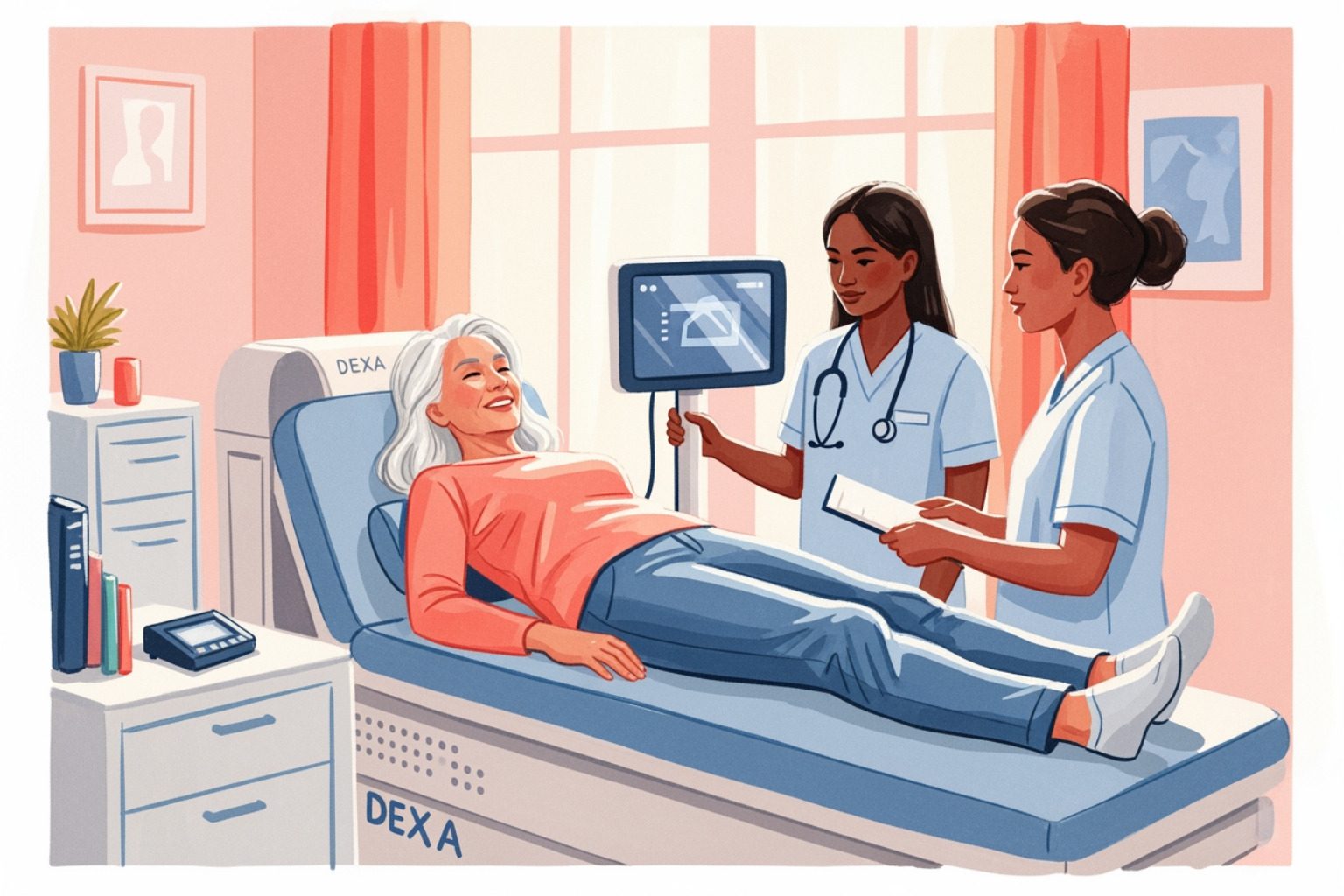
A DEXA scan is a specialized imaging technique that uses two different low-dose X-ray beams to differentiate between bone mineral, lean mass (muscle), and fat mass. This technology allows clinicians to measure "areal density," which is reported in grams per square centimeter (g/cm²).
The biology behind these numbers comes down to a nonstop process called bone remodeling. Over time, cells called osteoclasts remove old bone, while osteoblasts build new bone. In younger years, bone building usually stays ahead of bone loss. But with age, especially after menopause in women, bone breakdown often happens faster than bone formation, which can lower bone mineral density.
According to UC Davis Health, DEXA is the preferred method for monitoring these changes because of its high precision. The scan-rescan error can be as low as ±1%, making it an exceptionally reliable tool for tracking bone and body composition changes over time.
T-Scores and Z-Scores Explained
When understanding your scan results, the report typically presents two primary scores: the T-score and the Z-score. Both are based on standard deviations, a statistical measure of how far a specific result is from the population average.
- T-score: This compares a patient's bone density to the "Young Normal" (YN) population—healthy adults aged 20–29 at peak bone mass. This score is used to diagnose osteoporosis in postmenopausal women and men over age 50.
- Z-score: This compares the patient to an "Age-Matched" (AM) population. A Z-score of -2.0 or lower indicates bone density is significantly lower than expected for the patient's age and may suggest secondary causes for bone loss, such as vitamin deficiencies or medication side effects.
How T-scores are used to diagnose osteoporosis
The World Health Organization (WHO) established diagnostic categories based on T-scores to help clinicians determine the risk of fragility fractures. Clinical research indicates that fracture risk roughly doubles for every one-standard-deviation drop in bone mineral density. Consulting with a specialist can help determine if medication or specific weight-bearing exercises are necessary to stabilize these scores.
Body composition metrics beyond bone density
While bone density is the primary focus, a full-body DEXA provides data on body composition that influences longevity, as outlined in clinical guidelines for bone density interpretation.
- Visceral Adipose Tissue (VAT): Fat stored deep in the abdomen around vital organs. VAT is metabolically active and releases inflammatory cytokines. Elevated health risk is associated with VAT levels between 100–160 cm².
- Appendicular Lean Mass Index (ALMI): Measures muscle mass in the limbs relative to height. It is a key metric for identifying sarcopenia (age-related muscle loss). Thresholds are generally below 7.0 kg/m² for men and 5.5 kg/m² for women.
- Android/Gynoid (A/G) Ratio: Describes fat distribution. An "Android" (apple-shape) distribution indicates fat storage around the midsection, while a "Gynoid" (pear-shape) distribution indicates fat around the hips.
Clinical Significance of Regional Measurements in the Spine and Hip
A diagnostic DEXA scan focuses on skeletal sites most prone to fracture: the lumbar spine (L1-L4) and the hip (including the femoral neck and total hip).
- Lumbar Spine: Often the first site to show bone loss after menopause due to the high metabolic turnover rate of trabecular (spongy) bone.
- Femoral Neck: The narrow portion of the thigh bone; this is a critical predictor of hip fracture risk.
- Total Hip: An average of several hip areas, providing a broad view of pelvic and upper leg bone health.
Clinicians utilize these regional scores in the FRAX tool (Fracture Risk Assessment Tool) to calculate a patient's 10-year probability of a major osteoporotic fracture. Some reports also include a Trabecular Bone Score (TBS), which assesses bone quality and microarchitecture. Clinical analysis of these regional scores allows for a more nuanced understanding of fracture risk.
Preparation and Frequency: Ensuring Accuracy in Longitudinal Tracking
To ensure the most accurate understanding your scan results, consistency in preparation is vital. Patients should:
- Avoid calcium supplements for 24–48 hours before the scan, as undigested tablets can appear as "bone" on the report.
- Wear clothing without metal zippers, buttons, or underwires.
- Maintain consistent hydration, as fluid shifts can slightly alter lean mass readings.
For those starting a new bone health program, you can start your journey by establishing a baseline scan. Most clinical guidelines suggest repeating scans every 12–24 months to monitor the rate of change and the effectiveness of treatment.
Frequently Asked Questions about Bone Density Testing
What is the radiation exposure from a DEXA scan?
DEXA scans use extremely low levels of radiation, typically measured in microsieverts (uSv). A standard scan exposes a patient to about 5-10 uSv. To put this in perspective, this is roughly equivalent to the natural background radiation received over about a day or to the exposure from a commercial flight, depending on route and altitude. It is considered safe for routine clinical monitoring, although the scan should still be used when medically appropriate.
How does osteoarthritis affect bone density results?
Osteoarthritis can create extra calcified areas in the spine, such as bone spurs. These changes do not mean your bones are stronger or healthier, but they can make a DEXA scan report look better than it really is. In some cases, this falsely raises the spine T-score and makes the lumbar spine appear healthier than it actually is. When that happens, clinicians often put more weight on hip results, look for unusual differences between spine levels, or order other imaging if needed.
How often should a DEXA scan be repeated?
While athletes tracking body composition might scan every 3-6 months, bone density changes more slowly. For most older adults, a 12-to-24-month interval is standard. However, the appropriate interval depends on the patient's baseline risk, age, medication use, and whether treatment has recently started or changed. If a patient has begun long-term glucocorticoid therapy or an osteoporosis medication, a physician may recommend closer follow-up to assess treatment response and measurement stability. Medicare coverage rules for bone mass measurement also affect timing, and readers who want general educational information on care pathways can review Groove Health.
Turning Your DEXA Numbers Into a Care Plan
A DEXA scan is more than a snapshot of bone density — it gives you and your doctor a starting point for action. Whether your T-score calls for monitoring, lifestyle changes, or medication, the numbers on your report can guide personalized strategies in nutrition, resistance training, and medical care.
Groove Health supports this journey by pairing older adults with physicians and physical therapists who specialize in bone health. Through evidence-based, home-based care plans, the goal is to improve bone density and prevent the fractures that impact independence.
Works Cited
- Bone Health & Osteoporosis Foundation (BHOF). "Bone Density Exam/Testing." BHOF, 2024.
- International Society for Clinical Densitometry (ISCD). "2023 ISCD Official Positions – Adult." ISCD, 2023.
- National Institute of Arthritis and Musculoskeletal and Skin Diseases (NIAMS). "Bone Mineral Density Tests: What the Numbers Mean." NIH, 2025.
- University of California, Davis Health. "DXA Body Composition Analysis." UC Davis Health, 2025.
- World Health Organization (WHO). "Assessment of Osteoporosis at the Primary Health Care Level." WHO Technical Report, 2007.
This content is for informational purposes only and does not constitute medical advice. Consult a qualified healthcare professional for diagnosis and treatment. If you are on Medicare and interested in a personalized bone health program, you can check your eligibility at groovehealth.com.