Walking for Osteoporosis: Helpful, but not Enough
Walking is real, valuable exercise — just not enough on its own to build bone. Here's why, and the mix of strength, impact, and balance training that actually protects your skeleton as you age.
As a physical therapist, one of the first things I always ask my patients is, "What does your current exercise routine look like?" Walking is probably the most common response I hear, and for good reason — it's accessible, widely recommended by healthcare professionals, and beneficial for many common concerns like weight loss, cardiovascular health, and healthy aging. But for individuals with osteoporosis, which may be as many as 20% of women over 50 and 30% of women over 65, many are surprised to learn that walking alone is ineffective at improving bone density and reducing osteoporosis progression in a meaningful way. Though walking can be a valuable component of an osteoporosis exercise program, on its own, it's not enough.
What Walking Does Well
Walking is an excellent way to improve cardiovascular capacity, maintain mobility and independence, ward off dementia, and improve mental health. It might even help you live longer. Research on "blue zones," (areas in the world where people tend to have the longest lifespans) shows that walking is a key pillar of longevity.
Walking is much better than being sedentary — for many older adults who are predominantly inactive, walking is a great place to start when incorporating more physical activity into their day-to-day routines. In sedentary women with osteoporosis and high fracture risk, brisk walking is often the first line of action due to the relatively low risk and overall health benefits. Benefits are certainly greater than complete inactivity, with some studies suggesting small improvements in bone density at the hip with walking alone. However, most studies that recommend walking as a way to slow age-related bone loss combined it with other types of exercise, like balance and resistance training, for maximum protective effects. According to the current physical therapist clinical practice guidelines, pairing low-force weight-bearing exercise like walking with high-force non-weight-bearing exercise (i.e., progressive resistance training) produced the best outcomes — slowing BMD decline at both the spine and hip, and substantially reducing fracture risk.
For osteoporosis management and overall health, walking and other weight-bearing activities (stepping, hiking) are superior to low-impact activities like swimming or cycling, and should be prioritized to optimize bone health as an integral part of a combined exercise routine.
Why Walking Isn't Enough for Building Stronger Bones
Bone Responds to Mechanical Stress
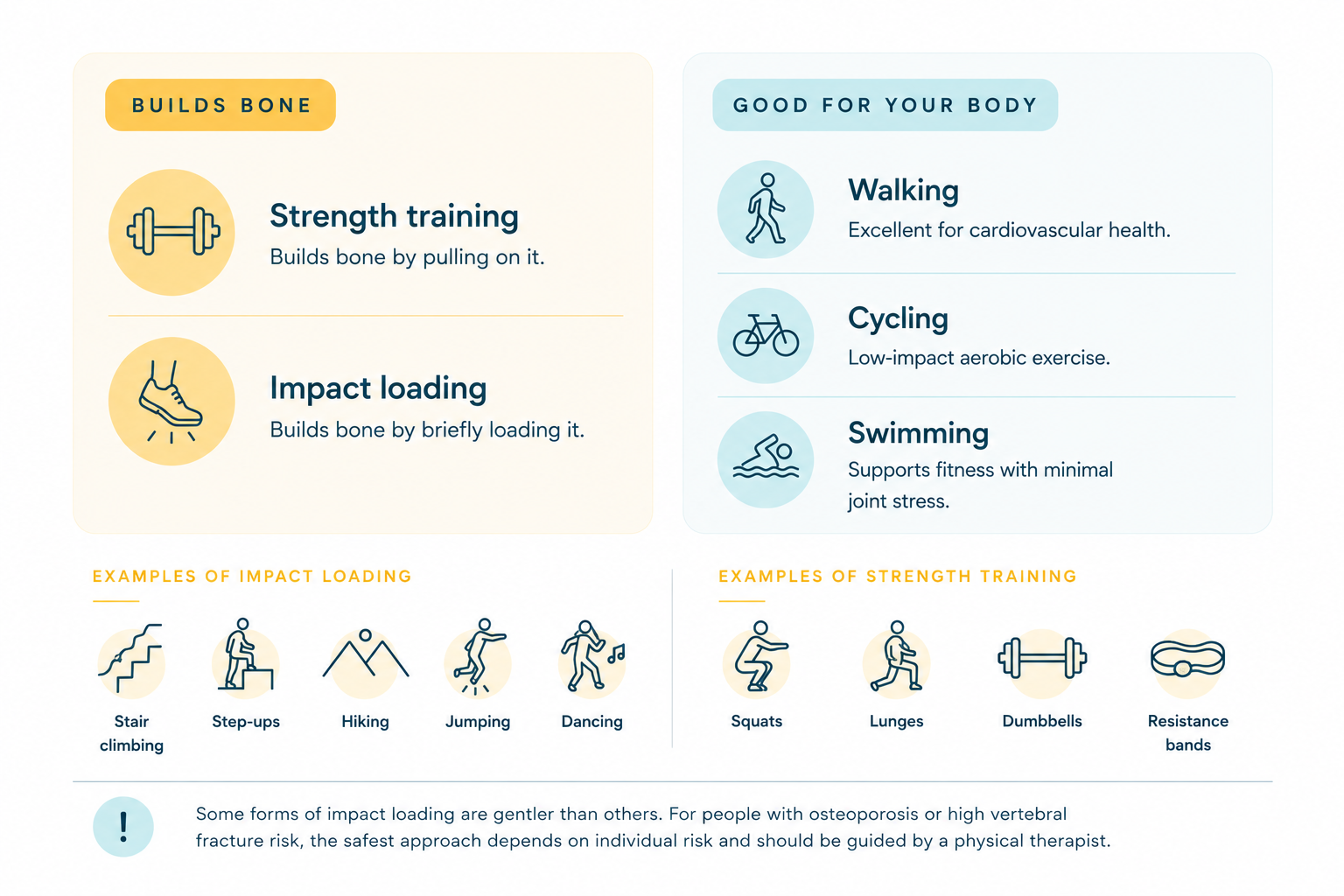
Wolff's law states that bone remodeling occurs in direct response to the mechanical forces placed upon it. Bone density is the result of the net activity of cell types called osteoblasts and osteoclasts. Osteoblasts build and strengthen bones in response to mechanical loading, and osteoclasts resorb bone when there is insufficient loading (i.e., immobilization of a limb). To summarize, this is why exercises that place high mechanical loads on the skeleton (like weightlifting) are effective at building bone, and walking, which produces relatively low bone loading, is less so — especially if the body is already adapted to walking as part of your exercise routine.
What Types of Exercise Build Bone More Effectively?
Resistance Training
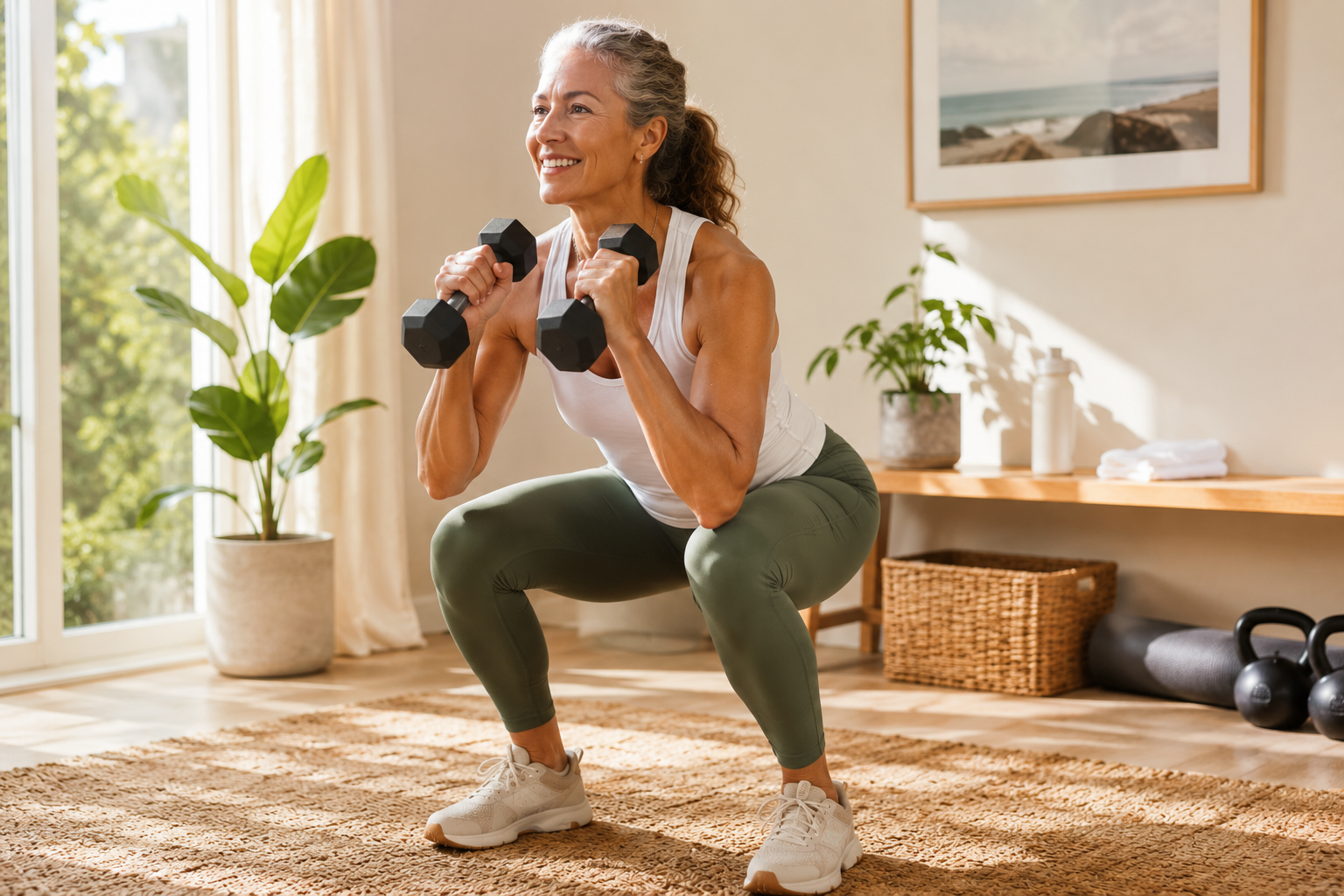
Progressive strength training is one of the most effective ways of building both muscle and bone. The forces muscles exert on our bones stimulate bone growth. Current physical therapist clinical practice guidelines recommend performing 3–10 exercises targeting major muscle groups using free weights and machines, at 50%–85% 1RM, 5–12 reps/set, 2–3 days/week for 3–12 months to see meaningful improvements in bone mass.
Examples:
- Squats
- Deadlifts
- Lunges
- Step-ups
- Push-ups
- Dumbbell rows and presses
** It is imperative to note that proper form is important when performing these exercises. It is recommended that individuals at high risk for osteoporotic fractures consult with a physical therapist prior to starting a resistance training program.
Impact Exercise (When Appropriate)
Activities that create ground reaction forces can stimulate bone adaptation. Research suggests that impact exercise can be effective and safe when appropriately screened and coached correctly.
Examples:
- Stomping
- Hopping
- Jumping
- Brisk stair climbing
Note: Impact training is often not recommended for individuals with high vertebral fracture risk. If you've been diagnosed with osteoporosis or have a history of vertebral fractures, it's always recommended to consult with a physical therapist or other healthcare professional prior to attempting these exercises.
High-Intensity Resistance and Impact Training Improves Bone Mineral Density and Physical Function in Postmenopausal Women With Osteopenia and Osteoporosis: The LIFTMOR Randomized Controlled Trial
Balance Exercise
Fractures are the biggest risk for individuals with osteoporosis, and one of the best ways to avoid a fracture is to prevent a fall. Regular balance training can reduce falls by 17–38%!
Examples:
- Single-leg standing, 1 min/leg, 3x/day for 24 weeks — shown to slow the decline of bone mineral density at the hip
- Narrow stance with eyes closed
- Tandem stance
- Walking with head turns
- Heel-to-toe walking
Balance is multifaceted — our eyes, our ears (vestibular system), and our feet (proprioception) all contribute to our ability to know where our bodies are in space. A physical therapist can help you determine what factors might be contributing to your balance problems and prescribe customized exercises to help. Always practice balance exercises with nearby support (like a countertop) available if needed, and/or another person to help spot you.
Should You Still Walk?
Absolutely!
Walking is an amazing way to support your mind and body as you age, but it should be viewed as a component of a comprehensive bone health program rather than the key pillar.
Just Don't Stop There
Walking should be viewed as one component of a comprehensive bone health program. For many people with osteoporosis or osteopenia, combining walking with resistance and balance training is the perfect formula for improving bone health.
Aim to Include:
- Weight-bearing activity (such as walking)
- Strength training
- Balance training
- Mobility exercises
Example Weekly Routine
- Walking: 3 days/week, 30–50 minutes at a moderate pace
- Strength training: 3 days/week for 30 minutes; perform 3–5 sets of 5–12 reps at 70–85% of max effort, progressing gradually over time
- Impact training: Jumping or landing activities, starting low and slow and building up over weeks. For many, starting with stepping or stomping is more appropriate — consult with a healthcare professional.
- Balance exercises: 3 days/week, 10–15 minutes per session
Putting It All Together for Stronger Bones
Walking is one of the easiest and most accessible forms of exercise and is an important component of osteoporosis management. However, current research suggests that walking alone is unlikely to provide enough stimulus to significantly improve bone density. For the best chance of maintaining or improving bone health, experts recommend a combination approach — walking, progressive strength training, balance training, and other bone-loading exercises tailored to your individual needs. A physical therapist can evaluate your readiness for this type of program and guide you through a customized exercise plan to improve your bone health safely.
Works Cited
- Murtagh EM, Nichols L, Mohammed MA, et al. The effect of walking on risk factors for cardiovascular disease: an updated systematic review and meta-analysis of randomised control trials. Preventive Medicine. 2015;72:34-43.
- Walker MD, Shane E. Postmenopausal osteoporosis. The New England Journal of Medicine. 2023;389(21):1979-1991. doi:10.1056/NEJMcp2307353.
- Ungvari Z, Fazekas-Pongor V, Csiszar A, Kunutsor SK. The multifaceted benefits of walking for healthy aging: from blue zones to molecular mechanisms. GeroScience. 2023;45(6):3211-3239.
- Chen JH, Liu C, You L, Simmons CA. Boning up on Wolff's law: mechanical regulation of the cells that make and maintain bone. Journal of Biomechanics. 2010;43(1):108-118.
- Dittmer KE, Firth EC. Mechanisms of bone response to injury. Journal of Veterinary Diagnostic Investigation. 2017;29(4):385-395.
- Guadalupe-Grau A, Fuentes T, Guerra B, Calbet JA. Exercise and bone mass in adults. Sports Medicine. 2009;39(6):439-468.
- Rubin CT, Hausman MR. The cellular basis of Wolff's law: transduction of physical stimuli to skeletal adaptation. Rheumatic Disease Clinics of North America. 1988;14(3):503-517.
- Xing L, Boyce BF. Regulation of apoptosis in osteoclasts and osteoblastic cells. Biochemical and Biophysical Research Communications. 2005;328(3):709-720. doi:10.1016/j.bbrc.2004.11.072.
- Osteoporosis prevention, screening, and diagnosis: ACOG Clinical Practice Guideline No. 1. Obstetrics and Gynecology. 2021;138(3):494-506. Committee on Clinical Practice Guidelines–Gynecology.
- Watson SL, Weeks BK, Weis LJ, Harding AT, Horan SA, Beck BR. High-intensity resistance and impact training improves bone mineral density and physical function in postmenopausal women with osteopenia and osteoporosis: the LIFTMOR randomized controlled trial. Journal of Bone and Mineral Research. 2018;33(2):211-220. doi:10.1002/jbmr.3284.
- Hartley GW, Roach KE, Nithman RW, Betz SR, Lindsey C, Fuchs RK, Avin KG. Physical therapist management of patients with suspected or confirmed osteoporosis: a clinical practice guideline from the Academy of Geriatric Physical Therapy. Journal of Geriatric Physical Therapy. 2022;45(2):E106-E119. doi:10.1519/JPT.0000000000000346.
- Bae S, Lee S, Park H, et al. Exercise guidelines for osteoporosis management and fall prevention in osteoporosis patients: position statement. Journal of Bone Metabolism. 2023;30(2):149-165. doi:10.11005/jbm.2023.30.2.149.
- Giangregorio LM, Papaioannou A, Macintyre NJ, et al. Too Fit To Fracture: exercise recommendations for individuals with osteoporosis or osteoporotic vertebral fracture. Osteoporosis International. 2014;25(3):821-835.
- Harris K, Zagar CA, Lawrence KV. Osteoporosis: common questions and answers. American Family Physician. 2023;107(3):238-246.