In Depth Guide to Questions to Ask Your Doctor About Osteoporosis
Test scores and medical terms can be hard to untangle in a short appointment. Use these questions on diagnosis, medication, monitoring, nutrition, exercise, and home safety to leave your visit with a clear plan.
Key Questions to Ask Your Doctor About Osteoporosis Diagnosis and Testing
You should ask your doctor to explain your scan scores, check for underlying health conditions that weaken bones, and calculate your 10-year chance of breaking a bone. These basic testing questions show whether your bone loss comes from natural aging or another treatable medical condition.
According to the Bone Health & Osteoporosis Foundation, about 54 million Americans have low bone density or osteoporosis, and about one in two women and up to one in four men over age 50 will break a bone because of osteoporosis. Asking the right diagnostic questions helps you understand where your bone strength stands today.
Top Diagnostic Questions to Ask Doctor About Osteoporosis Testing
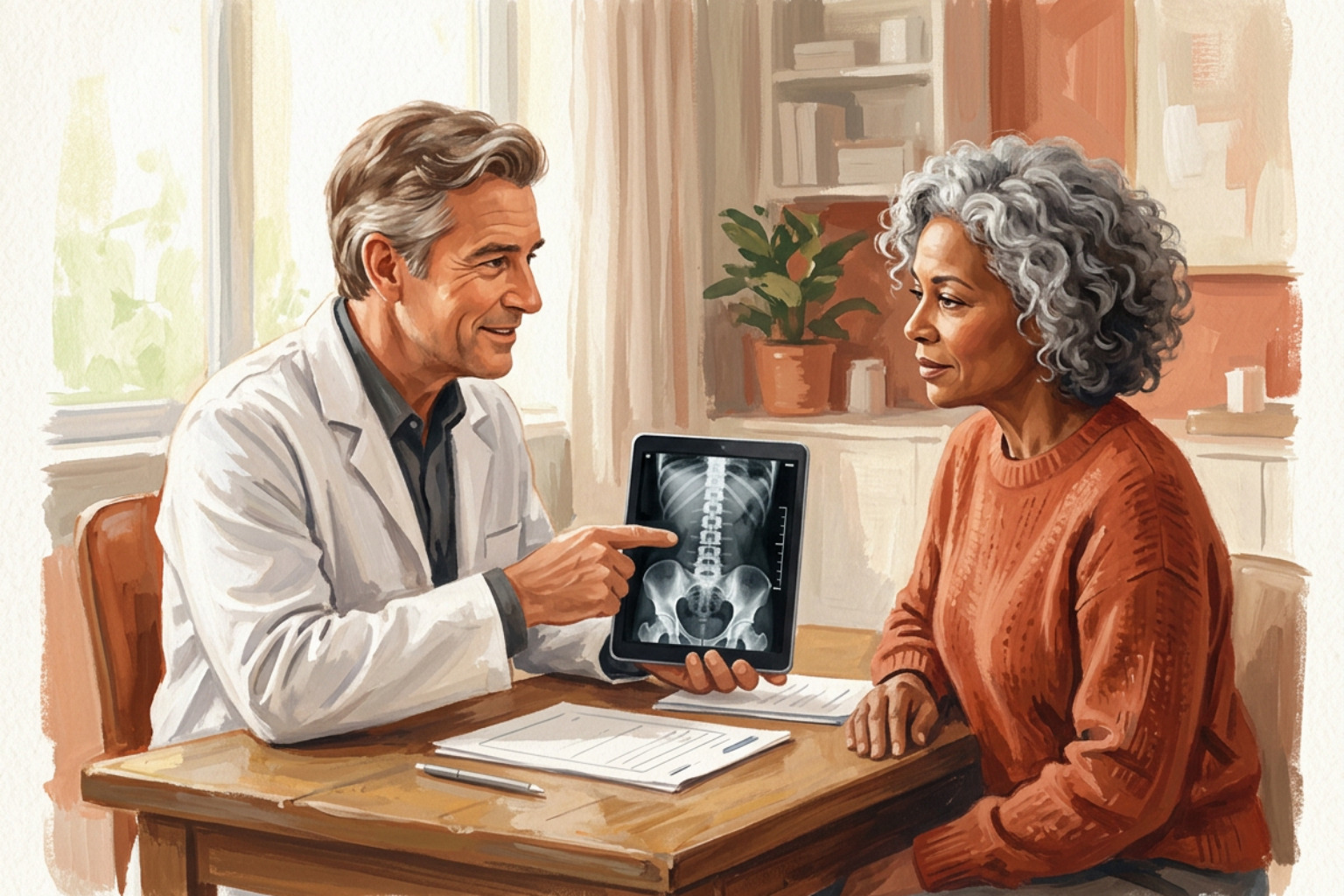
Bone mineral density measures the amount of mineral in your bones. The primary tool used to check bone mineral density is dual-energy X-ray absorptiometry, commonly called a DEXA scan. This quick test uses low-dose X-rays to measure bone thickness at your hip, spine, and sometimes forearm.
When reviewing tests with your provider, ask these key questions:
- What do my scan numbers mean across different body parts? Your hip and spine can have different bone density levels.
- Do I need lab tests for secondary causes of bone loss? Secondary osteoporosis happens when another disease or medication weakens bone tissue.
- Which blood tests should we run? Doctors often test parathyroid hormone, which controls blood calcium levels, as well as blood calcium, kidney function, and vitamin D levels.
- Could my thyroid or other hormones be involved? Hormones like thyroid hormone, estrogen, and testosterone influence bone turnover.
Understanding these results is simpler when you learn about interpreting DEXA scan results ahead of time.
Understanding Your T-Score and Fracture Risk Assessment
A T-score compares your bone density to that of a healthy young adult. A normal score is between +1.0 and -1.0. A score between -1.1 and -2.4 indicates osteopenia, which means lower than normal bone mass. A score of -2.5 or lower indicates osteoporosis. A Z-score compares your bone mass to people of your same age and sex.
Ask your clinician:
- What is my exact T-score at the lumbar spine, femoral neck, and total hip?
- How does my T-score affect my risk of breaking a bone in everyday life? A discussion of what a T-score below -2.5 means can help clarify the difference between standard age-related thinning and higher fracture risk.
- What is my FRAX score? The Fracture Risk Assessment Tool, calculates your 10-year probability of a major bone break based on your age, body weight, smoking status, and family history.

Navigating Treatment Plans and Prescription Therapies
Osteoporosis treatment options depend on your fracture risk, personal medical history, and bone density scores. Your doctor may recommend antiresorptive medications that slow bone breakdown or anabolic medications that help build new bone tissue.
If your doctor recommends starting a prescription, you can review when to start osteoporosis treatment to see standard clinical guidelines.
| Medication Class | How It Works | Common Examples | Typical Delivery Route |
|---|---|---|---|
| Bisphosphonates | Slows down cells (osteoclasts) that break down bone | Alendronate, Risedronate, Zoledronic acid | Weekly pill, monthly pill, or yearly IV infusion |
| Targeted Bone Protectors | Blocks a bone-clearing protein to protect bone density | Denosumab | Injection under the skin every 6 months |
| Anabolic Agents | Stimulates bone-forming cells (osteoblasts) | Teriparatide, Abaloparatide | Daily injection under the skin for up to 2 years |
| Dual-Acting Agents | Increases bone building while reducing bone breakdown | Romosozumab | Monthly doctor office injection for 12 months |
Practical Questions to Ask Doctor About Osteoporosis Medications and Side Effects
All medications have benefits and potential side effects. Ask your doctor these practical questions before starting any prescription:
- How should I take this medication? Oral bisphosphonates require standing or sitting upright for at least 30 to 60 minutes with a full glass of plain water to avoid irritating the esophagus.
- What are the common side effects? Patients may notice mild upset stomach or brief flu-like aches after an infusion.
- What rare side effects should I know about? Rare complications include atypical femur fractures (unusual breaks in the thigh bone) or osteonecrosis of the jaw (delayed healing in the jawbone, usually after invasive dental surgery).
- Do any of my current medicines cause bone loss? Long-term use of glucocorticoid steroid medications, some anti-seizure drugs, and certain acid reducers can thin bones.
Monitoring Treatment Progress and Medication Duration
Osteoporosis therapies require routine monitoring to ensure they are working properly. According to a task force of the American Society for Bone and Mineral Research, people taking bisphosphonates should have their fracture risk reassessed after 5 years of oral treatment or 3 years of intravenous treatment.
Ask your doctor:
- When will we review my prescription? Some patients take a temporary break from bisphosphonates, often called a drug holiday, after 3 to 5 years of stable bone density.
- How often should I get a follow-up DEXA scan? Scans are typically repeated every 1 to 2 years during treatment to measure changes.
- Should I repeat my scan on the same machine? Using the exact same DEXA machine gives the most accurate comparison over time.
- Do you work with a specialized bone program? Many healthcare systems run a fracture liaison service osteoporosis team to coordinate care after a break.
Questions on Safe Exercise, Daily Nutrition, and Fall Prevention
Safe bone care involves adequate daily nutrition, progressive strength training, and fall prevention measures. Your doctor can help you choose safe movement patterns that protect your spine while keeping you active.
Groove Health is a Medicare covered bone health program for adults 65 and older that pairs each member with a physician and a physical therapist who designs a personalized exercise plan. Asking your doctor about safe activity levels helps you build strength without stressing vulnerable bones. You can also review fracture prevention strategies seniors for more guidance.
Nutrition Targets and Daily Supplements
Ask your physician to evaluate your daily food intake and recommend appropriate supplements.
According to the National Institutes of Health Office of Dietary Supplements (NIH ODS), women aged 51 and older and men aged 71 and older need 1,200 mg of calcium daily from food and supplements combined, while men aged 51 to 70 need 1,000 mg. The NIH ODS also notes that adults aged 71 and older need 800 IU of vitamin D daily, compared with 600 IU for ages 19 to 70.
Questions to bring up include:
- Am I getting enough calcium and vitamin D from my current diet?
- Do I need a separate supplement? You can explore supplements for bone health and bone density to understand forms like calcium citrate and calcium carbonate.
- How much dietary protein should I eat? Protein supplies amino acids that maintain the structural frame of bone and muscle.
- Should I split my supplement doses? The body absorbs calcium best in amounts of 500 mg or less at one time.
Physical Activity and Home Safety Modifications
Exercise helps maintain strength and coordination. Building bone tissue requires osteogenic loading, which means placing direct force on bones through heavy resistance training with low repetitions and challenging weights. Compound movements like squats, lunges, and hip hinges strengthen the hips and spine.
Ask your clinician:
- Which exercises are safe for my current bone density? Avoid loaded spinal flexion (bending forward with weight) and rapid spinal twisting, which increase compression stress on the vertebrae. Instead, focus on tall posture and spinal extension.
- How can I build balance safely? Balance training should progress from steady static stances to dynamic stepping drills. Always use stable, braced supports, such as a sturdy chair placed firmly against a wall or a bolted kitchen counter, never rolling chairs or unstable tables.
- Am I ready for power exercises? Power movements combine strength with controlled speed, like rising briskly from a chair. Always get professional medical clearance before starting power training.
- Which home safety changes matter most for me? Falls become more common with age, and small fixes can lower risk. Use the Talking with your Healthcare Provider checklist - Bone Health & Osteoporosis Foundation to discuss grab bars, secure rugs, better lighting, and other changes that fit your home.
Frequently Asked Questions About Discussing Bone Health With Your Doctor
What should I bring to my osteoporosis appointment?
Bring a complete list of your current prescription medications, over-the-counter supplements, and exact doses. You should also bring copies of any prior DEXA scan reports, notes on past bone fractures, a list of recent falls, and a notepad or family member to help write down answers.
Who treats osteoporosis if I need a specialist?
Primary care physicians manage many cases of low bone density. If your bone loss is severe, unusual, or worsening despite treatment, your doctor may refer you to an endocrinologist (a hormone specialist) or a rheumatologist (a specialist in joint and autoimmune conditions). Geriatricians also specialize in bone care and fall prevention for older adults.
Does Medicare cover osteoporosis screening and doctor visits?
According to Medicare.gov and CMS, Medicare Part B covers bone mineral density DEXA tests once every 24 months for eligible individuals at risk for osteoporosis, or more frequently if medically necessary. Doctor visits to discuss bone health are also covered under standard outpatient medical benefits, though exact out-of-pocket costs and coverage may vary by plan type.
Conclusion
Preparing a clear list of questions helps you turn test scores and medical terms into a practical plan for protecting your bones. Discussing your T-scores, medication options, and daily nutrient goals gives you a solid foundation. Working with clinical professionals to follow a personalized, home-based exercise plan designed by a physical therapist can further help you build bone strength and prevent fractures safely.
Works Cited
- Bone Health & Osteoporosis Foundation. "General Facts." Bone Health & Osteoporosis Foundation, 2022.
- Adler RA, El-Hajj Fuleihan G, Bauer DC, et al. "Managing Osteoporosis in Patients on Long-Term Bisphosphonate Treatment: Report of a Task Force of the American Society for Bone and Mineral Research." Journal of Bone and Mineral Research, 2016.
- National Institutes of Health Office of Dietary Supplements. "Calcium - Health Professional Fact Sheet." NIH Office of Dietary Supplements, accessed October 1, 2026.
- National Institutes of Health Office of Dietary Supplements. "Vitamin D - Health Professional Fact Sheet." NIH Office of Dietary Supplements, accessed October 1, 2026.
- Centers for Medicare & Medicaid Services. "Bone mass measurements." Medicare.gov, accessed October 1, 2026.
This content is for informational purposes only and does not constitute medical advice. Consult a qualified healthcare professional for diagnosis and treatment. If you are on Medicare and interested in a personalized bone health program, you can check your eligibility at groovehealth.com.