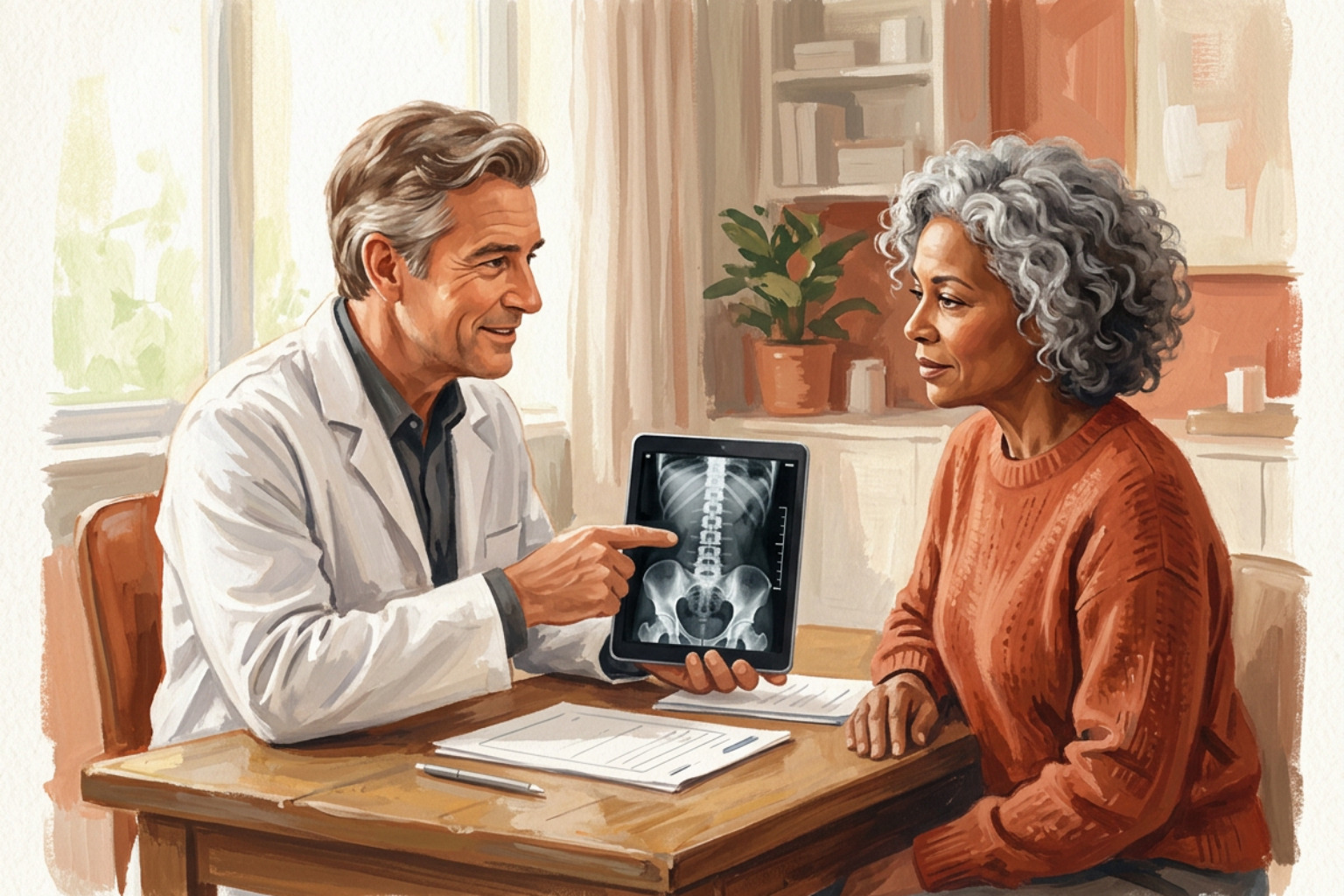
How to Build Better Bones with the Right Supplements
Calcium, vitamin D3, K2, magnesium, and collagen each play a role in bone density. Here is what the clinical evidence says about dosing, absorption, and which supplements actually matter.

What Clinical Evidence Says About Supplements for Bone Health and Bone Density
Supplements for bone health and bone density are a common focus for adults trying to make sense of an osteopenia or osteoporosis diagnosis, and for good reason. After age 50, many people face a much higher risk of fractures linked to bone loss. The stakes are real, and the supplement aisle can feel confusing fast.
The most clinically supported supplements for bone health are:
| Supplement | Primary Role | Evidence Level |
|---|---|---|
| Calcium | Structural mineral for bone matrix | Strong |
| Vitamin D3 | Enhances calcium absorption in the gut | Strong |
| Magnesium | Activates vitamin D; supports mineralization | Moderate |
| Vitamin K2 | Directs calcium into bone tissue | Moderate |
| Collagen peptides | Supports the protein scaffold of bone | Emerging |
| Vitamin C | Part of collagen synthesis | Moderate |
No supplement works in isolation. Bone tissue is living tissue, constantly being broken down and rebuilt through a process called bone remodeling. Supporting that process takes a coordinated mix of nutrients, not just calcium alone.
This guide reviews the clinical evidence behind each key supplement, explains how they interact, and helps patients and caregivers ask better questions when speaking with a physician.
The Role of Osteoclasts and Osteoblasts in Age-Related Bone Remodeling
To understand why supplements for bone health and bone density are necessary, one must understand that bone is not a static "rock" inside the body. It is a dynamic tissue undergoing constant renewal. This cycle involves two primary types of cells: osteoblasts and osteoclasts.
Osteoblasts build new bone. They create the bone's organic framework, made mostly of collagen, and then harden it with hydroxyapatite, a mineral crystal rich in calcium and phosphorus. Osteoclasts do the opposite. They break down old or damaged bone so minerals can be released back into the bloodstream.
In healthy adults under 30, bone breakdown and bone building are usually balanced. Peak bone mass is typically reached by the late 20s. With age, especially after menopause when estrogen drops, osteoclast activity can start to outpace osteoblast activity. The result is a gradual decline in bone mineral density (BMD). If the body does not get enough key nutrients such as calcium and magnesium, it may draw on mineral stores in the skeleton to support essential functions like muscle contraction and normal heart rhythm. About 99% of the body’s calcium and a large share of its magnesium are stored in bone.
Clinical Evidence for Secondary Supplements in Osteoporosis Prevention
While calcium and vitamin D are the traditional "gold standards," research indicates that secondary minerals play a vital role in bone matrix integrity. Magnesium, for instance, is essential for the formation of hydroxyapatite crystals. A large cohort study of postmenopausal women found that magnesium supplementation can increase BMD in those with inadequate dietary intake.
Vitamin C is another important, often overlooked nutrient for bone health. It is a key part of collagen synthesis, which helps build the protein framework that gives bones structure before minerals are laid down. Some clinical observations have linked higher vitamin C intake with a 33% lower risk of osteoporosis. Without enough vitamin C, this framework may not form as well.
For more detailed technical data on these interactions, the NIH Office of Dietary Supplements: Magnesium Fact Sheet provides a comprehensive review of how magnesium deficiency correlates with higher fracture risks.
The Synergy of Vitamin K2 and Vitamin D3 in Calcium Distribution
One of the most important clinical insights in bone health is the relationship between Vitamin D3 and Vitamin K2. While Vitamin D3 ensures that calcium is absorbed from the gastrointestinal tract into the bloodstream, it does not control where that calcium goes.
Vitamin K2 acts as the "traffic controller." It activates a protein called osteocalcin through a process known as gamma-carboxylation. Once activated, osteocalcin binds calcium to the bone matrix. Without sufficient K2, calcium may instead deposit in the soft tissues, such as the arteries (calcification).
Clinical trials, such as those discussed in Vitamins K1 and K2: The Emerging Group of Vitamins Required for Human Health, suggest that the MK-7 isoform of Vitamin K2 is particularly effective due to its longer half-life in the body. Research indicates that K2 supplementation may specifically strengthen the bones in the spine and lower the risk of vertebral fractures.
Evaluating Micronutrient Trace Elements for Bone Matrix Integrity
Beyond the major minerals, trace elements contribute to the complex biochemistry of bone:
- Zinc Bisglycinate: Zinc supports enzymes involved in bone formation, collagen production, and mineralization. The bisglycinate form is commonly used in supplements because it is generally well absorbed.
- Boron: Boron may help influence vitamin D function, calcium and magnesium use, and hormone activity - all of which matter for maintaining bone strength.
- Genistein Aglycone: This soy-derived plant compound appears in some medical foods and supplements and has shown potential in multi-year studies of postmenopausal bone loss. Research suggests it may support osteoblast activity and help preserve bone without adverse effects on reproductive tissues in studied populations.
- Strontium: Strontium ranelate is a prescription drug in some countries, while strontium citrate is sold in some over-the-counter supplements. It may influence both bone breakdown and bone formation, but it can also artificially raise DEXA bone density readings, making results harder to interpret.
Further reading on these elements can be found in the The Critical Role of Trace Elements in Bone Health (Nutrients, 2024).
Comparative Bioavailability: Calcium Citrate vs. Calcium Carbonate
Choosing the right form of calcium is essential for both effectiveness and comfort. The two most common forms are calcium carbonate and calcium citrate.
| Feature | Calcium Carbonate | Calcium Citrate |
|---|---|---|
| Elemental Calcium | ~40% (Higher) | ~21% (Lower) |
| Absorption Requirement | Needs stomach acid (take with food) | Does not need stomach acid (take anytime) |
| Cost | Generally lower | Generally higher |
| Common Side Effects | Gas, bloating, constipation | Generally well-tolerated |
| Best For | General population | Older adults, those on PPIs (acid blockers) |
A critical rule for all calcium supplementation is the "dosage cap." The human body can generally only absorb 500–600 mg of elemental calcium at one time. Taking a 1,200 mg dose at once is inefficient; it is better to split the dose between morning and evening. For those seeking quality assurance, look for the "USP Verified" mark on labels to ensure the product contains the ingredients listed and will dissolve properly. More guidance is available from the BHOF: Calcium and Vitamin D.
The Impact of Collagen and Trace Minerals on the Bone Matrix
While minerals provide the "hardness" of bone, collagen provides the "toughness" or flexibility. Bone is composed of approximately 30% organic matrix, which is almost entirely Type I collagen. Without this protein scaffold, bones become brittle and prone to shattering—much like dry porcelain.
Trace minerals like silica, manganese, and copper act as "glue" within this matrix. Silica, for example, is found in high concentrations at the active calcification sites of growing bone. Manganese is a cofactor for enzymes that produce the proteoglycans required for healthy bone and cartilage.
Collagen Peptides and Bone Mineral Density in Postmenopausal Women
Recent research has put collagen on the radar for bone health. In a 12-month randomized, double-blind, placebo-controlled trial involving 131 postmenopausal women, taking 5 g of collagen peptides daily was associated with improved bone mineral density in the lumbar spine and femoral neck.
These peptides are thought to stimulate the synthesis of the bone matrix by signaling osteoblasts. While research is still considered "emerging" compared to calcium, a 2018 randomized controlled trial in Nutrients suggests it may be a valuable adjunct therapy for those at risk of osteoporosis.
Safety Considerations and Pharmacological Interactions
Supplementation is not without risk. Excessive calcium intake, particularly from supplements rather than food, has been linked to an increased risk of kidney stones and potentially cardiovascular calcification. The Endocrine Society Clinical Practice Guidelines recommend focusing on dietary calcium first and using supplements only to fill the gap.
Key medication interactions to watch for include:
- Warfarin (Coumadin): Vitamin K supplements can affect how this blood thinner works.
- Thyroid medication: Calcium can reduce the absorption of levothyroxine, so take them at least four hours apart.
- Thiazide diuretics: These medicines can lower the amount of calcium lost in urine, which may raise the risk of elevated blood calcium when combined with high-dose calcium supplements.
Integrating Supplements into a Comprehensive Osteoporosis Management Plan
Supplements are only one piece of the puzzle. A comprehensive plan must include:
- Diagnostic monitoring: Regular [dual-energy X-ray absorptiometry (DEXA)] scans are the standard tool for measuring bone mineral density (BMD). Your T-score compares your bone density with that of a healthy young adult and helps track bone loss or improvement over time.
- Exercise: Weight-bearing activity and resistance training matter because they support mechanotransduction, the process by which physical force signals bone to maintain or build strength. Walking, stair climbing, and strength training can all help.
- Nutrition: Supplements work best when they sit on top of a strong eating pattern. A Mediterranean-style diet rich in fruits, vegetables, legumes, fish, olive oil, and adequate protein has been linked with better bone health and a lower risk of hip fracture.
- Professional guidance: Bone health plans are rarely one-size-fits-all. A personalized bone health program can help eligible individuals combine testing, exercise, nutrition, and medical support into a more complete osteoporosis management strategy.
Frequently Asked Questions about Bone Health Supplements
How long does it take for supplements to show measurable changes in bone density?
Bone remodeling is a slow process. It typically takes 12 to 24 months of consistent supplementation and lifestyle changes to see a statistically significant change in a DEXA scan.
Can dietary intake of calcium and vitamin D replace the need for supplementation?
Often, yes, but not always. Many people can meet calcium needs through food, including dairy, calcium-fortified products, and some leafy greens. But supplementation may still help if intake is low, absorption is reduced, or needs are higher. Vitamin D is the bigger challenge, since food sources are limited and sun exposure varies widely. That is why some people can rely on diet alone, while others need supplements based on labs, age, medications, or osteoporosis risk.
Which populations are at the highest clinical risk for osteoporosis?
Postmenopausal women are at the highest risk due to estrogen loss. Other high-risk groups include men over 70, individuals with a small/thin frame, those with a family history of hip fractures, and people taking certain medications like long-term corticosteroids.
Start Building a Smarter Supplement Plan
The journey to better bone health is built on a foundation of nutrient synergy. Calcium provides the raw material, Vitamin D3 ensures its absorption, and Vitamin K2 directs it to the skeleton. When supported by magnesium, vitamin C, and collagen, these nutrients work together to maintain the delicate balance of bone remodeling.
However, because of the risks of interactions and over-supplementation, clinical supervision is paramount. Groove Health remains committed to providing evidence-based, personalized care to help older adults prevent fractures and maintain their independence through informed, medically sound strategies.
Works Cited
- LeBoff MS, Greenspan SL, Insogna KL, et al. "The Clinician's Guide to Prevention and Treatment of Osteoporosis." Osteoporosis International, 2022.
- König D, Oesser S, Scharla S, Zdzieblik D, Gollhofer A. "Specific Collagen Peptides Improve Bone Mineral Density and Bone Markers in Postmenopausal Women — A Randomized Controlled Study." Nutrients, 2018.
- National Institutes of Health, Office of Dietary Supplements. "Calcium: Fact Sheet for Health Professionals." Updated 2024. And "Vitamin D: Fact Sheet for Health Professionals." Updated 2024.
- Migliorini F, Maffulli N, Colarossi G, Filippelli A, Memminger M, Conti V. "Vitamin D and calcium supplementation in women undergoing pharmacological management for postmenopausal osteoporosis." European Journal of Medical Research, 2025.
- Ma ML, Ma ZJ, He YL, et al. "Efficacy of Vitamin K2 in the Prevention and Treatment of Postmenopausal Osteoporosis: A Systematic Review and Meta-analysis of Randomized Controlled Trials." Frontiers in Public Health, 2022.
This content is for informational purposes only and does not constitute medical advice. Consult a qualified healthcare professional for diagnosis and treatment. If you are on Medicare and interested in a personalized bone health program, you can check your eligibility at groovehealth.com.