
How to Sleep with Osteoporosis in 3 Easy-to-Follow Steps
Night pain and fear of twisting make sleep hard with osteoporosis. Learn three practical steps: pillow placement, a safe log-roll, and bedding and bedroom setup that protect your spine and lower fall risk.
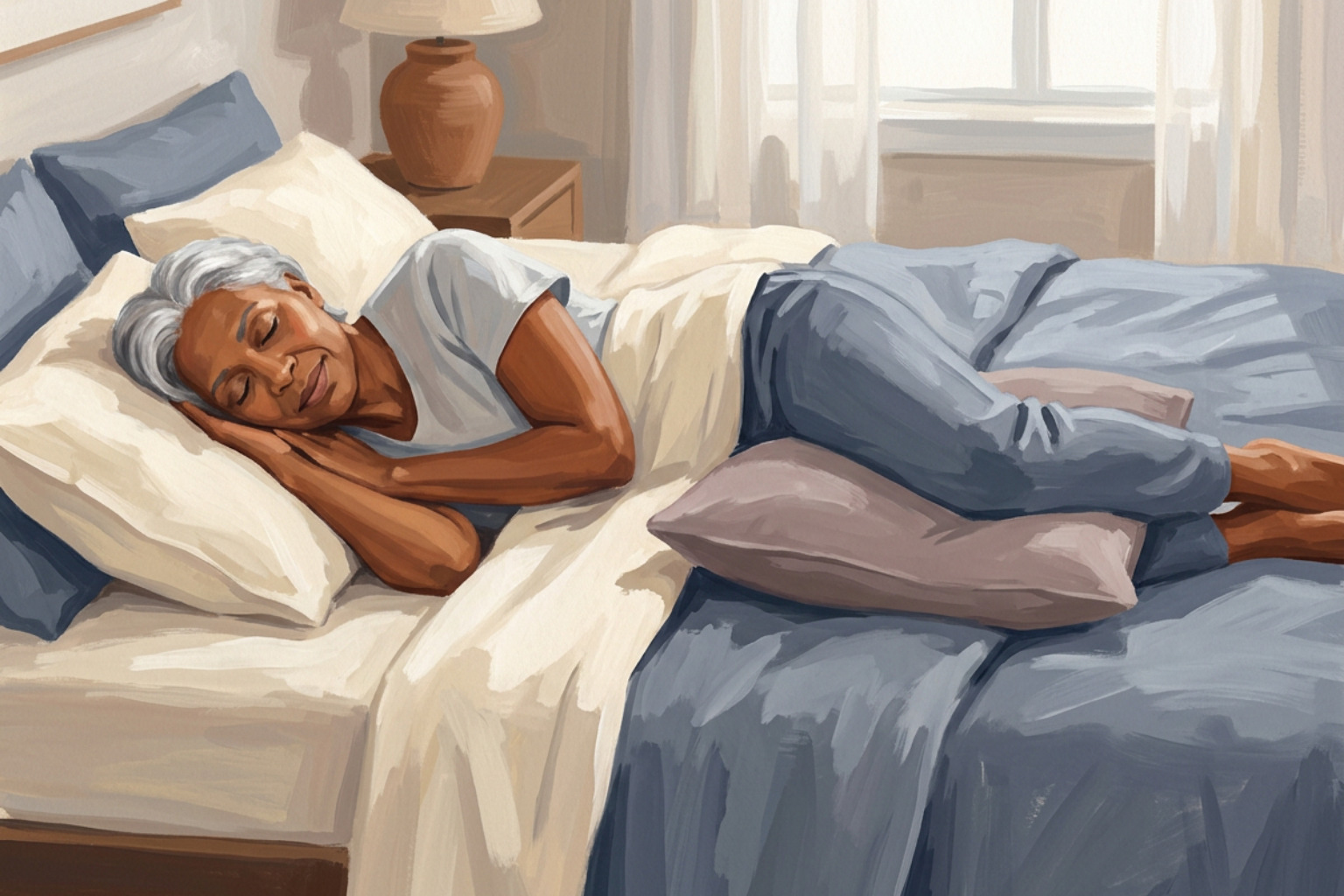
Sleep Comfortably With Osteoporosis in a Spine-Safe Position
If you have osteoporosis, the goal is to keep your spine supported in a neutral, comfortable line while you sleep. Sleep on your back with a pillow under your knees, or on your side with your knees slightly bent and a pillow between them. These positions may reduce strain on a sore back and help prevent your hips and spine from twisting.
Avoid stomach sleeping when you can. It often turns the neck and arches the lower back. When turning or getting out of bed, use a gentle log-roll: bend your knees, roll your shoulders and hips together, then use your arms to push yourself upright.
Sleep matters for more than comfort. Researchers have linked sleep duration to bone density, although most of that evidence is observational, and pain, stiffness, and fear of moving can make rest harder. If night pain is sudden, severe, or new after a fall, contact your clinician promptly.
In this guide, you’ll learn three simple ways to sleep more comfortably: support your body with pillows, turn without sharp twisting, and create a bedroom setup for calmer, safer nights.
The Direct Link Between Sleep Quality and Bone Health
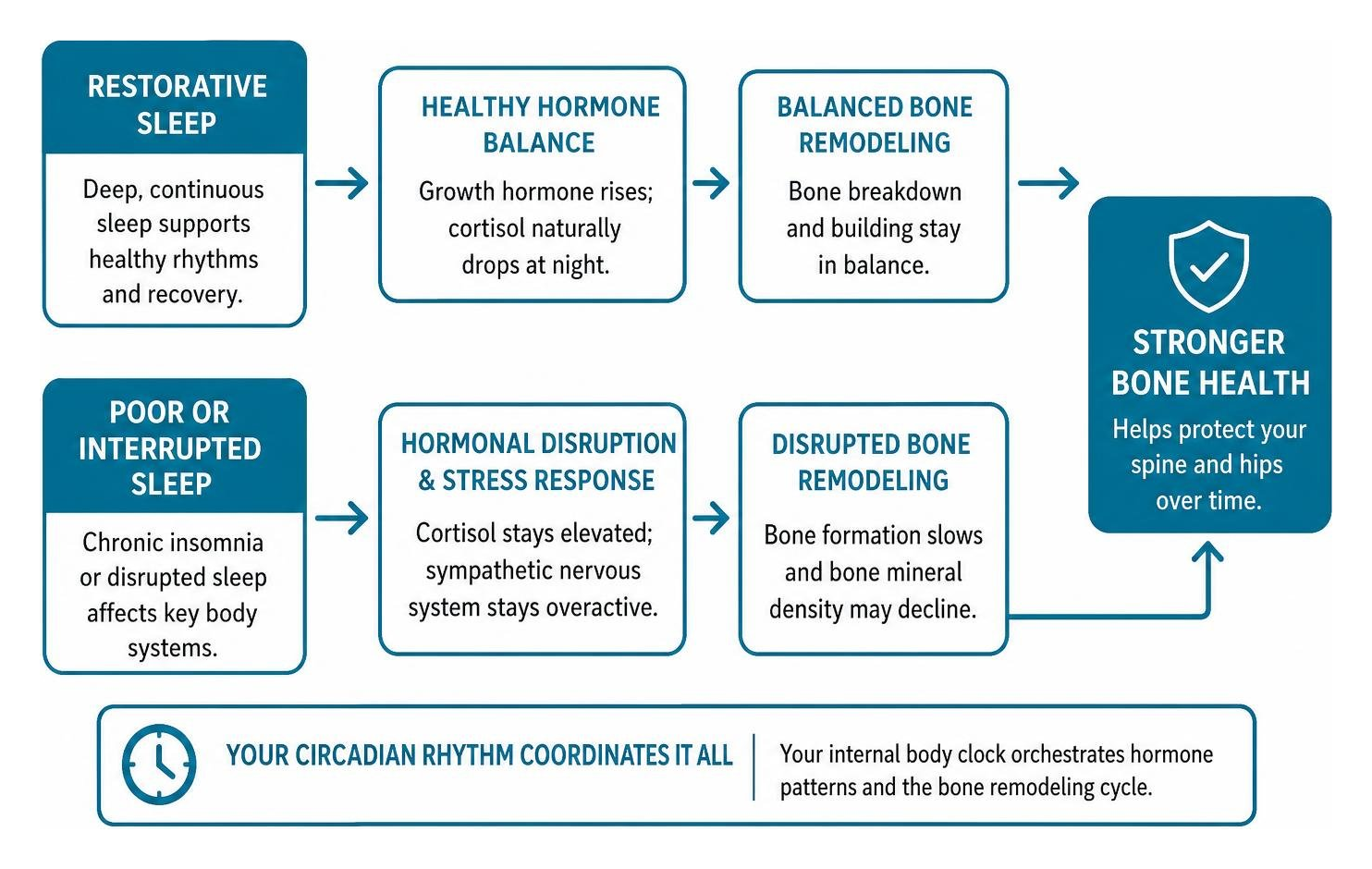
Sleep is an active maintenance period for your skeleton. Bone tissue is dynamic, constantly breaking down old areas and building new ones through a balanced cycle called bone remodeling. Special cells called osteoclasts remove worn bone, while cells called osteoblasts build new bone mineral.
Your internal body clock, or circadian rhythm, coordinates this rebuilding cycle. Essential hormones such as growth hormone rise during deep sleep, supporting tissue repair. Meanwhile, the stress hormone cortisol naturally drops at night.
When sleep is poor or broken by chronic insomnia, cortisol levels can stay elevated. High cortisol and an overactive sympathetic nervous system, which manages your fight-or-flight response, may interfere with normal bone formation. Meta-analyses link sleep duration at the extremes, especially long sleep, with lower bone density or osteoporosis, but most of the underlying studies are observational, so they show an association rather than proof that poor sleep causes bone loss.
Restful sleep also supports healthy hormone balance, so consistent, good-quality sleep is a reasonable part of a bone-health routine.
How to Sleep with Osteoporosis in 3 Practical Steps
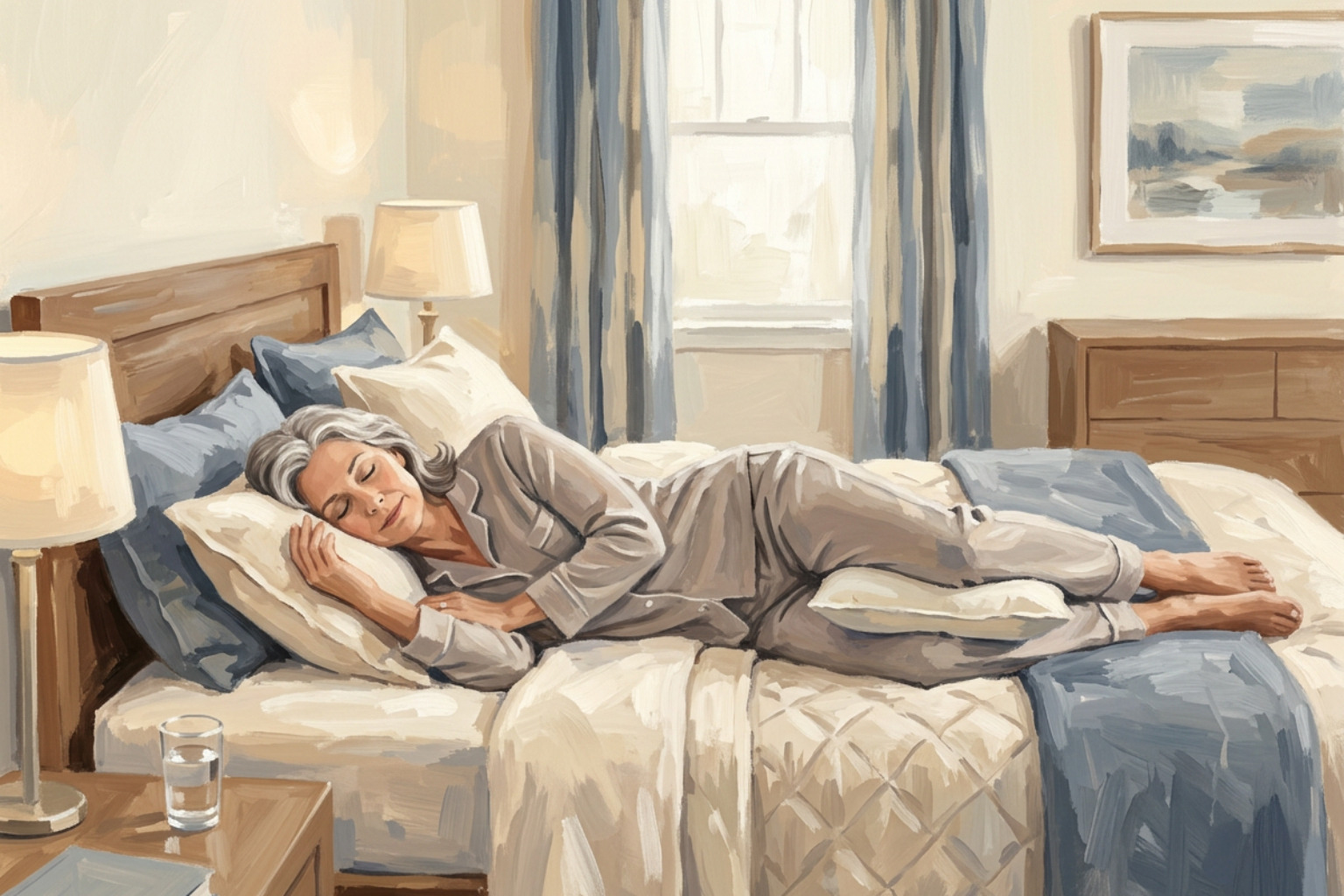
A structured approach to bedtime helps protect your vertebrae, eases joint pressure, and reduces night pain. Here is your three-step roadmap for comfortable, safer rest.
Step 1: Master Neutral Spine Alignment and Pillow Placement
Proper alignment keeps your spine in a natural, straight line from neck to pelvis. This distributes body weight evenly and minimizes pressure on vulnerable vertebrae. Reviewing guidelines on sleeping with fractures can offer practical ideas for managing tender areas.
- Back sleeping: Lie flat on your back and place a medium pillow under your knees. This slight bend flattens your lower back against the mattress and eases tension in your lumbar spine. A small, contoured neck pillow helps keep your cervical spine level.
- Side sleeping: Bend your knees slightly and place a supportive pillow between your knees and ankles. This prevents the top leg from pulling forward, which prevents the pelvis and lower spine from twisting.
- Support for rounded upper backs (kyphosis): If your upper back curves outward, standard pillows may let your head tilt back. Use a supportive or V-shaped pillow to keep your neck aligned without pushing your chin to your chest.
- Positions to avoid: Avoid stomach sleeping. Lying on your stomach forces your neck to turn sharply to the side and hyperextends your lower spine, increasing spinal stress.
| Sleep Position | Effect on the Spine | Best Pillow Support |
|---|---|---|
| Back | Spreads body weight evenly and reduces lower-back stress | Medium pillow beneath knees; thin contour pillow for the head |
| Side | Helps keep hips aligned and limits twisting through the spine | Supportive pillow between knees; head pillow that fills shoulder space |
| Stomach | Forces neck rotation and can overarch the lower back | Avoid if you have osteoporosis |
Step 2: Safe Turning: How to Sleep with Osteoporosis Without Twisting
Turning in bed can cause anxiety if you worry about sudden twists or spinal fractures. Using smooth, low-force turning techniques lets you move safely without sharp rotation.
- Move as one unit: Think of your torso and pelvis as a single package. Keep your shoulders and hips moving together rather than twisting your upper body ahead of your hips.
- Slide your hips first: Before rolling, slide your hips two to three centimeters in the opposite direction of your turn. This creates space and breaks the friction against the sheets.
- Hug a pillow: Hold a small pillow against your chest. This stabilizes your upper body and prevents your shoulders from rolling independently.
- Lead with the knees: Gently bend your knees and roll your whole body together onto your side.
- Manage nightwear friction: Long nightgowns or grippy mattress covers can catch on sheets, acting like a brake at the hips. Choose smooth sleepwear like pajama sets made of satin or cotton blends to let your body glide easily. If using an adjustable bed, return it to a flat position before turning to avoid fighting gravity.
Step 3: Choose Supportive Bedding and Prevent Nighttime Falls
A supportive mattress should cushion pressure points while helping your spine stay aligned. For many people with osteoporosis, a medium-firm option with a soft comfort layer, like a hybrid or pocket-sprung mattress, can offer a good balance of support and gentleness.
- The hand-slide test: Lie on your back on the mattress. Slide your flat hand into the small of your lower back. If your hand slides through with large gaps, the bed is too firm. If you must force your hand under your back, the bed is too soft. A slight resistance with full contact indicates good support.
- Trial periods: Look for mattress manufacturers that provide in-home trials of 60 nights or more so you can test comfort over several weeks.
- Room temperature: Keep your bedroom around 18°C (65°F). A cool room prevents overheating and minimizes restless shifting.
- Nighttime safety: Place motion-sensor night lights along the route from your bed to the bathroom. Keep walkways clear of cords and clutter, and remove loose throw rugs to maintain safe footing during late-night awakenings.
Managing Common Nighttime Sleep Disruptions
Nighttime awakenings are common, but learning how to resettle calmly protects your rest. If hot flashes disrupt your sleep, use layered, breathable cotton bedding that you can easily peel back with one hand without twisting your back.
If sore knees make it hard to settle, place a soft pillow between your joints to prevent bony contact. When you need to use the bathroom, sit upright for a few seconds on the edge of the mattress before standing to ensure your balance is steady.
To maintain daytime stability and reduce fall risks at night, practicing balance exercises for osteoporosis under proper professional guidance helps build lower-body strength and confidence.
Managing Insomnia and Sleep Aids: How to Sleep with Osteoporosis Safely
When dealing with chronic sleep challenges, non-medication strategies are a recommended starting point. Cognitive Behavioral Therapy for Insomnia (CBT-I) helps reset sleep patterns through behavioral adjustments and sleep scheduling without increasing fall risk.
Melatonin supplements are sometimes used for sleep. A 2026 review of trials in menopausal women found that melatonin-containing supplements may be associated with higher bone density, but the effect of melatonin alone and the best dose remain unclear, so ask your clinician before using it.
In contrast, prescription sleep aids require caution. Medications like benzodiazepines and non-benzodiazepine Z-drugs can cause lingering morning grogginess and impaired balance, and a meta-analysis linked both drug types to a higher risk of hip fracture in older adults. Discuss non-sedating options with your physician if sleep difficulties persist.
Try these simple wind-down habits:
- Stop drinking caffeinated beverages at least six hours before bedtime.
- Keep bedroom lights dim for an hour before sleep to encourage natural melatonin release.
- Engage in quiet relaxation, such as slow deep breathing or reading, rather than watching bright screens.
- Keep consistent sleep and wake times seven days a week.
When to Consult a Doctor About Nocturnal Spine Pain
While mild morning stiffness is common, certain symptoms require prompt medical evaluation:
- Sudden, sharp, or severe back pain that starts without a clear reason or follows a minor stumble.
- Pain that worsens when standing or walking but does not ease when lying flat.
- Localized tenderness directly over a specific spinal bone.
- Numbness, tingling, or weakness spreading into your legs.
These signs can indicate a vertebral compression fracture, which occurs when a weakened spinal bone develops a small crack or collapses under pressure. A clinician can order imaging and refer you to a physical therapist for safe movement techniques.
Frequently Asked Questions About Sleeping with Osteoporosis
What is a recommended sleeping position for osteoporosis?
Sleeping on your back with a pillow under your knees is widely recommended for neutral spinal support. It distributes body weight evenly, supports the natural curves of your neck and lower back, and reduces pressure on the hip joints.
How can I get out of bed safely without hurting my back?
Use the log-roll technique. Bend your knees, roll onto your side as one unit so your shoulders and hips move together, and swing your lower legs off the edge of the mattress. Use your arms to push your upper body into a seated position while keeping your spine straight.
Is a soft memory foam mattress good for osteoporosis?
An overly soft memory foam mattress is usually not recommended. Deep sinking can make rolling and changing positions difficult, which may lead to awkward twisting. A medium-firm mattress with a gentle cushioning top layer offers a better balance of support and pressure relief.
Conclusion
Getting restorative rest with osteoporosis relies on keeping your spine in neutral alignment, using supportive pillows, and rolling your body as a single unit without sudden twisting. While safe sleeping habits protect your back through the night, daytime movement is essential for long-term bone health. Engaging in a personalized, home-based exercise plan designed by a physical therapist helps you build bone strength, improve balance, and protect against fractures during daily activities.
Works Cited
- Qaseem A, Kansagara D, Forciea MA, Cooke M, Denberg TD. "Management of Chronic Insomnia Disorder in Adults: A Clinical Practice Guideline From the American College of Physicians." Annals of Internal Medicine, 2016.
- Tian J, Zhang J, Ding L, Qi X. "Association Between Sleep Duration and Low Bone Mineral Density and Osteoporosis: A Systematic Review and Meta-analysis." Calcified Tissue International, 2024.
- Wang D, Ruan W, Peng Y, Li W. "Sleep duration and the risk of osteoporosis among middle-aged and elderly adults: a dose-response meta-analysis." Osteoporosis International, 2018.
- Du J, Tan Y. "A systematic review and meta-analysis of randomized controlled trials investigated the effects of melatonin supplementation on bone mineral density, quality of life, and sleep in menopausal women." Frontiers in Nutrition, 2026.
- Donnelly K, Bracchi R, Hewitt J, Routledge PA, Carter B. "Benzodiazepines, Z-drugs and the risk of hip fracture: A systematic review and meta-analysis." PLoS One, 2017.
- Royal Osteoporosis Society. "How to sleep more comfortably with osteoporosis or fractures." Royal Osteoporosis Society, 2025.
This content is for informational purposes only and does not constitute medical advice. Consult a qualified healthcare professional for diagnosis and treatment. If you are on Medicare and interested in a personalized bone health program, you can check your eligibility at groovehealth.com.