
The Menopause-Osteoporosis Connection: What Every Woman Needs to Know
Estrogen protects your bones, until menopause. As levels fall, women can lose up to 20% of their bone density, often without symptoms. Here's how the menopause-osteoporosis connection works and how to protect your bones.

Why Menopause and Osteoporosis Are Deeply Connected
Understanding how menopause causes osteoporosis starts with one key fact: estrogen, a hormone that helps protect your bones, drops sharply during menopause. And when it does, bones can start to thin quickly and quietly.
Here is a simple breakdown of the process:
- Estrogen declines. During menopause, your ovaries produce much less estrogen (a hormone that, among other things, acts like a shield for your bones).
- Bone breakdown speeds up. Estrogen normally slows down the cells that dissolve old bone tissue. Without enough of it, those cells become more active.
- Bone building can't keep up. New bone is still being made, but not fast enough to replace what's being lost.
- Bones become thinner and weaker. Over time, this imbalance lowers bone density — the measure of how solid and strong your bones are.
- Fracture risk rises. Thinner bones break more easily, sometimes from a minor fall or even everyday movement.
This process often has no symptoms. You won't feel your bones getting thinner. That's why osteoporosis (a condition where bones become weak and fragile) is often called the "silent disease." Many people only find out they have it after breaking a bone.
The numbers are sobering. Research suggests women can lose up to 20% of their bone density in the five to seven years following menopause. About one in two postmenopausal women will experience a broken bone related to osteoporosis at some point in their lifetime.
The good news is that this is not inevitable. Knowing what's happening in your body — and when — gives you real options to slow bone loss, lower your fracture risk, and stay strong.
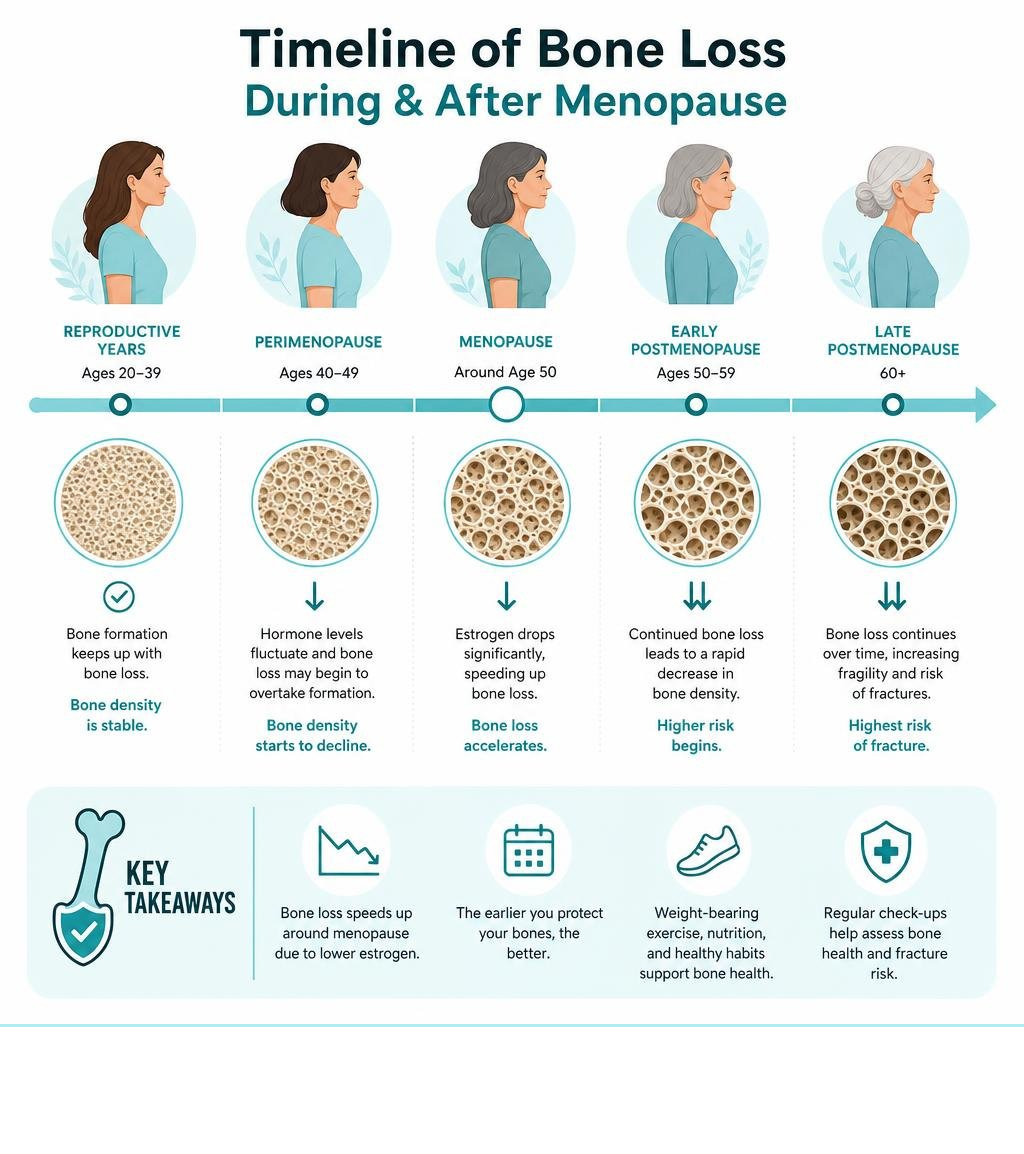
To understand how this change affects your skeleton, it helps to look at how bones stay healthy. Your bones are not static. They are living tissues that constantly remodel themselves. Every day, your body removes old bone and replaces it with new bone.
Two main types of cells do this work:
- Osteoclasts: These are the cells that break down and dissolve old bone.
- Osteoblasts: These are the cells that build new bone.
In your younger years, these cells work in perfect balance. Estrogen plays a vital role in keeping this balance. It acts like a shield, slowing down the osteoclasts so they do not break down too much bone.
When you reach menopause, your estrogen levels drop. Without enough estrogen, the osteoclasts go into overdrive. They dissolve bone faster than the osteoblasts can rebuild it. This leads to a steady drop in overall bone strength. You can read more about this relationship in this guide on Menopause and Bone Loss | Endocrine Society.
The Biological Link: How Menopause Causes Osteoporosis
The connection between menopause and bone loss is chemical. When estrogen levels fall, it triggers a chain reaction in your body that directly weakens your skeleton.
Normally, estrogen acts as a natural brake on the cells that break down bone. When estrogen levels drop during menopause, this brake is removed. The bone-dissolving cells become hyperactive, while the bone-building cells cannot keep up. This imbalance leads to a rapid loss of bone strength.
This imbalance causes two distinct phases of bone loss:
- The rapid phase: This starts just before menopause and lasts for about five to seven years. During this time, women can lose up to 3% of their bone density each year.
- The slower phase: After the initial drop, bone loss continues at a slower rate of about 0.5% to 1% per year.
To learn more about these phases, you can review the medical research on Primary osteoporosis in postmenopausal women - PMC - NIH.
What Happens to Your Bones at the Cellular Level
At the cellular level, estrogen helps control inflammation in the body. Under normal conditions, estrogen keeps inflammatory signals quiet.
When estrogen levels fall, your body produces more inflammatory signals. These signals act like fuel for the bone-dissolving cells, encouraging them to break down bone at an accelerated rate. At the same time, the process of building new bone slows down. The result is a rapid decline in the mineral content of your bones, leaving them weaker and more porous.
Why Fracture Risk Rises After Menopause
Your bones have two main parts: a hard outer shell and a spongy inner structure.
In healthy bones, the spongy inner structure looks like a strong, tightly woven honeycomb under a microscope. When osteoporosis develops, the gaps in this honeycomb grow much larger, and the walls become thin and brittle.
This structural damage increases the risk of three common types of fractures:
- Wrist fractures: These often happen first, around age 50, when a person puts their hand out to break a fall.
- Vertebral fractures: These are breaks in the spine. They can happen during everyday activities like lifting a grocery bag, and can cause back pain, loss of height, and a stooped posture.
- Hip fractures: These are the most serious. They typically occur in a person's late 70s or 80s and often require surgery.
Diagnosing Bone Loss: What Tests Do You Need?
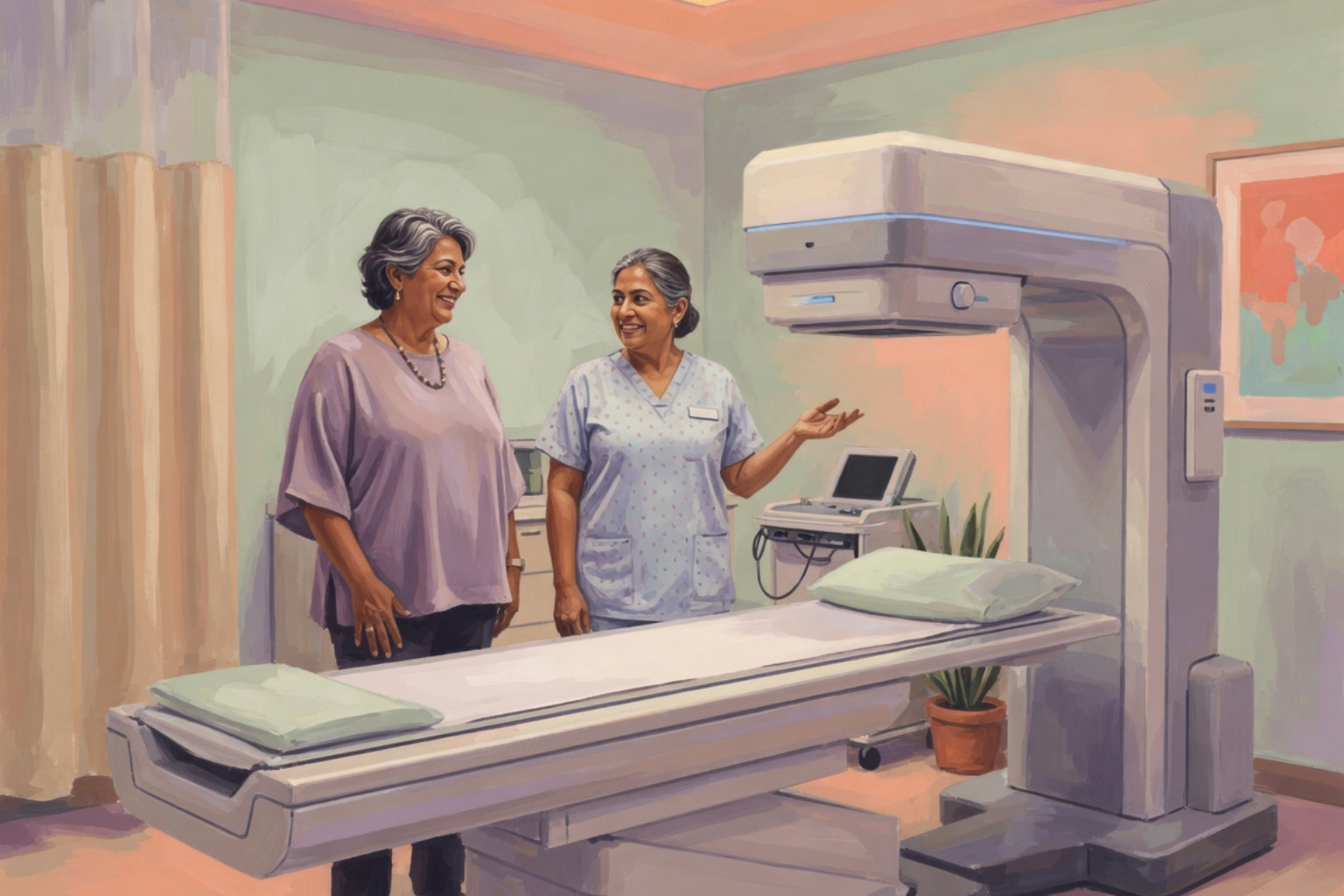
Because bone loss is silent, you cannot feel your bones getting weaker. The only way to know your bone strength is through medical testing.
The standard test is a DEXA scan (dual-energy X-ray absorptiometry). This is a quick, safe, and painless scan that uses very low-dose X-rays to measure the mineral density of your bones, usually at your hip and spine.
Your DEXA scan results are reported as a T-score. A T-score compares your bone density to that of a healthy 30-year-old woman.
| T-Score Range | Bone Health Category | What It Means |
|---|---|---|
| -1.0 or higher | Normal | Your bones are healthy and strong. |
| -1.1 to -2.4 | Osteopenia | Your bones are weaker than normal, but not yet osteoporotic. |
| -2.5 or lower | Osteoporosis | Your bones are thin and have a high risk of breaking. |
Along with your T-score, your doctor may use the FRAX tool. This is a program that calculates your personal 10-year risk of breaking a bone. It looks at your age, family history, lifestyle, and other health factors to help you and your doctor decide if you need medical treatment.
Preventing Fractures and Keeping Bones Strong After Menopause
While you cannot stop menopause, you can take active steps to protect your bones and lower your risk of fractures. A combination of nutrition, exercise, and safety habits can make a major difference.
- Optimize your calcium: Aim for 1,200 milligrams of calcium daily. It is best to get this from food, such as yogurt, milk, leafy green vegetables, and calcium-fortified foods. If you cannot get enough from your diet, talk to your doctor about a supplement.
- Get enough vitamin D: Your body needs vitamin D to absorb calcium. Most older adults need 800 to 1,000 IU of vitamin D3 daily. You can get this from sunlight, fortified foods, or supplements.
- Focus on weight-bearing exercise: These are activities where your feet and legs carry your weight. Examples include walking, climbing stairs, and dancing. This impact tells your bones to stay strong.
- Incorporate resistance training: Using hand weights, resistance bands, or bodyweight exercises (like squats) helps strengthen the muscles around your bones.
- Practice balance exercises: Activities like tai chi or specific physical therapy exercises improve your stability and help prevent falls.
- Make your home safer: Remove tripping hazards like throw rugs, keep walkways well-lit, and install grab bars in the bathroom.
Medical Treatments and Hormone Therapy for Postmenopausal Bone Loss
If your bone density is very low, lifestyle changes alone may not be enough. Fortunately, several medical treatments can help protect your skeleton.
- Menopausal Hormone Therapy (MHT): This treatment replaces the estrogen your body no longer makes. If started early in menopause, it can prevent rapid bone loss. However, it is generally used for osteoporosis prevention rather than treating established disease.
- Bisphosphonates: These are the most common medications for osteoporosis. Drugs like alendronate work by slowing down the osteoclasts, allowing your bones to maintain their density.
- Denosumab: This is an injection given once every six months. It stops osteoclasts from maturing. You must never stop taking denosumab without a transition plan from your doctor, as stopping it suddenly can cause rapid bone loss.
- Anabolic agents: These are bone-building medications. They stimulate osteoblasts to build new bone. They are typically used for women at very high risk of fractures.
To dive deeper into how these medications work at a molecular level, you can read the research on Osteoporosis After Menopause and After Drug Therapy: The Molecular Mechanism of Bone Loss and Its Treatment - PMC.
Frequently Asked Questions About Menopause and Bone Health
Can you reverse bone loss after menopause?
Yes — bone loss doesn't have to be permanent. With consistent weight-bearing and resistance exercise, proper nutrition, and adequate calcium and vitamin D, many people stop it from getting worse.
How fast do you lose bone density after menopause?
Bone loss is fastest in the first five years after your final period. During this rapid phase, some women lose up to 2% to 3% of their bone mass each year. After this phase, the rate of loss slows down but continues steadily.
Does everyone get osteoporosis after menopause?
No. While every woman loses some bone density after menopause, not everyone develops osteoporosis. Your risk depends on your genetics, your peak bone mass (how much bone you built in your youth), and your lifestyle habits like diet and exercise.
Taking Charge of Your Bone Health After Menopause
Understanding how menopause causes osteoporosis is the first step toward protecting your independence. While you cannot stop the hormonal changes of menopause, you can actively combat the resulting bone loss.
This is where Groove Health can make a life-changing difference. Groove Health is a Medicare-covered bone health program designed specifically to address postmenopausal bone thinning. By pairing you with a dedicated physical therapist and a physician, the program delivers personalized, home-based physical therapy and exercise plans tailored to your body. These customized workouts focus on weight-bearing and resistance exercises that stimulate bone growth, improve your balance, and build the muscle strength needed to prevent falls and fractures.
You can take control of your bone health and protect your skeleton from the comfort of your home. Sign up for Groove Health's personalized bone health program to see if you qualify.
Works Cited
- Endocrine Society. "Menopause and Bone Loss." Endocrine Society, 2022.
- Ji, M.-X., & Yu, Q. "Primary osteoporosis in postmenopausal women." Chronic Diseases and Translational Medicine, 2015.
- Keen, M.U., Barnett, M.J., & Anastasopoulou, C. "Osteoporosis in Females." StatPearls Publishing, 2025.
- Lee, K.I., Chen, J.H., & Chen, K.H. "Osteoporosis After Menopause and After Drug Therapy: The Molecular Mechanism of Bone Loss and Its Treatment." International Journal of Molecular Sciences, 2026.
This content is for informational purposes only and does not constitute medical advice. Consult a qualified healthcare professional for diagnosis and treatment. If you are on Medicare and interested in a personalized bone health program, you can check your eligibility at groovehealth.com.