Moving for Maintenance: How to Prevent Osteoporosis Progression
Resistance training, weight-bearing aerobics, and balance work each trigger bone remodeling through different mechanisms. Here's the clinical evidence on which exercises strengthen the hip and spine — and how to do them safely with osteoporosis.
Why Bone Loss Is a Silent Crisis — and Why Movement Is the Most Powerful Tool to Slow It
Osteoporosis is often called a "silent disease" because bone mineral density (BMD) declines gradually — with no pain, no symptoms, and no warning — until a fracture occurs. An estimated 8 million women and 2 million men in the United States have osteoporosis, and the condition causes more than 2 million fractures every year. Six out of ten people who fracture a hip never fully regain their former level of independence.
Bone mass naturally peaks around age 30, then begins a slow decline. After age 40, bone loss accelerates at roughly 1% per year. For postmenopausal women, that rate can climb to 2.1% per year after age 80. These aren't just statistics — they represent a shrinking margin between independence and a life-altering fracture.
The encouraging clinical reality is that exercise remains one of the most evidence-supported interventions for slowing bone loss, improving bone architecture, and reducing fracture risk — at any age. The key is understanding which types of exercise work, how they work at a biological level, and how to do them safely.
This guide explains all three.
The Biological Mechanism: How Mechanical Loading Strengthens Bone
Bone is not a static, rock-like substance; it is dynamic, living tissue that constantly remodels itself. This process is governed by Wolff's Law, which states that bone adapts to the loads under which it is placed. If loading increases, the bone will remodel itself over time to become stronger to resist that sort of loading.
The primary biological mechanism at play is mechanotransduction. When a person lifts a weight or strikes the ground while walking, the physical force creates "micro-strain" in the bone. Specialized cells called osteocytes, embedded within the bone matrix, act as sensors. They detect this mechanical strain and trigger a signaling cascade that recruits osteoblasts (cells that form new bone) while inhibiting osteoclasts (cells that resorb or break down bone).
Under Mechanostat Theory, bone responds when loading passes a certain strain threshold. But the goal is not only more bone mineral density. Exercise also helps improve bone quality — including how bone is organized, renewed, and able to handle force. A systematic review and meta-analysis in Frontiers in Physiology found that exercise changes bone turnover markers such as osteocalcin and P1NP, which signal active new bone formation and ongoing remodeling.
For adults looking to protect their bone health, understanding this biological "bank account" can be incredibly useful. Every session of the right kind of mechanical loading works like a small deposit into your skeleton's structural reserve.
Why Exercise Must Target the Hip and Spine Directly
One of the most critical nuances of bone physiology is that adaptation is site-specific. Unlike cardiovascular exercise, which improves the entire circulatory system, bone-building only occurs where the mechanical strain is applied. For example, the dominant arm of a professional tennis player often has significantly higher bone mineral density than the non-dominant arm.
To protect the most fracture-prone areas — the hips and the spine — exercise must specifically target those regions. Walking creates ground reaction forces that benefit the hips and lower limbs, but it may do little for the wrists or the upper spine. Clinical guidelines from Harvard Health emphasize that a well-rounded program must include movements that load the specific bones at risk for osteoporosis.
Why Progressive Overload Matters for Bone Growth
For exercise to remain effective, it must be progressive. Bone cells adapt; once they accommodate a certain level of stress, they no longer receive enough stimulus to grow stronger. This is why a walking routine that felt challenging three months ago may eventually become a "maintenance" activity rather than a "building" activity.
Clinical research suggests that for optimal osteogenic (bone-building) stimulus, resistance training should involve loads between 70% and 90% of a person's one-repetition maximum (1RM). This level of intensity ensures that the mechanical strain crosses the threshold necessary to activate bone-specific alkaline phosphatase (BALP), a marker of bone growth. Individuals can start a personalized bone health program to determine their safe starting point and learn how to progress intensity without risking injury.
Clinical Evidence for Resistance Training in Targeting Fracture-Prone Sites
Resistance training is arguably the most potent tool for improving bone density in older adults. By using free weights, machines, or resistance bands, the muscles pull on the bone at the site of attachment, creating the necessary tension for remodeling.
| Exercise Type | Impact on BMD | Primary Benefit |
|---|---|---|
| High-Intensity Resistance (HiRT) | High | Increases density in hips and spine; builds muscle mass. |
| Weight-Bearing Aerobic | Moderate | Maintains current density; slows rate of bone loss. |
| Non-Weight-Bearing (Swimming) | Low | Cardiovascular health; minimal impact on bone density. |
Resistance training also addresses sarcopenia, the age-related loss of muscle mass. Because muscles and bones function as a single unit, stronger muscles provide better support for the skeleton and improve the "joint reaction forces" that stimulate bone growth. The National Institute of Arthritis and Musculoskeletal and Skin Diseases (NIAMS) notes that resistance training is essential for targeting the femoral neck and lumbar spine, the two most common sites for fragility fractures.
Targeting the Axial Skeleton
The "axial skeleton" refers to the head and trunk, with the spine being the primary concern for osteoporotic patients. Vertebral fractures can occur during simple daily tasks like bending over to tie a shoe if the bone is sufficiently fragile.
Exercises focusing on spinal extension — strengthening the paraspinal muscles that run along the back — are vital. These movements not only help maintain bone density in the vertebrae but also combat kyphosis (the forward rounding of the back). Improving postural alignment ensures the spine's natural S-curve is maintained, which can make the spine up to ten times stronger than a flattened or slumped position. For professional guidance on these specific movements, explore which exercises are most effective for bones or learn how to close the exercise gap in osteoporosis care.
Weight-Bearing Aerobic Exercise and Its Impact on Bone Mineral Density
Weight-bearing aerobic exercise refers to any activity where the feet and legs bear the body's weight against gravity. This includes walking, jogging, stair climbing, and dancing. The "impact" of the foot hitting the ground creates ground reaction forces that travel up the skeleton.
Research published in the International Journal of Environmental Research and Public Health highlights that brisk walking (3–4 mph) is significantly more effective for bone health than a slow stroll. For those who can tolerate it, "impact loading" — such as small jumps or jogging — provides a highly effective stimulus for triggering osteocyte activity. A starter guide for movement and food can help you build these habits into your daily routine.
Limitations of Low-Impact Aerobics
It is a common misconception that all exercise builds bone. While swimming and cycling are excellent for heart health and joint mobility, they are non-weight-bearing. Because the water or the bike frame supports the body's weight, the bones do not experience the compressive force necessary to stimulate new growth.
The American Academy of Orthopaedic Surgeons notes that while these activities support overall fitness, they work best alongside weight-bearing or resistance exercise for bone health. For many older adults, combining swimming for cardiovascular fitness with light strength training for the bones can offer a more well-rounded routine.
Multicomponent Programs: Integrating Balance and Posture for Fracture Prevention
Building bone density is only half of the equation; the other half is preventing the fall that leads to a fracture. This is where multicomponent programs become essential. These programs combine:
- Resistance Training: For bone and muscle strength.
- Weight-Bearing Aerobic: For skeletal maintenance.
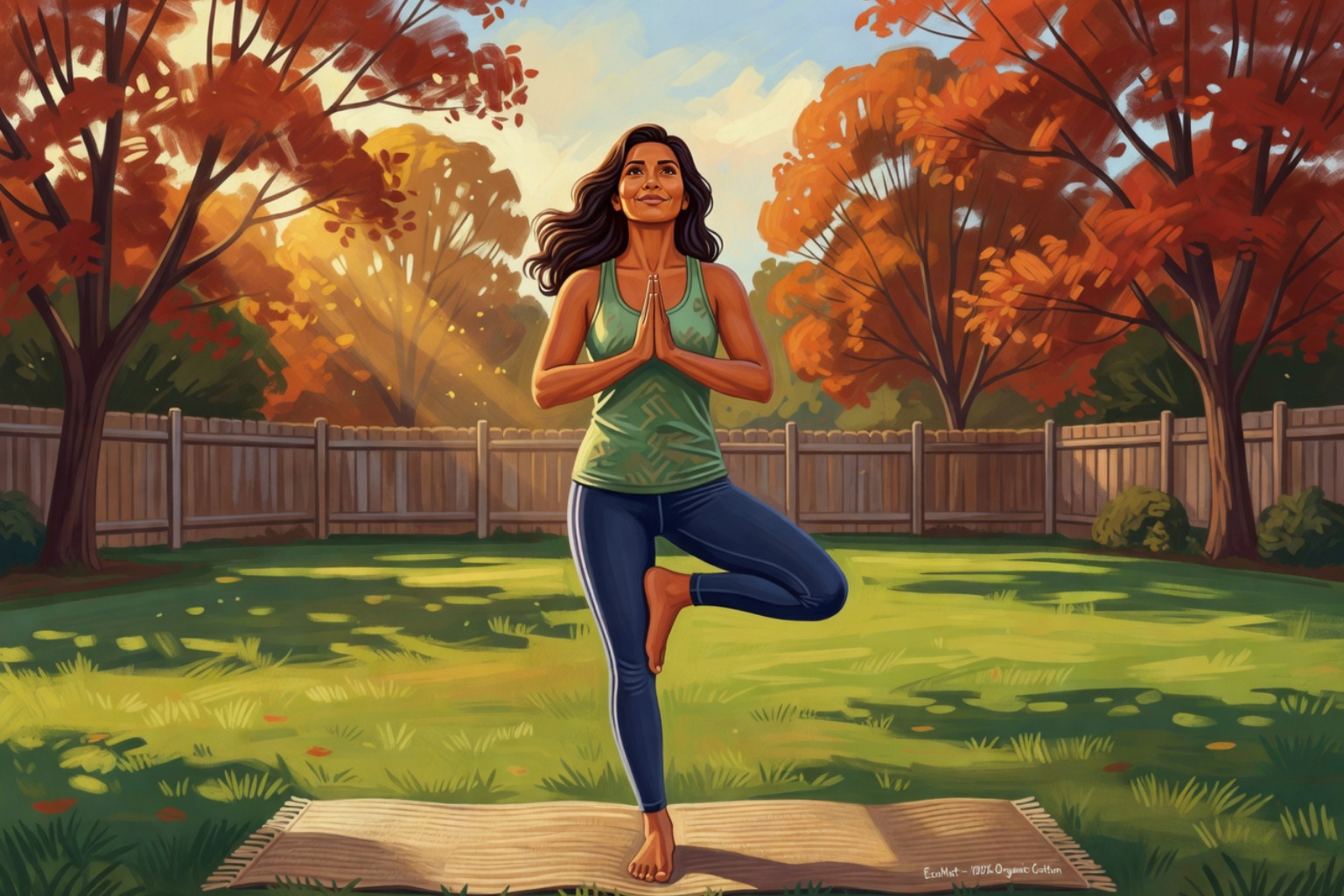
- Balance and Proprioception: Such as Tai Chi or standing on one leg, to improve stability.
- Postural Training: To ensure safe movement patterns.
Tai Chi, in particular, has been shown to decrease fall risk by up to 47% in some populations. By improving core stability and body awareness, older adults can navigate uneven sidewalks or dim lighting with greater confidence. Groove's Osteoporosis Starter Guide covers how to integrate these elements into a comprehensive plan.
Safety Protocols and Clinical Precautions for Osteoporotic Patients
Safety is paramount when exercising with low bone density. For individuals with a T-score of -2.5 or lower, certain movements can actually increase the risk of a vertebral fracture.
- Avoid Excessive Trunk Flexion: Bending forward at the waist (like a traditional sit-up or touching toes) puts high pressure on the front of the vertebrae.
- Limit Spinal Rotation: Deep twists, especially when forceful, can stress fragile spinal bones.
- Focus on Hip Hinges: Learn to bend at the knees and hips while keeping the back straight (the "neutral spine" position).
- Clinical Evaluation: Before starting any high-impact program, a clinical evaluation of fracture history and current BMD is necessary.
As Harvard Health advises, people over 65 or those with a history of fractures should consult a physical therapist or a specialized bone health physician to tailor their movements to their specific T-score. Pairing the right nutrition with your exercise program can further support safe bone-building.
Frequently Asked Questions about Exercise and Bone Density
Can exercise reverse bone loss in adults over 65?
Clinical evidence suggests that while "reversing" bone density to the levels of a 20-year-old is rare, exercise can increase BMD by 1% to 2% in older adults. More importantly, exercise improves bone quality — the internal architecture and "toughness" of the bone — which DXA scans don't always fully capture. This, combined with increased muscle strength, significantly reduces fracture risk even if the T-score only changes slightly.
Is walking alone sufficient to build bone density?
For most adults, walking alone is not enough to build new density, though it is excellent for maintaining what you have. To see an increase in bone mass, the skeleton needs the higher forces provided by resistance training or higher-impact activities. Walking should be viewed as the foundation of a program, not the entire structure.
What is the role of Whole Body Vibration (WBV) in bone health?
Whole Body Vibration involves standing on a vibrating platform. While some studies show it can improve balance and muscle power, its ability to significantly increase bone mineral density remains controversial and inconsistent in clinical literature. It may be a helpful supplement for those with very limited mobility, but it is generally not a replacement for active exercise.
Does nutrition affect how well exercise builds bone?
Yes. Bone remodeling requires adequate calcium, vitamin D, and protein to supply the raw materials for new bone tissue. Without proper nutrition, even the best exercise program may not reach its full potential. A supplement guide for bone density can help fill any gaps in your diet.
Your Next Steps for Stronger Bones
Bone health is a lifelong process of remodeling and maintenance. While bone loss is a natural part of aging, it is not an inevitable path to frailty. By understanding how mechanical loading, site-specific training, and progressive overload work together, older adults can take an active role in preserving their skeletal strength.
Groove Health offers a Medicare-covered bone health program that pairs you with a physician and a dedicated physical therapist. This team-based approach helps make each squat, walk, and balance exercise safer, more effective, and better matched to your needs. To see if this personalized, home-based care model is right for you, check your eligibility for Groove Health today.
Disclaimer: This content is for informational purposes only and does not constitute medical advice. Consult a qualified healthcare professional for diagnosis and treatment. If you are on Medicare and interested in a personalized bone health program, you can check your eligibility at groovehealth.com.
Works Cited
- Li X, Kordsmeier J, Xiong J. "New Advances in Osteocyte Mechanotransduction." Current Osteoporosis Reports, 2021.
- Bonewald LF, Johnson ML. "Osteocytes, Mechanosensing and Wnt Signaling." Bone, 2008.
- Rubin CT, Lanyon LE. "Regulation of bone formation by applied dynamic loads." Journal of Bone and Joint Surgery (American), 1984.
- Haapasalo H, Kontulainen S, Sievänen H, Kannus P, Järvinen M, Vuori I. "Exercise-induced bone gain is due to enlargement in bone size without a change in volumetric bone density: a peripheral quantitative computed tomography study of the upper arms of male tennis players." Bone, 2000.
- Massini DA, Nedog FH, de Oliveira TP, Almeida TAF, Santana CAA, Neiva CM, Macedo AG, Castro EA, Espada MC, Santos FJ, Pessôa Filho DM. "The Effect of Resistance Training on Bone Mineral Density in Older Adults: A Systematic Review and Meta-Analysis." Healthcare, 2022.
- Zhao F, Su W, Sun Y, Wang J, Lu B, Yun H. "Optimal resistance training parameters for improving bone mineral density in postmenopausal women: a systematic review and meta-analysis." Journal of Orthopaedic Surgery and Research, 2025.
- Shojaa M, Von Stengel S, Schoene D, Kohl M, Barone G, Bragonzoni L, Dallolio L, Marini S, Murphy MH, Stephenson A, Mänty M, Julin M, Risto T, Kemmler W. "Effect of Exercise Training on Bone Mineral Density in Post-menopausal Women: A Systematic Review and Meta-Analysis of Intervention Studies." Frontiers in Physiology, 2020.
- Palombaro KM. "Effects of walking-only interventions on bone mineral density at various skeletal sites: a meta-analysis." Journal of Geriatric Physical Therapy, 2005.
- Kelley GA, Kelley KS, Tran ZV. "Exercise and bone mineral density in men: a meta-analysis." Journal of Applied Physiology, 2000.
- Chen W, Li M, Li H, Lin Y, Feng Z. "Tai Chi for fall prevention and balance improvement in older adults: a systematic review and meta-analysis of randomized controlled trials." Frontiers in Public Health, 2023.
- Giangregorio LM, McGill S, Wark JD, Laprade J, Heinonen A, Ashe MC, MacIntyre NJ, Cheung AM, Shipp K, Keller H, Jain R, Papaioannou A. "Too Fit To Fracture: outcomes of a Delphi consensus process on physical activity and exercise recommendations for adults with osteoporosis with or without vertebral fractures." Osteoporosis International, 2015.
- de Oliveira RDJ, de Oliveira RG, de Oliveira LC, Santos-Filho SD, Sá-Caputo DC, Bernardo-Filho M. "Effectiveness of whole-body vibration on bone mineral density in postmenopausal women: a systematic review and meta-analysis of randomized controlled trials." Osteoporosis International, 2023.