Bone Health 101: Osteoporosis Facts & Tips
What is osteoporosis, how common is it, and what can you do about it? A quick primer on bone health, exercise, and the nutrients your bones need most.

What is Osteoporosis?
Osteoporosis ("porous bone") is a condition that results in weak, brittle bones. This increases the risk of fractures, most commonly experienced in the spine, hip, and wrist.
How Common is It?
If left untreated, 1 in 2 women and approximately 1 in 4 men over 50 will experience an osteoporosis-related fracture.
Why Does this Happen?
Bones are living tissue. They are constantly being remodeled throughout our lifetimes, through a balanced process of building and breaking down bone. In fact, every 10 years, you have a completely new skeleton! As we age, this process can become imbalanced, leading to more bone breakdown than formation. The biggest contributors to this imbalance include:
- Hormonal changes (especially estrogen loss in menopause)
- Poor nutrition
- Lack of exercise
- Certain medications and disease states
The Role of Hormones
During menopause, women lose estrogen, a key hormone that helps prevent unwanted breakdown of bone. Without estrogen, bone loss and muscle loss accelerate. In fact, women can lose 10–20% of their bone mass in the first 5–7 years after menopause.
The good news? Strength training and the right nutrients can help slow, stop, or even reverse this process.
How is Osteoporosis Diagnosed?
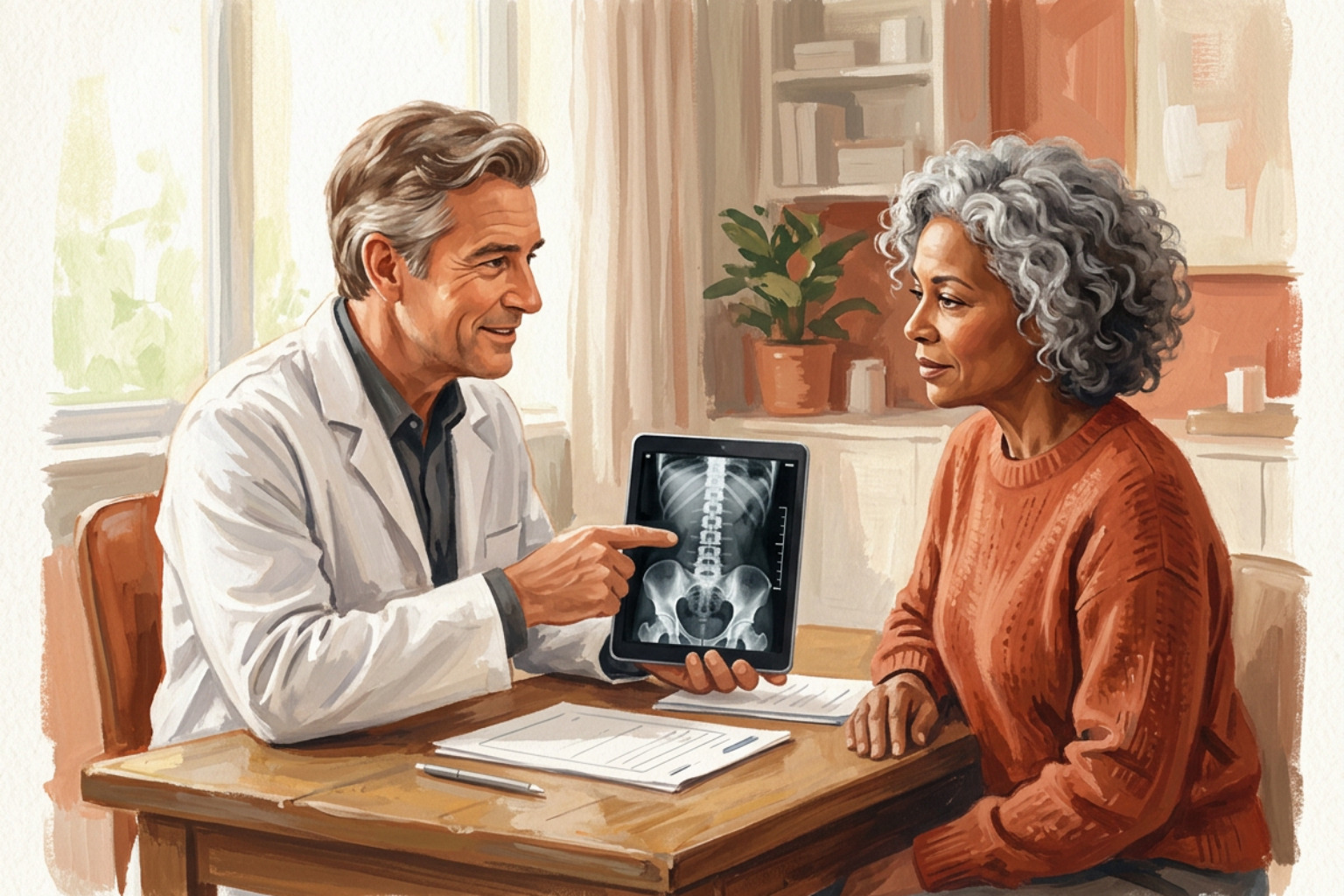
Osteoporosis is often called a "silent disease" because most people don't know they have it until they break a bone. The most common test for diagnosis is a DEXA scan, which measures bone density.
Exercise for Stronger Bones
Strength training and weight-bearing exercises are some of the best ways to prevent osteoporosis. People who stay active have 5–15% stronger bones than those who are sedentary!
Even if you've been diagnosed with osteoporosis or osteopenia, exercise can help. Studies show that:
- You can build 1–3% more bone mass with exercise alone
- Targeted strength and stability training can cut fracture risk by up to 50%-60%
- Even without medication, strength training is the most powerful non-drug tool for building bone and preventing fractures
Here at Groove Health, we are experts in conditions like osteoporosis and osteopenia. Meet with one of our coaches to get a custom plan for managing your bone health. Click here to get started.
Nutrition for Bone Health
Your bones need key nutrients to stay strong, including:
- Calcium – The main building block of bone, found in dairy, kale, and broccoli
- Vitamin D – Helps absorb calcium, found in fatty fish, eggs, and dairy
- Protein – Essential for bone repair, found in meat, fish, beans, eggs, dairy, and quinoa
Recommended daily intakes:
- 1,000–1,200 mg of calcium per day
- 800–1,200 IU of vitamin D per day
- 70–100 grams of protein per day for most women
Disclaimer: The information provided in this article is for educational purposes only and is not intended to serve as medical advice. This content should not be used to diagnose or treat any health condition, nor should it replace consultation with qualified healthcare professionals. Always consult with your physician or other qualified healthcare provider regarding any medical concerns, before starting any new diet, exercise program, or taking/discontinuing any medication. Individual needs vary, and your healthcare provider can offer personalized recommendations based on your specific health situation.
Works Cited
- National Institute of Arthritis and Musculoskeletal and Skin Diseases. "Osteoporosis." NIAMS, National Institutes of Health, 2023.
- Bone Health & Osteoporosis Foundation. "What Women Need to Know." Bone Health & Osteoporosis Foundation, 2025.
- Watson SL, Weeks BK, Weis LJ, et al. "High-Intensity Resistance and Impact Training Improves Bone Mineral Density and Physical Function in Postmenopausal Women With Osteopenia and Osteoporosis (LIFTMOR)." Journal of Bone and Mineral Research, 2018.
- NIH Office of Dietary Supplements. "Calcium: Fact Sheet for Health Professionals." National Institutes of Health, 2024.
- NIH Office of Dietary Supplements. "Vitamin D: Fact Sheet for Health Professionals." National Institutes of Health, 2024.