
Medicare Coverage for Bone Health: A Guide
Medicare can cover your bone density scans, osteoporosis medications, and fracture-prevention care, but only if you meet specific criteria. Here's who qualifies and how to keep costs low.
What Medicare Covers for Bone Health — and Why It Matters
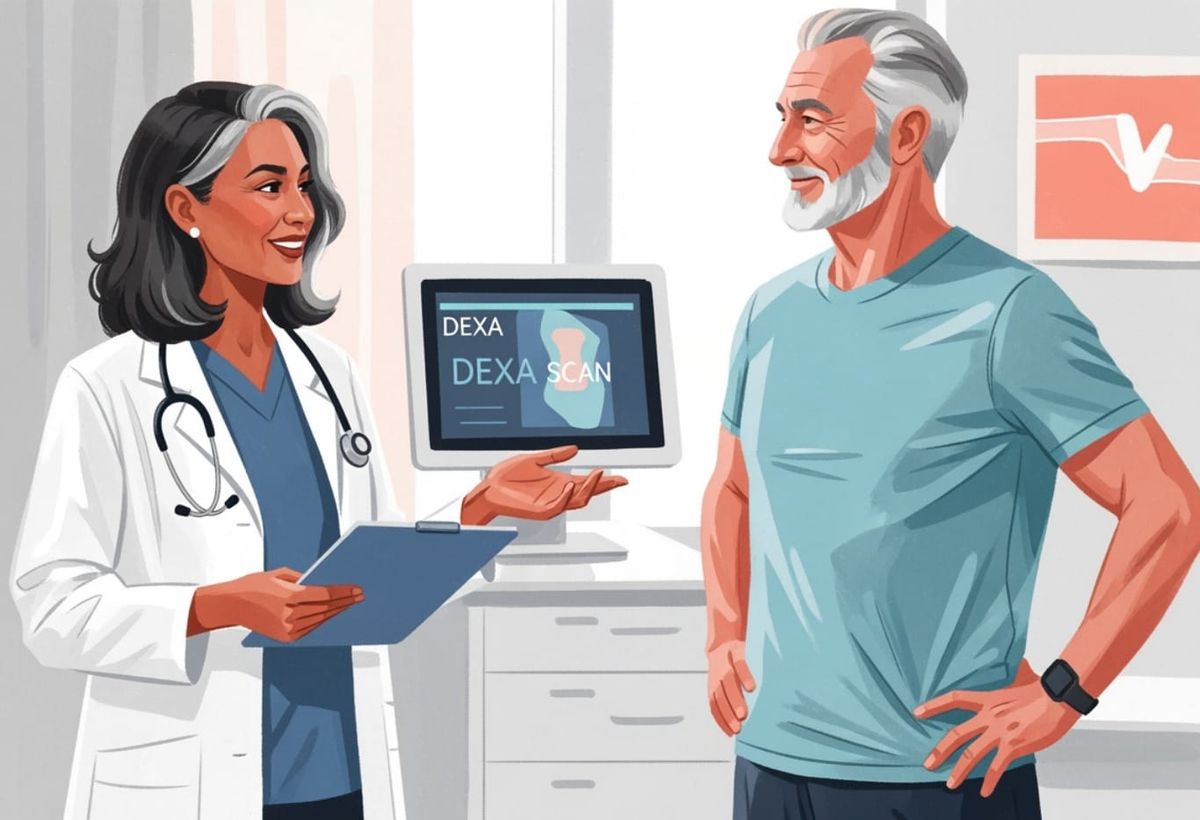
Medicare covers a range of bone health services to give eligible beneficiaries access to bone density testing, osteoporosis medications, and related care — often at no out-of-pocket cost when the right conditions are met.
Here is a quick summary for those who want the essentials:
| What Medicare Covers | Key Details |
|---|---|
| Bone density (DEXA) scans | Once every 24 months for eligible beneficiaries; more often if medically necessary |
| Who qualifies | Estrogen-deficient women at risk, individuals with vertebral abnormalities, long-term steroid users, those with hyperparathyroidism, or anyone monitoring current osteoporosis treatment |
| Cost for qualifying tests | $0 if your provider accepts Medicare |
| Injectable osteoporosis drugs | Injections given at a doctor's office are typically covered under Part B. Home-injection coverage is available under strict conditions for postmenopausal women with fractures. |
| Oral osteoporosis medications | Covered under Part D; costs vary by plan |
| Medicare Advantage | Must offer at least the same level of coverage as Original Medicare, but you may need to stay in-network. |
Bone loss happens slowly and quietly. Osteoporosis makes bones weaker, more brittle, and more likely to break, often with zero symptoms until a fracture actually occurs. Right now, more than 10 million Americans have osteoporosis, and another 43 million have low bone density (osteopenia).
The good news? Medicare covers bone density testing, medications, and preventive care. If your doctor accepts Medicare, you can often get your bone density scans with no out-of-pocket costs.
This guide explains exactly who qualifies, how coverage works across Medicare Parts A, B, C, and D, what treatments are covered beyond testing, and how to avoid unexpected out-of-pocket costs.
Clinical Criteria: Who Qualifies as an At-Risk Beneficiary
Medicare does not offer bone density screenings to every beneficiary as a universal baseline. Instead, coverage is based on specific clinical risk factors that suggest a higher probability of bone loss or fracture. According to Medicare.gov, Medicare Part B covers these tests for if you meet at least one of five specific criteria.
The main goal of these criteria is to identify people whose bone remodeling process has become imbalanced. In this cycle, osteoclasts break down old bone and osteoblasts build new bone. When breakdown happens faster than rebuilding, bone mineral density (BMD) falls, which can lead to osteopenia or osteoporosis. To see if you qualify for specialized support, you can check your eligibility for bone health support.
Coverage for Estrogen-Deficient Women at Risk
The most common qualifying group includes women who are estrogen-deficient and at clinical risk for osteoporosis. Estrogen plays a vital role in inhibiting the activity of osteoclasts, the cells that break down bone. So, when estrogen levels drop during menopause, bone loss speeds up. If your doctor determines you are at risk based on your medical history, weight, or family history of hip fractures, Medicare covers the scan.
How Medicare Evaluates Medical Necessity
Beyond estrogen deficiency, Medicare covers bone mass measurements for several other medical scenarios:
- Vertebral Abnormalities: If an X-ray shows signs of bone loss, low mass, or possible spinal fractures, Medicare covers a follow-up scan to confirm a diagnosis.
- Steroid-Induced Bone Loss: f you have been taking prednisone or other steroid medications (glucocorticoids) for more than three months, you qualify. These drugs directly interfere with how your body builds bone and absorbs calcium.
- Primary Hyperparathyroidism: Overactive parathyroid glands release too much hormone, which causes calcium to be pulled out of your bones and into your bloodstream.
- Monitoring Therapy: If you are already diagnosed and taking an FDA-approved osteoporosis medication, Medicare covers routine scans to see if your treatment is working.
Bone Mass Measurement Protocols: DEXA Scan Frequency and Diagnostic Accuracy
Medicare generally follows a "24-month rule," meaning it will pay for a bone density test once every two years. There are exceptions. If a physician determines that more frequent testing is medically necessary, such as for someone on high-dose steroids or a patient whose treatment plan needs urgent adjustment, Medicare may cover the scan sooner.
The Role of Dual-Energy X-ray Absorptiometry in Clinical Diagnosis
The gold standard for measuring bone health is a Central DEXA scan. It’s a quick, painless test that uses very low-dose X-rays to check your spine and hip—the areas most vulnerable to serious fractures.
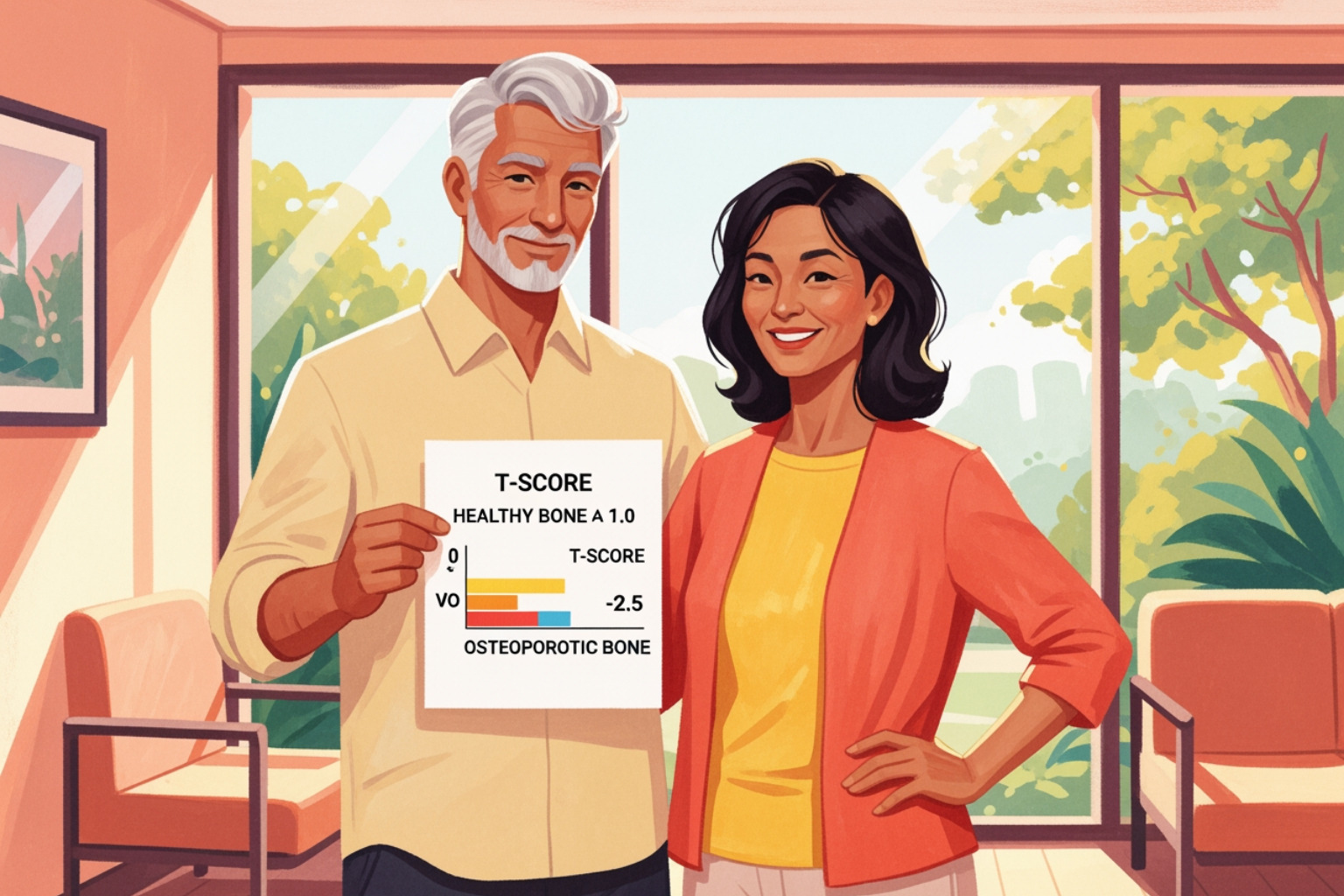
The results are reported as a T-score, which compares your bone density to that of a healthy 30-year-old.
- -1.0 or higher: Normal bone density.
- -1.0 to -2.5: Osteopenia (low bone mass).
- -2.5 or lower: Osteoporosis.
For more information on these diagnostic tools, you can learn more about bone density scans or review the Bone Mass Measurements on Medicare Interactive.
Peripheral Bone Density Testing and Initial Screenings
Note on Peripheral Tests: You might see smaller devices used at health fairs or clinics to scan your wrist, finger, or heel (called peripheral tests). While Medicare covers these as initial screenings, they aren't as accurate as a central DEXA scan. If a peripheral test shows low bone density, we will want to get a central DEXA scan of your hip or spine to get a definitive diagnosis.
Pharmacological Management: Medicare Part B and Part D Coverage for Osteoporosis
If we diagnose you with osteoporosis or severe osteopenia, medication may be necessary to lower your risk of breaking a bone. Medicare divides this coverage between Part B and Part D based on how the drug is given. Detailed information is available regarding osteoporosis drug coverage.
Medicare Part B Coverage for Injectable Medications
Part B covers injections administered directly by a healthcare provider in an office or clinic, such as Prolia (denosumab) or Reclast (zoledronic acid).
Separately, Part B can cover a home health nurse to administer these injections, but only if you meet very specific criteria:
- You are woman with postmenopausal osteoporosis.
- You have had a fracture related to postmenopausal osteoporosis.
- You meet Medicare’s home health "homebound" criteria.
- You don't have a family member or caregiver available who can give you the injection.
In these specific cases, Part B may cover the drug and a home health nurse to give the injection, though the Part B deductible and usually 20% coinsurance still apply.
Medicare Part D and Self-Administered Oral Medications
If you take oral pills (like alendronate/Fosamax) or self-administered injections at home, your coverage goes through your private Medicare Part D prescription plan.
Financial Safety Net: Due to the Inflation Reduction Act, starting in 2025 there is now a $2,000 annual out-of-pocket cap on covered Part D prescription drugs. Once you hit that limit in a calendar year, you pay $0 for your covered medications for the rest of that year.
Most beneficiaries receive osteoporosis treatment through oral bisphosphonates, like alendronate, or self-administered injections. Low-income individuals may also qualify for the Extra Help program to further reduce premiums and copays.
Economic Impact of Bone Health Services: Deductibles, Coinsurance, and Plan Variations
To keep your costs low for preventive scans, keep this in mind:
- Check the Doctor’s "Assignment": Make sure your doctor accepts Medicare assignment. This means they agree to accept the Medicare-approved amount as full payment. If they do, a preventive DEXA scan costs you nothing.
For more details on these costs, you can read Medicare.gov: Osteoporosis drug coverage or Visit Groove Health.
Comparing Original Medicare and Medicare Advantage for Bone Health
| Feature | Original Medicare | Medicare Advantage (Part C) |
|---|---|---|
| DEXA Scan Cost | $0 (Preventive) | $0 (if in-network) |
| Provider Choice | Any provider accepting Medicare | Limited to plan network |
| Drug Coverage | Requires separate Part D plan | Usually included (MAPD) |
| Additional Benefits | Limited | May include fitness programs (SilverSneakers) |
While Medicare Advantage plans are legally required to cover the same baseline services as Original Medicare, their rules differ on where you can go.
- Original Medicare: You can see any provider in the country who accepts Medicare.
- Medicare Advantage (Part C): You generally must use an in-network facility. If you go out-of-network for your DEXA scan, you might get hit with a surprise bill. Always call your plan first to confirm the facility is in-network.
Avoiding Unexpected Out-of-Pocket Costs
A common pitfall occurs when a "preventive" scan becomes a "diagnostic" service. If a physician orders a scan because of a specific symptom or to monitor a known condition, it may be billed as diagnostic. In this case, the Part B deductible and 20% coinsurance apply. You can ask the physician or their office how the test will be coded before the appointment.
Multidisciplinary Fracture Prevention: Physical Therapy and Home-Based Care Models
Bone health is about more than just density; it is about the structural integrity of the skeleton and the strength of the muscles supporting it. Medicare Part B covers medically necessary physical therapy, which is crucial for fracture prevention. You can find more details on Medicare.gov: Bone Mass Measurements coverage.
Clinical Evidence: Why Movement Matters
Clinical research has shown that bones are living tissue that respond to physical stress. When you perform targeted exercises, you stimulate cells to build denser bone. A comprehensive plan should include:
- High Impact Weight-Bearing Exercise: Dancing, climbing stairs, and jumping forces your body to work against gravity, triggering bone growth.
- Resistance Training: Using weights strengthens muscles and protects your joints.
- Balance Training: Practicing specific movements or Tai Chi improves your spatial awareness and prevents the falls that lead to hip fractures.
Personalized Care Coordination for Long-Term Bone Health
Managing bone health can feel overwhelming, which is why integrated care models are so valuable. Groove Health provides personalized, home-based care plans. This approach pairs you with a physician and physical therapist, ensures your movement plan is safe for any medical conditions you may have, tracks your exercise plan, and gives you structured support without making you drive to multiple appointments.
Frequently Asked Questions about Medicare Bone Health
Does Medicare cover bone density tests for men?
Yes. While the criteria for women often focus on estrogen deficiency, men qualify if they have other risk factors, such as long-term steroid use, primary hyperparathyroidism, or X-ray evidence of vertebral fractures.
How often can I receive a covered DEXA scan if I am on high-dose steroids?
While the baseline rule is once every 24 months, Medicare allows for more frequent testing if your physician provides medical documentation showing that monitoring aggressive bone loss from steroid use is necessary.
Will Medicare pay for a home health nurse to give me osteoporosis injections?
Only under strict limitations. You must be a postmenopausal woman with a documented osteoporosis-related fracture, be certified as homebound, and have no one else available to administer the shot. .
Your Next Steps Toward Stronger Bones
Navigating Medicare & bone health coverage shouldn't stand in your way of protecting your independence and mobility. By utilizing the preventive benefits available under Part B, such as routine DEXA scans, you can catch bone loss early. Whether through taking a medication covered by Part D or specialized exercise and physical therapy, managing osteoporosis is a long-term commitment. Programs like Groove Health further support this journey by providing integrated, expert care directly to the home, ensuring that you can have the tools needed to prevent fractures and build stronger bones.
Works Cited
- Bone Health & Osteoporosis Foundation. "Clinician’s Guide to Prevention and Treatment of Osteoporosis." 2022.
- Bouxsein, M. L., et al. "Change in Bone Density and Reduction in Fracture Risk: A Meta-Regression of Published Trials." Journal of Bone and Mineral Research, 34(4), 632–642, 2019.
- Centers for Medicare & Medicaid Services. "Medicare & You 2026." 2026.
- National Institute of Arthritis and Musculoskeletal and Skin Diseases (NIAMS), National Institutes of Health. "Osteoporosis." Accessed June 2026.
- Social Security Administration. "Compilation of the Social Security Laws: § 1861(rr) — Bone Mass Measurement." Title XVIII of the Social Security Act.
- Watson, S. L., et al. "High-Intensity Resistance and Impact Training Improves Bone Mineral Density and Physical Function in Postmenopausal Women With Osteopenia and Osteoporosis: The LIFTMOR Randomized Controlled Trial." Journal of Bone and Mineral Research, 33(2), 211–220, 2018.
Disclaimer: This content is for informational purposes only and does not constitute medical advice. Consult a qualified healthcare professional for diagnosis and treatment. If you are on Medicare and interested in a personalized bone health program, you can check your eligibility at groovehealth.com.