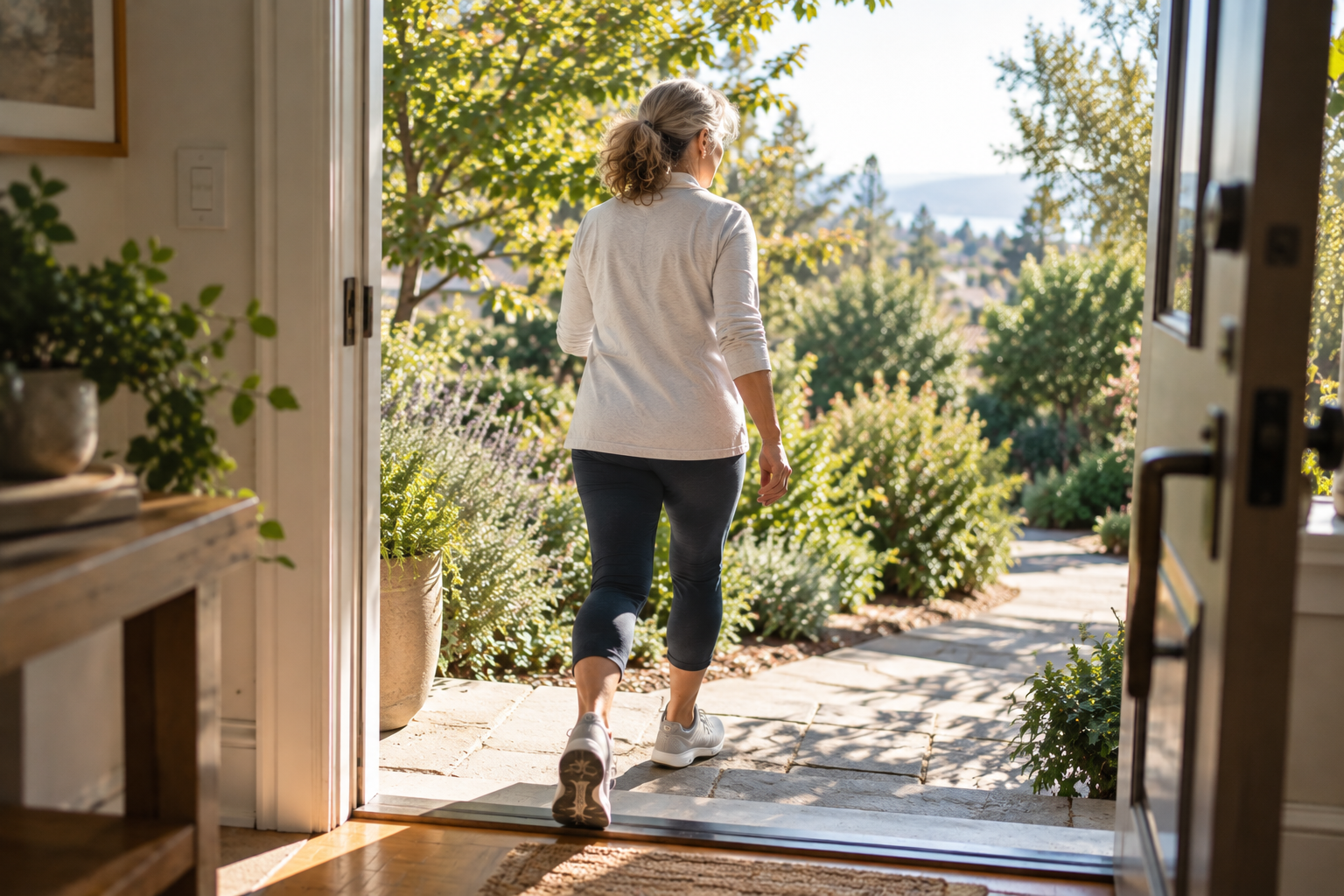
How to Lift Without the Shift: Safe Workouts for Osteoporosis
Safe, targeted exercises can help strengthen bone, improve balance, and reduce fracture risk. Learn which resistance, weight-bearing, and balance moves are backed by clinical research.
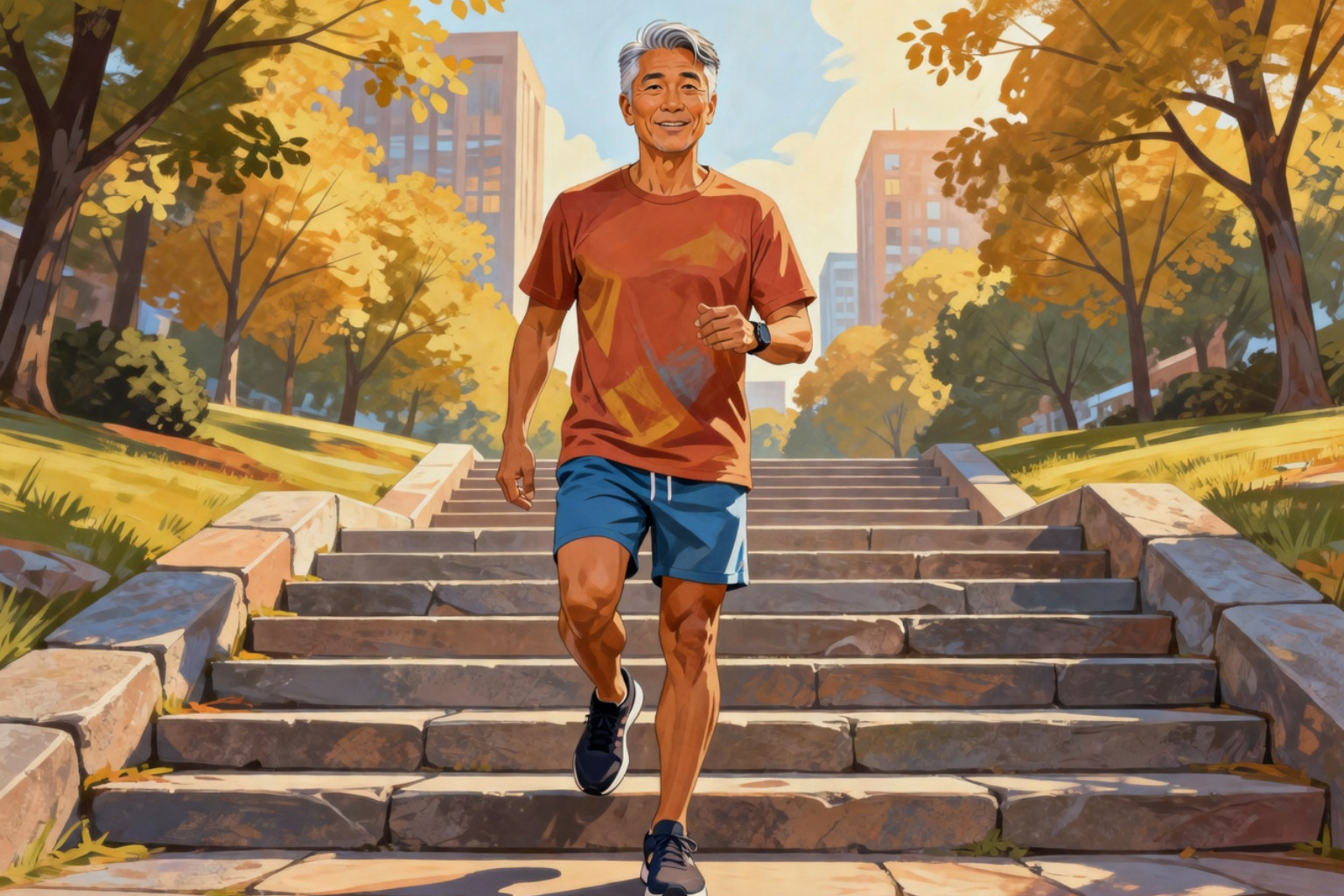
What Are the Best Osteoporosis Exercises? A Clinical Overview
The best osteoporosis exercises combine four evidence-based movement categories that work together to strengthen bone, improve balance, and reduce fracture risk:
| Exercise Category | Primary Benefit | Examples |
|---|---|---|
| Weight-bearing aerobics | Stimulates bone formation through gravitational load | Walking, dancing, stair climbing |
| Resistance training | Increases bone mineral density (BMD) via muscle pull on bone | Free weights, resistance bands, bodyweight squats |
| Balance training | Reduces fall risk and improves proprioception | Tai chi, single-leg stands, tandem walking |
| Flexibility and posture | Corrects kyphosis, reduces spinal compression fracture risk | Shoulder blade squeezes, gentle stretching |
Your bones are living tissue. They are constantly being broken down by cells called osteoclasts and rebuilt by cells called osteoblasts, a process known as bone remodeling. In osteoporosis, breakdown happens faster than rebuilding, which leaves bones weaker, thinner, and more likely to fracture.
The consequences are serious. About half of women and one in four men over age 50 will have an osteoporosis-related fracture during their lifetime. Yet after diagnosis, many people become less active because they understandably fear getting hurt, even though avoiding movement can be the wrong response.
The evidence points in the opposite direction.
Programs that combine balance, strength, and resistance training may cut the risk of falls that lead to fractures by more than 60%, based on a BMJ analysis. Exercise does more than help prevent falls. If a fall happens, stronger muscles can help cushion and support vulnerable bones, which may lessen how severe an injury becomes.
The sections below break down exactly which movements are most effective, how to perform them safely, what to avoid entirely, and how to build a program matched to your current bone density and fracture history.
The Clinical Role of Mechanical Loading in Bone Remodeling
To understand why exercise works, one must look at Wolff’s Law, a principle of bone physiology developed in the 19th century that remains foundational today. It states that bone grows or remodels in response to the forces or demands placed upon it. When you subject bone to mechanical loading, it triggers a process called mechanotransduction.
During this process, bone cells (osteocytes) sense the mechanical strain and signal osteoblasts to deposit new bone mineral. This increases bone mineral density (BMD). However, this effect is site-specific. If you walk, you strengthen your hips and legs; if you lift weights with your arms, you strengthen your wrists and spine.
Bones consist of two main types of tissue: trabecular bone (the spongy, honeycomb-like inner layer) and cortical bone (the hard outer shell). Trabecular bone has a higher turnover rate, making it more responsive to exercise but also more vulnerable to rapid loss during menopause or aging. By engaging in consistent loading, individuals can help preserve these delicate structures.
Get a personalized plan to support your bone health
Four Categories of Bone-Building Exercise
Clinical guidelines from organizations like Harvard Health emphasize a multi-modal approach. For an exercise to be effective for bone health, it must be weight-bearing — meaning you are working against gravity.
| Impact Level | Description | Examples |
|---|---|---|
| Low-Impact | One foot stays on the ground; lower joint stress. | Walking, elliptical training, low-impact aerobics. |
| Moderate-Impact | Brief moments where both feet leave the ground; higher bone stimulation. | Brisk walking, hill climbing, "stomping," dancing. |
| High-Impact | Significant force; highest bone density gains but higher fracture risk. | Jogging, jumping rope, tennis. |
Note: High-impact activities should only be performed by those with a low fracture risk and under the guidance of a professional.
Resistance Training Protocols for Improving Bone Mineral Density
Research, including the landmark LIFTMOR trial, indicates that "gentle" exercise is often insufficient to trigger bone growth. To stimulate osteoblasts, the load must be significant. Clinical consensus suggests aiming for 70-80% of a 1-Rep Max (1RM). This means lifting a weight heavy enough that the final repetition in a set of 8 to 12 is difficult to complete with good form.
This "progressive overload" causes myofibrillar hypertrophy (muscle growth) and places enough tension on the tendons to pull on the bone, signaling it to thicken. Key targets include the hip abductors (muscles on the side of the hip) and spinal extensors (muscles that keep the back upright). Strengthening these areas provides a "muscular corset" that protects the most fracture-prone areas.
How to Start a Resistance Program
When starting a resistance program, individuals can use free weights, resistance bands, or even body weight. The goal is to reach muscle fatigue within 8-12 repetitions, performed 2 to 3 times per week. If your diagnosis is osteopenia rather than osteoporosis, see our dedicated guide to weight training for osteopenia.
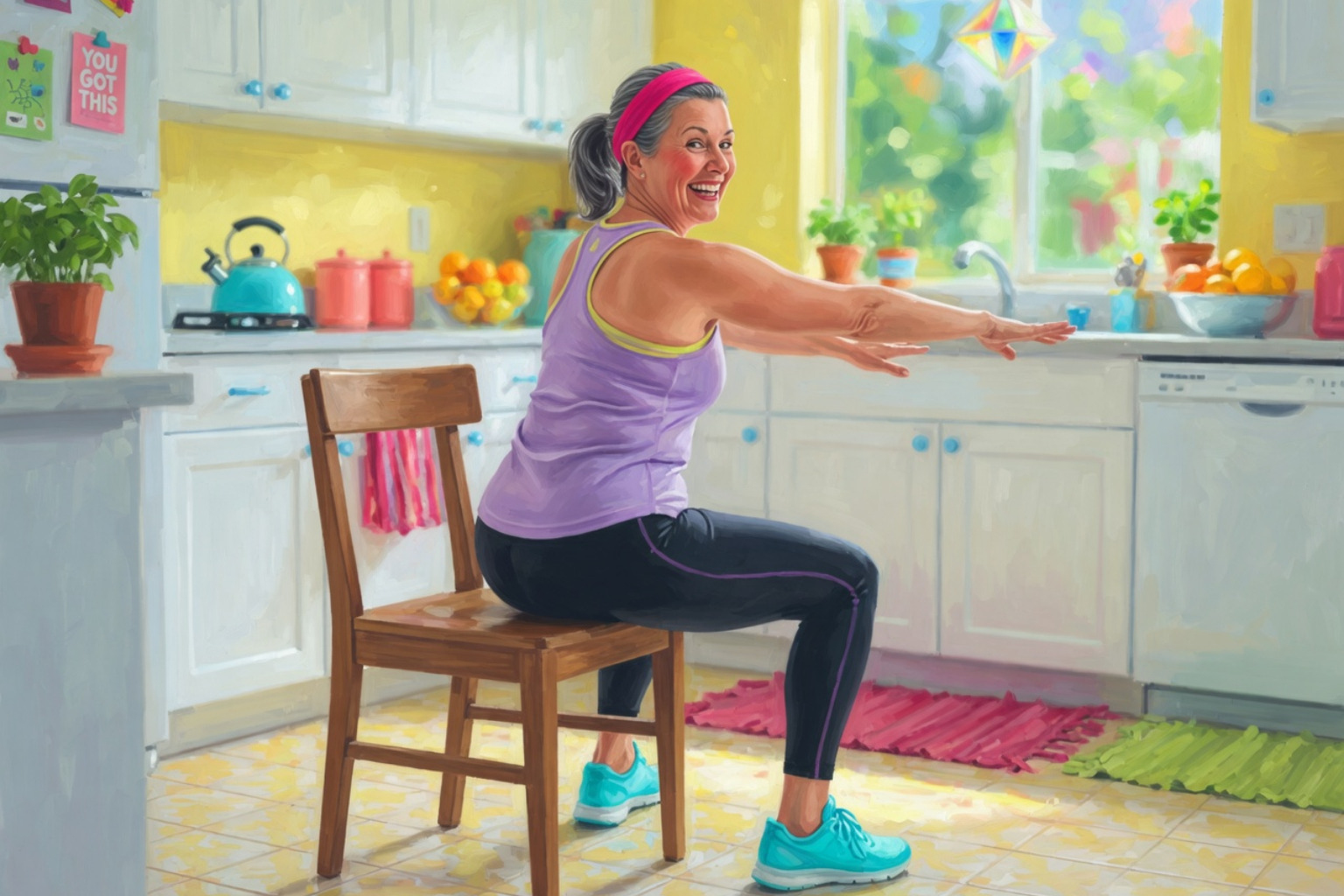
A fundamental exercise is the "sit-to-stand." This functional movement mimics daily activity but, when performed in sets, builds significant lower-body strength. It is critical to avoid "plopping" back into the chair, as the sudden impact can be jarring to a fragile spine. Instead, the movement should be slow and controlled.
Site-Specific Loading for Fracture-Prone Areas
Because osteoporosis often affects the hips, spine, and wrists, it helps to choose exercises that load those areas safely. One simple option for the hips is heel drops or firm stomps, done in a controlled way if your clinician says impact is appropriate for you. For the wrists and arms, gentle weight-bearing moves such as wall push-ups can provide useful loading without excessive strain.
Fall Prevention and Postural Stability Strategies
While bone density is the hardware, proprioception (the body's ability to sense its position in space) is the software. Improving your center of gravity is essential for preventing the falls that lead to fractures. Furthermore, many individuals with osteoporosis develop kyphosis, or a rounded upper back. This forward-leaning posture increases the load on the front of the vertebrae, raising the risk of spinal compression fractures.
Stanford Medicine's Strong for Life Program highlights the importance of multi-component programs that include balance and posture.
Effective Balance and Posture Drills
Effective balance training should make the participant feel slightly "wobbly" — this indicates the nervous system is being challenged.
- Single-leg stands: Standing on one leg while holding a sturdy chair for safety.
- Tandem walking: Walking heel-to-toe as if on a tightrope.
- Shoulder blade squeezes: Pulling the shoulders back and down to strengthen the upper back and counteract slouching.
Contraindications and Safety Precautions to Prevent Fractures
Not all movement is safe for someone with low bone mass. The most common site for osteoporotic fractures is the spine, and most of these occur during spinal flexion (bending forward) or trunk rotation (twisting).
To stay safe, individuals should:
- Avoid toe touches and sit-ups: Bending forward at the waist puts extreme pressure on the front of the vertebrae.
- Avoid forceful twisting: Movements like a vigorous golf swing or certain yoga twists can cause "shear" force on the spine.
- Monitor T-scores: Those with a T-score of -2.5 or lower should be particularly cautious with high-impact activities like jumping or running.
For a detailed safety checklist, refer to Kaiser Permanente’s stay active guide.
Developing a Personalized Exercise Prescription
Because the severity of osteoporosis varies, there is no one-size-fits-all plan. A personalized prescription often begins with a DEXA scan to identify specific areas of low density.
Groove Health provides a Medicare-covered program that pairs older adults with a physician and a dedicated physical therapist. This team creates a home-based plan that accounts for your T-scores and fracture history, ensuring you are lifting enough to build bone without overstepping safety boundaries.
Frequently Asked Questions about Osteoporosis Exercises
Is swimming or cycling effective for building bone density?
While swimming and cycling are excellent for cardiovascular health and muscle endurance, they are non-weight-bearing. Because the water’s buoyancy or the bike’s frame supports the body, there is no gravitational stress on the bones. They should be used for heart health but supplemented with the best osteoporosis exercises like walking or weightlifting to protect the skeleton.
How often should someone with osteoporosis perform resistance training?
The general clinical recommendation is 2 to 3 days per week, with at least 48 hours of rest between sessions for the same muscle groups. Bone, like muscle, requires recovery cycles to repair and strengthen after the "stress" of a workout.
Are yoga and Pilates safe for individuals with low bone mass?
Yoga and Pilates offer excellent benefits for balance and flexibility. However, many traditional poses involve deep spinal flexion (like "Cat-Cow" or "Child's Pose") or twisting. It is vital to work with an instructor who is certified in osteoporosis modifications and to always keep the spine in a "neutral" or straight position.
The Right Challenge for Stronger Bones
Managing osteoporosis does not mean avoiding challenge. It means choosing the right kind of challenge. Safe, targeted mechanical loading through weight-bearing movement, progressive strength training, and balance work can help support bone remodeling, improve function, and lower fall risk. Fracture concerns are valid, but avoiding all effort is not the answer. Smart movement is one of the most effective tools for protecting bone health.
Learn more about Groove Health
Works Cited
- Harvard Health Publishing. "Effective Exercises for Osteoporosis." Harvard Health, 2021.
- Kaiser Permanente. "Osteoporosis: Stay Active and Exercise to Stay Strong." Kaiser Permanente Health Education, 2023.
- Bone Health & Osteoporosis Foundation. "Exercise/Safe Movement." Bone Health & Osteoporosis Foundation, 2024.
- Stanford Medicine. "Strong for Life Exercise Program." Stanford Medicine, 2024.
- Watson, S. L., et al. "High-Intensity Resistance and Impact Training Improves Bone Mineral Density and Physical Function in Postmenopausal Women With Osteopenia and Osteoporosis: The LIFTMOR Randomized Controlled Trial." Journal of Bone and Mineral Research, 2018.
- El-Khoury, F., et al. "The Effect of Fall Prevention Exercise Programmes on Fall Induced Injuries in Community Dwelling Older Adults." BMJ, 2013.
This content is for informational purposes only and does not constitute medical advice. Consult a qualified healthcare professional for diagnosis and treatment. If you are on Medicare and interested in a personalized bone health program, you can check your eligibility at groovehealth.com.