What Bone Changes Happen During Menopause? The Timeline of Loss
In the years around menopause, falling estrogen accelerates bone loss and reshapes your skeleton. Here's the timeline of what happens and the steps that help protect your bones.
Menopause Bone Changes: Why Your Bones Need Attention Now
The change in bone that menopause causes can begin earlier than most women expect, and the effects on the skeleton are significant.
Here is a quick summary of what happens to your bones during and after menopause:
- Bone density drops fast. On average, women lose about 10% of their bone density across the decade spanning menopause, with the most rapid loss happening in the one to two years near the final menstrual cycle.
- Bones become more porous. Lower estrogen speeds up the breakdown of bone faster than the body can replace it, making bones more fragile over time.
- Bone shape changes. The outer surface of bone slowly widens, and the hollow inner cavity expands, altering bone structure beyond just density.
- Fracture risk rises. About one in two women over the age of 50 will experience at least one broken bone linked to bone thinning.
- The process is silent. Most women have no symptoms until a fracture occurs.
Menopause is the point when a woman's periods stop permanently, which most commonly happens between the ages of 45 and 55. The years leading up to it, called perimenopause, are when estrogen levels begin to fall. Estrogen acts like a brake on the cells that break down bone. When estrogen drops, that brake lifts, and bone loss accelerates.
To understand this process, it helps to look at how your bones stay strong. Bone is living tissue that is constantly being broken down and rebuilt. This process is called bone remodeling. Two main types of cells do this work: osteoclasts (cells that break down and remove old bone) and osteoblasts (cells that lay down new bone). Under normal conditions, these cells work in perfect balance. Estrogen acts like a protective shield for your skeleton by keeping the bone-breaking cells in check and helping the bone-building cells do their job. When estrogen drops, this balance is lost, and the osteoclasts work much faster than the osteoblasts can keep up with.
The good news? These changes are not inevitable or untreatable. Understanding what is happening inside your skeleton is the first step toward protecting it.
How Menopause Changes Your Bones

Understanding The Bone Changes Menopause Triggers Over Time
The drop in bone density during the menopausal years does not happen at a steady pace. Instead, it follows a specific timeline.
The fastest bone loss usually begins about one year before the final menstrual period and continues for roughly two to three years afterward. In this transition window, studies show average losses of around 2% to 3% per year at the spine, with somewhat slower losses at the hip. Across the decade spanning menopause, cumulative loss averages about 10% at the spine, though the exact amount varies by baseline bone density, genetics, body weight, medications, smoking, nutrition, and activity level. These transmenopausal loss rates were documented in the SWAN cohort study.
After this rapid phase, the rate of loss slows down to about 1 percent per year, but it continues for the rest of a woman's life. This rapid decline is the main reason why postmenopausal women face a much higher risk of developing fragile bones, as explained in our article on how menopause causes osteoporosis.
Beyond Density: Changes in Bone Size and Shape
Most people only focus on bone density, which is the amount of mineral packed into your bones. However, research shows that menopause also changes the physical size and shape of your bones.
As estrogen drops with age, your bones can change in two main ways:
- The inside space gets larger: Long bones have a hollow center. After menopause, this inner space can slowly widen, meaning there is less solid bone around it. Research suggests it may widen by about 1.1 percent per year after menopause.
- The outside edge gets slightly wider: At the same time, the outer surface of the bone may slowly expand. This is your body’s way of trying to make up for bone loss on the inside. Research suggests the outer width may increase by about 0.7 percent per year.
This outer growth is your body's natural way of trying to keep the bone from breaking. A wider tube is structurally stronger than a narrow one, even if the walls are thinner.
How Estrogen Loss Accelerates Bone Thinning
When bone loss begins, it usually progresses through two stages:
- Osteopenia: This means your bones are thinner than normal, but not yet fragile enough to break easily. Think of it as a warning sign.
- Osteoporosis: This is a more advanced stage where bones become highly porous and fragile, resembling a honeycomb with large holes.
Without estrogen to protect your osteoblasts, your bones lose their internal support beams. This raises your risk of a fracture, which is a broken bone. About half of all women over the age of 50 will break a bone due to osteoporosis. The most common sites for these breaks are the hip, spine, and wrist.
To learn more about how estrogen loss directly changes cell activity, read our article on how does estrogen affect osteoblasts and osteoclasts?.
How Doctors Diagnose Postmenopausal Bone Loss
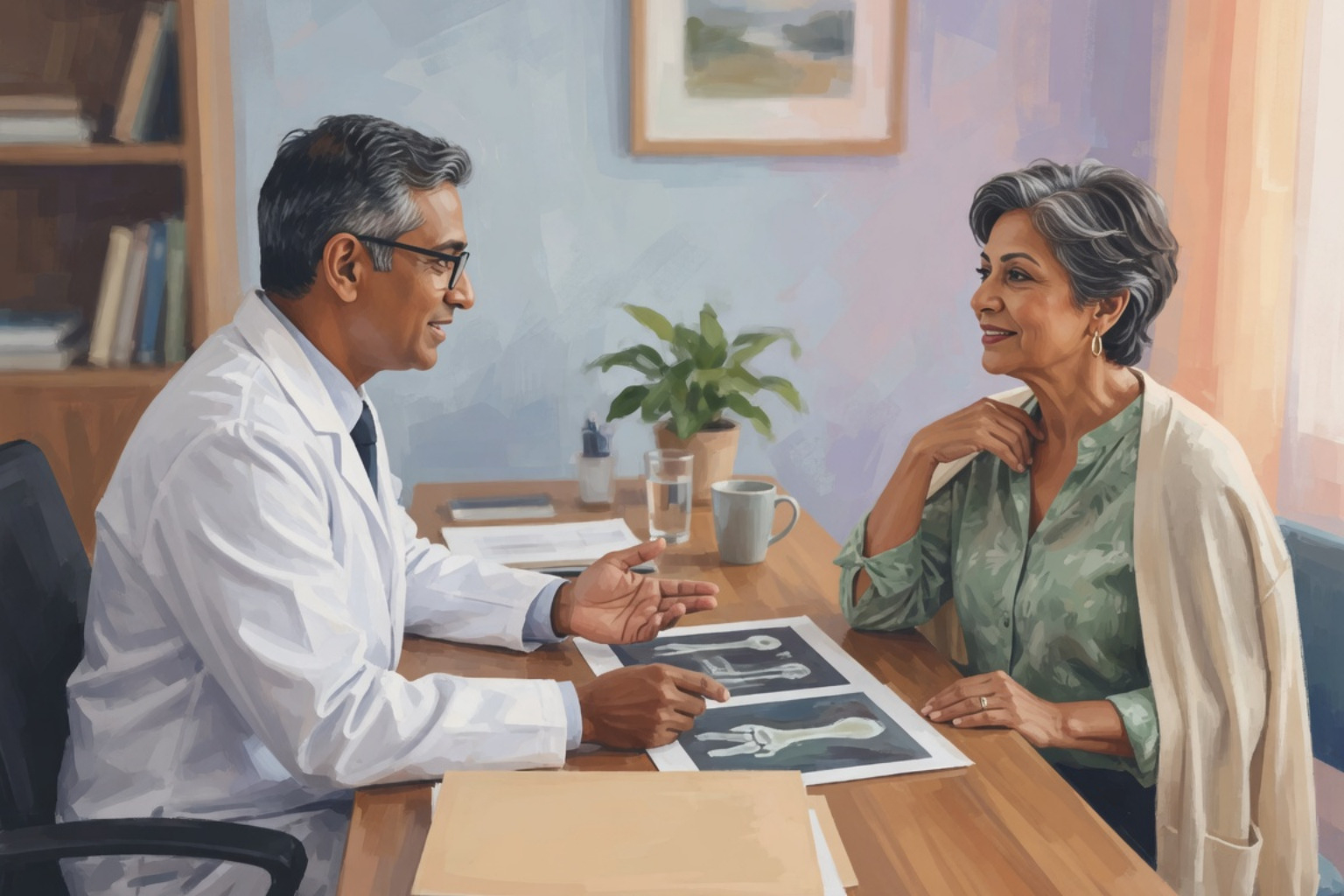
Because bone loss is silent, you cannot feel your bones getting weaker. Doctors use a special test called a DEXA scan( dual-energy X-ray absorptiometry). This is a quick, painless test that uses very low-dose X-rays to measure the strength of your bones, usually at your hip and lower spine.
The scan gives you a T-score, which shows how many standard deviations your bone density is above or below the average for a healthy young adult of the same sex:
- Normal bone density: A T-score of -1.0 or higher.
- Osteopenia (low bone density): A T-score between -1.0 and -2.5.
- Osteoporosis: A T-score of -2.5 or lower.
Your doctor may also use a tool called FRAX. This is a program that calculates your personal risk of breaking a bone over the next ten years by looking at your T-score, age, weight, and lifestyle habits.
How Strength Training and Lifestyle Changes Protect Your Bones
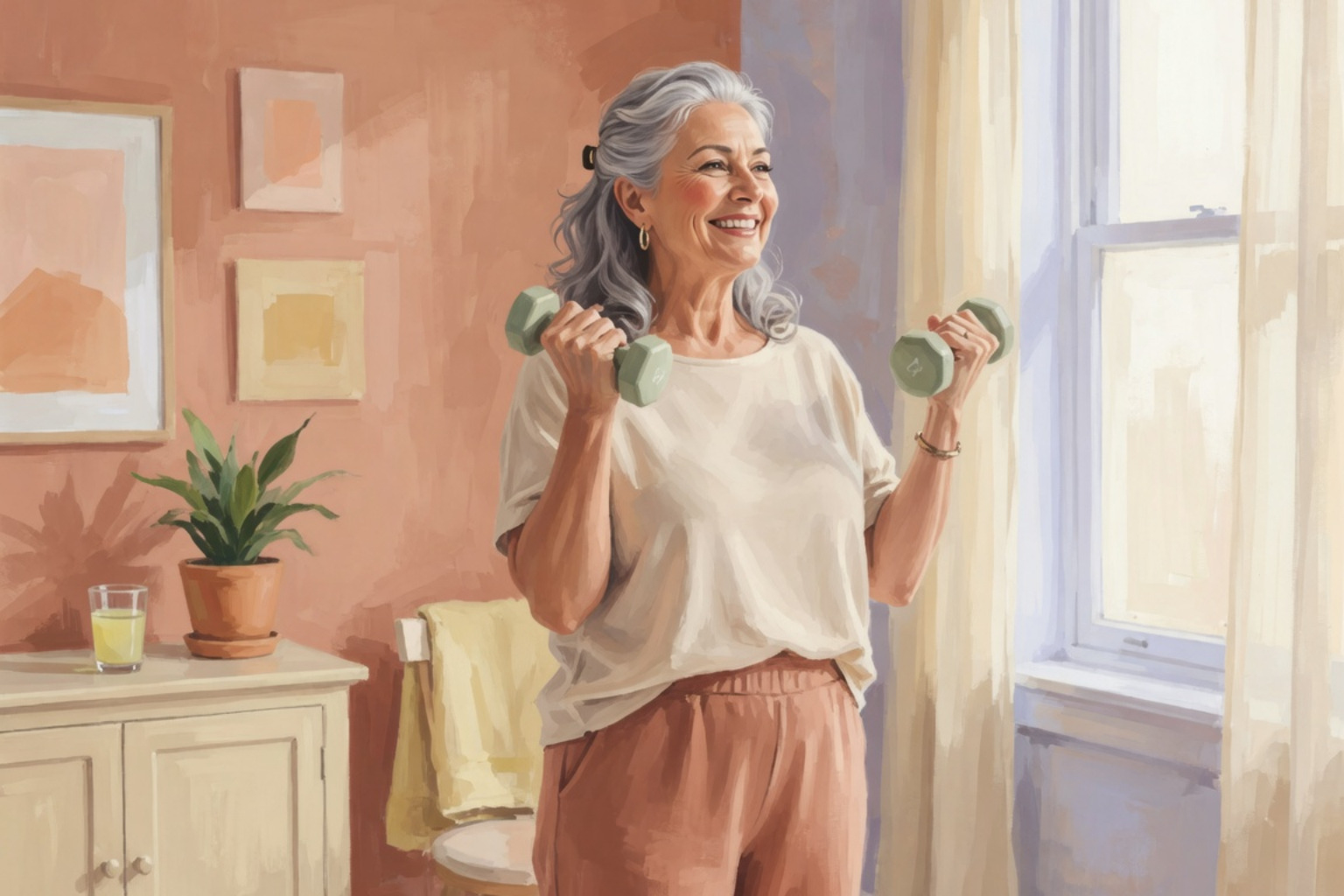
To make bones stronger, you must give them a reason to grow. This requires an osteogenic load, which means a physical force heavy enough to signal your osteoblasts to build new bone.
Gentle walking, light resistance bands, and stretching are great for your joints and heart, but they do not create enough force to build bone. To trigger bone growth, you need heavy strength training. This means lifting weights that are heavy enough that you can only perform a few repetitions (usually around 75 to 85 percent of the maximum weight you can lift one time) for a few sets.
Focus on large compound movements that load your hips and spine:
- Squats: Gently bending your knees and hips as if sitting in a chair.
- Lunges: Stepping forward or backward to load each leg individually.
- Romanian Deadlifts: A hip hinge where you bend forward at your hips while keeping your back long and straight to lift a weight.
Spinal extension exercises, where you gently arch your upper back backward, are highly recommended because they strengthen the muscles that support your spine. Always avoid loaded spinal flexion, which means rounding your back forward while holding a weight, as this can squeeze and damage fragile spinal bones.
To learn how to lift safely, check out our guides on strength training for bone health and the best exercise for bones.
Nutrition and Supplements for Postmenopausal Bone Health
Your bones need the right building blocks to stay strong. Focus on these key areas daily:
- Calcium: Aim for 1200 mg per day. It is best to get this from foods like dairy, calcium-fortified juices, and leafy greens. If you cannot get enough from food, a supplement can help fill the gap. Read more in our guide on calcium for postmenopausal women.
- Vitamin D: Aim for 800 to 1000 IU per day. Your body needs Vitamin D to absorb calcium properly.
- Protein: Ensure you eat enough protein to maintain your muscle mass, which protects your joints and improves balance.
It is also vital to limit alcohol and quit smoking, as both habits speed up bone loss.
Medical Treatments and Hormone Therapy
If your bone density is very low, lifestyle changes alone may not be enough. Menopausal hormone therapy, for one, was shown to reduce fractures and preserve bone density in the Women’s Health Initiative randomized trial. Your doctor might recommend medical treatments:
| Medication Type | How It Works | Examples |
|---|---|---|
| Bone-Protecting (Antiresorptives) | Slows down the osteoclasts to stop bone breakdown. | Bisphosphonates (alendronate, risedronate), Denosumab |
| Bone-Building (Anabolics) | Speeds up the osteoblasts to build new bone. | Teriparatide, Abaloparatide |
| Dual-Action | Both builds new bone and slows down breakdown. | Romosozumab (a sclerostin blocker) |
| Hormone Therapy | Replaces the estrogen lost during menopause. | Menopausal Hormone Therapy (MHT) |
Frequently Asked Questions About Menopause Bone Changes
Can you rebuild bone density after menopause?
Yes. While you cannot easily return to the bone density of your youth, you can build new bone and strengthen your existing skeleton. A combination of heavy resistance training, proper nutrition, and medical treatments when necessary can help stop bone loss and improve your bone strength.
How fast do you lose bone density during menopause?
The fastest loss occurs from one year before to two years after your final period. During this peak phase, you can lose about 2.5 percent of your bone density per year. To protect your bones during this time, make sure you get enough of the essential nutrients for bone health.
Does walking build bone density?
Walking is wonderful for your heart, mood, and balance, but it is generally not a heavy enough load to build new bone on its own. To truly strengthen your bones, you should combine walking with progressive resistance training.
Protecting Your Bones Through the Menopause Transition
The bone changes that happen during menopause are a natural part of aging, but they do not have to lead to fragile bones or fractures. By understanding how estrogen loss affects your skeleton, getting a DEXA scan, eating a nutrient-rich diet, and practicing heavy strength training, you can protect your bone health.
If you want more support, Groove Health can help you build a safer, stronger routine at home. The bone health and exercise program connects you with a physical therapist who creates a personalized plan based on your current strength, balance, mobility, and goals. Your plan focuses on progressive resistance training and balance exercises designed to support bone strength, lower fall risk, and help reduce the chance of fractures over time.
You can check your eligibility for Groove Health to see if you qualify for this Medicare-covered program.
Works Cited
- Lee KI, Chen JH, Chen KH. “Osteoporosis After Menopause and After Drug Therapy: The Molecular Mechanism of Bone Loss and Its Treatment” International Journal of Molecular Sciences, 2026;27(2):641.
- Morin SN, Leslie WD, Schousboe JT. “Osteoporosis: A Review” JAMA, 2025;334(10):894–907.
- Greendale GA, Sowers M, Han W, et al. “Bone mineral density loss in relation to the final menstrual period in a multiethnic cohort: results from the Study of Women’s Health Across the Nation (SWAN)” Journal of Bone and Mineral Research, 2012;27(1):111–118.
- Ahlborg HG, Johnell O, Turner CH, Rannevik G, Karlsson MK. “Bone Loss and Bone Size after Menopause” New England Journal of Medicine, 2003;349(4):327–334.
- Cauley JA, Robbins J, Chen Z, et al. “Effects of Estrogen Plus Progestin on Risk of Fracture and Bone Mineral Density: The Women’s Health Initiative Randomized Trial” JAMA, 2003;290(13):1729–1738.
- Watson SL, Weeks BK, Weis LJ, Harding AT, Horan SA, Beck BR. “High-Intensity Resistance and Impact Training Improves Bone Mineral Density and Physical Function in Postmenopausal Women With Osteopenia and Osteoporosis: The LIFTMOR Randomized Controlled Trial” Journal of Bone and Mineral Research, 2018;33(2):211–220.
- Bone Health & Osteoporosis Foundation. “What Women Need to Know” Bone Health & Osteoporosis Foundation, 2025.
This content is for informational purposes only and does not constitute medical advice. Consult a qualified healthcare professional for diagnosis and treatment. If you are on Medicare and interested in a personalized bone health program, you can check your eligibility at groovehealth.com.