The Best Exercise for Bones to Keep You Moving
Weight-bearing exercise, resistance training, and balance work — the three types of movement proven to build bone density and prevent fractures.
Why Bone-Building Exercise Matters More Than Most People Realize
The most effective exercise for bones combines weight-bearing impact, progressive resistance training, and balance work — not just one activity alone. Here is a quick overview of the most effective types:
| Exercise Type | Examples | Primary Bone Benefit |
|---|---|---|
| Weight-bearing impact | Brisk walking, dancing, stair climbing | Stimulates bone formation through ground reaction forces |
| Progressive resistance training | Free weights, resistance bands, bodyweight | Muscle contractions load bone tissue, triggering remodeling |
| High-velocity / multi-directional | Jogging, tennis, aerobics classes | Increases mechanical signal strength to bone cells |
| Balance and stability | Tai Chi, single-leg stance | Reduces fall risk and fracture incidence |
Bones are living tissue. They respond to mechanical stress by rebuilding themselves stronger — a biological principle known as Wolff's Law. But not all exercise delivers that stress equally.
Research consistently shows that activities like swimming and cycling, while excellent for cardiovascular health, do not provide the skeletal loading required to slow bone loss. Weight-bearing and resistance-based movement do. For a broader introduction to bone health basics, see our Bone Health 101 guide.
This matters enormously as we age. Beginning around age 30, bone mineral density — the concentration of calcium and other minerals within bone — begins a gradual decline of roughly 1% per year. For women, that decline accelerates sharply in the five to seven years following menopause, with losses of up to 20% possible. According to clinical data, half of all women and one in four men over age 50 will experience a fracture caused by osteoporosis in their lifetime.
The good news: the right exercise program, started at any age, can meaningfully slow that loss, improve balance, and reduce fracture risk — sometimes dramatically. A BMJ analysis found that programs combining balance, strength, and resistance training reduced the odds of falls resulting in fractures by more than 60%.
The sections below break down exactly which exercises work, why they work at a biological level, how much is enough, and what to avoid if bone density is already compromised.
How Bone Remodeling Works During Physical Activity
Bone is not a static structure; it is a dynamic organ constantly undergoing a process called bone remodeling. This cycle is managed by two primary types of cells: osteoclasts, which break down old or damaged bone tissue, and osteoblasts, which lay down new bone mineral.
Physical activity is one of the clearest mechanical signals telling the body to strengthen bone. This is the core idea behind Wolff's Law: bone changes in response to the loads placed on it. When bones feel tension from impact or muscle pull, they signal bone cells to improve structural integrity and support mineralization in that specific area. In other words, exercise helps build not just bone density, but also the quality and resilience of bone tissue. Our deep-dive on how exercise builds bones explores these mechanisms in more detail.
Understanding Peak Bone Mass and Age-Related Decline
Most people reach peak bone mass by about age 30. After that, bone breakdown gradually starts to outpace bone building. In women, menopause speeds this process because falling estrogen levels remove an important layer of bone protection. At the same time, many adults begin to lose muscle mass, a change known as sarcopenia. Because bones and muscles function as a unit, weaker muscles create less of the healthy pulling force that helps stimulate bone maintenance, which can increase fragility over time.
How Muscle Contractions Stimulate Osteogenesis
Osteogenesis, or the creation of new bone, is triggered significantly by muscle contractions. When a person performs resistance training, the tendons (which connect muscle to bone) pull on their attachment points. This tugging force creates enough mechanical stress to stimulate the remodeling process. Research indicates that tensing muscles through slow, intentional movements can release chemicals that help increase bone density even without using heavy weights. This is particularly beneficial for the cortical bone (the hard outer layer) and the trabecular bone (the spongy inner layer), both of which require regular stimulation to maintain structural integrity.
Weight-Bearing Impact: How Gravity Stimulates Bone Growth
Weight-bearing exercise is defined as any activity where the body works against gravity while staying upright. These activities generate ground reaction forces — the energy that travels from the ground up through the skeleton upon impact.
Clinical guidelines suggest that most adults need approximately 50 moderate-impact movements on most days of the week to maintain bone health. Brisk walking is a foundational example, but it must be performed at a pace of at least 3 to 4 miles per hour to provide sufficient stimulation. The National Institute of Arthritis and Musculoskeletal and Skin Diseases (NIAMS) provides additional research on how these forces affect the skeleton.
Comparing High-Impact and Low-Impact Modalities
While high-impact activities like jogging and dancing provide the strongest stimulus for bone growth, they are not appropriate for everyone.
- High-Impact: Jogging, jumping rope, and high-intensity aerobics multiply the weight-bearing effect through significant ground impact.
- Low-Impact: Activities like elliptical training, stair climbing, and brisk walking are safer for those with joint concerns but still provide effective gravity resistance.
Research notes that walking on real ground is superior to walking on a treadmill. Natural terrain requires a more forceful "push-off" and involves subtle variations in surface that challenge the bone from different angles.
The Role of Velocity and Directional Changes
Bones respond best to "surprises." Steady-state movement, like walking in a straight line for miles, eventually leads to a plateau in bone stimulation. Introducing higher velocity (speed) and sudden directional changes can reignite bone growth.
Sports like tennis, pickleball, or squash are highly effective because they involve rapid turns and lateral movements. For those who prefer walking, the "can-crushing" technique — incorporating 2 to 3 firm stomps every 10 steps — can turn a standard walk into a bone-building session. This "stomp" provides the "jolt" necessary to stimulate the hip and pelvic bones.
Progressive Resistance Training for Older Adults
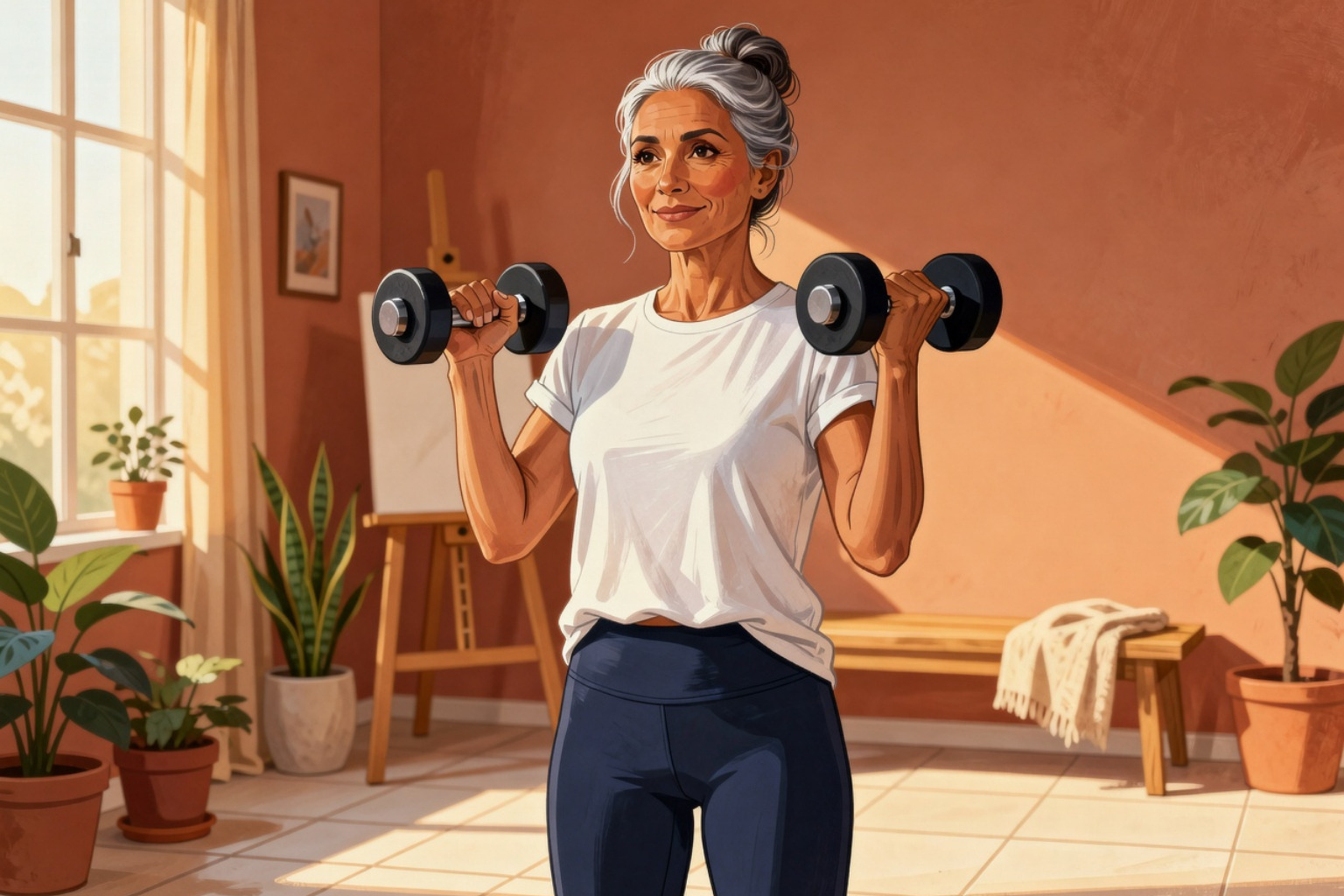
Resistance training is perhaps the most critical component of a bone-health regimen for those over 50. To stimulate bone, the load must be greater than what the body encounters in daily life. For an in-depth look at why this matters, read our guide to strength training and osteoporosis.
| Stimulus Level | Intensity (% of 1-Rep Max) | Bone Response |
|---|---|---|
| Low | < 60% | Maintenance only |
| Moderate | 60-70% | Slight density improvement |
| High | 70-85% | Significant osteoblast activation |
For those looking for a structured approach, Groove Health provides a Medicare-covered program that pairs participants with physical therapists to design safe, high-stimulus routines at home.
Site-Specific Strengthening for Fracture-Prone Areas
Bone building is site-specific; you only strengthen the bone you load.
- Hips: Exercises like hip extensions (raising the leg straight behind while holding a chair) and chair stands (standing up using only leg strength) target the femoral neck.
- Spine: Strengthening the spinal extensors (the muscles of the upper back) is vital for posture and preventing compression fractures.
- Wrists: Wall push-ups are an excellent way to build wrist density, which can prevent fractures during a "FOOSH" (fall on outstretched hand) incident.
The Bone Health & Osteoporosis Foundation offers additional guidance on site-specific exercises and safe movement patterns.
Frequency and Progression Guidelines
Current clinical consensus recommends performing muscle-strengthening activities at least two days a week. The key is progressive overload: gradually increasing the resistance (using free weights, bands, or body weight) so the bone is constantly challenged. A typical set should involve 8 to 12 repetitions at an effort level of 7 or 8 out of 10. If you are new to structured exercise, our guide to closing the exercise gap is a practical starting point.
Exercise Guidelines for People with Osteoporosis
When a diagnosis of osteoporosis or osteopenia is present, the focus shifts to a "safety-first" paradox: exercise is necessary to prevent fractures, but certain movements can increase risk. Consulting a professional is essential; Harvard Health offers a helpful overview of effective exercises for osteoporosis.
Contraindicated Movements for Low Bone Density
If bone density is low, several common movements should be avoided to prevent spinal compression fractures:
- Spinal Flexion: Forward bending at the waist (like touching toes or traditional sit-ups).
- Forceful Twisting: Rapid trunk rotation, often found in certain golf swings or yoga poses.
- Deep Hip Stretches: Extreme ranges of motion that put undue pressure on the joint.
Balance and Stability Training to Prevent Fractures
Balance training does not necessarily build bone density, but it is a "bone-protecting" activity. By improving proprioception (the body's sense of its position in space), exercises like Tai Chi and single-leg stances significantly reduce fall risk. Clinical studies show that balance and strength programs can reduce fracture-causing falls by over 60%.
Integrating Exercise into a Comprehensive Bone Health Strategy
Exercise does not happen in a vacuum. It must be supported by:
- Nutrition: Adequate calcium and vitamin D3 are the raw materials bones need to rebuild. Learn more in our articles on nutrition for bone health and supplements for bone density.
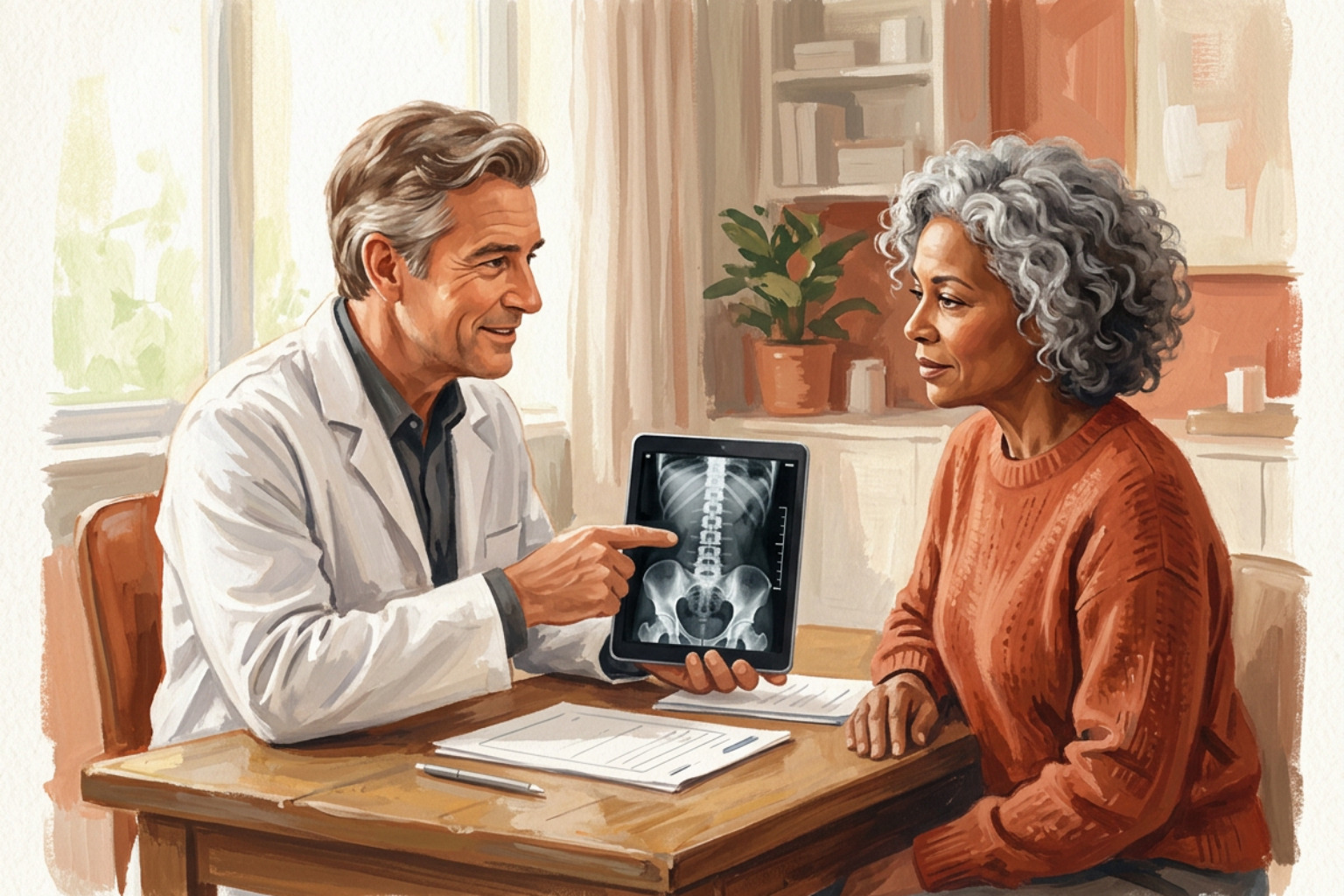
- Screening: Regular DEXA scans to monitor T-scores and bone mineral density.
- Professional Guidance: Medicare often covers physical therapy for those with a high risk of falls or fractures.
For a personalized approach, you can sign up for a personalized bone health program that integrates these clinical elements into a home-based plan. You can also explore our starter guide for movement and food for a broader overview of where to begin.
Frequently Asked Questions about Bone-Strengthening Exercise
Is swimming or cycling effective for building bone density?
While swimming and cycling are excellent for heart health and muscle tone, they are non-weight-bearing. The buoyancy of water and the support of a bike frame remove the gravity-based "load" that bones need to grow. If these are your primary activities, it is essential to add supplemental impact exercises like walking or resistance training.
How much exercise is required to maintain bone health as an adult?
The general recommendation is 150 minutes of moderate-intensity aerobic activity per week, plus at least two sessions of muscle-strengthening exercise. The American College of Sports Medicine (ACSM) provides detailed physical activity guidelines. Consistency is more important than intensity; daily movement helps maintain the biological signals for bone remodeling.
Is it safe to perform high-impact exercises after an osteoporosis diagnosis?
Safety depends on an individual's fracture history and T-score. While moderate impact is often safe and beneficial, those with a history of spinal fractures should stick to low-impact weight-bearing exercises (like walking) under the supervision of a physical therapist. Groove's Osteoporosis Starter Guide can help you understand where to begin.
Your Next Steps for Stronger Bones
The best exercise for bones is not a single movement, but a lifestyle of varied, gravity-resisting activity. By combining weight-bearing impact with progressive resistance and balance training, older adults can take an active role in maintaining their skeletal health. Programs like those offered by Groove Health provide the multidisciplinary support needed to move with confidence and prevent the fractures that limit mobility.
Disclaimer: This content is for informational purposes only and does not constitute medical advice. Consult a qualified healthcare professional for diagnosis and treatment. If you are on Medicare and interested in a personalized bone health program, you can check your eligibility at groovehealth.com.
Works Cited
- Hughes JM, Castellani CM, Popp KL, et al. "The Central Role of Osteocytes in the Four Adaptive Pathways of Bone's Mechanostat." Exercise and Sport Sciences Reviews, 2020.
- Mullender M, El Haj AJ, Yang Y, van Duin MA, Burger EH, Klein-Nulend J. "Mechanotransduction of Bone Cells in vitro: Mechanobiology of Bone Tissue." Medical and Biological Engineering and Computing, 2004.
- Weaver CM, Gordon CM, Janz KF, Kalkwarf HJ, Lappe JM, Lewis R, O'Karma M, Wallace TC, Zemel BS. "The National Osteoporosis Foundation's position statement on peak bone mass development and lifestyle factors: a systematic review and implementation recommendations." Osteoporosis International, 2016.
- Demontiero O, Vidal C, Duque G. "Aging and bone loss: new insights for the clinician." Therapeutic Advances in Musculoskeletal Disease, 2012.
- Herrmann M, Engelke K, Ebert R, et al. "Interactions between Muscle and Bone — Where Physics Meets Biology." Biomolecules, 2020.
- Abrahin O, Rodrigues RP, Marçal AC, et al. "Swimming and cycling do not cause positive effects on bone mineral density: a systematic review." Revista Brasileira de Reumatologia, 2016.
- Miao T, Li X, Zhang W, et al.. "Effects of high-impact jumping versus resistance exercise on bone mineral content in children and adolescents: a systematic review and meta-analysis." PeerJ, 2025.
- O'Bryan SJ, Giuliano C, Woessner MN, et al. "Progressive Resistance Training for Concomitant Increases in Muscle Strength and Bone Mineral Density in Older Adults: A Systematic Review and Meta-Analysis." Sports Medicine, 2022.
- Kohrt WM, Bloomfield SA, Little KD, Nelson ME, Yingling VR; American College of Sports Medicine. "American College of Sports Medicine Position Stand: Physical Activity and Bone Health." Medicine & Science in Sports & Exercise, 2004.
- Giangregorio LM, McGill S, Wark JD, Laprade J, Heinonen A, Ashe MC, MacIntyre NJ, Cheung AM, Shipp K, Keller H, Jain R, Papaioannou A. "Too Fit To Fracture: outcomes of a Delphi consensus process on physical activity and exercise recommendations for adults with osteoporosis with or without vertebral fractures." Osteoporosis International, 2014.
- Sherrington C, Michaleff ZA, Fairhall N, Paul SS, Tiedemann A, Whitney J, Cumming RG, Herbert RD, Close JCT, Lord SR. "Exercise to prevent falls in older adults: an updated systematic review and meta-analysis." British Journal of Sports Medicine, 2017.
- Bull FC, Al-Ansari SS, Biddle S, Borodulin K, Buman MP, Cardon G, Carty C, Chaput JP, Chastin S, Chou R, Dempsey PC, DiPietro L, Ekelund U, Firth J, Friedenreich CM, Garcia L, Gichu M, Jago R, Katzmarzyk PT, Lambert E, Leitzmann M, Milton K, Ortega FB, Ranasinghe C, Stamatakis E, Tiedemann A, Troiano RP, van der Ploeg HP, Wari V, Willumsen JF. "World Health Organization 2020 guidelines on physical activity and sedentary behaviour." British Journal of Sports Medicine, 2020.