Take Action on Your DEXA Scan Results with Proper Follow-Up Care
Your DEXA report is only the starting point. Here is how to turn your T-score and FRAX fracture risk into a plan for treatment, nutrition, fall prevention, and your next scan with your doctor.

Your First Steps After DEXA Scan Results
If you're wondering: “I got my DEXA results, what’s next?” Start with these 4 steps:
- Get your full report and note the lowest T-score from your hip, spine, or forearm.
- Review it with your clinician, along with your age, past falls and fractures, medicines, and health history.
- Ask for a FRAX fracture-risk calculation if appropriate. This estimates your chance of a major bone break over the next 10 years.
- Leave with a plan for exercise, food and vitamin needs, fall prevention, possible medication, and your next scan.
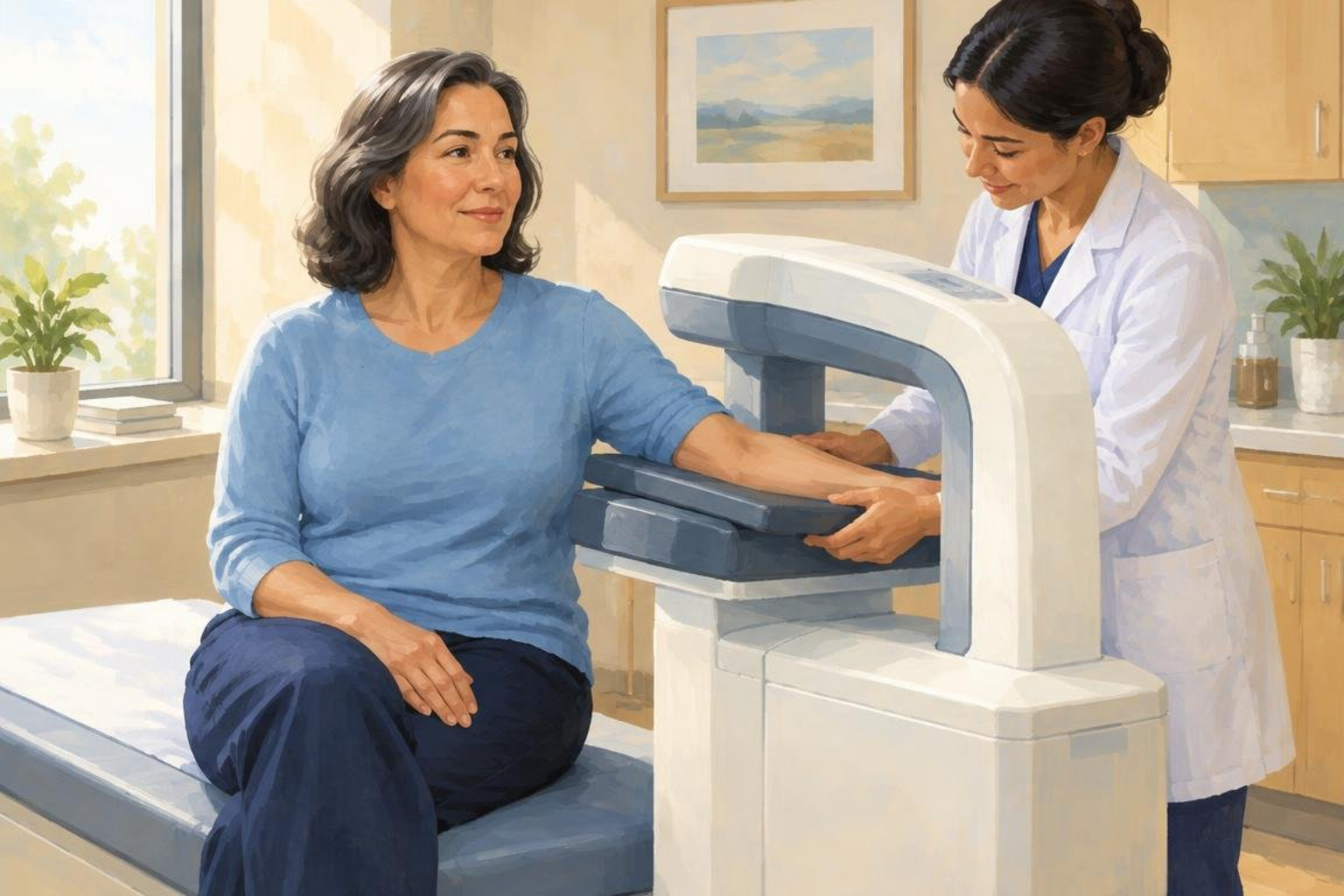
A DEXA scan is a low-dose X-ray that measures bone strength. A low score does not tell the whole story. Your risk also depends on whether you have broken a bone before, fall often, take certain medicines, or have another condition that affects bone health.
For a plain-language walkthrough of the numbers on your report, see interpreting DEXA scan results. This guide focuses on what comes next: turning the result into a clear, practical follow-up plan.
How Your DEXA Results Define Your Diagnosis
To understand your diagnosis, your doctor checks your lowest score across measured bone sites to determine if you have normal bone density, osteopenia, or osteoporosis. When you receive your central dual-energy X-ray absorptiometry report, the numbers establish your baseline bone strength.

A DEXA test scans key areas like your lower back and hip where breaks happen most often. Your diagnosis is based on the lowest T-score among your spine, hip, and, if measured, forearm. Helpful guidance from the National Institute of Arthritis and Musculoskeletal and Skin Diseases on osteoporosis diagnosis and steps outlines how clinicians combine these scan measurements with physical exams to form a complete care plan. Gaining a solid foundation by understanding osteoporosis helps you take charge of your health.
Osteopenia vs. Osteoporosis: What Your T-Score Means
Your T-score compares your bone mass to the average peak bone mass of a healthy young adult. It tells you how many units, called standard deviations, your bone density sits above or below that healthy standard. Reviewing your T-score meaning helps clarify how doctors measure this gap.
| T-Score Threshold | Bone Density Category | Clinical Meaning |
|---|---|---|
| -1.0 and higher | Normal Bone Density | Bone strength is typical for young adults |
| Between -1.0 and -2.5 | Osteopenia (Thinning Bones) | Bone density is lower than normal; medical intervention may be recommended if you have had a hip or spine fragility fracture, or if your FRAX risk meets treatment thresholds |
| -2.5 and lower | Osteoporosis | Bone density is significantly reduced; medical intervention is indicated |
Falling in the middle range means your bones are thinning, which you can track using a T-score osteopenia range chart. At this stage, proactive steps can help keep your bones from weakening further.
A result showing a T-score of −2.5 or lower signals osteoporosis. This level of bone loss warrants a detailed discussion about prescription therapies and proactive fall protection.
Clinical Nuances: Z-Scores and Osteoarthritis Artifacts
A Z-score compares your bone mass to people of your same age, sex, and ethnicity. While T-scores guide diagnosis for postmenopausal women and men over 50, your doctor may look at your bone density Z-score to detect possible secondary causes of bone loss, such as thyroid problems or nutrient absorption issues. A Z-score of -2.0 or lower suggests that something other than typical aging might be speeding up bone thinning.
Spinal arthritis, also called osteoarthritis, can skew DEXA readings. When joints develop bone spurs or extra calcium deposits, the scanner reads that calcified tissue as dense bone. This can falsely elevate your lower spine score, making your bones appear stronger than they really are. Clinicians often rely on the femoral neck score or use a special software tool called a trabecular bone score to check bone quality without arthritis interference.
Evaluating Fracture Risk Beyond Bone Density
A T-score is only one part of your overall fracture risk. Two people with the exact same score can have very different chances of breaking a bone depending on their personal risk factors, daily habits, and history of falls.
Key clinical risk factors that raise your fracture risk include:
- Having broken a bone from a standing height after age 50
- Having a parent who broke a hip
- Long-term use of steroid medicines
- A history of smoking or heavy alcohol use
- Medical conditions like rheumatoid arthritis or chronic kidney disease
Understanding how these elements combine with your DEXA T-score fracture risk allows your doctor to see the bigger picture rather than focusing only on a single number.
Using Your FRAX Risk Score to Guide Medication Decisions
The FRAX tool is a computer calculation designed by the World Health Organization that estimates your percent chance of breaking a bone over the next 10 years. It combines your hip T-score with your personal risk factors to generate two separate risk scores.
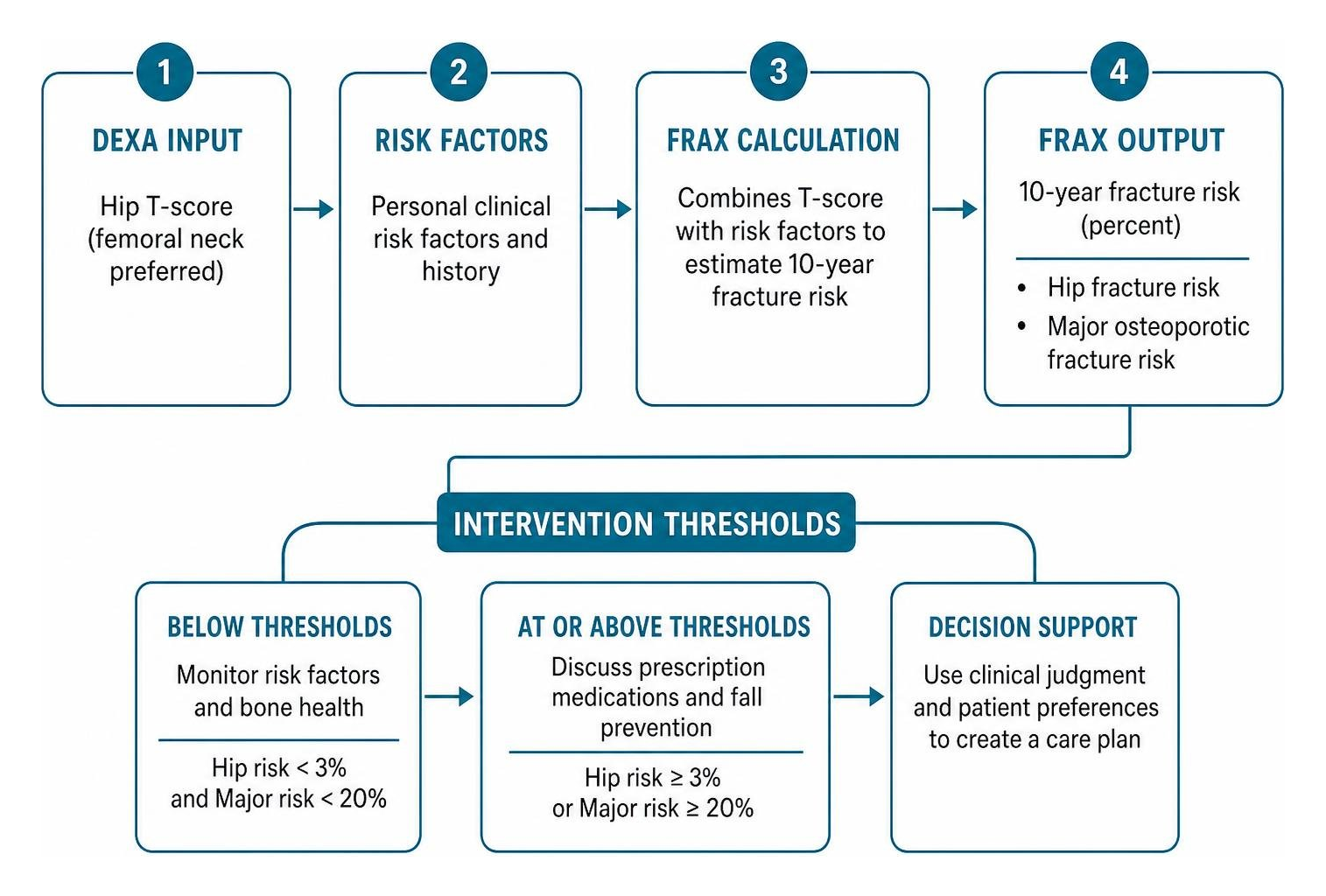
In standard clinical practice, doctors usually evaluate prescription medicines if your FRAX calculation shows:
- A 10-year risk of 3% or higher for a hip break
- A 10-year risk of 20% or higher for a major break, such as the spine, forearm, shoulder, or hip
Knowing these thresholds helps you and your physician determine when to start osteoporosis treatment based on your true fracture risk rather than bone density alone.
Medical Treatments and Clinical Intervention Thresholds
Prescription medication helps shift the bone remodeling balance so your body preserves or builds more bone than it breaks down. If your test results show severe bone loss or a high risk of breaks, your doctor will discuss which option fits your health history.
Choosing an appropriate treatment for osteoporosis depends on your medical history, your fracture risk, and how well you tolerate certain medicines. Educational resources from the Endocrine Society osteoporosis resources explain how different therapies work inside the body to help keep bones strong and reduce break rates.
Prescription Medication Classes
Prescription therapies fall into two main categories: antiresorptive medicines that slow bone breakdown, and bone-building medicines that prompt the body to create new bone.
- Bisphosphonates: These are often the first medicine prescribed. Common options like alendronate pills or annual zoledronic acid infusions slow down the cells that break down old bone.
- Targeted Injections: Denosumab is an injection given every six months that stops bone-clearing cells from thinning your bones.
- Anabolic Bone Builders: Medicines like teriparatide and abaloparatide act like natural parathyroid hormone to stimulate new bone formation.
- Dual-Action Agents: Romosozumab is a sclerostin inhibitor given by monthly injection that helps build new bone while also slowing breakdown.
When to Seek Medical Evaluation
While osteoporosis itself does not cause daily aches, sudden breaks can occur during normal daily activities. Contact your healthcare provider if you notice any of the following symptoms:
- Call promptly for sudden, severe back pain that starts after bending, lifting, or a minor slip
- Call promptly for sharp tenderness along a specific bone in your spine when pressed
- At your next visit, report height loss of 0.8 inch (2 cm) or more since your last measurement
- At your next visit, mention total height loss of 1.5 inches (about 4 cm) from peak adult height or a new visible stoop
Non-Pharmacologic Care: Nutrition and Fall Prevention
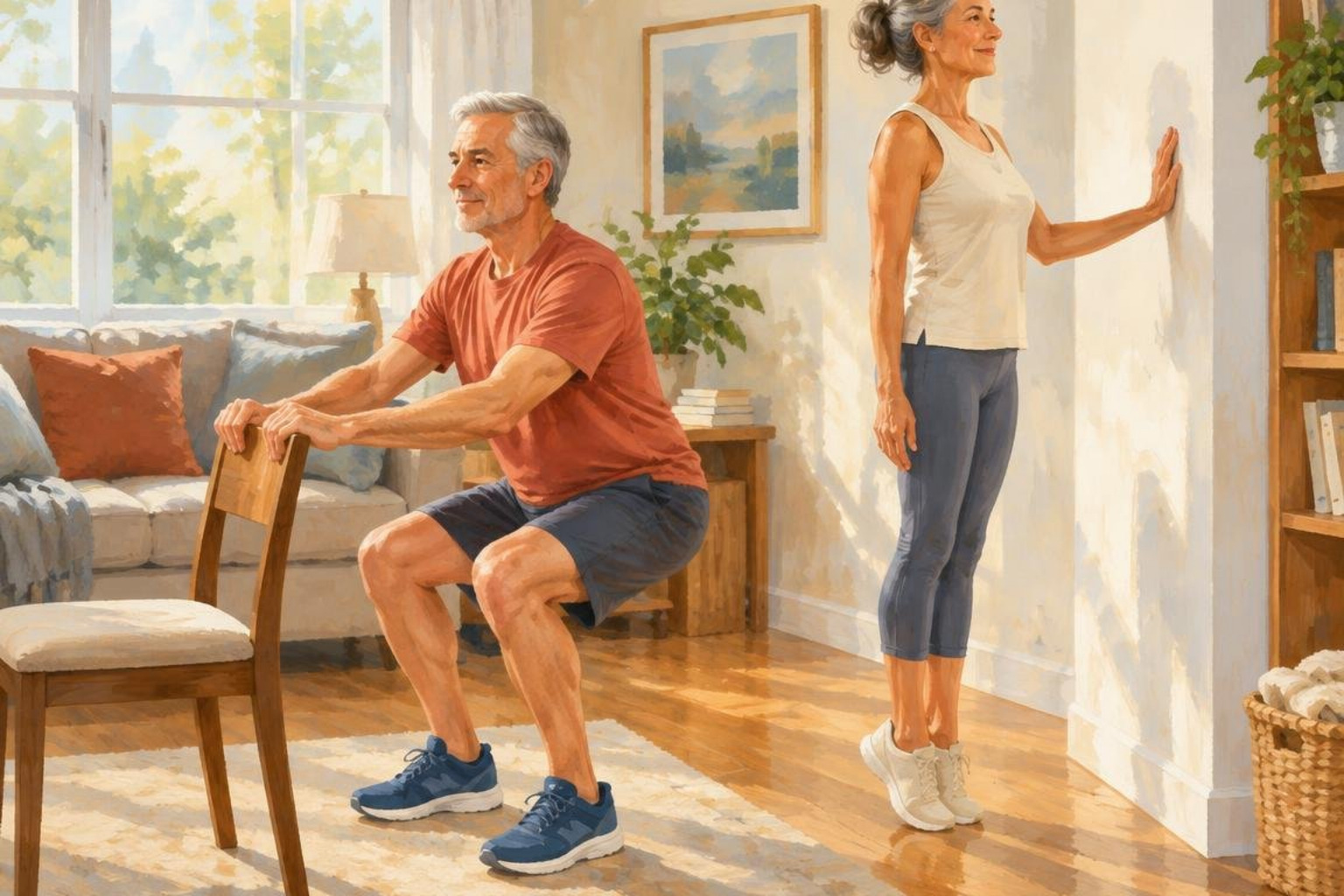
Daily habits play a major role in protecting your bones and lowering your risk of injury. Groove Health is a Medicare covered bone health program for adults 65 and older that pairs each member with a physician and a physical therapist who designs a personalized exercise plan. Research indicates that keeping your muscles strong and your home free of hazards significantly reduces your chance of falling.
Federal RDAs list calcium as 1,000 mg daily for men ages 51 to 70, and 1,200 mg daily for women over 50 and everyone over 70. Vitamin D is 600 IU daily through age 70 and 800 IU after age 70. Aim to get calcium mainly from food, using supplements only to fill gaps. Calcium supplements can raise kidney-stone risk, and low-dose supplements have not been shown to prevent fractures in average-risk postmenopausal women. For practical nutrition ideas, review these bone health facts and tips.
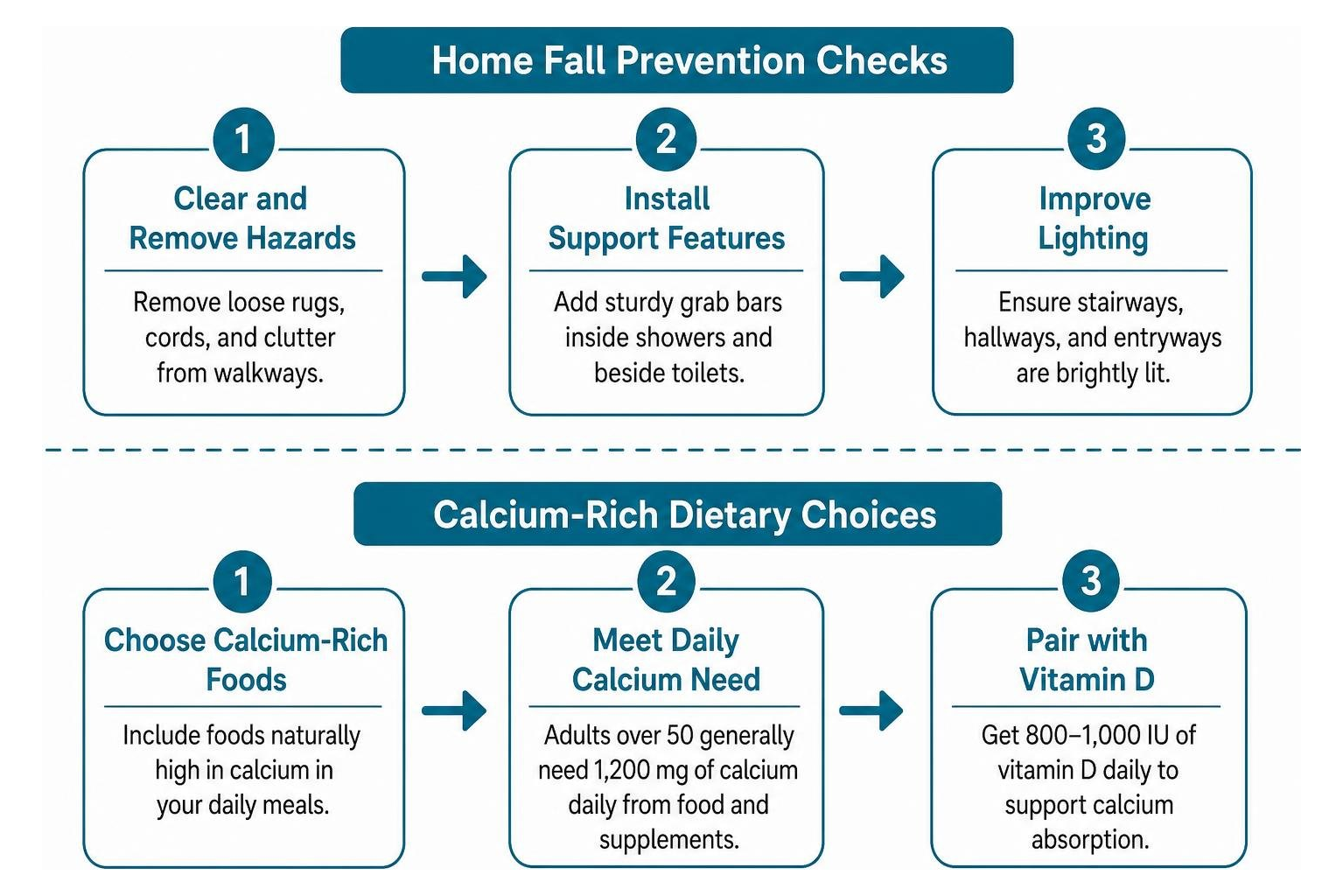
In addition to good nutrition, fall prevention is essential for avoiding breaks. Practical safety steps supported by the Centers for Disease Control and Prevention on fall prevention include:
- Removing loose rugs, cords, and clutter from walkways
- Adding sturdy grab bars inside showers and beside toilets
- Ensuring stairways, hallways, and entryways are brightly lit
- Getting regular eye and hearing checks to maintain strong balance
Follow-Up Timelines, Medicare Coverage, and Doctor Discussions
Tracking your bone density over time helps your healthcare team see if your care plan is working. Your doctor will set a schedule for repeat scans based on your diagnosis, risk factors, and whether you are taking medication.
Understanding your recommended DEXA scan frequency helps you prepare for future appointments. According to Medicare.gov, Medicare Part B covers bone mass measurements once every 24 months, or more often if medically necessary, if you meet certain conditions, such as being a woman at risk for osteoporosis, taking long-term steroids, or being treated for osteoporosis. There is typically no out-of-pocket cost when your healthcare provider accepts assignment, though coverage rules may vary by plan type.
When preparing for your next doctor visit, consider bringing this checklist:
- What were my exact T-scores and Z-scores for my hip, lower back, and wrist?
- Did arthritis in my spine affect the accuracy of my scan results?
- What is my estimated 10-year chance of breaking a bone based on the FRAX tool?
- Do any of my current prescriptions or health conditions contribute to bone thinning?
- When should we schedule my next follow-up DEXA scan?
Frequently Asked Questions about DEXA Scan Results
Is osteopenia guaranteed to progress to osteoporosis?
No. Having thinning bones does not mean you will definitely develop osteoporosis. With prompt lifestyle adjustments, proper calcium and vitamin D intake, and regular monitoring, you can help stabilize your bone strength. Learning how to interpret bone density allows you to track changes over time and take action early.
Can bone density improve after a low T-score result?
Yes. Studies indicate that bone density can stabilize or improve when people use prescribed therapies alongside proper nutrition and lifestyle changes. While treatments might not restore your bones to young-adult levels, halting further bone loss helps lower your chance of future breaks.
Why does spinal arthritis affect DEXA accuracy?
Osteoarthritis causes extra calcium to build up around joints and creates bone spurs along the spine. Because the DEXA scanner measures the total mineral density in the path of the X-ray beam, it reads these extra calcifications as bone, which can artificially raise your spine T-score. In these cases, clinicians rely more heavily on your hip score.
Turn Your DEXA Results Into a Follow-Up Plan
Receiving your DEXA scan results is the first step toward protecting your bones and staying independent. A low bone density score provides valuable information that helps you and your doctor build a personalized plan for nutrition, fall prevention, and medical care.
Taking time to understand your T-score, calculating your overall break risk, and discussing treatment options ensures you address bone loss from every angle. For a complete overview of next steps, review this osteoporosis starter guide to learn how a structured care plan supports your daily wellness.
Works Cited
- LeBoff MS, Greenspan SL, Insogna KL, et al. “The clinician’s guide to prevention and treatment of osteoporosis.” Osteoporosis International, 2022.
- NIH Office of Dietary Supplements. “Calcium: Health Professional Fact Sheet.” National Institutes of Health, 2026.
- NIH Office of Dietary Supplements. “Vitamin D: Health Professional Fact Sheet.” National Institutes of Health, 2026.
- Centers for Medicare & Medicaid Services. “Bone mass measurements.” Medicare.gov, 2026.
This content is for informational purposes only and does not constitute medical advice. Consult a qualified healthcare professional for diagnosis and treatment. If you are on Medicare and interested in a personalized bone health program, you can check your eligibility at groovehealth.com.