The Complete Guide to DEXA T-Score Fracture Risk
A DEXA T-score is the standard measure of bone density, but it only tells part of your fracture-risk story. Learn what the numbers mean, why some fractures happen with normal scores, and how doctors use FRAX.
What Your DEXA T-Score Really Means for Your Fracture Risk
DEXA T-score fracture risk is something millions of older adults face after getting their first bone density scan result — and the numbers can feel confusing without context.
Here is a quick-reference breakdown so you can understand where you stand:
| T-Score Range | Diagnosis | Fracture Risk |
|---|---|---|
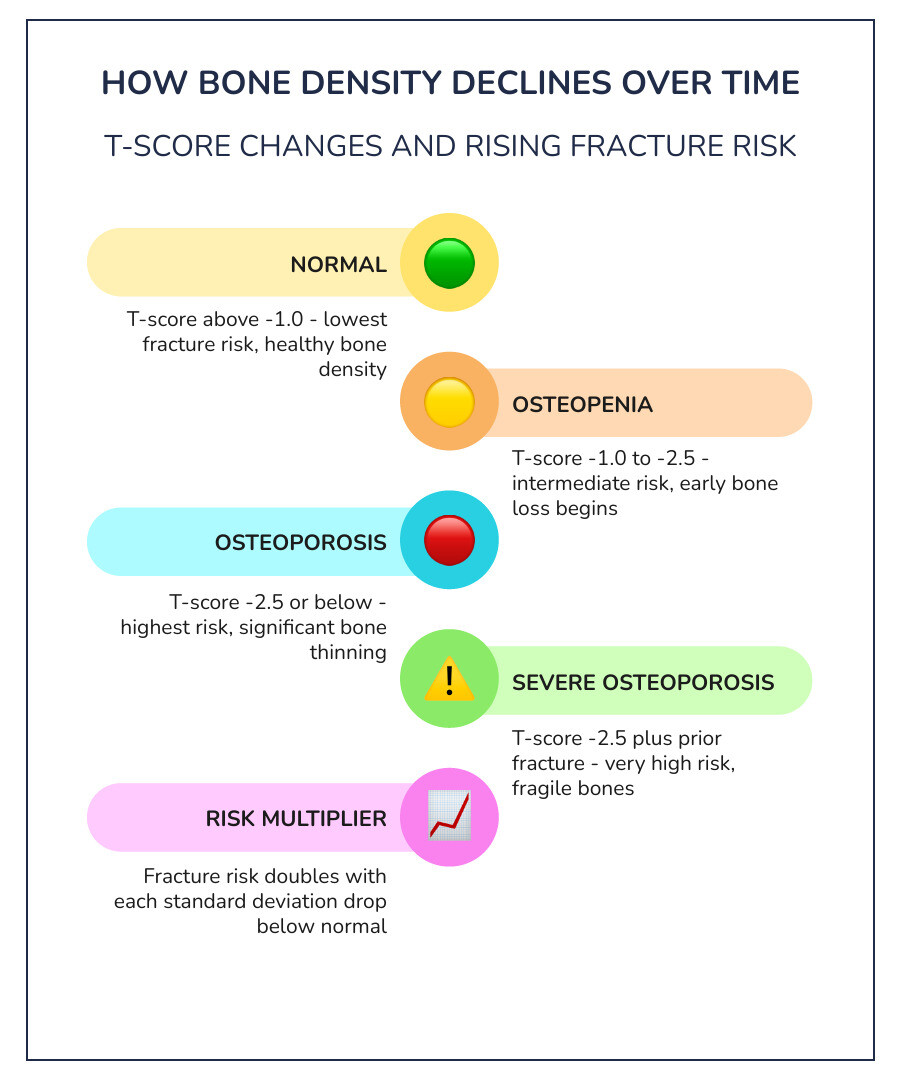
| Above -1.0 | Normal bone density | Lowest risk |
| -1.0 to -2.5 | Osteopenia (low bone mass) | Intermediate risk |
| -2.5 or below | Osteoporosis | Highest risk |
| -2.5 or below + prior fracture | Severe osteoporosis | Very high risk |
One key number to know: research indicates that fracture risk roughly doubles with every standard deviation (one point on the T-score scale) below normal. So a T-score of -2.0 carries about four times the fracture risk of a score of 0.
But here is what many people are not told after their scan: the T-score alone does not paint the full picture. Clinical research shows that the majority of fragility fractures actually occur in people whose T-scores are above -2.5. Age, bone structure, fall history, and other health conditions all shape your real-world risk in ways a single number cannot capture.
This guide explains what your T-score means, what it misses, and how doctors use additional tools to make smarter decisions about your bone health and fracture prevention.
What is a DEXA Scan and How Does It Measure Bone Strength?
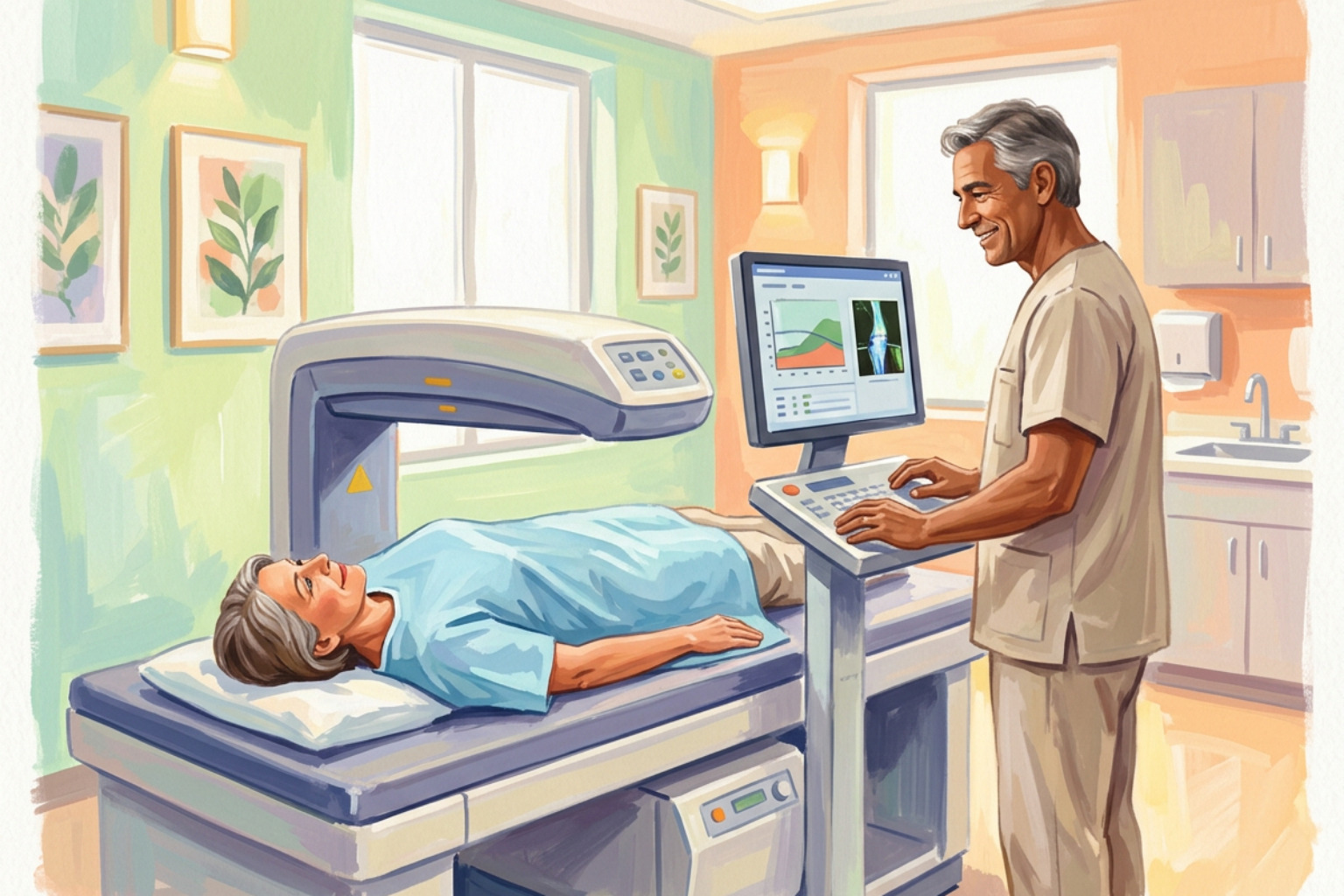
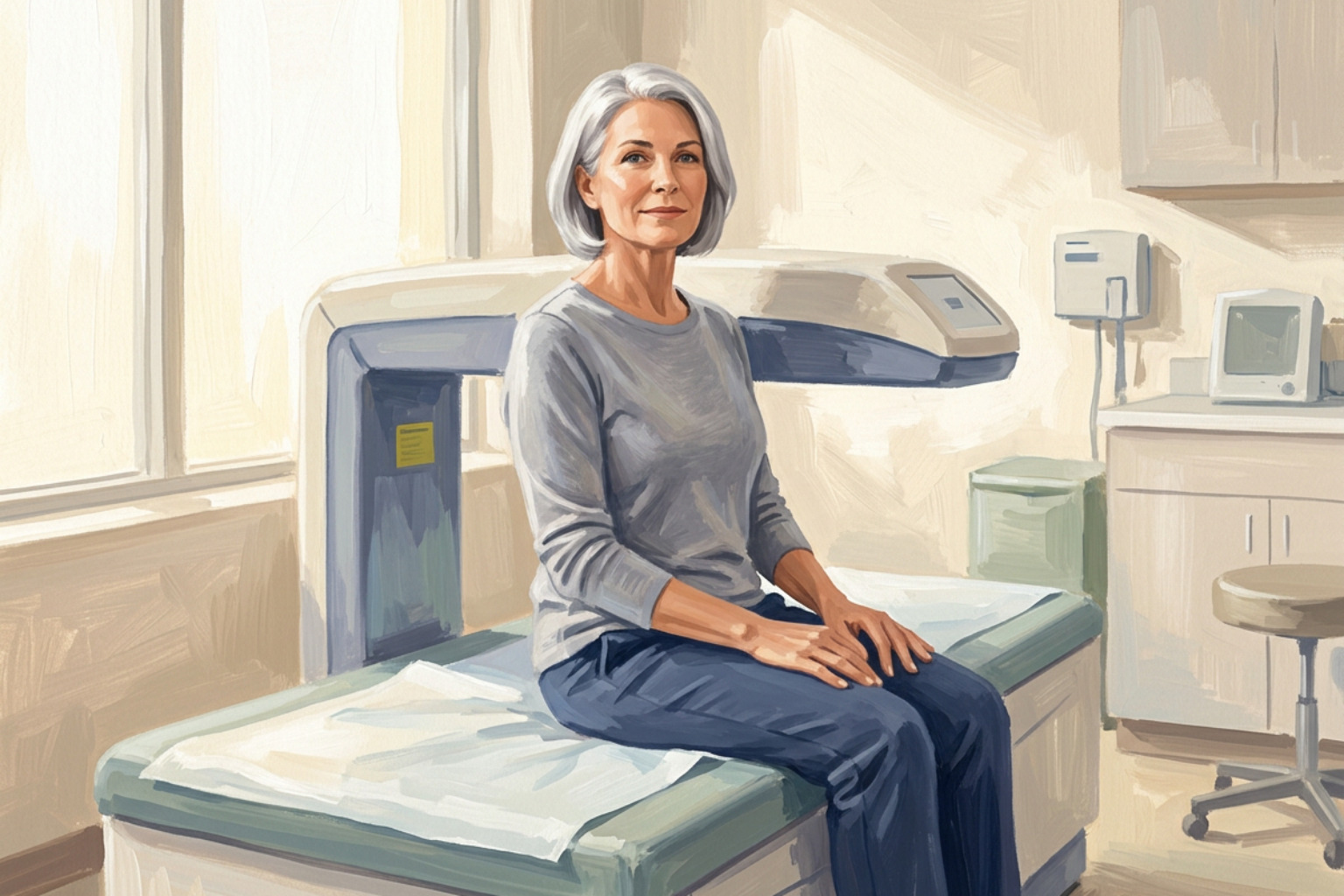
A dual-energy X-ray absorptiometry scan (commonly called a DEXA scan) is a quick, painless imaging test that measures how strong your bones are. It is the gold standard for checking bone health because it can spot bone loss long before a standard X-ray can.
The machine works by sending two very low-dose X-ray beams through your body. One beam is absorbed by soft tissue like fat and muscle, while the other is absorbed by your bones. By subtracting the soft tissue absorption from the total, the machine calculates your bone mineral density. This is the amount of calcium and other minerals packed into a specific segment of your bone.
Doctors focus on the lumbar spine (lower back) and the hip (including the femoral neck) because these areas are highly prone to breaks. The radiation from a DEXA scan is extremely low. It is comparable to the natural background radiation you receive during a cross-country flight. For a deeper look at how this technology works, you can read this clinical guide on DEXA technology.
How to Read Your DEXA T-Score
Your DEXA scan results are delivered as a T-score. This number represents how much your bone density differs from that of a healthy thirty-year-old adult, which is when human bones are at their peak strength.
The T-score is calculated using a mathematical unit called a standard deviation. A standard deviation simply measures how far your bone density is from the ideal average. If your score is 0, your bone density is exactly the same as a healthy young adult. A positive number means your bones are stronger than average, while a negative number means your bones are weaker and more porous.
What a Normal T-Score Means
A T-score of -1.0 or higher is considered normal. If your score falls into this range, your bones are at a healthy baseline density. Your risk of experiencing a sudden break from a minor fall is low.
However, a normal T-score does not eliminate fracture risk, because bone density is only one of several factors involved. Age, fall risk, medications, prior fractures, and overall bone quality can all affect your chances of breaking a bone. Healthy lifestyle habits still matter for protecting your skeleton over time.
How Osteopenia and Osteoporosis Show Up on Your T-Score
When your T-score drops below normal, it indicates that your bones are losing their structural strength.
- Osteopenia (T-score between -1.0 and -2.5): This means you have low bone mass. Your bones are weaker than normal, but they are not yet brittle enough to be classified as osteoporotic. This is a very broad category. Many postmenopausal women stay in this range for decades without ever progressing further.
- Osteoporosis (T-score of -2.5 or lower): This diagnosis means your bone density has dropped significantly. Your bones have become porous, much like a dry sponge, making them highly susceptible to breaks from simple daily activities.
- Severe Osteoporosis (T-score of -2.5 or lower plus a history of a fragility fracture): If you have osteoporosis and have already broken a bone from a minor incident (like a fall from standing height), your condition is classified as severe.
To learn more about what these specific numbers mean for your daily life, you can refer to the NIH guide on bone density numbers.
Why T-Scores Do Not Tell the Whole Story About Bone Breaks
While T-scores are incredibly useful, they have major limitations. A T-score only measures the quantity of your bone mineral, not the quality of the bone itself.
Bone quality depends on bone microarchitecture. This is the microscopic, three-dimensional scaffolding that keeps your bones from collapsing under pressure. If this inner scaffolding is degraded, your bones can break easily even if your DEXA scan shows a decent amount of mineral density.
Other factors that influence your fracture risk beyond your T-score include:
- Age: Age is one of the strongest predictors of bone fragility. A seventy-year-old woman has a significantly higher risk of breaking a hip than a thirty-year-old woman with the exact same T-score.
- Type 2 Diabetes: People with type 2 diabetes often have normal or even high T-scores, yet they may still have fragile bone quality and a higher risk of breaks due to changes in the bone matrix.
- Previous Fractures: If you have broken a bone recently, your risk of breaking another is much higher, regardless of what your T-score says.
To explore the clinical math behind these variables, you can read this research on FRAX and clinical risk factors.
When to Use Z-Scores Instead of T-Scores
A Z-score is another number you will see on your DEXA report. While a T-score compares your bones to a young adult, a Z-score compares your bone density to age-matched peers of your same gender and ethnic background.
Doctors do not use T-scores for everyone. T-scores are only reliable for untreated postmenopausal women and men aged fifty and older. For premenopausal women, younger men, and children, doctors use Z-scores instead. A Z-score of -2.0 or lower indicates "low bone mass for age" and suggests that an underlying medical condition may be causing premature bone loss.
How Doctors Use FRAX and Other Tools to Predict Bone Breaks
Because T-scores have limitations, doctors use clinical risk calculators to get a clearer picture of your safety. The most common tool is the FRAX (Fracture Risk Assessment Tool) calculator.
FRAX estimates your predicted ten-year probability of experiencing a major osteoporotic fracture or hip fracture. It is not an exact forecast. It combines your femoral neck T-score with key personal risk factors, including:
- Your age and body weight.
- A parent history of a broken hip.
- The use of glucocorticoids, such as prednisone.
- Lifestyle factors like smoking and alcohol consumption.
- Conditions like rheumatoid arthritis.
Doctors may also use newer tools like the Trabecular Bone Score (TBS). TBS is software that analyzes the gray-scale texture of your standard DEXA spine image to estimate aspects of bone microarchitecture. It offers an indirect measure of bone quality without requiring extra scans or additional radiation.
Who Should Get a DEXA Scan and How Often?
Many clinical guidelines recommend bone density screening to catch silent bone loss early. You should talk to your doctor about getting a DEXA scan if you meet any of the following criteria:
- You are a woman aged sixty-five or older.
- You are a man around age seventy or older, especially if you have risk factors.
- You are a younger postmenopausal woman with clinical risk factors, such as a family history of hip fractures or very low body weight.
- You have broken a bone after age fifty.
- You have taken steroid medications for more than three months.
According to Medicare.gov, Medicare covers a bone density scan once every twenty-four months for qualified individuals, and more frequently if it is medically necessary. If your bones are healthy, you may only need a scan every five to ten years. If you are actively being treated for osteoporosis, your doctor may order a scan every two years to monitor how well your medication is working.
Frequently Asked Questions about DEXA T-Scores
Can you reverse a low T-score?
Yes, it is possible to improve your T-score and reduce your rate of bone loss. While you may not always be able to rebuild your bones to youthful levels, a combination of targeted strength training, balance exercises, proper nutrition (including calcium and vitamin D), and FDA-approved medications can significantly strengthen your bones and lower your risk of a break.
Why did I break a bone if my T-score was normal?
Bones can break even with a normal T-score because bone density is only one part of fracture risk. Bone quality, fall risk, medications, vision, balance, and how you land all matter. Wrist fractures, for example, often happen after a fall onto an outstretched hand, even in people with normal or only slightly low bone density. A wrist fracture should still be treated as a warning sign: research suggests roughly 10% to 15% of people with wrist fractures may later have a hip or spine fracture.
Does Medicare pay for yearly DEXA scans?
Medicare generally covers a bone density test once every twenty-four months. However, if you have a high-risk condition, are taking medications that cause bone loss, or need close monitoring to see if your osteoporosis treatment is working, Medicare may cover more frequent scans if your doctor documents the medical necessity.
Turning Your T-Score Into a Bone Protection Plan
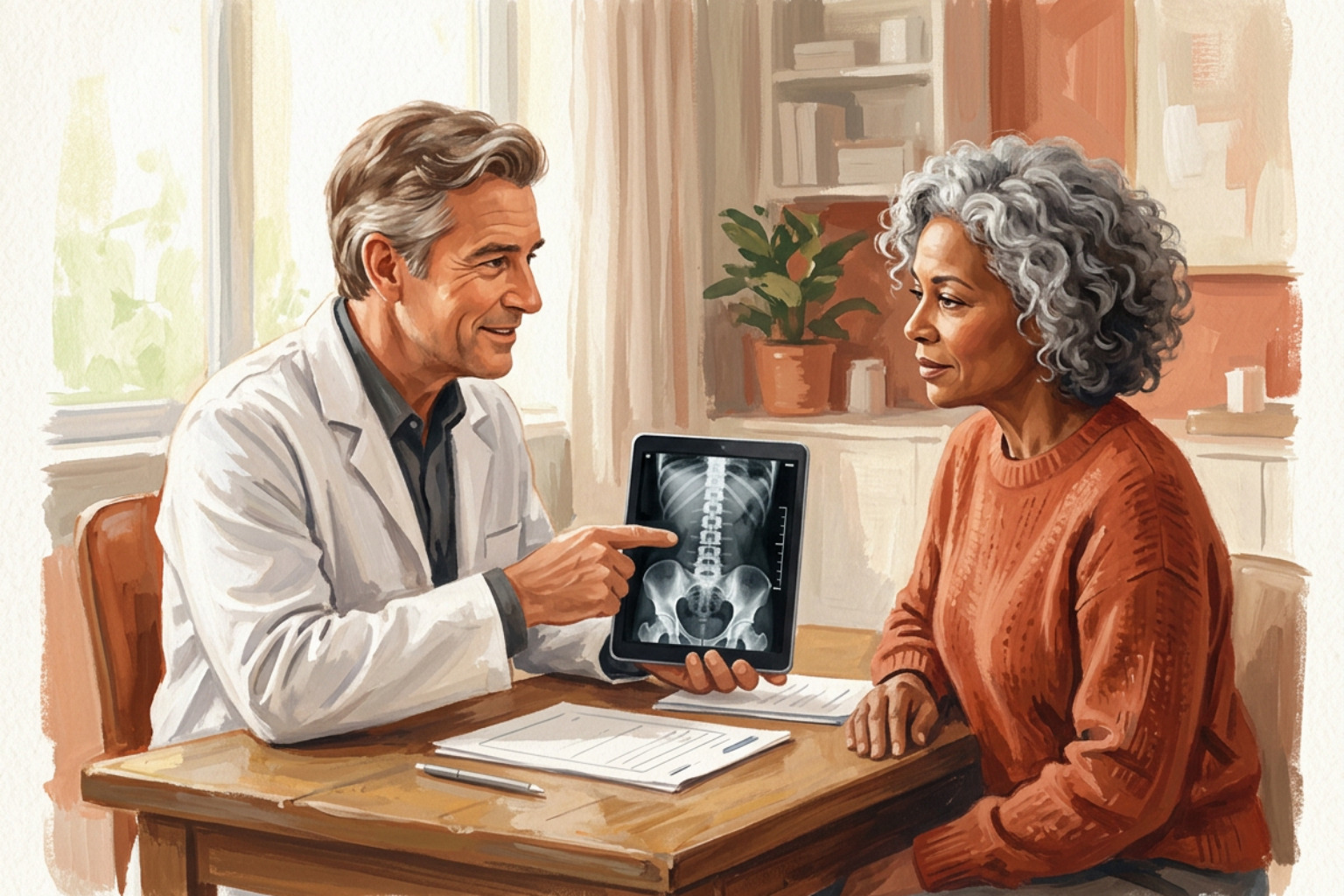
Understanding your DEXA T-score fracture risk is an essential step in protecting your independence. While a T-score is a vital baseline, your real-world safety depends on a holistic view of your health, including your lifestyle, age, and fall risk. If your DEXA scan indicates osteopenia or osteoporosis, translating those numbers into a practical prevention plan is key to avoiding injury.
This is where Groove Health can help. Groove Health is a Medicare-covered bone health program that addresses your specific fracture risk by pairing you with a specialized physician and a dedicated physical therapist. Through personalized guidance, targeted exercise plans, and fall-prevention support, Groove Health helps you build strength, improve balance, and reduce the everyday risks that can lead to fractures. Instead of just worrying about a T-score, you get a customized, actionable care model designed to protect your bones and keep you moving safely. You can Check your eligibility for Groove Health today to take control of your bone health.
Works Cited
- National Institute of Arthritis and Musculoskeletal and Skin Diseases. "Bone Mineral Density Tests: What the Numbers Mean.". NIAMS, 2023.
- Krugh, M., and M. D. Langaker. "Dual-Energy X-Ray Absorptiometry.". StatPearls, 2024.
- Allbritton-King, J. D., et al. "Reverse Engineering the FRAX Algorithm: Clinical Insights and Systematic Analysis of Fracture Risk.". Bone, 2022.
- Adams, A. L., et al. "Osteoporosis and Hip Fracture Risk From Routine Computed Tomography Scans: The Fracture, Osteoporosis, and CT Utilization Study (FOCUS).". Journal of Bone and Mineral Research, 2018.
This content is for informational purposes only and does not constitute medical advice. Consult a qualified healthcare professional for diagnosis and treatment. If you are on Medicare and interested in a personalized bone health program, you can check your eligibility at groovehealth.com.