How Often Do You Really Need a DEXA Scan?
How often you need a DEXA scan depends on your T-score and risk level, not the calendar. Here are the screening intervals major guidelines recommend and what Medicare will cover.

How Often Should You Get a DEXA Scan?
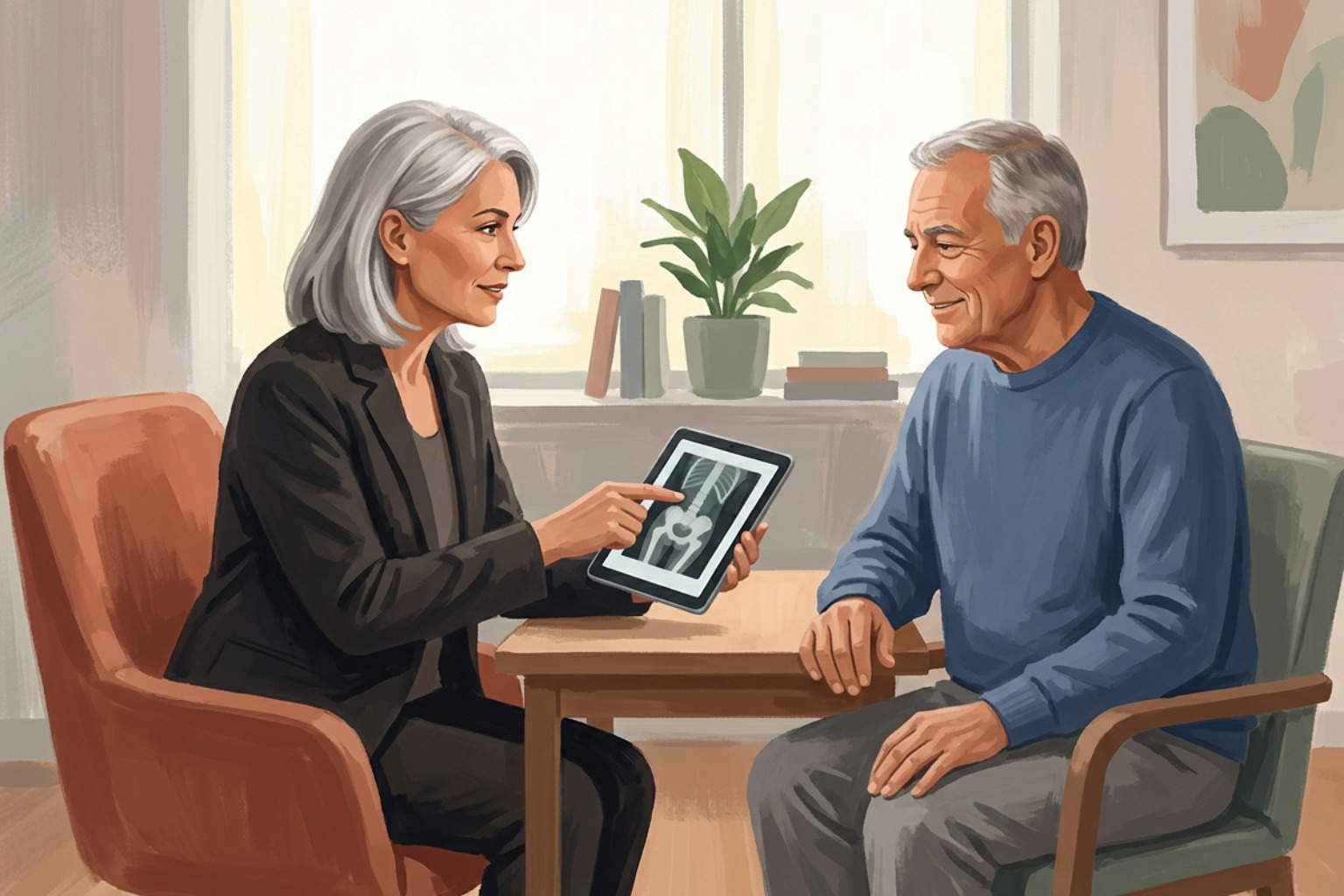
How often you need a DEXA scan depends mainly on your baseline bone density results, fracture risk, age, and any conditions or medications that speed bone loss. Here’s a simple guide to DEXA scan frequency:
| Your Bone Density Result | Typical Rescreening Interval to Discuss With Your Clinician |
|---|---|
| Normal bone density (T-score above -1.0) | About every 10-15 years if no new risk factors develop |
| Mild osteopenia (T-score -1.0 to -1.49) | About every 10-15 years if overall fracture risk is low |
| Moderate osteopenia (T-score -1.5 to -1.99) | About every 3-5 years |
| Advanced osteopenia (T-score -2.0 to -2.49) | About every 1-2 years |
| Osteoporosis (T-score -2.5 or lower) | Usually monitored every 1-2 years if results will guide treatment |
| Osteoporosis medication use or high-risk conditions | Often every 1-2 years; sometimes sooner if medically necessary |
Note: Medicare covers bone density testing once every 24 months for eligible patients, or more often if medically necessary.
If you’ve recently had a bone density test and your doctor mentioned scheduling the next one, it’s reasonable to ask, “How soon is soon enough?” The answer depends on your results and risk factors. Many people with normal bone density or mild bone loss don’t need repeat testing every two years, because an early retest often won’t change their care plan.
Nearly 1 in 5 women and 1 in 20-25 men over age 50 have osteoporosis, according to the CDC. But when baseline results are healthy, bone loss is often slow. In a large prospective study of older women, Gourlay et al. estimated it would take 16.8 years before even 10% of women with normal bone density progressed to osteoporosis.
This guide explains who needs a bone density scan, how often to repeat it based on your results, and how risk factors like age, medications, and medical history impact frequency.
What Is a DEXA Scan and How Does It Work?
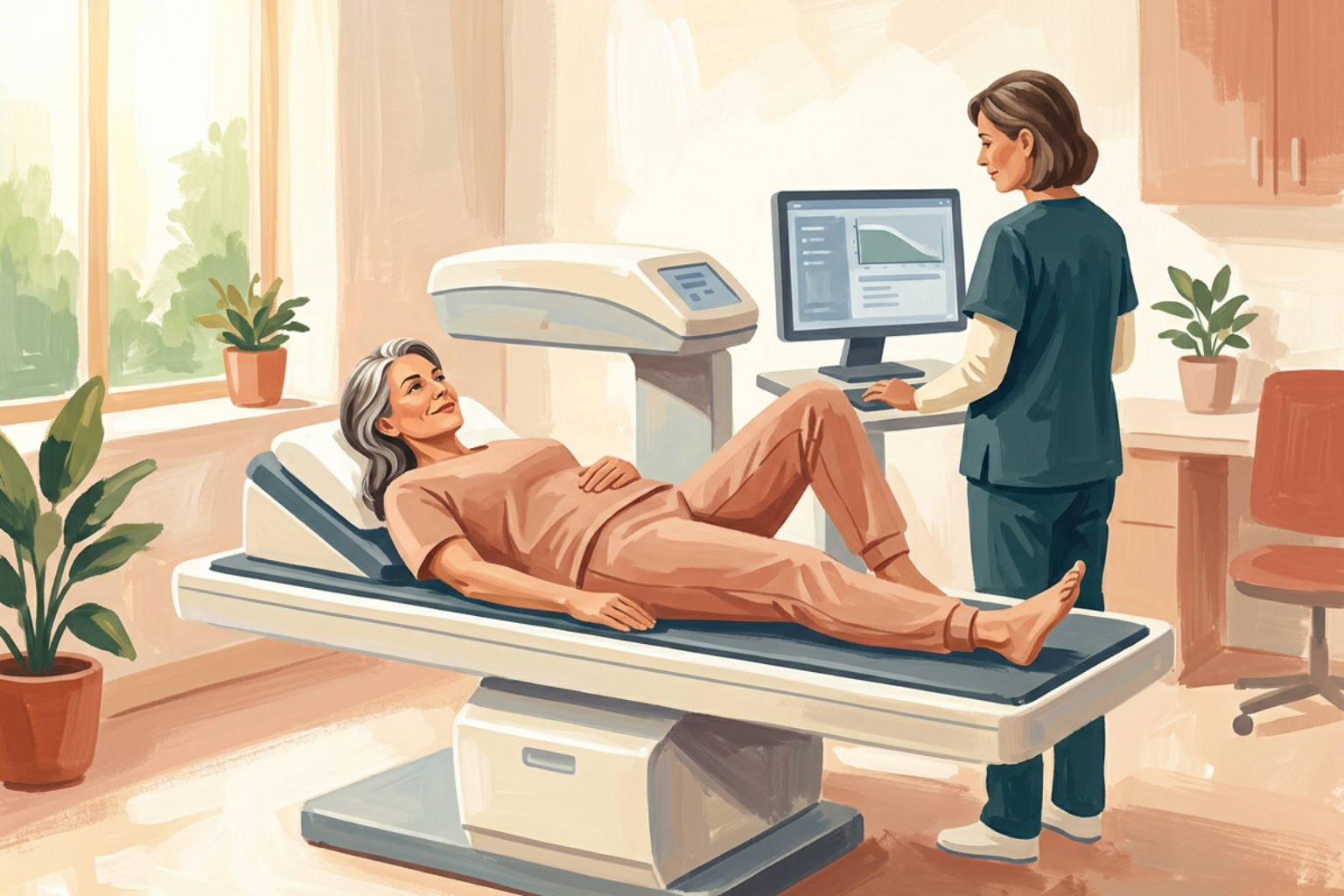
A DEXA scan, or dual-energy X-ray absorptiometry, is a noninvasive imaging test used to measure bone mineral density. It is the standard diagnostic method for identifying low bone mass and osteoporosis, a condition associated with reduced bone strength and increased fracture risk.
During the test, you lie on a padded exam table while a scanning arm moves over the area being measured, usually the hip, spine, or sometimes the forearm. The DEXA machine uses two very low-dose X-ray beams at different energy levels. By comparing how much of each beam is absorbed by your bones, the system estimates your bone mineral density, which reflects the amount of mineral content, mainly calcium, in a specific area of bone.
Preparing for the test is straightforward. You can eat as usual, but avoid taking calcium supplements for 24 to 48 hours before your appointment. Calcium tablets may appear on the scan and make your bones look denser than they truly are. Wear loose, comfortable clothing without metal buttons, zippers, or snaps.
Radiation exposure is usually not what determines DEXA scan frequency. A standard DEXA scan uses a very low dose of radiation, typically much less than a chest X-ray. In practice, repeat testing is guided more by your baseline results, risk factors, and whether the new scan would change your care.
Understanding T-Scores and Z-Scores
When you receive your bone density report, your results will be presented as two different numbers: a T-score and a Z-score.
- T-score: This compares your bone density to the peak bone mass of a healthy, young adult of your same sex. This is the main score doctors use to diagnose bone thinning or osteoporosis in postmenopausal women and men over age 50.
- Z-score: This compares your bone density to what is expected for a person of your same age, sex, and ethnic background. This score is helpful for younger adults or children, and it can alert doctors if something other than natural aging is causing bone loss.
Who Needs a Bone Density Test and When?
Bone loss is often called a "silent" condition because you cannot feel your bones getting weaker. Many older adults do not realize they have bone loss until they break a bone from a fall, which is why routine screening is so important.
Osteoporosis risk rises with age, but it does not rise equally for everyone. Women face a higher risk, especially after menopause, because estrogen levels drop. Estrogen helps regulate bone remodeling, the normal process where the body removes old bone and builds new bone in its place. Think of estrogen as helping keep that process in balance. It slows the cells that break down bone, giving bone-building cells a better chance to maintain strength. When estrogen falls, that balance can shift. Bone may be broken down faster than it is rebuilt, leading to a quicker loss of bone density.
That is why the years just after menopause matter. Research on menopause-related bone loss reports that women can lose around 10%-12% of bone mass in the first several years after menopause, with the fastest losses often happening early in the transition (Endotext, NCBI Bookshelf). This can raise the risk of osteoporosis and fractures over time.
Initial Screening Guidelines for Older Adults
The U.S. Preventive Services Task Force (USPSTF) recommends that all women get their first bone density scan at age 65.
However, women should get screened earlier—between ages 50 and 64—if they have certain risk factors that increase their chance of breaking a bone. These risk factors include:
- A parent who has broken a hip
- A personal history of breaking a bone after age 50
- A body weight under 127 pounds (low body mass index)
- Early menopause (before age 45)
- Smoking or drinking more than three alcoholic beverages a day
For men, screening guidelines vary. While the USPSTF does not have a formal recommendation for men without symptoms, other groups like the Bone Health & Osteoporosis Foundation recommend that all men get screened starting at age 70, or earlier if they have risk factors like chronic steroid use or low testosterone.
Recommended DEXA Scan Frequency Based on Your Risk Level
Once you have your baseline bone density scan, your doctor will determine how long you should wait before getting another one. This interval is highly personalized.
Medicare Part B generally covers a bone density test once every 24 months for people who meet certain criteria, such as estrogen-deficient women at clinical risk for osteoporosis, people on long-term steroid medications, people with primary hyperparathyroidism, or those being monitored during osteoporosis treatment. Medicare may cover testing more often when a doctor documents that it is medically necessary.
Why Your Baseline T-Score Determines Your DEXA Scan Frequency
The strongest predictor of how fast you will develop osteoporosis is your very first T-score. If your baseline scan shows healthy bones, you do not need to be tested every two years.
A major study funded by the National Institutes of Health followed older women for 15 years to see how fast their bone density changed. The researchers found that:
- Women with normal bone density (T-score above -1.0) or mild osteopenia (T-score of -1.0 to -1.49) took about 15 years for just 10% of them to develop osteoporosis.
- Women with moderate osteopenia (T-score of -1.5 to -1.99) took about 5 years to transition to osteoporosis.
- Women with advanced osteopenia (T-score of -2.0 to -2.49) transitioned much faster, taking only about 1 year on average.
Because of this, a 15-year screening interval is highly safe and reasonable for women with normal bone density or very mild bone thinning. Conversely, those with advanced bone thinning need close monitoring about every 1 to 2 years to catch severe bone loss before a break occurs.
How Medical Conditions and Medications Affect DEXA Scan Frequency
Certain health conditions and prescription medications can cause your body to break down bone much faster than normal. If you fall into one of these categories, your doctor may recommend an intensive testing schedule, sometimes repeating the scan every 6 to 12 months.
The most common medication that damages bone is glucocorticoids—steroid medications like prednisone. If you take 5 milligrams or more of prednisone daily for three months or longer, your risk of bone loss rises significantly. Other conditions that warrant more frequent screening include:
- Primary hyperparathyroidism: A condition where overactive glands in your neck release too much hormone, causing calcium to leach out of your bones and into your blood.
- Rheumatoid arthritis: An autoimmune disease that causes chronic inflammation, which can trigger bone loss.
- Digestive disorders: Conditions like celiac disease or Crohn's disease that make it hard for your body to absorb calcium and vitamin D from your food.
How Major Medical Guidelines Compare
Leading health organizations do not all recommend the exact same DEXA scan schedule. That can make follow-up timing feel unclear for both patients and clinicians.
- The U.S. Preventive Services Task Force (USPSTF): Focuses primarily on initial screening. They state that there is not enough evidence to recommend a specific rescreening interval, but suggest that a longer wait (up to 15 years) is safe for low-risk individuals.
- The Bone Health & Osteoporosis Foundation (BHOF): Recommends repeating the scan every 1 to 2 years once a patient starts osteoporosis medication to monitor whether the drug is working.
- The International Society for Clinical Densitometry (ISCD): Suggests repeat scans every 1 to 2 years after starting therapy, but notes that intervals can be extended once bone density stabilizes.
- The American College of Physicians (ACP): Takes a more conservative approach, recommending against routine monitoring during the first 5 years of osteoporosis treatment, as they believe the focus should be on taking the medication consistently rather than tracking small changes on a scan.
If you’ve just been diagnosed, remember: your T-score is only one part of the story. Your doctor can help you understand your full picture, including strength, balance, fall history, and steps to protect your bones going forward.
Frequently Asked Questions About Bone Density Testing
Does Medicare cover a DEXA scan every year?
No, Medicare Part B typically covers a bone density scan once every 24 months (every two years). However, Medicare will pay for more frequent scans if your doctor provides medical justification. This might happen if you are taking high-dose steroid medications, have a disease that causes rapid bone loss, or if your doctor needs to monitor how well a new osteoporosis drug is working.
Can you have a DEXA scan if you have spinal arthritis?
Yes, you can still have a scan, but spinal arthritis can affect the accuracy of the results. Severe arthritis can cause bone spurs or extra calcium to build up on your vertebrae. The DEXA machine cannot tell the difference between healthy bone and arthritic buildup, which can falsely elevate your spine T-score, making your bones look stronger than they really are. In these cases, your doctor may rely on your hip scan results or perform a scan on your forearm instead.
What is the difference between a central and peripheral DEXA scan?
A central DEXA scan is performed on a large table in a clinic or hospital and measures the bone density of your hip and spine. It is the gold standard used to officially diagnose osteoporosis. A peripheral scan is a smaller, portable test that measures bone density in your heel, wrist, or finger. While peripheral scans are useful for quick community health screenings, they are not as detailed as central scans and cannot be used alone to diagnose osteoporosis or monitor treatment.
Making DEXA Screening Part of Your Bone Health Plan
Getting a bone density scan is a critical step in taking charge of your skeletal health, but knowing your DEXA scan frequency is only the first step. Once you have your results, the most important step is taking action to improve bone health.
Groove Health supports bone health by turning your DEXA scan results into a practical, home-based exercise plan. We pair adults with a physician and a dedicated physical therapist who develops personalized exercise programming based on your bone density, risk level, and goals. Through remote therapeutic monitoring, Groove Health focuses on targeted weight-bearing exercise, balance training, and fall prevention from the comfort of home, helping you build strength and reduce fall and fracture risk between scheduled scans.
Check your eligibility for Groove Health's personalized bone health program
Works Cited
- CDC. "Facts About Bone Density (DEXA Scan)." Centers for Disease Control and Prevention, 2024.
- Gourlay ML, Fine JP, Preisser JS, et al. "Bone-Density Testing Interval and Transition to Osteoporosis in Older Women." New England Journal of Medicine, 2012.
- Centers for Medicare & Medicaid Services. "Bone Mass Measurements." Medicare.gov, 2026.
- Krugh, M., & Langaker, M. D. "Dual-Energy X-Ray Absorptiometry." StatPearls, 2025.
- Radiological Society of North America. "Bone Density Scan (DEXA or DXA)." RadiologyInfo.org, 2025.
This content is for informational purposes only and does not constitute medical advice. Consult a qualified healthcare professional for diagnosis and treatment. If you are on Medicare and interested in a personalized bone health program, you can check your eligibility at groovehealth.com.