
The Complete Guide to Magnesium Glycinate for Bones
Magnesium glycinate is one of the most absorbable forms of magnesium and a key partner to calcium and vitamin D for bone strength. Here's how it supports bone density, the right dose, and the best food sources.

What Magnesium Glycinate Does for Bones (And Why It Matters)
Magnesium glycinate for bones is one of the most well-absorbed forms of magnesium you can take to support bone strength, and it is often overlooked in conversations that focus almost entirely on calcium and vitamin D.
Here is what you need to know upfront:
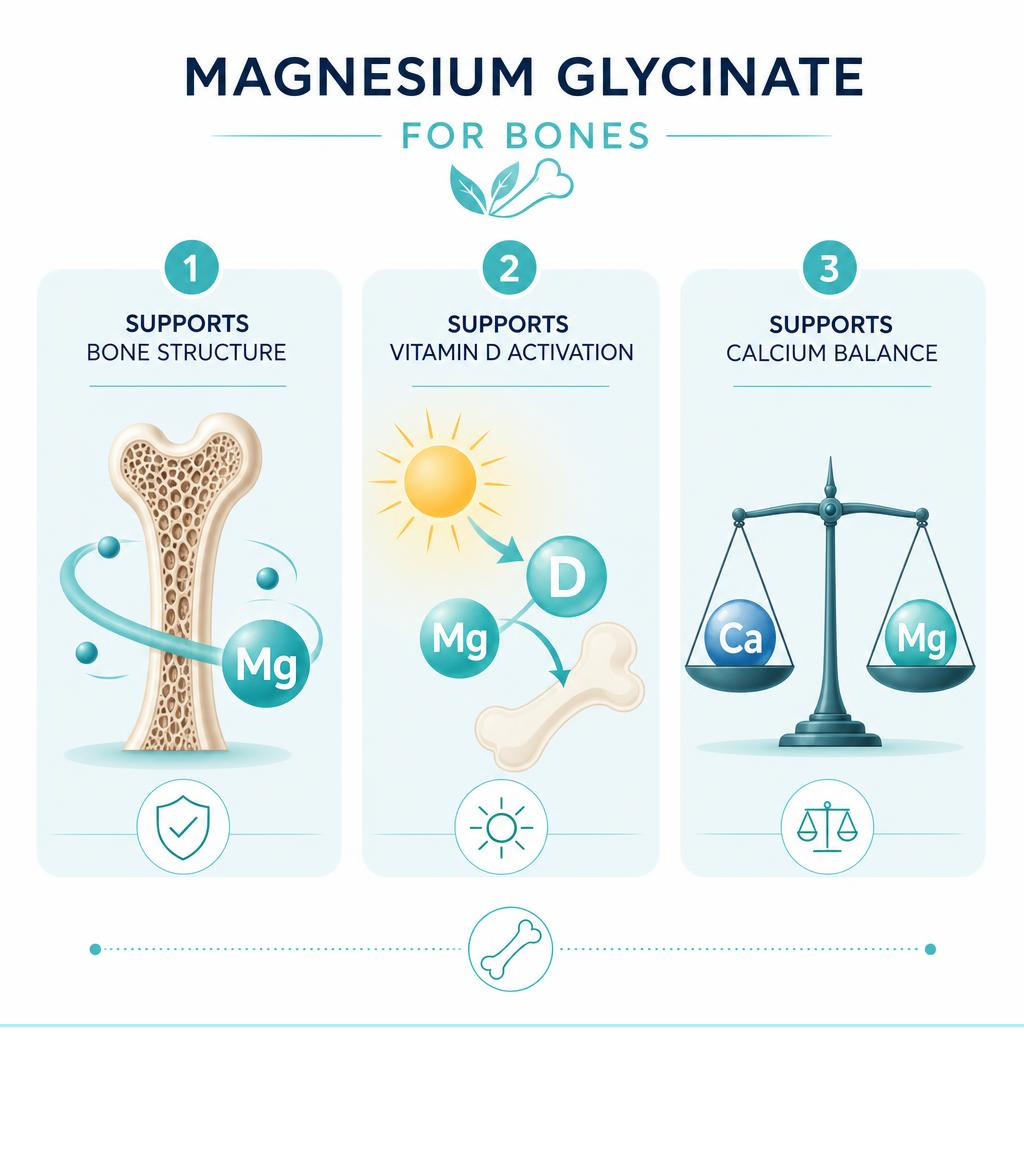
- About 60% of your body's magnesium is stored in your bones -- it is a structural part of your skeleton, not just a supporting player
- Magnesium glycinate is magnesium bound to the amino acid glycine, which makes it easier for your body to absorb and gentle on your stomach
- Without enough magnesium, your body cannot properly activate vitamin D -- which means calcium may not get absorbed into your bones as it should
- Research suggests that low magnesium intake is linked to lower bone mineral density, especially in women after menopause
- Healthy bone mineral balance is associated with lower fracture risk, and magnesium may help support that balance alongside calcium, vitamin D, nutrition, and strength-building movement
If you have been diagnosed with osteoporosis or osteopenia (early-stage bone thinning), or if a recent bone density scan gave you results you are still making sense of, magnesium is worth understanding. It is not a replacement for your doctor's treatment plan — but it may be a meaningful piece of the puzzle that has not come up yet.
Why Your Skeleton Needs Magnesium to Stay Strong
Bones are living tissue. They constantly break down and rebuild themselves throughout your life in a process called bone remodeling. Two main types of cells do this work: osteoclasts, which dissolve old bone tissue, and osteoblasts, which build new bone.
Magnesium helps keep osteoclasts and osteoblasts in balance. Without enough magnesium, bone breakdown can outpace bone formation, which may contribute to bone loss over time.

Magnesium helps support the formation and maintenance of collagen, an important protein found throughout your bones. Think of collagen as the internal framework of bone—it provides flexibility and resilience, helping bones absorb stress without becoming too brittle. Calcium is then deposited into this framework, helping bones become strong and dense. Because magnesium supports both collagen production and the cells that build new bone, low magnesium levels may make it harder for your body to maintain healthy bone strength and bone mineral density.
Your body has a hormone called parathyroid hormone (PTH) that acts like a thermostat for calcium. It constantly monitors your calcium levels and adjusts them to keep everything in balance — making sure enough calcium gets into your bones, your blood, and your cells.
Magnesium is essential for this system to work properly. When magnesium levels drop too low, PTH stops functioning the way it should. Think of it like a thermostat that loses power — it can no longer read the temperature or make adjustments.
When this happens, your body loses the ability to manage calcium efficiently. Calcium can be lost through your kidneys instead of being directed where it is needed, and the normal process of building and maintaining strong bones gets disrupted. And calcium matters: it is one of the main minerals your bones rely on to stay dense and strong. To learn more about how this mineral supports your body, you can read about the NIH Office of Dietary Supplements: Magnesium.
How Magnesium Glycinate Compares to Other Forms
Not all magnesium supplements are the same. Different forms have different absorption rates and can affect your stomach in different ways.
| Magnesium Form | How Well It Absorbs | How Gentle It Is on Your Stomach | Best Used For |
|---|---|---|---|
| Magnesium Glycinate | High | Excellent (Very Gentle) | Long-term bone support and daily use |
| Magnesium Citrate | High | Moderate (Can cause loose stools) | Bone support when tolerated; occasional constipation relief |
| Magnesium Oxide | Low | Poor (Often causes stomach upset) | Short-term antacid use |
To understand why magnesium glycinate is highly recommended, it helps to look at Magnesium Bisglycinate absorption benefits. Magnesium glycinate and magnesium bisglycinate are essentially the same compound: magnesium bound to two molecules of the amino acid glycine.
Why Magnesium Glycinate Is Highly Bioavailable
Bioavailability simply means how much of a nutrient your body can actually absorb and use. Many standard magnesium supplements, like magnesium oxide, do not dissolve well in your digestive tract. Magnesium oxide is considered one of the least bioavailable forms, which means your body may absorb less of it compared with better-tolerated forms like magnesium glycinate.
Magnesium glycinate is different because it is a chelated mineral. Chelation means the magnesium is chemically bonded to an amino acid, in this case, glycine. This bond may help keep magnesium stable as it moves through your digestive tract and may facilitate absorption in the small intestine. That is one reason magnesium glycinate is often valued for its bioavailability and gentle feel on the stomach.
Choosing a Form That's Gentle on Digestion
If you have ever taken a magnesium supplement and ended up with an upset stomach or diarrhea, you likely took magnesium oxide or magnesium citrate. Because those forms are not absorbed well, they draw water into your colon, creating a strong laxative effect.
Magnesium glycinate is often associated with fewer digestive side effects than forms like magnesium oxide or citrate, which can be more likely to cause loose stools. This may make it a good option for older adults, postmenopausal women, or anyone with a sensitive digestive system who needs a daily supplement for bone health.
The Synergy: Combining Magnesium, Calcium, and Vitamin D
When it comes to bone health, nutrients do not work alone. They behave like teammates. For decades, public health advice focused almost entirely on calcium and vitamin D, but without magnesium, these two nutrients cannot do their jobs well.
Here is how they work together:
- Vitamin D Activation: The vitamin D you get from sunlight or supplements is inactive. Your liver and kidneys must convert it into its active form, a hormone called calcitriol. Key enzymes involved in this conversion require magnesium. If you are low in magnesium, your body may not use vitamin D as effectively.
- Calcium Absorption: Active vitamin D helps your body absorb calcium from your food.
- Bone Mineralization: Once calcium is in your bloodstream, magnesium and vitamin K2 act as traffic guards. They help direct calcium into your bones and teeth, keeping it out of your soft tissues, like your kidneys and arteries, where calcium buildup can cause health issues.
If you take high doses of calcium without enough magnesium, it can create an imbalance that leaves your bones vulnerable. Ensuring you have adequate levels of all three nutrients helps keep your bones strong and your cardiovascular system healthy.
Frequently Asked Questions About Magnesium and Bone Health
How much magnesium should I take daily for bone health?
The Recommended Dietary Allowance for magnesium is 320 mg daily for women over the age of 30, and 420 mg daily for men. When looking at a supplement label, pay attention to the "elemental magnesium" amount, which is the actual weight of the magnesium itself, rather than the weight of the entire magnesium glycinate compound. Always consult your doctor to find the dose that fits your diet and health history.
What are the best food sources of magnesium?
While supplements are helpful, it is always a good idea to get magnesium from your diet. Some of the best food sources include:
- Pumpkin seeds: 156 mg per ounce
- Spinach (cooked): 78 mg per half-cup
- Almonds: 80 mg per ounce
- Black beans (cooked): 60 mg per half-cup
- Brown rice (cooked): 42 mg per half-cup
Are there any side effects or drug interactions with magnesium glycinate?
Magnesium glycinate is highly tolerated, but you should still use caution. Your kidneys are responsible for filtering out extra magnesium, so if you have kidney disease, you should not take magnesium supplements unless specifically directed by your doctor.
Magnesium can also bind to certain medications in your stomach, making them less effective. This includes some antibiotics, blood pressure medicines, and osteoporosis medications like bisphosphonates. It is usually best to take your magnesium supplement at least two hours apart from other medications.
Your Magnesium Plan for Stronger Bones
Taking care of your bones as you age requires a complete approach. While calcium and vitamin D are important, magnesium glycinate is a highly absorbable, stomach-friendly option that helps tie all of these nutrients together.
For older adults looking to protect their mobility and independence, managing bone health can feel overwhelming. Groove Health offers a personalized, Medicare-covered program that pairs you with a physician and a dedicated physical therapist. You receive a customized, home-based care plan designed to build bone strength, prevent falls, and lower your risk of fractures.
To take the next step in protecting your bone health, you can Sign up for Groove Health's personalized bone health program.
Works Cited
- Castiglioni, S., et al. "Magnesium and Osteoporosis: Current State of Knowledge and Future Research Directions." Nutrients, 2013.
- National Institutes of Health, Office of Dietary Supplements. "Magnesium: Fact Sheet for Health Professionals." 2022.
- Farsinejad-Marj, M., et al. "Dietary magnesium intake, bone mineral density and risk of fracture: a systematic review and meta-analysis." Osteoporosis International, 2016.
- Groenendijk, I., et al. "Impact of Magnesium on Bone Health in Older Adults: A Systematic Review and Meta-Analysis." Bone, 2022.
- Touyz, R. M., de Baaij, J. H. F., and Hoenderop, J. G. J. "Magnesium Disorders." New England Journal of Medicine, 2024.
- Dai, Q., et al. "Magnesium Status and Supplementation Influence Vitamin D Status and Metabolism: Results From a Randomized Trial." The American Journal of Clinical Nutrition, 2018.
- Al Alawi, A. M., Majoni, S. W., and Falhammar, H. "Magnesium and Human Health: Perspectives and Research Directions." International Journal of Endocrinology, 2018.
- Pardo, M. R., et al. "Bioavailability of Magnesium Food Supplements: A Systematic Review." Nutrition, 2021.
- Orchard, T. S., et al. "Magnesium Intake, Bone Mineral Density, and Fractures: Results From the Women’s Health Initiative Observational Study." The American Journal of Clinical Nutrition, 2014.
This content is for informational purposes only and does not constitute medical advice. Consult a qualified healthcare professional for diagnosis and treatment. If you are on Medicare and interested in a personalized bone health program, you can check your eligibility at groovehealth.com.