All About Osteopenia T-Score Medication Thresholds
Osteopenia doesn't always mean medication. Learn how FRAX scores, prior fractures, and risk factors like long-term steroid use decide when drugs make sense and when strength training and nutrition come first.
What Is an Osteopenia T-Score and When Does It Require Medication?
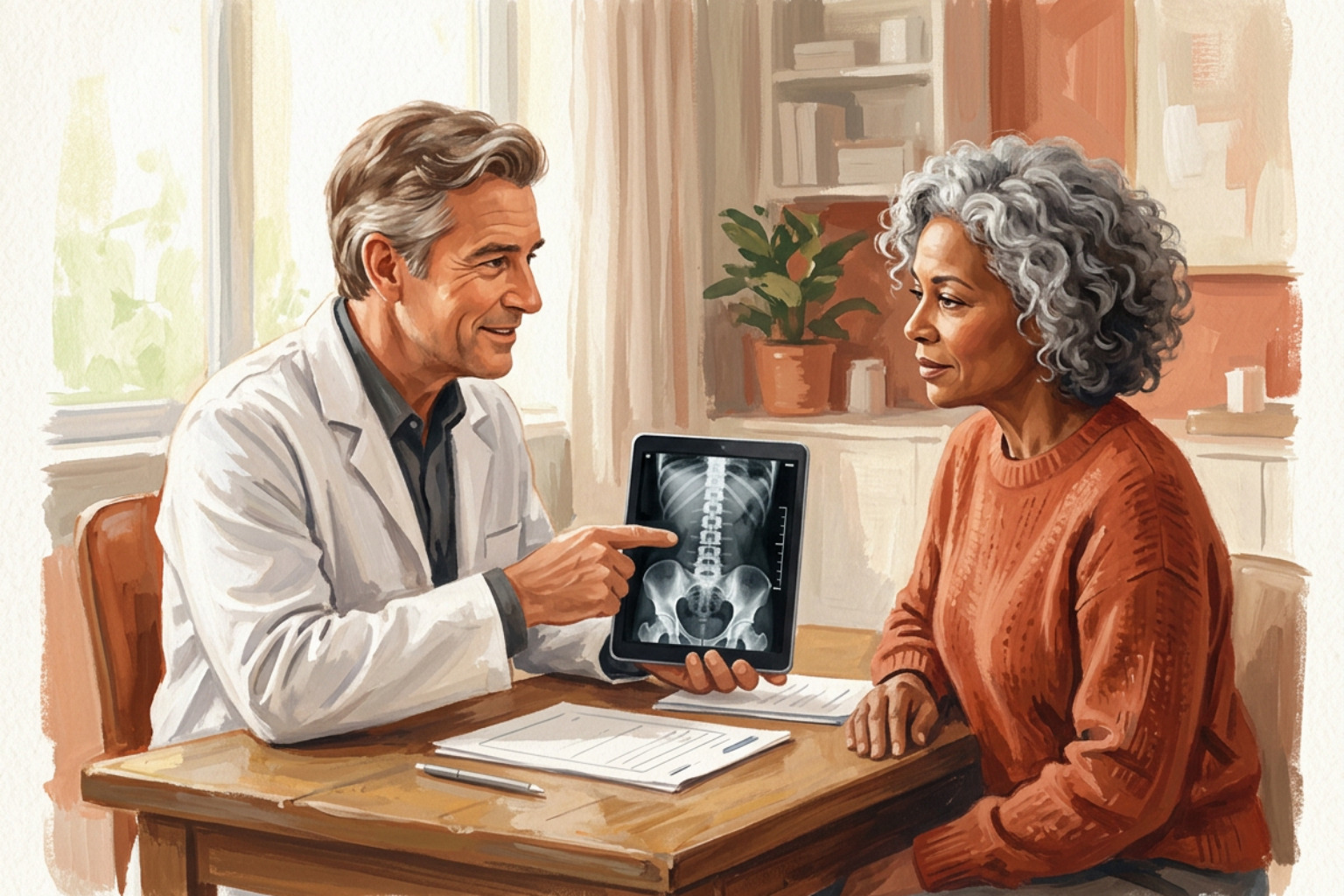
An osteopenia T-score may warrant prescription medication in addition to lifestyle changes when fracture risk is high, such as a FRAX score of 20% or higher for major osteoporotic fracture or 3% or higher for hip fracture, after certain fragility fractures, or with major risk factors like long-term steroid use. For lower-risk osteopenia, care usually starts with progressive resistance exercise, nutrition, fall prevention, and monitoring.
A dual-energy X-ray absorptiometry (DEXA) scan measures bone mineral density and produces a T-score, which compares your bone mass to that of a healthy young adult. A result between -1.0 and -2.5 indicates osteopenia, while -2.5 or lower indicates osteoporosis. Having your T-score meaning explained simply helps clarify that osteopenia is a category of low bone density rather than an irreversible disease. Clinicians evaluate your complete clinical risk profile to decide whether medications are necessary to protect your bone health.
How Does the FRAX Score Determine When Osteopenia Needs Medication?
A bone mineral density score provides a snapshot of bone quantity, but it does not measure bone quality or capture your daily risk of falling. Because many fractures occur in individuals whose bone density sits in the osteopenia range, medical experts developed the Fracture Risk Assessment Tool, commonly known as the FRAX score.
The FRAX calculator combines your femoral neck T-score with several clinical risk factors to estimate your percentage likelihood of breaking a bone over the next ten years. These risk factors include:
- Current age and sex
- Personal history of a previous fracture as an adult
- Parental history of a broken hip
- Body mass index (BMI)
- Current cigarette smoking
- Daily alcohol intake of three or more units
- Chronic use of oral corticosteroid medications
- Secondary conditions linked to bone loss, such as rheumatoid arthritis
Major medical organizations establish clear treatment thresholds based on these calculations. According to established Clinical Practice Guidelines, prescription medication is strongly recommended for individuals with an osteopenia T-score between -1.0 and -2.5 if their FRAX score shows:
- A 10-year probability of a major osteoporotic fracture of 20% or higher (major fractures include the spine, hip, forearm, or shoulder), OR
- A 10-year probability of a hip fracture of 3% or higher.
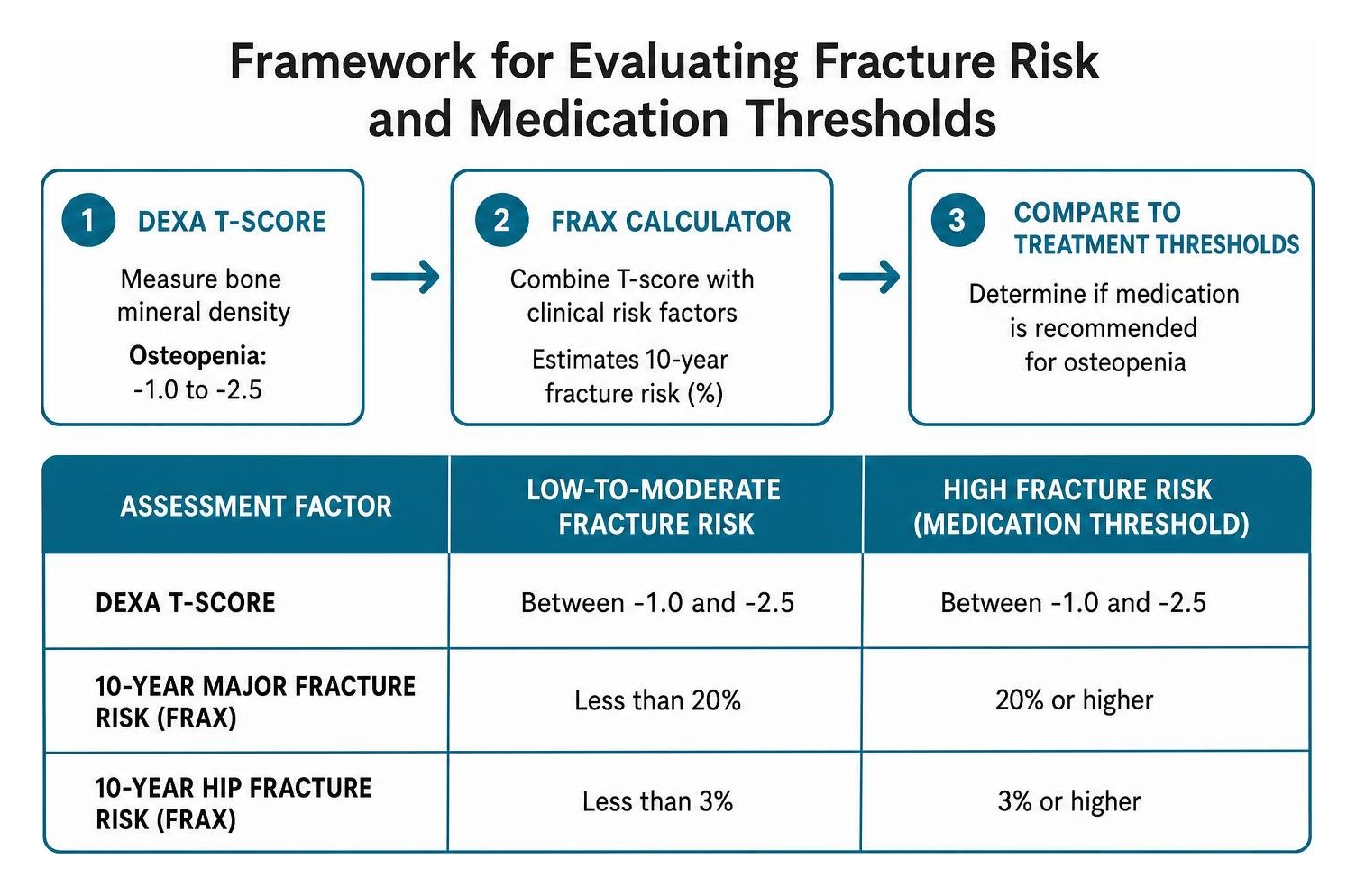
| Assessment Factor | Low-to-Moderate Fracture Risk | High Fracture Risk (Medication Threshold) |
|---|---|---|
| DEXA T-Score | Between -1.0 and -2.5 | Between -1.0 and -2.5 |
| 10-Year Major Fracture Risk (FRAX) | Less than 20% | 20% or higher |
| 10-Year Hip Fracture Risk (FRAX) | Less than 3% | 3% or higher |
| Fragility Fracture History | None | Previous adult low-trauma fracture |
| Primary Clinical Approach | Lifestyle changes, diet, and exercise | Prescription medication plus lifestyle support |
Reviewing your DEXA T-score fracture risk together with clinical calculators helps match treatment decisions to your actual fracture risk, not just a scan result.
Which High-Risk Factors and Fragility Fractures Trigger Immediate Pharmacologic Treatment?
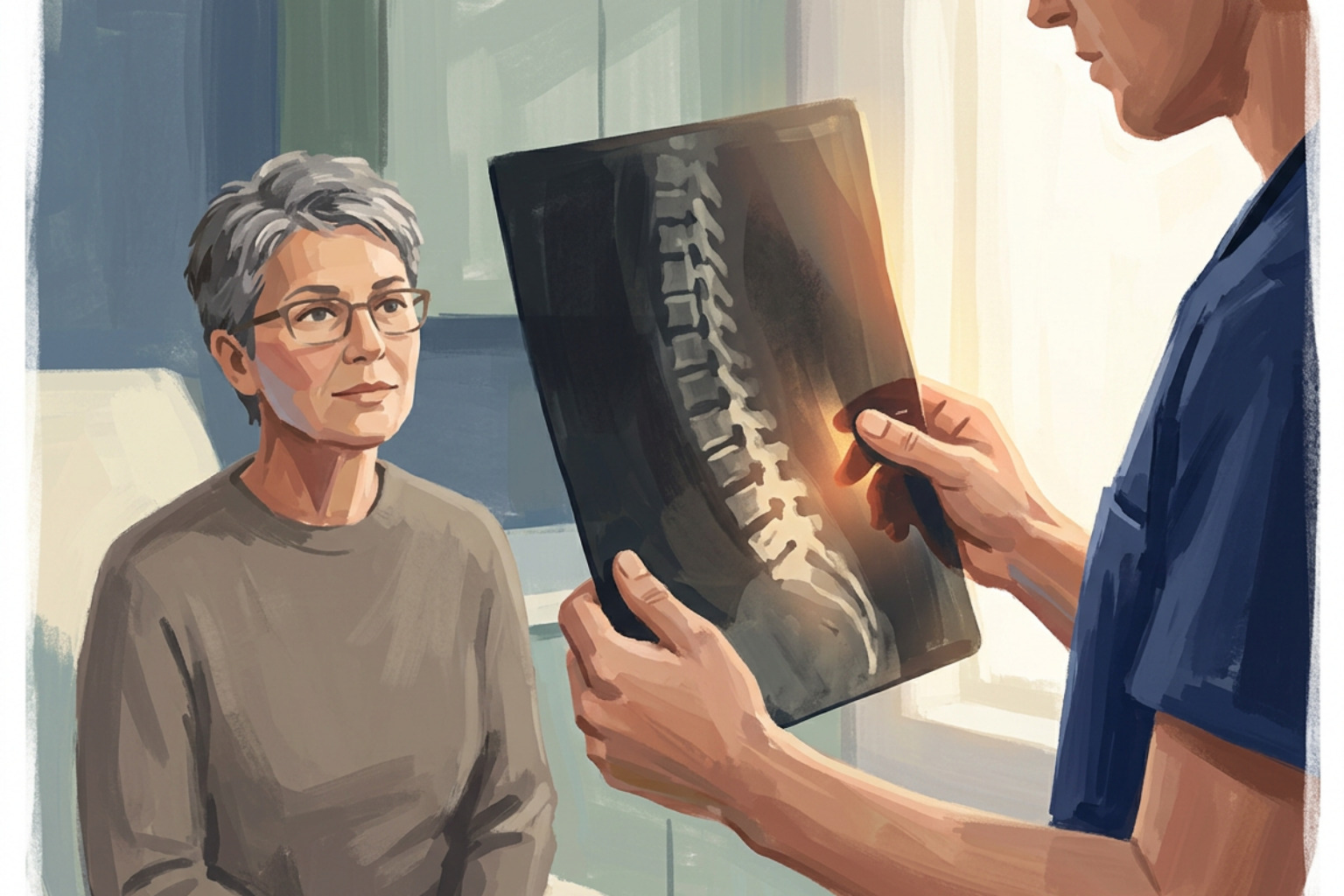
Certain clinical events immediately place an individual in a high-risk category, prompting doctors to recommend medication even if a DEXA scan shows mild osteopenia.
The most significant trigger is a fragility fracture. A fragility fracture is a broken bone that occurs from a low-trauma event, such as a fall from standing height or less, or even from everyday actions like coughing or reaching. If an adult over age fifty breaks a hip, wrist, or vertebra during a routine slip, clinical guidelines recommend starting treatment to prevent subsequent fractures. Understanding when to start osteoporosis treatment often comes down to recognizing these silent warning signs.
Other major clinical factors that may require early medication include:
- Long-Term Glucocorticoid Use: Taking oral steroid medications (such as prednisone) for three months or longer significantly accelerates bone breakdown and suppresses bone rebuilding cells.
- Aromatase Inhibitors and Androgen Deprivation Therapy: Cancer treatments that lower circulating estrogen or testosterone levels can lead to rapid mineral loss.
- Secondary Medical Conditions: Disorders such as primary hyperparathyroidism, untreated celiac disease, malabsorption syndromes, and advanced kidney disease directly affect calcium metabolism and skeletal strength.
When these medical conditions or prior fractures are present, lifestyle modifications alone are generally insufficient to protect against future bone injuries.
What First-Line Lifestyle Changes Are Recommended Before Starting Medication?
When fracture risk remains below established medication thresholds, first-line management relies on evidence-based lifestyle strategies designed to preserve bone mineral density and reduce fall risk.
Targeted Nutritional Strategies
Bones require specific building blocks to maintain their structural matrix. Focus on the following dietary habits:
- Dietary Calcium: Aim for roughly 1,200 milligrams of calcium daily, ideally obtained through food sources such as low-fat dairy, fortified plant milks, canned sardines with bones, and leafy greens.
- Antinutrient Management: Certain compounds, such as oxalic acid found in high concentrations in raw spinach and Swiss chard, bind to calcium and reduce how well your body absorbs it. Moderating high-oxalate foods and choosing lower-oxalate greens like kale and collard greens helps improve calcium absorption.
- Vitamin D Intake: Vitamin D helps your intestines absorb calcium efficiently. Maintaining adequate blood levels through sensible sun exposure, fortified foods, or supplementation as advised by your doctor is essential.
- Moderation: Excessive sodium and high caffeine intake can increase calcium excretion through the kidneys, while smoking and excess alcohol directly impair bone-forming cells.
Progressive Resistance and Weight-Bearing Exercise
Physical activity is essential for bone health, but different exercises serve different roles. While walking and stretching support joint mobility and cardiovascular fitness, they do not provide enough mechanical force to stimulate bone growth.
Building bone requires heavy resistance training with heavy weights and low repetitions (typically 75% to 85% of your one-rep maximum) to create an osteogenic load. This mechanical load bends the bone tissue microscopically, which signals specialized bone-building cells called osteoblasts to lay down new mineral density.
Safe technique is vital when lifting weights. Always encourage safe spinal extension and avoid loaded spinal flexion (bending forward through the spine while holding weights), which places excessive compressive force on the front of the vertebral bodies and increases spine fracture risks.
Any movement carrying a fall or injury risk must begin within your current physical ability and progress gradually under professional supervision. Power-based movements (such as hopping, bounding, or jump squats) provide dynamic impact that can benefit bone, but they carry joint stress and are not safe for everyone. They require professional clearance and careful progression before being introduced.
When performing balance exercises, require that any support used (such as a sturdy chair or countertop) be stable and braced against sliding or tipping. Practicing structured weight training for osteopenia builds the muscular strength needed to protect joints and prevent accidental falls.
For individuals seeking structured guidance, Groove Health provides a comprehensive bone health and exercise program. Members work with a physician and a physical therapist who designs their personalized exercise plan, ensuring all movements are progressive, safe, and tailored to individual bone density levels.
What Medications Are Prescribed for Osteopenia and What Are Their Risks?
When medication is necessary, doctors select from several drug classes depending on the patient's medical history, fracture risk level, and potential side effects. Clinical summaries, such as the Pharmacologic Treatment of Primary Osteoporosis or Low Bone Mass to Prevent Fractures in Adults: A Living Clinical Guideline From the American College of Physicians, outline the benefits and trade-offs of each approach.
1. Bisphosphonates (First-Line Therapy)
Bisphosphonates are the usual first choice when drug treatment is needed. The American College of Physicians recommends them for initial pharmacologic treatment in postmenopausal women with osteoporosis. They work by slowing down osteoclasts, the cells responsible for breaking down old bone tissue.
- Common Options: First-line choices often include bisphosphonates such as alendronate, usually taken weekly, risedronate, taken weekly or monthly, or intravenous zoledronic acid, typically given once yearly for treatment or less often for prevention in some cases.
- Potential Risks: Oral bisphosphonates can irritate the esophagus or stomach, causing heartburn, nausea, or swallowing discomfort. Rare long-term complications include osteonecrosis of the jaw, usually linked to invasive dental procedures, and atypical femur fractures, which are unusual stress-type fractures of the thigh bone.
- Drug Holidays: Because bisphosphonates stay in bone for years, clinicians often reassess after about 5 years of oral therapy or 3 years of IV therapy. People with stable bone density and low fracture risk may pause treatment, while higher-risk patients may need to continue.
2. Targeted Anti-Resorptive Injections (Denosumab)
Denosumab is a monoclonal antibody injection given under the skin every six months. It slows bone breakdown by blocking RANKL, a signal involved in osteoclast activity.
- Clinical Considerations: Denosumab is often prescribed for individuals who cannot tolerate oral bisphosphonates or who have impaired kidney function.
- Important Caution: Unlike bisphosphonates, denosumab does not stay in bone tissue. If an injection is delayed or stopped abruptly, bone turnover rebounds rapidly, leading to fast bone loss and an increased risk of multiple spinal fractures. Stopping denosumab calls for a planned transition to another osteoporosis medicine, usually a bisphosphonate, under medical supervision.
3. Selective Estrogen Receptor Modulators (SERMs) and Hormone Therapy
- Raloxifene: Acts like estrogen in bone while blocking estrogen effects in some breast tissue. It can lower vertebral fracture risk in postmenopausal women, but it has not been shown to meaningfully reduce hip fracture risk. Possible downsides include hot flashes and a small increased risk of blood clots.
- Hormone Therapy: May help preserve bone density in recently postmenopausal women, especially when also treating significant menopausal symptoms. It is not usually used solely for bone protection because risks, including blood clots, stroke, and breast cancer concerns, must be weighed carefully.
When exploring diagnostic scans and prescriptions, consult Medicare.gov directly to review coverage details for bone density testing, and read our guide on whether Medicare covers osteoporosis medication for treatments, noting that coverage may vary by plan type.
How Often Should DEXA Scans Monitor Bone Density Changes?
Monitoring your bone mineral density over time helps determine whether your current strategy (whether lifestyle adjustments or prescription medication) is effectively preserving your skeletal strength.
For individuals diagnosed with osteopenia who have a low risk of fracture, repeat DEXA scans are typically scheduled every two to three years. For those categorized as high-risk, those on long-term steroid medications, or those actively taking bone-protective prescriptions, scans are generally recommended every one to two years until bone density stabilizes.
When reviewing follow-up scans, doctors look for changes that exceed the scanner's margin of error, known clinically as the least significant change. A small fluctuation in your numbers on a T-score osteopenia range chart may simply reflect natural variations between scanner calibrations. However, if follow-up testing reveals rapid, significant bone loss, your physician will evaluate secondary causes and discuss transitioning from lifestyle-only management to pharmacologic therapy.
Frequently Asked Questions About Osteopenia Medication Thresholds
Can osteopenia be reversed solely through lifestyle changes?
Research suggests that consistent, multimodal lifestyle interventions can help maintain bone density and slow the natural rate of age-related bone loss. While lifestyle habits may not dramatically increase T-scores in individuals with advanced bone thinning, heavy resistance training and targeted nutrition support bone architecture, improve muscle strength, and significantly lower the likelihood of falling.
At what exact T-score does osteopenia become osteoporosis?
Osteopenia transitions to osteoporosis when the T-score reaches -2.5 or lower at the lumbar spine, femoral neck, or total hip. However, a person with a T-score of -2.3 or -2.4 who has experienced a fragility fracture or carries a high FRAX score is clinically managed with the same urgency as someone with a score below -2.5.
Why would a doctor recommend medication if a T-score is only mildly low?
A mildly low T-score (such as -1.5) reflects only one aspect of skeletal health. If a patient is older, has lost height due to silent spinal compression, takes oral steroid medications, or has a parent who suffered a broken hip, their absolute chance of sustaining a fracture may exceed the 20% major fracture or 3% hip fracture threshold, warranting protective medical therapy.
What Are the Key Takeaways for Managing Your Bone Health?
Determining whether an osteopenia T-score requires prescription medication comes down to evaluating total fracture risk rather than focusing on a single number.
- T-Score Context: Osteopenia (-1.0 to -2.5) represents low bone mass, but first-line care remains focused on lifestyle improvements for most individuals.
- Medication Thresholds: Guidelines recommend pharmacologic treatment when your 10-year FRAX probability reaches 20% or higher for major osteoporotic fractures, 3% or higher for hip fractures, or if you have sustained a fragility fracture.
- Foundational Habits: Heavy progressive resistance training, adequate dietary calcium, sufficient vitamin D, and balance training form the cornerstone of bone health, whether you take prescription medication or not.
Whether your management involves medication or targeted lifestyle changes, protecting your bones requires a structured approach. Groove Health offers a bone health and exercise program delivered directly at home. Members work with a physician and a physical therapist who designs a personalized, progressive exercise plan tailored to individual bone density levels, safely building toward bone-loading exercises to strengthen bone and prevent accidental falls.
Discuss your scan results and comprehensive fracture risk calculation with your healthcare provider to design a safe, long-term plan tailored to your body.
Works Cited
- Camacho PM, Petak SM, Binkley N, et al. "American Association of Clinical Endocrinologists/American College of Endocrinology Clinical Practice Guidelines for the Diagnosis and Treatment of Postmenopausal Osteoporosis—2020 Update." Endocrine Practice, 2020.
- Qaseem A, Hicks LA, Etxeandia-Ikobaltzeta I, et al. "Pharmacologic Treatment of Primary Osteoporosis or Low Bone Mass to Prevent Fractures in Adults: A Living Clinical Guideline From the American College of Physicians." Annals of Internal Medicine, 2023.
- Adler RA, El-Hajj Fuleihan G, Bauer DC, et al. "Managing Osteoporosis in Patients on Long-Term Bisphosphonate Treatment: Report of a Task Force of the American Society for Bone and Mineral Research." Journal of Bone and Mineral Research, 2016.
- Tsourdi E, Langdahl B, Cohen-Solal M, et al. "Discontinuation of Denosumab therapy for osteoporosis: A systematic review and position statement by ECTS." Bone, 2017.
- LeBoff MS, Greenspan SL, Insogna KL, et al. "The clinician's guide to prevention and treatment of osteoporosis." Osteoporosis International, 2022.
- Centers for Medicare & Medicaid Services. "Bone mass measurements." Medicare.gov, accessed September 30, 2026.
Disclaimer: This article is for informational purposes only and is not a substitute for professional medical advice, diagnosis, or treatment. Always seek the advice of your physician or other qualified health provider with any questions you may have regarding a medical condition. If you are interested in personalized bone health and exercise support, check your Medicare eligibility for Groove Health at my.groovehealth.com/signup/osteo/start.