
The Ultimate Guide to Bone Vitamins for Elderly Adults
Calcium and vitamin D are just the start. This guide covers the bone vitamins older adults truly need after 65 — magnesium, vitamin K, and B vitamins — plus dosing, food sources, and absorption tips.

Why Bone Vitamins for the Elderly Matter More Than Most People Realize
If you're looking for the best bone vitamins for elderly adults, here is a quick overview of the most important nutrients and what each one does:
| Nutrient | Why It Matters | Key Sources |
|---|---|---|
| Calcium | Builds and maintains bone structure | Dairy, leafy greens, fortified foods |
| Vitamin D | Helps your body absorb calcium | Sunlight, fatty fish, fortified milk |
| Magnesium | Supports bone mineral density | Nuts, seeds, whole grains |
| Vitamin K2 | Directs calcium into bones, not blood vessels | Fermented foods, some cheeses |
| Vitamin B12 | Supports bone-forming cells; low levels linked to fracture risk | Meat, eggs, dairy, fortified cereals |
| Vitamin C | Helps build collagen, the protein framework of bone | Citrus, berries, bell peppers |
Bone health is easy to overlook until something goes wrong. But for adults over 65, it is one of the most important areas of health to pay attention to.
Osteoporosis (a condition where bones become thinner and weaker over time) affects 1 in 3 women and 1 in 5 men after age 50. And the consequences can be serious. Older adults who break a hip face a 3 to 4 times greater risk of dying within the following year compared to the general population.
The encouraging news is that what you eat, and which vitamins and minerals you get enough of, plays a real role in slowing bone loss and reducing the risk of a serious break.
Most people know that calcium matters. But calcium is only part of the picture. Vitamin D, magnesium, vitamin K, and several B vitamins all work alongside calcium to keep bones strong. And if your body is not absorbing these nutrients properly, even a good diet may not be enough.
This guide explains what the research actually says, what older adults need and why, and how to make smart, safe choices when it comes to bone vitamins and supplements.
Related content about bone vitamins for elderly:
Why Nutrient Needs Change After Age 65
As the body ages, bones go through a constant recycling process called bone remodeling. During this process, specialized cells called osteoclasts break down old bone tissue, while other cells called osteoblasts build new bone.
When you are young, your body builds new bone faster than it breaks it down. Most people reach their peak bone mass (the strongest their bones will ever be) around age 25 to 30. After age 30, the balance shifts. The body begins to break down bone slightly faster than it replaces it.
For women, this process speeds up significantly during and after menopause. Estrogen acts like a shield, slowing down the cells that break down bone. When estrogen levels drop, women can lose up to 1% of their bone strength every year.
Because of this rapid loss, getting the right nutrients is vital to prevent bones from becoming brittle. To learn more about how women can protect their skeletal strength, you can watch the Stanford Healthcare video series on women's bone health.
Without enough bone-supporting vitamins and minerals, the body is forced to steal calcium from the skeleton to keep the heart, muscles, and nerves working. Over time, this makes the bones porous and easy to break.
The Core Nutrients: How Calcium and Vitamin D Work Together
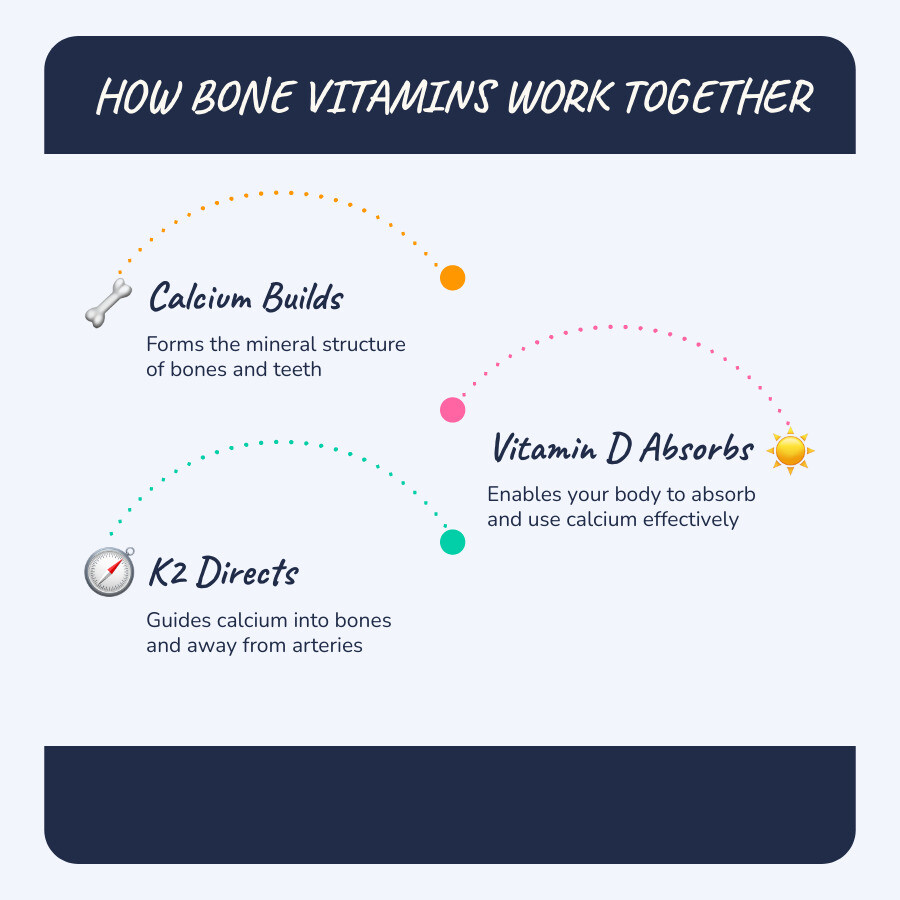
To build strong bones, the body needs calcium and vitamin D to work as a team.
Calcium is a mineral that forms calcium phosphate salts. These salts are the raw materials that harden and strengthen your bones. However, the body cannot absorb calcium on its own.
This is where vitamin D comes in. Vitamin D acts more like a hormone than a traditional vitamin. It signals the intestines to absorb calcium from the food you eat. Without enough vitamin D, the body can only absorb about 10% to 15% of the calcium in your diet.
Additionally, vitamin D supports muscle strength. Stronger muscles help older adults maintain their balance, which directly reduces the risk of falling and breaking a bone.
Recommended Daily Intakes for Older Men and Women
Nutrient requirements change as we age. Because the gut becomes less efficient at absorbing minerals, older adults need higher amounts of both calcium and vitamin D.
| Group | Recommended Daily Calcium | Recommended Daily Vitamin D |
|---|---|---|
| Women aged 51 to 70 | 1,200 mg | 15 mcg (600 IU) |
| Men aged 51 to 70 | 1,000 mg | 15 mcg (600 IU) |
| Women over 70 | 1,200 mg | 20 mcg (800 IU) |
| Men over 70 | 1,200 mg | 20 mcg (800 IU) |
Source: National Institutes of Health (NIH)
Beyond Calcium: The Supporting Role of Magnesium, Vitamin K, and B Vitamins
While calcium and vitamin D are the main building blocks, other nutrients play essential supporting roles in keeping bones strong.
- Magnesium: About 60% of the body's magnesium is stored in the bones. It helps structure the bone matrix and assists in converting vitamin D into its active form. Magnesium glycinate is a highly absorbable form that is gentle on older stomachs.
- Vitamin K2: If calcium is the building material, vitamin K2 is the traffic guard. It activates a protein called osteocalcin, which binds calcium to the bone matrix. This ensures calcium goes into your bones where it is needed, rather than settling in your blood vessels where it can cause heart issues.
- B Vitamins (B6, B9, and B12): Research suggests that B vitamins help control levels of an amino acid called homocysteine. High homocysteine levels are linked to weaker bones and a higher risk of breaks. Furthermore, a vitamin B12 deficiency can increase the risk of sarcopenia (age-related muscle loss), which makes falls more likely.
- Vitamin C: This antioxidant is necessary for the body to produce collagen. Collagen is the soft protein framework that gives bones their flexibility, allowing them to absorb impact without snapping.
To explore how these nutrients fit together in a daily routine, you can read the NIH Office of Dietary Supplements: Calcium.
How to Choose a Quality Supplement
When choosing a supplement, the form of the nutrient matters:
- Calcium Citrate vs. Calcium Carbonate: Calcium carbonate is cheaper and contains more elemental calcium, but it requires stomach acid to dissolve. It must be taken with food. Calcium citrate does not need stomach acid to dissolve, making it the better choice for seniors who take acid-reducing medications.
- Vitamin D3 vs. D2: Always look for vitamin D3 (cholecalciferol). It is much more effective at raising and maintaining vitamin D levels in the blood than vitamin D2.
- Quality Standards: Choose products made in Good Manufacturing Practices (GMP) compliant facilities that undergo third-party testing to ensure the bottle contains exactly what the label claims.
Food Sources vs. Supplements: Meeting Your Daily Needs Safely
Getting your nutrients from food is always the safest and most effective approach. The body absorbs vitamins and minerals from natural foods more easily than from pills.
Excellent food sources include:
- Calcium: Yogurt, milk, cheese, calcium-fortified orange juice, tofu, canned salmon with bones, and dark leafy greens like kale and bok choy.
- Vitamin D: Salmon, mackerel, sardines, egg yolks, and fortified cereals.
- Vitamin K2: Natto (fermented soybeans), egg yolks, and dark meat chicken.
If you do need to use supplements to close a nutrient gap, keep the 500-milligram rule in mind. The human body cannot absorb more than 500 mg of calcium at one time. If you need to take 1,000 mg of supplemental calcium daily, split it into two doses—one in the morning and one in the evening—to maximize absorption.
Absorption Challenges: Aging Gut Health, Medications, and Malabsorption
Even if you eat a perfect diet, your bones can still suffer if your body cannot absorb the nutrients.
As we age, our stomachs naturally produce less acid, which makes it harder to break down minerals. Additionally, chronic digestive conditions like celiac disease or Crohn's disease damage the lining of the small intestine. This damage prevents the body from absorbing fat-soluble vitamins like D and K, as well as minerals like calcium and magnesium. Severe liver disease can also interfere with how the body processes vitamin D.
If you have any of these conditions, taking standard calcium carbonate may not help. Calcium citrate is highly recommended here because it absorbs easily even with low stomach acid. It is always wise to ask your doctor for a simple blood test to check your actual vitamin D and calcium levels before starting a new supplement regimen.
Risks and Precautions: Strontium, Toxicity, and Medication Interactions
More is not always better when it comes to supplements. In fact, some bone health products can carry serious risks:
- Strontium: Some over-the-counter bone supplements contain strontium. While strontium can make bones look denser on a DEXA scan (an X-ray that measures bone strength), it does so by physically replacing calcium in the bone. This creates an artificial improvement on the scan without actually making the bone stronger. It can also increase the risk of serious cardiovascular problems.
- Vitamin D Toxicity: Because vitamin D is fat-soluble, excess amounts build up in the body over time. Taking too much can cause hypercalcemia (too much calcium in the blood), which can damage the kidneys and heart.
- Medication Interactions: Vitamin K helps blood clot. If you take blood-thinning medications like warfarin, sudden changes in your vitamin K intake can interfere with your medication. Always consult a doctor or pharmacist before starting a supplement containing vitamin K.
Frequently Asked Questions about Bone Health in Seniors
How much exercise do older adults need to keep bones strong?
The CDC recommends adults over 65 get at least 150 minutes of moderate-intensity activity each week, plus strength training at least twice weekly. That is a strong baseline for balance, muscle, and fall prevention, but improving bone density may require more osteogenic loading, such as progressive resistance training, stair climbing, or supervised impact exercises when safe.
Exercise puts safe physical stress on the bones, which signals the osteoblasts to build more bone tissue. For older adults looking to build a safe, personalized exercise routine, Groove Health pairs participants with a physical therapist to design home-based care plans that improve balance and prevent falls.
Can you get enough vitamin D from sunshine alone as you age?
It is very difficult for older adults to get enough vitamin D from sunlight alone. As skin ages, it becomes much less efficient at synthesizing vitamin D from UV rays. Geographic location, winter seasons, and the necessary use of sunscreen also limit how much vitamin D your body can make. To understand more about how aging affects this process, you can read the Of Aging Bones and Sunshine (Berkeley Lab) report.
Why should seniors avoid strontium supplements?
Seniors should avoid strontium because it replaces calcium in the bone matrix. This distorts bone density test results, making bones look healthier than they actually are, while potentially increasing cardiovascular risks.
Building a Bone-Strong Routine After 65
Maintaining strong bones after age 65 requires a combination of the right nutrients, a balanced diet, and regular physical activity. While getting the right bone vitamins and minerals provides the biological building blocks your skeleton needs, physical exercise is what signals your body to actually use those nutrients to build bone strength.
Groove Health's Medicare-covered bone health program connects these pieces with personalized guidance for nutrition, supplements, lifestyle habits, and safe at-home movement. This tailored approach helps support stronger bones, better balance, and fracture prevention, so your daily routine works together with your nutritional foundation.
To learn more about eating for skeletal strength and managing your bone density, explore the Groove Health Nutrition Blog.
Works Cited
- National Institutes of Health. Calcium and Vitamin D: Important for Bone Health. National Institute of Arthritis and Musculoskeletal and Skin Diseases, 2023.
- Sato, T., Inaba, N., & Yamashita, T. MK-7 and Its Effects on Bone Quality and Strength. Nutrients, 2020.
- Centers for Disease Control and Prevention. Older Adult Activity: An Overview. CDC, 2024.
- Medicare.gov. Bone Mass Measurements. Centers for Medicare & Medicaid Services, 2026.
This content is for informational purposes only and does not constitute medical advice. Consult a qualified healthcare professional for diagnosis and treatment. If you are on Medicare and interested in a personalized bone health program, you can check your eligibility at groovehealth.com.