Everything You Need to Know About Foods for Bone and Joint Health
Strong bones and flexible joints start on your plate. See how calcium, vitamin D, collagen, and anti-inflammatory foods work together to protect your skeleton—and the everyday habits quietly working against them.

Why What You Eat Matters More for Bones and Joints Than You Think
The best food for bone and joint health gives your body the nutrients it needs to maintain bone density, support muscle function, and keep joints moving comfortably. Use the table below to quickly match key nutrients with everyday foods:
| Goal | Top Foods to Eat | Why They Help |
|---|---|---|
| Strengthen bones | Dairy, canned salmon, tofu, white beans, fortified plant milks, almonds | Provide calcium and protein, two building blocks bones need to stay dense and strong |
| Boost calcium absorption | Fatty fish, egg yolks, fortified cereals | Supply vitamin D, which helps your body absorb and use calcium |
| Reduce joint inflammation | Salmon, sardines, walnuts, chia seeds, olive oil | Offer omega-3 fats and healthy fats that may help calm inflammation around joints |
| Support collagen and cartilage | Citrus fruits, leafy greens, bone broth | Provide vitamin C, amino acids, and minerals that help maintain connective tissue |
| Preserve bone density | Prunes, figs, magnesium-rich nuts and seeds | Add magnesium, potassium, and plant compounds linked with healthier bone maintenance |
Your bones and joints do quiet, constant work. Every step, every lift, every morning stretch depends on them. And what you eat plays a surprisingly large role in how well they hold up over time.
Here is a number worth pausing on: osteoporosis—a condition where bones become weak, brittle, and highly prone to fractures—contributes to more than two million bone breaks in the United States every year, according to the Bone Health and Osteoporosis Foundation. Half of all women over 50 will break a hip, wrist, or spine bone at some point in their lifetime.
That is not meant to alarm you. It is meant to make this clear: what you put on your plate is one of the most practical levers you have.
Diet alone will not reverse bone loss or replace medical care. But research consistently shows that getting the right nutrients, from the right foods, can help slow the loss of bone density, lower the risk of fractures, and support healthier joints by reducing everyday inflammation and helping maintain strong connective tissue.
This guide covers exactly which foods help, why they work, how much you need, and what to limit. Whether you are managing an osteoporosis diagnosis, supporting an aging parent, or simply being proactive about your health after 50, this is the practical, evidence-based foundation you are looking for.
Essential Nutrients for Strong Bones and Healthy Joints
To keep your skeletal system strong, you need a variety of vitamins and minerals working together. Think of your bones as a building project. Calcium is the concrete, but you also need workers, cement mixers, and steel supports to make the structure last.
The most important nutrients for this process are calcium, vitamin D, magnesium, vitamin K2, and protein.
Here is a helpful comparison of what older adults need daily according to clinical guidelines:
| Nutrient | Recommended Daily Amount for Women (Over 50) | Recommended Daily Amount for Men (Over 50) | Key Dietary Sources |
|---|---|---|---|
| Calcium | 1,200 mg | 1,000 mg (ages 51 to 70) 1,200 mg (over age 70) |
Yogurt, milk, cheese, fortified plant milks, tofu, canned salmon with bones |
| Vitamin D | 600 IU (up to age 70) 800 IU (over age 70) |
600 IU (up to age 70) 800 IU (over age 70) |
Salmon, mackerel, egg yolks, fortified foods, sunlight |
How Calcium and Vitamin D Work Together
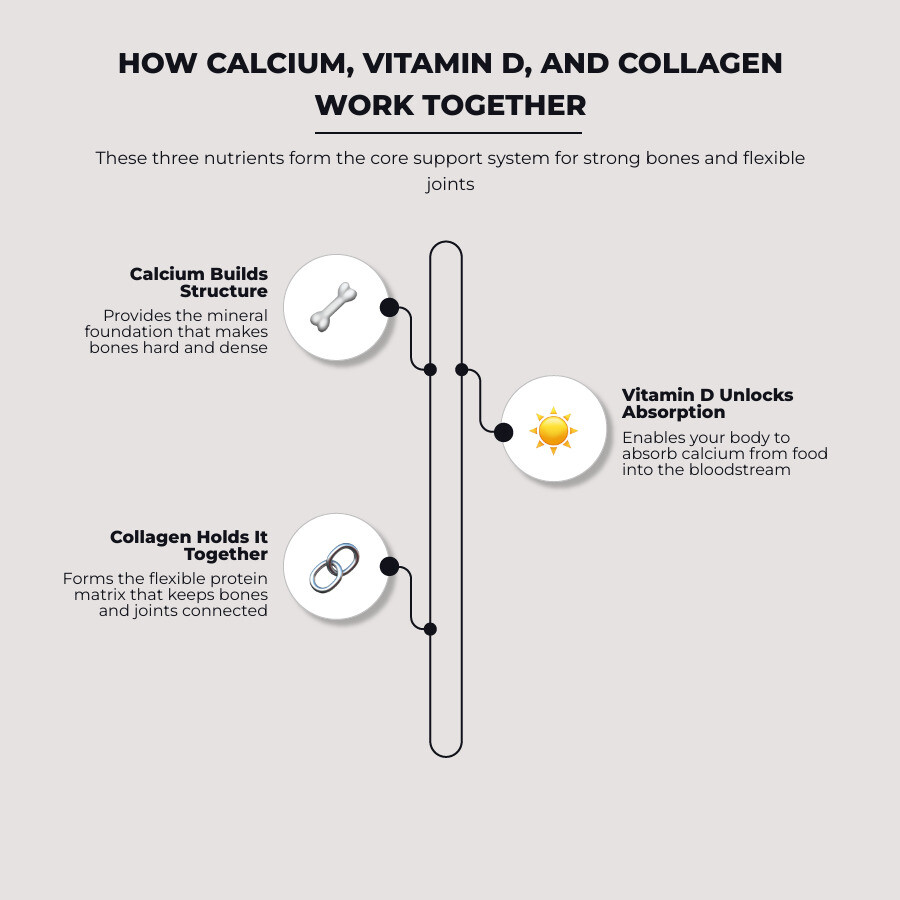
Calcium is the primary mineral that gives your bones their strength. In fact, 99 percent of the calcium in your body is stored in your bones and teeth. However, your body cannot absorb this calcium on its own.
This is where vitamin D comes in. Vitamin D acts like a key that opens the doors of your small intestine. When you eat food for bone and joint health that contains calcium, vitamin D allows that calcium to pass through your gut wall and enter your bloodstream.
Once in the blood, the calcium can be used for bone mineralization. This is the process where minerals are deposited into the bone matrix to make it dense and strong. Without enough vitamin D, your body can only absorb a small fraction of the calcium you eat. When calcium levels in the blood run low, your body will actually steal calcium from your bones to keep your heart and muscles working. This leads to thinning bones over time.
Other Key Minerals and Vitamins for Bone Strength
While calcium and vitamin D get the most attention, several other nutrients play vital supporting roles:
- Magnesium: About 60 percent of the magnesium in your body is stored in your bones. Magnesium helps convert vitamin D into its active form so it can do its job. It also helps guide calcium into the bones.
- Vitamin K2: This vitamin activates a protein called osteocalcin. Osteocalcin acts like a traffic cop. It binds calcium to the bone and prevents it from settling in your blood vessels or kidneys.
- Potassium: Potassium helps neutralize acids in the body. This prevents calcium from being leached out of your bones and lost in your urine.
- Vitamin C: This vitamin is essential for collagen synthesis. Collagen is the fibrous protein framework that gives bones their flexibility and keeps joints cushioned.
The Best Foods to Strengthen Bones and Prevent Fractures

Eating a varied diet is the safest and most effective way to secure these nutrients. Here are some of the top foods you should consider adding to your weekly grocery list:
- Dairy Products: Milk, Greek yogurt, and cheese remain the most famous sources of calcium. A single cup of plain yogurt can provide up to 30 percent of your daily calcium needs.
- Canned Salmon with Bones: This is a surprising bone-building powerhouse. A three-ounce serving of canned salmon provides about 180 mg of calcium. This is because the tiny, soft bones in canned fish are completely edible and highly nutritious. Fresh salmon is excellent for vitamin D, but it only contains about 36 mg of calcium because the bones are removed.
- Prunes: Research suggests that eating just five or six prunes a day can help postmenopausal women preserve bone mineral density in their hips. This may translate to fewer bone breaks over time. Prunes contain antioxidants that lower inflammatory chemicals in the body, which helps slow down bone breakdown. You can read more about this in this guide to the best foods for bone health.
- Almonds: If you do not eat dairy, almonds are a wonderful alternative. A quarter-cup of almonds provides about 75 mg of calcium, while two tablespoons of almond butter contain 111 mg.
- White Beans: Navy, cannellini, and great northern beans are packed with minerals. One cup of cooked white beans provides about 190 mg of calcium.
- Dried Figs: These sweet treats are rich in bone-supporting minerals. Just two dried figs provide about 65 mg of calcium.
Anti-Inflammatory Foods to Support Joint Mobility and Reduce Pain
Joint pain is often caused by chronic inflammation, which can slowly irritate and damage healthy cartilage, tendons, and ligaments. Cartilage is the slippery tissue that caps the ends of your bones so they can glide without friction.
Eating anti-inflammatory foods helps protect this cartilage and keeps your joints moving smoothly.
- Omega-3 Fatty Acids: These healthy fats are highly effective at lowering inflammation. Oily fish like salmon, mackerel, sardines, and anchovies are the best sources. For those who prefer plant-based options, chia seeds have the highest level of omega-3s of any seed.
- Extra Virgin Olive Oil: This oil contains a compound called oleocanthal, which has natural anti-inflammatory properties similar to common over-the-counter pain relievers. Using olive oil for salad dressings and light cooking is an easy way to support joint health.
- Walnuts: Walnuts are another excellent source of plant-based omega-3 fats and antioxidants that protect joint tissues from oxidative stress.
- Hydration: Water is crucial for joint lubrication. Your joints are cushioned by synovial fluid, which is a thick liquid that prevents friction. If you are dehydrated, your body cannot produce enough of this fluid, leading to stiffness and pain.
To explore more options for managing joint discomfort through your diet, check out this guide to nutrition for bone health.
The Role of Collagen and Joint-Supporting Compounds
Collagen is the main structural protein found in your skin, bones, and joints. It provides the scaffold that gives cartilage its shape and strength. As people age, their bodies naturally produce less collagen, which can lead to stiffer joints and thinner bones.
Many people turn to collagen peptides, which are small, easily digestible pieces of collagen, to help support their joints. Type II collagen is particularly important because it is the primary type found in joint cartilage.
In recent years, researchers have looked at how to deliver these joint-supporting compounds through everyday foods. For example, a clinical study on collagen-enriched milk demonstrated that fortifying daily milk with native type II collagen can help reduce signs of cartilage breakdown and support joint comfort.
Other natural compounds like glucosamine and chondroitin act as the building blocks of cartilage. Hyaluronic acid is another key molecule that helps retain water in the joint space to keep it lubricated. While these are often taken as supplements, eating bone broth and slow-cooked meats with connective tissue can also provide these valuable joint-supporting nutrients.
Foods and Habits That Can Harm Your Bones
Just as some foods build your bones, others can actively work against them. Here are a few dietary habits that can interfere with calcium absorption or accelerate bone loss:
- High Sodium Intake: Eating too much salt forces your kidneys to excrete more calcium in your urine. Experts recommend limiting sodium to no more than 2,300 mg per day.
- Heavy Alcohol Consumption: Chronic, heavy drinking disrupts the body's calcium balance and interferes with the production of vitamin D.
- Oxalates and Phytates: Some healthy foods contain compounds that bind to calcium in the gut, making it harder to absorb. For example, spinach contains high levels of oxalates. While spinach is healthy, it is not a reliable calcium source for this reason. Beans contain phytates, but soaking them in water for several hours before cooking can significantly reduce these compounds.
- 100% Wheat Bran: This is the only food that seems to reduce calcium absorption from other foods eaten at the same time. If you take a calcium supplement, avoid taking it within two hours of eating wheat bran.
Frequently Asked Questions About Bone and Joint Nutrition
What are the best non-dairy sources of calcium?
If you are lactose intolerant or follow a vegan diet, you can get plenty of calcium from tofu (especially calcium-set tofu, which can contain over 400 mg per serving), fortified plant milks like almond or soy milk, canned salmon or sardines with edible bones, almonds, and white beans.
How much calcium and vitamin D do older adults need daily?
According to the National Academy of Medicine, women over 50 need 1,200 mg of calcium daily. Men between 51 and 70 need 1,000 mg, which increases to 1,200 mg after age 70. Both men and women need 600 IU of vitamin D daily up to age 70, and 800 IU after age 70.
Can diet alone reverse osteoporosis or prevent falls?
No. While eating a nutrient-rich diet is a critical foundation, it cannot fully reverse osteoporosis or prevent falls on its own. Building bone density and staying safe on your feet requires a combination of proper nutrition, strength training, and balance exercises.
Building Your Bone- and Joint-Friendly Plate
Your diet is a powerful tool for maintaining strong bones and healthy joints, but it is only one part of the puzzle. While eating the right foods provides the essential raw materials your body needs, your skeletal system requires physical stimulus to actually absorb those nutrients and build lasting strength. True fracture prevention and joint mobility require combining proper nutrition with targeted physical movement.
This is where Groove Health can help. Groove Health is a Medicare-covered bone health program that pairs older adults with a physician and a dedicated physical therapist. Through personalized care and safe, customized exercise plans, the program helps participants build bone strength, improve balance, and reduce fracture risk. By combining a bone-healthy diet with targeted movement designed by physical therapy experts to support bone remodeling, you can protect your independence and keep moving with confidence.
If you want to take the next step in protecting your bone health, you can sign up for Groove Health's bone health program to check your eligibility.
Works Cited
- National Institutes of Health. "Osteoporosis Overview." National Institute of Arthritis and Musculoskeletal and Skin Diseases, 2023.
- Bone Health & Osteoporosis Foundation. "Osteoporosis Diet & Nutrition: Foods for Bone Health." Bone Health & Osteoporosis Foundation, 2024.
- Centers for Disease Control and Prevention. "About Older Adult Fall Prevention." Centers for Disease Control and Prevention, 2026.
- Medicare.gov. "Bone Mass Measurements." Medicare.gov, 2026.
This content is for informational purposes only and does not constitute medical advice. Consult a qualified healthcare professional for diagnosis and treatment. If you are on Medicare and interested in a personalized bone health program, you can check your eligibility at groovehealth.com.