
The Ultimate Guide to Healthy Food for Bone and Muscle Strength
What you eat shapes how strong your bones and muscles stay as you age. This guide breaks down the calcium, protein, and vitamin D your body needs, the best whole-food sources, and the habits that quietly weaken bone.

Why What You Eat Matters for Your Bones and Muscles
Healthy food for bone and muscle strength is not a niche concern for athletes or bodybuilders. For adults 65 and older, it is one of the most practical tools available for staying independent, avoiding falls, and reducing the risk of broken bones.
Foods that can support bone and muscle strength include:
| Food | Key Nutrients | How They Help |
|---|---|---|
| Fatty fish (salmon, sardines) | Calcium, vitamin D, protein, omega-3s | Supports bone mineral strength, muscle repair, and healthy inflammation response |
| Dairy (yogurt, milk) | Calcium, vitamin D, protein | Helps build strong bones and maintain muscle tissue |
| Leafy greens (kale, bok choy) | Calcium, magnesium, vitamin K | Supports bone structure and helps the body use calcium well |
| Eggs | Complete protein, vitamin D, leucine | Helps trigger muscle protein synthesis and supports calcium absorption |
| Calcium-set tofu | Calcium, plant-based protein | Strengthens bones while adding protein for muscle maintenance |
| Fortified plant milks | Calcium, vitamin D | Helps fill common bone-health nutrient gaps |
| Legumes (beans, lentils) | Plant protein, magnesium | Supports muscle repair and bone-supporting mineral balance |
| Prunes | Potassium, phytochemicals | May help protect bone density as part of a balanced diet |
Bones are living tissue. They constantly break down and rebuild, and the raw materials for that process come largely from what you eat. Muscles work the same way. Without adequate protein, calcium, and vitamin D, your body starts pulling resources from your bones and losing muscle tissue faster than it can replace it.
The numbers behind this are worth knowing. According to the Bone Health and Osteoporosis Foundation, osteoporosis contributes to more than two million bone breaks in the United States every year. Half of all women over 50 will break a hip, wrist, or spine at some point in their lifetime. These are not rare events.
The good news? Research is clear that diet makes a measurable difference. It will not reverse severe bone loss on its own, but consistent, nutrient-rich eating can slow bone thinning, support muscle repair, and lower the odds of a serious fall or break.
This guide walks through exactly what to eat, how much, and why it works.
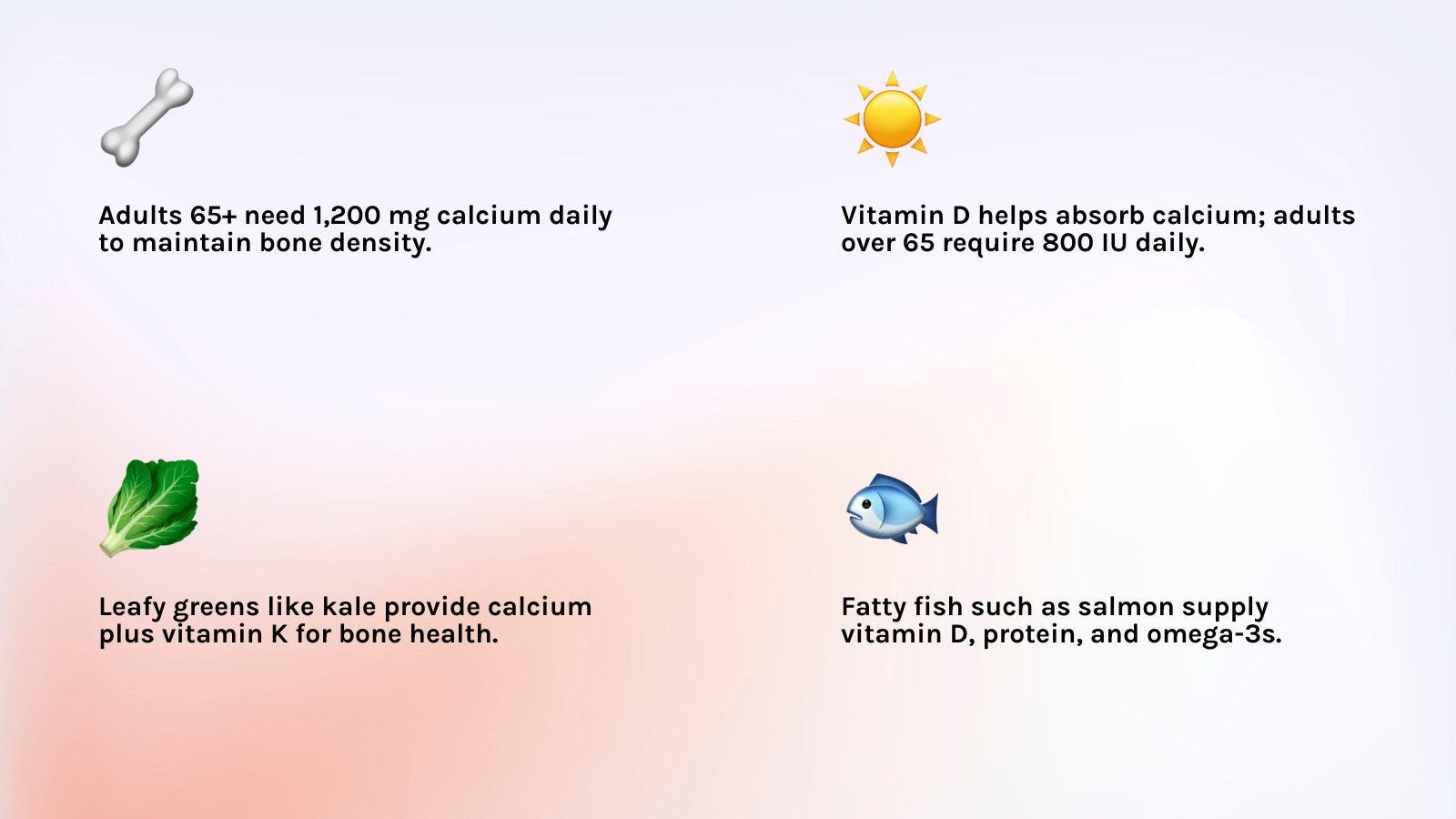
Quick healthy food for bone and muscle strength definitions:
The Science Behind Strong Bones and Muscles

To understand how food protects your body, it helps to look at how bones and muscles maintain themselves. Your skeleton is not a static frame. It undergoes bone remodeling, a continuous process where old bone tissue is removed and new bone tissue is created. At the same time, your muscles undergo constant repair to stay strong and functional.
For older adults, keeping this balance positive is essential for physical independence and fracture prevention (preventing broken bones).
How Aging and Hormones Affect Your Bones and Muscles
As people age, natural hormone changes affect how the body builds and maintains bone and muscle. In women, menopause brings a sharp drop in estrogen, a hormone that helps slow the cells that break down bone. When estrogen levels fall, bone loss can speed up. Over time, this can lead to osteopenia, which means thinner bones, and eventually osteoporosis, a condition that makes bones weaker and more likely to break.
At the same time, both men and women experience sarcopenia, which is the natural loss of muscle mass and strength that occurs with age. Without targeted nutrition and exercise, the body struggles to maintain the muscle tissue needed to support the joints and keep the body stable.
Why Exercise and Nutrition Must Work Together
Eating a nutrient-rich diet is only half of the equation. To build bone density and stimulate muscle synthesis (the process of repairing and building muscle tissue), your body needs physical stimulation.
Resistance exercise, such as lifting weights, using resistance bands, or performing bodyweight movements, places a safe amount of stress on your bones and muscles. This stress signals your body to absorb the nutrients you eat and use them to rebuild stronger tissues.
Without exercise, your body will not use dietary protein and calcium as effectively. Conversely, without proper nutrition, exercise can leave your muscles fatigued and unable to recover. Combining these two elements is the most effective way to improve balance and support fall prevention. You can read more about how dietary choices support this process in the NHS guide on bone-healthy foods.
Essential Nutrients Your Body Needs to Stay Strong
To support your musculoskeletal system, your daily meals should focus on a few key micronutrients and macronutrients that work together.
Calcium and Vitamin D: The Core Pillars
Calcium is the primary mineral that hardens and strengthens your bones. In fact, nearly all the calcium in your body is stored in your skeleton. If you do not consume enough calcium through your diet, your body will steal it from your bones to support other vital functions, like heart and nerve activity.
Calcium cannot do its job alone. It needs vitamin D, which helps your intestines absorb calcium from food. Without enough vitamin D, your body may use only a small portion of the calcium you eat. Sunlight is one major source, but many older adults also need vitamin D-rich foods or supplements to meet their daily needs.
Protein and Amino Acids for Muscle Maintenance
Protein provides the building blocks for muscle tissue. When you eat protein, your body breaks it down into amino acids. One specific amino acid, called leucine, acts as an "on-switch" to trigger muscle protein synthesis.
As we age, our muscles become less sensitive to protein. This is known as anabolic resistance, which means older adults require a higher concentration of protein per meal, often referred to as the leucine threshold, to trigger muscle repair.
Research suggests that getting your protein from whole foods is highly effective. A study published in PubMed Central (PMC) found that eating a mix of high-quality whole-food proteins can support muscle protein synthesis about as well as isolated protein powders. What’s more, early research in Food & Function suggests that certain protein blends with key amino acids, like lysine and tryptophan, may also help support healthier bones.
Top Dietary Sources for Musculoskeletal Health
Focusing on whole foods rather than isolated supplements provides your body with nutrient synergy. This means the vitamins and minerals in real food work together to enhance absorption and overall health. You can find practical advice on building these habits in Groove Health's nutrition resources.
How to Build a Bone- and Muscle-Strengthening Plate
As you build each meal, choose foods that support both bone strength and muscle health in more than one way:
- Fatty Fish: Canned sardines and salmon are exceptional choices. A three-ounce serving of canned salmon provides about 180 mg of calcium because it contains tiny, soft, edible bones. These fish also provide high-quality protein, vitamin D, and omega-3 fats.
- Whole Eggs: Eggs are a strong food for muscle support. The yolk contains vitamin D, choline, and selenium, which work alongside the high-quality protein in the egg white to support muscle recovery.
- Greek Yogurt: This dairy option provides a dense source of protein and calcium, making it a simple snack to support both muscles and bones.
Plant-Based Options for Stronger Bones and Muscles
If you follow a vegetarian or vegan diet, you can still meet your nutritional targets with plant-based foods:
- Leafy Greens: Bok choy, kale, and collard greens are excellent low-oxalate sources of calcium, which supports bone mineral density and long-term skeletal strength.
- Calcium-Set Tofu: Tofu prepared with calcium sulfate is dense in both calcium and plant-based protein, making it a strong choice for bones and muscles.
- Prunes: A clinical trial found that eating five to six prunes a day helped postmenopausal women preserve hip bone mineral density over one year, likely thanks to antioxidants and potassium.
- Fortified Plant Milks: Soy, almond, or oat milks fortified with calcium and vitamin D can help bridge common nutrition gaps.
According to a comprehensive review in Nutrients, plant-based proteins can support muscle health, but they are not always gram-for-gram equivalent to animal proteins. Blending sources like soy, legumes, grains, nuts, and seeds can help provide enough essential amino acids.
Meal Planning for Stronger Bones and Muscles
To help you compare your options, here is a breakdown of the calcium and protein content in common foods:
| Food Source | Serving Size | Calcium Content | Protein Content |
|---|---|---|---|
| Plain Greek Yogurt | 1 cup (8 oz) | ~250 mg | 20-24 g |
| Canned Sardines (with bones) | 3 ounces | ~325 mg | 21 g |
| Calcium-Set Tofu | 4 ounces | ~430 mg | 10 g |
| Fortified Plant Milk | 1 cup (8 oz) | ~350-400 mg | 1-7 g |
| Cooked Kale | 1 cup | ~180 mg | 3 g |
| Whole Egg | 1 large | ~25 mg | 6 g |
To get the most out of these foods, you should also be aware of lifestyle habits that can hinder calcium absorption. Try to limit the following:
- High Sodium Intake: Excess salt causes your body to lose calcium through your urine. Aim to keep your sodium intake under 2,300 mg per day.
- Excessive Caffeine: Drinking more than three cups of coffee daily can slightly interfere with how well your body absorbs calcium.
- Excessive Alcohol: Heavy drinking weakens bones by interfering with vitamin D activation and increasing the risk of falls.
- Phytates in Whole Grains: While whole grains are healthy, 100% wheat bran contains phytates that can reduce calcium absorption from other foods eaten at the same time. If you take calcium supplements, avoid taking them within two hours of eating wheat bran.
Frequently Asked Questions About Bone and Muscle Nutrition
How much calcium and vitamin D do I need every day?
According to the National Academy of Medicine, daily requirements vary slightly by age and sex:
- Calcium: Women 50 and under, and men 70 and under, should aim for 1,000 mg daily. Women 51 and older, and men 71 and older, should increase this to 1,200 mg daily.
- Vitamin D: Most adults under 70 need 600 IU (15 micrograms) per day. Adults over 70 should aim for 800 IU (20 micrograms) daily to support calcium absorption and muscle function.
Can I get enough calcium if I do not eat dairy?
Yes. You can easily meet your calcium goals without dairy by incorporating fortified plant milks, calcium-set tofu, canned fish with soft bones, and low-oxalate dark leafy greens like kale and bok choy into your daily routine.
How long does it take to see improvements in bone density?
Bone remodeling is a very slow process. While muscle strength can show noticeable improvements within a few weeks of starting a new protein and exercise routine, measurable changes in bone density typically take 6 to 12 months to appear on a DEXA scan (the specialized X-ray used to measure bone strength). Consistency over the long term is key.
Building Your Plan for Lifelong Strength
Nourishing your body with healthy food for bone and muscle strength is a foundational step toward protecting your physical independence. However, nutrition alone cannot fully safeguard your skeleton. Safe, targeted physical activity is the other essential piece of the puzzle.
If you are looking for guidance on how to safely build strength and protect your bones at home, Groove Health can help. Groove Health offers a personalized bone health program that pairs older adults with a physician and a dedicated physical therapist. Together, they design a customized, safe exercise and care plan tailored to your T-scores and physical needs, helping you prevent falls and avoid fractures.
To learn more and see if you qualify, visit Groove Health's personalized bone health program.
Works Cited
- NHS. "Food for healthy bones". NHS, 2024.
- Bone Health & Osteoporosis Foundation. "Food and Your Bones — Osteoporosis Nutrition Guidelines." Bone Health & Osteoporosis Foundation, 2024.
- Haigh, F.A.D., et al. "Ingestion of diverse protein-rich whole-foods result in similar post exercise whole body and myofibrillar protein synthesis rates compared with a more isolated protein source in young adults". The American Journal of Clinical Nutrition, 2026.
- Fan, C., et al. "A composite protein enriched with threonine, lysine, and tryptophan improves osteoporosis by modulating the composition and metabolism of the gut microbiota". Food & Function, 2026.
- Prevention. "This Is the Number-1 Food to Eat to Build Stronger Muscles". Prevention, 2025.
- Ferrari, L., et al. "Animal- and Plant-Based Protein Sources: A Scoping Review of Human Health Outcomes and Environmental Impact". Nutrients, 2022.
This content is for informational purposes only and does not constitute medical advice. Consult a qualified healthcare professional for diagnosis and treatment. If you are on Medicare and interested in a personalized bone health program, you can check your eligibility at groovehealth.com.