Calcium for Women: A Practical Guide
Calcium is essential for women's bone health after 50, but more isn't always better. Here's how much you really need, the best food sources, when supplements make sense, and the nutrients that help calcium work.

What Women Need to Know About Calcium After 65
Calcium for women is one of the most important nutrients to get right as you age, and most people are either getting too little or relying too heavily on supplements that may not be the right fit.
Here is a quick answer to what women need to know:
| Life Stage | Daily Calcium Target | Key Reason |
|---|---|---|
| Women 19-50 | 1,000 mg/day | Building and maintaining bone mass |
| Women 51 and older | 1,200 mg/day | Estrogen loss speeds up bone breakdown |
| Adults 71 and older | 1,200 mg/day | Intestinal absorption declines with age |
| Safe upper limit, adults 19-50 | 2,500 mg/day | Going above this may raise health risks |
| Safe upper limit, adults 51+ | 2,000 mg/day | Exceeding this may raise kidney stone and heart risk |
Calcium is the most abundant mineral in the human body. About 99% of it lives in your bones and some in your teeth. The other 1% does essential work, helping your muscles contract, regulate your heartbeat, and your nerves send signals. When you do not get enough calcium from food, your body pulls it from your bones to keep those vital functions running. Over time, that withdrawal process weakens your skeleton.
After menopause, estrogen levels fall. Estrogen plays a crucial role in bone remodeling—the continuous biological process where your body breaks down old bone and replaces it with new bone—by acting like a brake on the cells that break down bone. Without estrogen to control this process, bone breakdown outpaces bone building, and bone loss speeds up, sometimes significantly. Research suggests women can lose up to 20% or more of their bone density in the five to seven years right after menopause. That is why calcium intake becomes so important to get right during this window, and why it stays important for the rest of life.
But calcium is not a simple "take more, get stronger bones" story. The source matters. The dose matters. And what you pair it with matters too.
This guide walks through what the research actually shows, how much you need, where to get it, when supplements make sense, and what to avoid.
Does Calcium Really Prevent Broken Bones? What the Research Shows
To understand how calcium protects you, it helps to look at how bones work. As mentioned, your skeleton is constantly undergoing bone remodeling. During your youth, your body builds bone faster than it breaks it down. You reach peak bone mass, which is the maximum strength and density your bones will ever have, around age 30. After that, the balance shifts, and you slowly begin to lose more bone than you build.
Many women believe that taking high doses of calcium will automatically boost their bone mineral density (a measure of how dense and strong your bones are) and stop fractures. However, clinical trials show a more complicated picture.
According to research highlighted by Harvard Health on Calcium Needs, simply taking large amounts of calcium does not guarantee protection against broken bones. A major analysis of several studies found that calcium supplements reduced overall fracture risk by about 11%, but they did not show a clear protective benefit for hip or spinal fractures.
After menopause, getting enough calcium helps prevent the body from pulling more from bone due to a dietary shortfall, but it cannot fully stop or reverse estrogen-driven bone loss.

Meeting Your Daily Calcium Target Through Food
Most medical experts recommend a food-first approach to meeting your calcium goals. Your body absorbs calcium from food more gradually and efficiently than it does from high-dose supplements.
Excellent dietary sources of calcium include:
- Dairy products: One cup of low-fat milk or yogurt provides about 300 mg of calcium. Hard cheeses like cheddar or Swiss are also highly concentrated sources.
- Canned fish: Canned sardines and canned salmon with soft, edible bones are excellent options. A three-ounce serving of sardines provides roughly 350 mg of calcium.
- Leafy greens: Vegetables like collard greens, kale, and bok choy are good non-dairy sources.
- Calcium-set tofu: Tofu prepared with calcium sulfate can provide around 400-860 mg per half-cup.
- Fortified foods: Many brands of orange juice, oatmeal, and plant-based milks are fortified with calcium.
When planning your diet, keep in mind that certain natural compounds can affect your absorption rates. For example, spinach and rhubarb contain oxalates, while beans, seeds, and whole grains contain phytates. These compounds bind to calcium in the digestive tract, meaning your body absorbs less calcium from these specific foods. Shaking fortified plant milks well before drinking is also important, as calcium can settle to the bottom of the carton.
When Should You Consider Calcium Supplements?
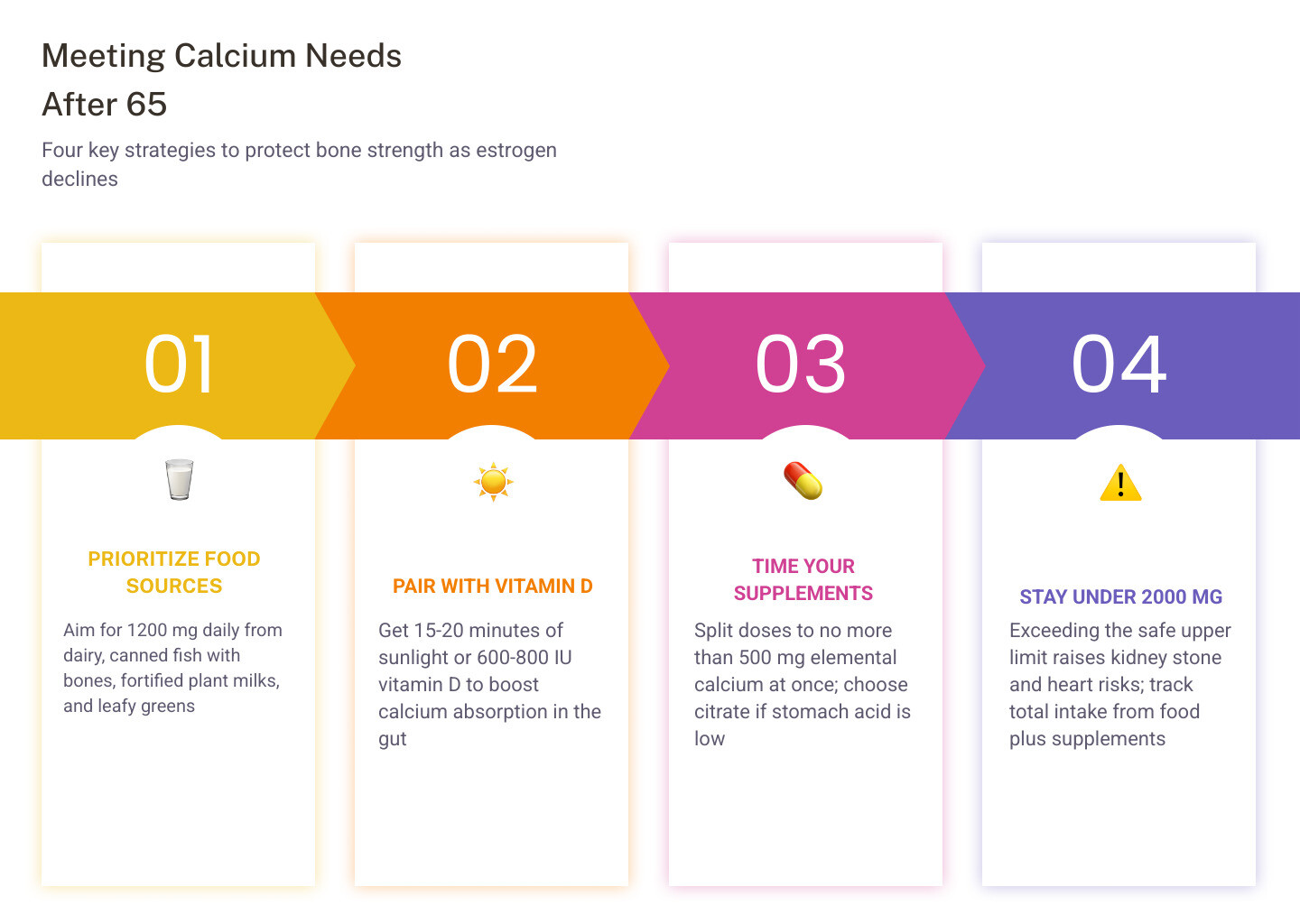
If you struggle to meet your 1,200 mg daily goal through food alone, supplements can help fill the gap. However, they should only be used to make up the difference, not to replace dietary calcium entirely.
There are two primary types of calcium supplements:
- Calcium carbonate: This form is highly common and contains about 40% elemental calcium (the actual amount of calcium your body can use). It requires stomach acid to dissolve, so it must be taken with a meal to be absorbed properly.
- Calcium citrate: This form contains about 21% elemental calcium. It does not require stomach acid for absorption, meaning you can take it with or without food. This makes it an ideal option for older adults who have lower stomach acid or those taking acid-reducing medications.
According to the Mayo Clinic Guide on Calcium Supplements, your body can only absorb about 500 mg to 600 mg of calcium at one time. If you need to take more than that in supplement form, you should split your doses and take them at different times of the day.
Additionally, calcium supplements can interact with common medications. For example, calcium carbonate can block the absorption of thyroid medications like levothyroxine, so they should be taken at least four hours apart. Calcium can also interfere with certain antiviral medications, like dolutegravir, and some antibiotics. Always consult your doctor or pharmacist before starting a new supplement.
The Hidden Risks of Taking Too Much Calcium
When it comes to calcium, more is not always better. Consuming too much calcium can lead to health complications, especially when the excess comes from supplements rather than food.
The tolerable upper intake level for women over 50 is 2,000 mg per day. Regularly exceeding this limit can lead to several health issues:
- Kidney stones: While calcium from food may help protect against kidney stones by binding to oxalates in the gut, high-dose calcium supplements can increase stone risk.
- Cardiovascular concerns: Some studies suggest high-dose calcium supplements may contribute to calcium buildup in blood vessels, potentially affecting heart health.
- Hypercalcemia: This means there is too much calcium in your blood. It can cause kidney problems, weaken bones, and interfere with how the heart and brain work. Doctors can check for it with routine blood tests.
- Digestive issues: High doses of calcium supplements can cause constipation, gas, and bloating. These side effects are more common with calcium carbonate than calcium citrate.
How Vitamin D and Other Nutrients Help Your Bones Absorb Calcium
Calcium cannot do its job alone. Without enough vitamin D, your body absorbs significantly less of the calcium you consume -- sometimes only a fraction of what it otherwise would.
Vitamin D works like a key for calcium absorption. It helps your intestines move calcium into your bloodstream, where your body can use it. Your skin can make vitamin D from sunlight, but this process often becomes less efficient with age. The National Academy of Medicine recommends 600 IU per day for females ages 51 to 70 and 800 IU per day for adults 70 and older. The safe upper limit is generally 4,000 IU per day from supplements, unless your clinician recommends otherwise.
Other nutrients are also essential for a strong skeleton:
- Vitamin K: Vitamin K from foods like leafy greens supports normal bone metabolism. Supplement research is more mixed, so it is best viewed as one helpful nutrient, not a stand-alone bone fix.
- Magnesium: Magnesium helps convert vitamin D into its active form so it can assist with calcium absorption.
Frequently Asked Questions About Calcium and Bone Health
Can I get enough calcium if I do not eat dairy?
Yes, it is entirely possible to meet your daily calcium requirements without eating dairy. If you have lactose intolerance or follow a vegan diet, you can rely on fortified plant milks (such as almond, soy, or oat milk), calcium-fortified orange juice, and calcium-set tofu. Canned salmon or sardines with bones, almonds, broccoli, and kale are also excellent non-dairy sources of calcium that help protect your bones.
Do calcium supplements cause kidney stones?
Research indicates that calcium supplements can increase your risk of kidney stones because they cause a sudden rise in the amount of calcium passing through your kidneys. On the other hand, getting your calcium from dietary sources actually lowers your risk of kidney stones. To help prevent stones, focus on getting your calcium from food, limit your supplement doses to 500 mg or less at a time, and stay well-hydrated by drinking plenty of water throughout the day.
How does estrogen loss during menopause affect my bones?
Estrogen acts like a natural shield for your skeleton by slowing down the cells that break down bone. When estrogen levels drop during menopause, this shield disappears. This leads to a period of rapid bone loss that typically lasts for five to seven years post-menopause. During this time, women can lose up to 20% of their bone density, which greatly increases the risk of developing osteopenia (mild bone thinning) or osteoporosis (severe bone thinning).
Building Strong Bones: Your Calcium Action Plan
Getting enough calcium for women is a vital part of maintaining independence and staying active after age 65. However, the best approach is a food-first strategy. Focus on incorporating dairy, leafy greens, canned fish, and fortified foods into your meals, and only use low-dose supplements to fill in the gaps. Remember to pair your calcium with vitamin D, split your supplement doses, and stay within safe limits to protect your heart and kidneys.
While getting enough calcium matters, nutrition alone cannot rebuild bone density or prevent falls. To better protect your skeleton, calcium should be paired with regular, targeted movement that challenges your bones and strengthens the muscles that support them. That is where Groove Health can help. Groove Health is a Medicare-covered bone health program that pairs you with an MD and PT to build a personalized exercise routine for stronger bones, better balance, and lower fracture risk. The goal is simple: combine smart nutrition with safe, consistent movement so your body has the support it needs to stay strong.
If you want to take a proactive step in managing your bone strength, you can learn more and Start your personalized bone health program with Groove Health.
Works Cited
- Ross, A. C., et al. "The 2011 Report on Dietary Reference Intakes for Calcium and Vitamin D from the Institute of Medicine: What Clinicians Need to Know.". Journal of Clinical Endocrinology & Metabolism, 2011.
- Tai, V., et al. "Calcium intake and bone mineral density: systematic review and meta-analysis.". BMJ, 2015.
- Bone Health & Osteoporosis Foundation. "Calcium and Vitamin D.". Bone Health & Osteoporosis Foundation, 2026.
- Centers for Medicare & Medicaid Services. "Bone mass measurements.". Medicare.gov, 2026.
This content is for informational purposes only and does not constitute medical advice. Consult a qualified healthcare professional for diagnosis and treatment. If you are on Medicare and interested in a personalized bone health program, you can check your eligibility at groovehealth.com.