
How to Verify Medicare Coverage for DEXA Scans on Meds
On osteoporosis medication? Medicare Part B covers a monitoring DEXA scan every 24 months at $0 when your provider accepts assignment. Here are the eligibility rules, billing codes, and cost traps to avoid.

Does Medicare Cover a DEXA Scan If You Are Already on Osteoporosis Medication?
Medicare Part B covers a DEXA scan to monitor how well osteoporosis medication is working. A DEXA scan is a dual-energy X-ray absorptiometry scan, which is a low-dose X-ray that measures how strong bones are.
When an individual takes prescription bone drugs, the main goal is to stop bone loss and lower the risk of a bone break. Medicare covers this test to see if bones are getting stronger or staying the same on drug therapy.
Several Food and Drug Administration approved osteoporosis medications qualify a patient for this monitoring benefit. These include:
- Alendronate (Fosamax), a common daily or weekly pill.
- Zoledronic acid (Reclast), a yearly medicine given through an intravenous line in a clinic.
- Denosumab (Prolia), a shot given in a doctor's office twice a year.
It is important to know that daily supplements like calcium and vitamin D do not count as approved drug therapies for this specific monitoring benefit. Hormone replacement therapy, such as estrogen, also does not qualify a patient for Medicare-covered monitoring. Estrogen helps protect bones by slowing down the natural process where the body breaks down old bone cells, but Medicare does not classify it as an active osteoporosis drug treatment for this test.
To learn more about how Medicare handles these bone density tests, patients can read about does medicare cover dexa bone density scans.
How Often Will Medicare Pay for Your DEXA Scan While on Medication?
Under normal circumstances, Medicare covers a bone density test once every 24 months. This is often called the two-year rule. Medicare measures this time by counting 23 full months after the month of the last scan.
However, there are exceptions that allow Medicare to pay for a scan more frequently than every two years. If an individual is on osteoporosis medication, a doctor can request an early scan if there is a clear medical reason.
To get an early scan covered, the doctor must document medical necessity in the patient's medical records. Common reasons for an early scan include:
- Starting a new medication that is known to cause bone loss.
- Experiencing a new bone break, which may show that the current treatment is not working.
- Showing signs that the current osteoporosis drug therapy is failing to stop bone loss.
Patients who want to understand how often they can get tested can find more details on dexa scan frequency. To review the official guidelines directly, individuals can also Verify Medicare coverage guidelines on the official government website.
What Are the Medicare Eligibility Rules for Drug Monitoring and Steroid Use?

Medicare has strict clinical rules to decide who qualifies for a covered bone mass measurement. For patients on steroid therapy, the rules are very specific because these medications can rapidly thin the bones.
Steroids like prednisone are often used to treat inflammation, asthma, or joint pain. Medicare may cover a DEXA scan for steroid use if:
- You are taking a steroid now, or your doctor expects you to start taking one.
- Your dose is about 5.0 milligrams or more of prednisone per day, or an equal dose of a similar steroid.
- Your treatment is expected to last longer than three months.
Patients with osteopenia can also get covered scans. Osteopenia means thinning bones, which is a condition where bone density is lower than normal but not yet low enough to be called osteoporosis. If an individual has thinning bones and is taking a bone-depleting medication, or has other high-risk factors like a history of bone breaks, Medicare will cover the monitoring scans.
For a deeper look into how bone thinning develops and how it is diagnosed, patients can read about understanding osteoporosis.
What Will a DEXA Scan Cost You Out-of-Pocket Under Medicare?
If a healthcare provider accepts Medicare assignment, the patient pays nothing out-of-pocket for a medically necessary DEXA scan. Accepting assignment means the doctor and the scanning facility agree to accept Medicare's approved payment amount as full payment for the service. Under Medicare Part B, preventive and monitoring services that meet clinical guidelines have a $0 copay, and the annual deductible does not apply.
Standard charges billed by doctor's offices can be quite high. However, the Medicare-approved rate is much lower. When a provider accepts assignment, the patient is protected from paying the difference between the provider's standard charge and the Medicare-approved rate.
Medicare only covers DEXA scans when they are medically necessary. It does not cover DEXA scans for body composition or fitness tracking, which measure body fat and muscle mass. Those are elective services, so you pay cash. Fitness DEXA scans commonly cost about $75 to $150, though prices can be higher in some areas. A medically necessary Medicare DEXA may cost $0 if your provider accepts assignment.
Additionally, peripheral scans are not covered for monitoring drug therapy. A peripheral scan is a quick test on a smaller bone, like a heel or wrist ultrasound. While these are sometimes used for quick screenings, they are not accurate enough to monitor how well a medication is working. For monitoring, Medicare requires an axial DEXA scan, which measures the hip and the spine.
| Scan Feature | Covered Bone Density Scan | Non-Covered Body Composition Scan |
|---|---|---|
| Primary Purpose | Measures bone strength to monitor osteoporosis or steroid use | Measures body fat percentage and muscle mass distribution |
| Medicare Coverage | Fully covered under Part B if medically necessary | Not covered (considered elective or investigational) |
| Out-of-Pocket Cost | $0 if the provider accepts Medicare assignment | Patient pays the full cash price |
| Scan Areas | Hip and spine (axial skeleton) | Whole body |
| Equipment Used | Medical-grade axial DEXA machine | Specialized body composition scanner |
To learn more about what is covered and how to avoid unexpected bills, patients can read about dexa medicare part b coverage.
How Can Your Doctor Ensure Medicare Pays for Your Scan?
To prevent Medicare from denying a claim, the doctor's office must use the exact billing codes required by federal guidelines. If a claim is coded incorrectly, the patient might receive an unexpected bill.
First, the facility must bill the scan using CPT code 77080. This code represents an axial DEXA scan of the hip and spine, which is the gold standard for measuring bone health.
Second, the doctor must include the correct diagnosis code on the claim form. For patients currently taking osteoporosis medications, the doctor should use ICD-10 code Z79.83. This code tells Medicare that the patient is on long-term drug therapy.
Third, the doctor must write the exact name of the FDA-approved osteoporosis drug in Box 19 of the Medicare claim form. This step is crucial for proving that the scan is being used to monitor an approved treatment.
If a patient needs a scan sooner than the standard two-year limit, the doctor must submit extra documentation. The medical records must show a clear reason for the early test, such as:
- A documented vertebral fracture, which is a break in the bones of the spine.
- Lab results showing rapid bone loss despite taking medication.
- A change in treatment due to severe side effects from a previous drug.
For more information on how doctors submit these claims, patients can read about medicare bone health coverage.
How Can Exercise Help Strengthen Your Bones While on Medication?
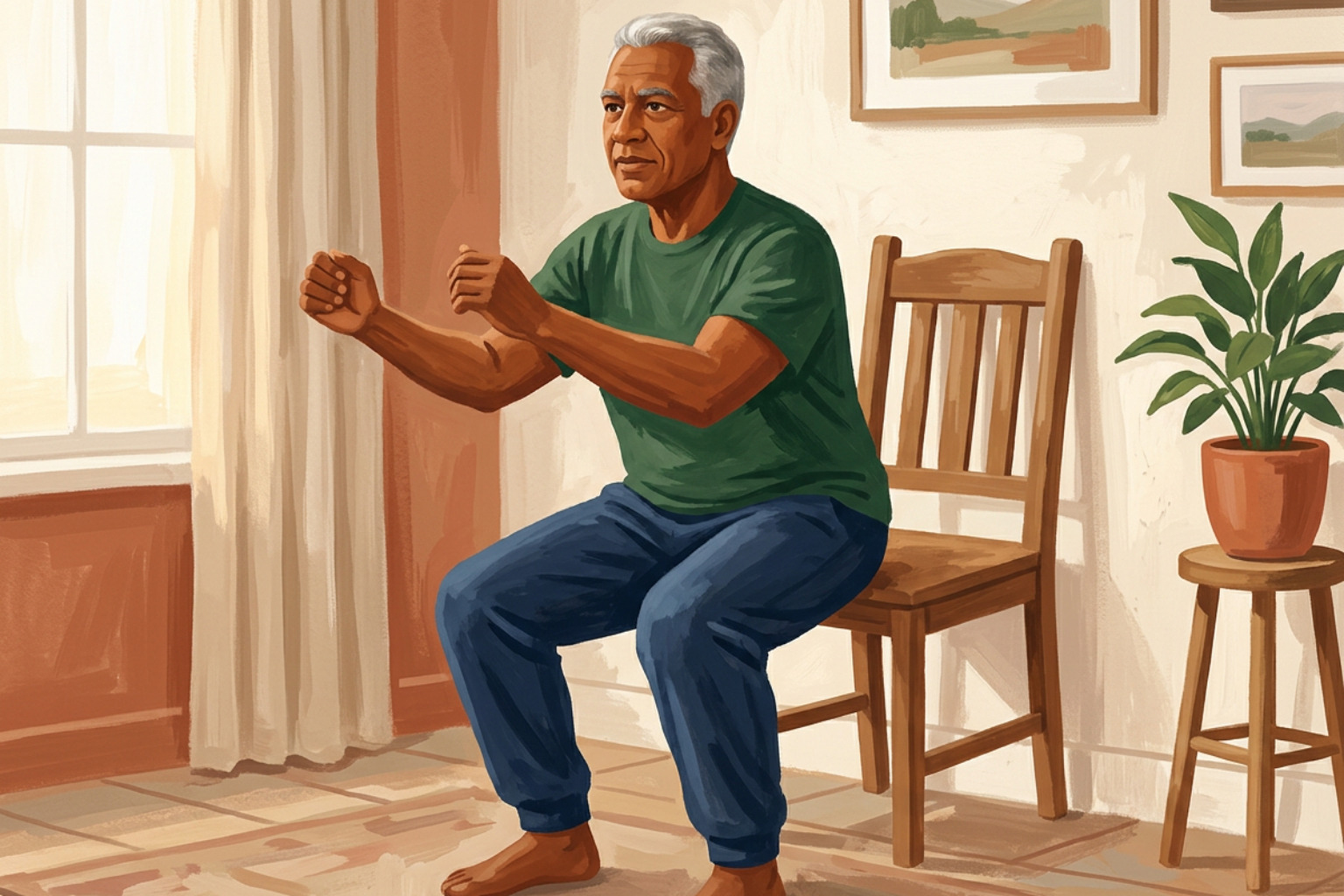
While prescription medication is a powerful tool to protect bones, it is only one part of the journey. Physical movement is also essential. To understand how exercise helps, it helps to learn about osteoblasts (the cells that lay down new bone). These specialized cells build new bone, but they need a physical signal to start working.
That signal is called an osteogenic load, which means a physical force heavy enough to tell the body to grow new bone. Heavy resistance training is one of the best ways to create this load: weights heavy enough that you can only do a few controlled repetitions before resting. Bone changes are slow, some strength and balance may improve in weeks, but measurable bone density changes usually take 6 to 12+ months and are often checked on DEXA over 1 to 2 years.
Light weights, high-repetition circuits, and light resistance bands do not create enough force to build bone. While they are excellent for muscle endurance and joint mobility, they do not trigger the osteoblasts to lay down new bone. Walking is also wonderful for heart health, but on its own, it does not provide enough load to strengthen bones.
To strengthen the areas most at risk for breaks, exercises must load the hip and the spine. Large compound movements are highly effective for this purpose:
- Squats: Bending at the knees and hips to lower the body, then standing back up.
- Lunges: Stepping forward or backward to load one leg at a time.
- Hip Hinges: Bending forward from the hips while keeping the back long and straight, not rounded.
It is critical to avoid loaded spinal flexion, which means rounding the back forward while holding a weight. This movement can put too much pressure on the front of the spine and raise the risk of a spine break. When performing any bending movement, the back should remain long and supported. Gentle spinal extension, which means arching the upper back slightly, is safe and helps strengthen the muscles that support the spine.
Power is another key focus. Power is strength plus speed, or how fast a person can produce force. Power often fades faster than plain strength as people age, but it is exactly what is needed to react quickly and catch oneself during a stumble. For individuals who are cleared by a professional, power-based moves like gentle hopping or bounding can help build bone and improve reaction times.
Because about nine in ten hip fractures are caused by falls, fall prevention is a central part of protecting bones. The Centers for Disease Control and Prevention reports that 88% of hip fracture hospitalizations among older adults are caused by falls, as documented in the CDC's Facts About Falls.
Balance training is a highly trainable skill that lowers fall risk. It should progress from static balance, which means holding steady in one place, like standing on one leg, to dynamic balance, which means staying steady while moving, such as stepping or reaching.
For older adults looking for guided support, Groove Health offers a Medicare-covered bone health program. Members are connected with a physical therapist who designs a personalized, progressive exercise plan. This plan is tailored to the individual's current abilities and safely builds toward the kinds of strength, balance, and loading exercises that support stronger bones and help prevent falls. To learn more about combining exercise with medical care, read about when to start osteoporosis treatment.
Frequently Asked Questions About Medicare and DEXA Scans
Does Medicare cover a DEXA scan if I am taking prednisone?
Yes. Medicare Part B can cover a DEXA scan if you are taking prednisone or expect to start it. To qualify, you must take, or expect to take, an average of 5.0 milligrams or more per day for more than three months. Your doctor must document the steroid use in your medical records to show medical necessity. Medicare also lists prednisone or steroid-type drug use as a qualifying risk factor for covered bone mass measurements.
Will Medicare pay for a heel ultrasound to monitor my osteoporosis medication?
No, Medicare does not cover peripheral scans, such as heel or wrist ultrasounds, to monitor how well osteoporosis medication is working. These smaller tests are only covered for basic screenings. To monitor drug therapy, Medicare requires an axial DEXA scan of the hip and spine, billed under CPT code 77080.
What should I do if Medicare denies my DEXA scan claim?
If a claim is denied, the first step is to contact the doctor's office to check the billing codes. The office should verify that they used CPT code 77080 for the scan and included diagnosis code Z79.83 to show the patient is on long-term osteoporosis medication. The doctor must also ensure the exact name of the FDA-approved drug was written in Box 19 of the claim form. If a clerical error was made, the provider can correct the codes and resubmit the claim to Medicare.
How Can You Take Action on Your Bone Health Today?
Securing Medicare coverage for a DEXA scan while on medication requires a few clear steps. First, patients should talk to their doctor to ensure the scan is ordered as an axial DEXA scan of the hip and spine. Second, patients must confirm that both the ordering doctor and the imaging facility accept Medicare assignment, which guarantees a $0 out-of-pocket cost.
Beyond medical testing, taking charge of bone health means looking at daily habits. This is where Groove Health can help. Groove Health connects you with a personalized exercise plan specifically designed to build bone strength and prevent fractures. By working directly with a physical therapist from the comfort of your home, you can safely learn how to load your bones and improve your balance, turning the insights from your DEXA scan into a practical plan for long-term safety.
Works Cited
- U.S. Centers for Medicare & Medicaid Services. "Bone Mass Measurements." Medicare.gov, accessed August 2026.
- Code of Federal Regulations. "42 CFR § 410.31 — Bone Mass Measurement: Conditions for Coverage and Frequency Standards." eCFR, accessed August 2026.
- Centers for Medicare & Medicaid Services. "Billing and Coding Guidelines L34639: Bone Mass Measurement." CMS Medicare Coverage Database, 2015.
- Centers for Disease Control and Prevention. "Facts About Falls." Older Adult Fall Prevention, accessed August 2026.
- Watson SL, Weeks BK, Weis LJ, Harding AT, Horan SA, Beck BR. "High-Intensity Resistance and Impact Training Improves Bone Mineral Density and Physical Function in Postmenopausal Women With Osteopenia and Osteoporosis: The LIFTMOR Randomized Controlled Trial." Journal of Bone and Mineral Research, 2018.
This content is for informational purposes only and does not constitute medical advice. Consult a qualified healthcare professional for diagnosis and treatment. If you are on Medicare and interested in a personalized bone health program, you can check your eligibility at groovehealth.com.