Hip Protectors: A Practical Guide for Seniors at Risk of Falling
Hip protectors can cushion a sideways fall, but the evidence is strongest in care facilities. Here is how soft and hard pads compare, how to get a good fit, and how to build real fall prevention around them.
How Hip Protector Pads Help Prevent Fall-Related Fractures
Hip protectors work by cushioning the impact or redirecting the force of a fall away from vulnerable hip bones. When an older adult falls sideways, the outer point of the upper thigh bone—called the greater trochanter—takes direct contact with the ground. By using specialized padding directly over this area, the kinetic energy of the impact gets dispersed into surrounding soft tissue instead of concentrating on brittle bone.
According to the CDC fall prevention guidelines, falls send millions of older adults to emergency departments each year, and more than 95% of hip fractures are caused by falling, most often sideways. When someone lands on a hard surface, the impact can exceed what fragile bone can tolerate. Hip protector garments add cushioning over the hip to help absorb and redirect some of that force.
Biomechanical Force Attenuation and Trochanter Protection
The human hip has a specific fracture threshold—the amount of impact force bone tissue can tolerate before cracking. In healthy young adults, this threshold is relatively high. In older adults with thinning bones, that threshold drops significantly.
In a sideways fall without padding, the hip can hit the ground hard enough to break the bone. Hip protector pads act like a cushion. Good pads can reduce the force of the impact by absorbing some of the shock and spreading the pressure over a wider area. This gives the body more help handling the fall and may lower the chance of a hip fracture.
Who Benefits Most From Hip Protectors: Fall and Fracture Risk Factors
Hip protectors provide the greatest benefit to older adults who have an elevated chance of falling and low bone strength. Key risk factors include:
- A medical diagnosis of osteoporosis or thinning bones
- A history of one or more falls in the past year
- Muscle loss (sarcopenia) that weakens stabilizing leg muscles
- Balance problems or gait changes from conditions like Parkinson's disease or stroke
- Sensory issues, such as mild hearing loss or reduced vision
- Taking medications that cause dizziness or sedation
Understanding osteoporosis helps explain why minor impacts can cause severe breaks. Women experience roughly three-quarters of all hip fractures, and half of all women over age 50 will experience a break related to low bone density in their lifetime. Combining physical padding with medical oversight helps safeguard individuals with these risk profiles.
Comparing Soft Foam and Hard Shield Hip Protectors
Hip protectors fall into two main categories: soft foam pads and rigid plastic shields. Soft pads use impact-absorbing materials that cushion the bone, while hard shields use a stiff outer layer to shunt the force of impact away from the trochanter and into the surrounding thigh muscle.
| Feature | Soft Foam Pads | Hard Shield Protectors |
|---|---|---|
| Primary Mechanism | Energy absorption and dampening | Energy shunting and redirection |
| Daytime Wearability | High; flexible and discreet under clothing | Moderate; can appear bulky |
| Nighttime Comfort | Comfortable for side sleepers | Often too firm for sleeping |
| User Compliance | Higher adherence due to soft texture | Lower adherence due to stiffness |
| Best Suited For | Active seniors and 24/7 continuous wear | Daytime use in structured care settings |
Soft vs. Hard Hip Protectors: Protection and Comfort Differences
Soft pads rely on viscoelastic foam or air-pocket technology. These materials stay flexible during normal movement like walking or sitting, but stiffen instantly upon sudden impact to absorb force. Because they conform to the natural curves of the body, soft pads create fewer pressure points and can be worn comfortably while resting in bed.
Hard shield protectors use curved plastic shells lined with thin foam. When an impact occurs, the rigid shell acts like a bridge, preventing direct pressure on the greater trochanter by transferring the force to the fleshy areas of the thigh and buttocks. While effective at redirecting force, hard shields can feel uncomfortable during prolonged sitting or side sleeping, which can lead some individuals to stop wearing them.
Key Design Features: Breathability, Fit, and Laundering
A hip protector is only helpful if it is worn consistently. Modern designs include several practical features to keep wearers comfortable and hygienic:
- Breathable fabrics: Breathable cotton-spandex blends and engineered air channels prevent heat buildup and protect skin health.
- Low-profile shape: Contoured pads fit naturally under everyday pants, sweatpants, or dresses without drawing unwanted attention.
- Laundering durability: Many models feature sewn-in, waterproof pads that can withstand standard machine washing and drying without losing their protective shape.
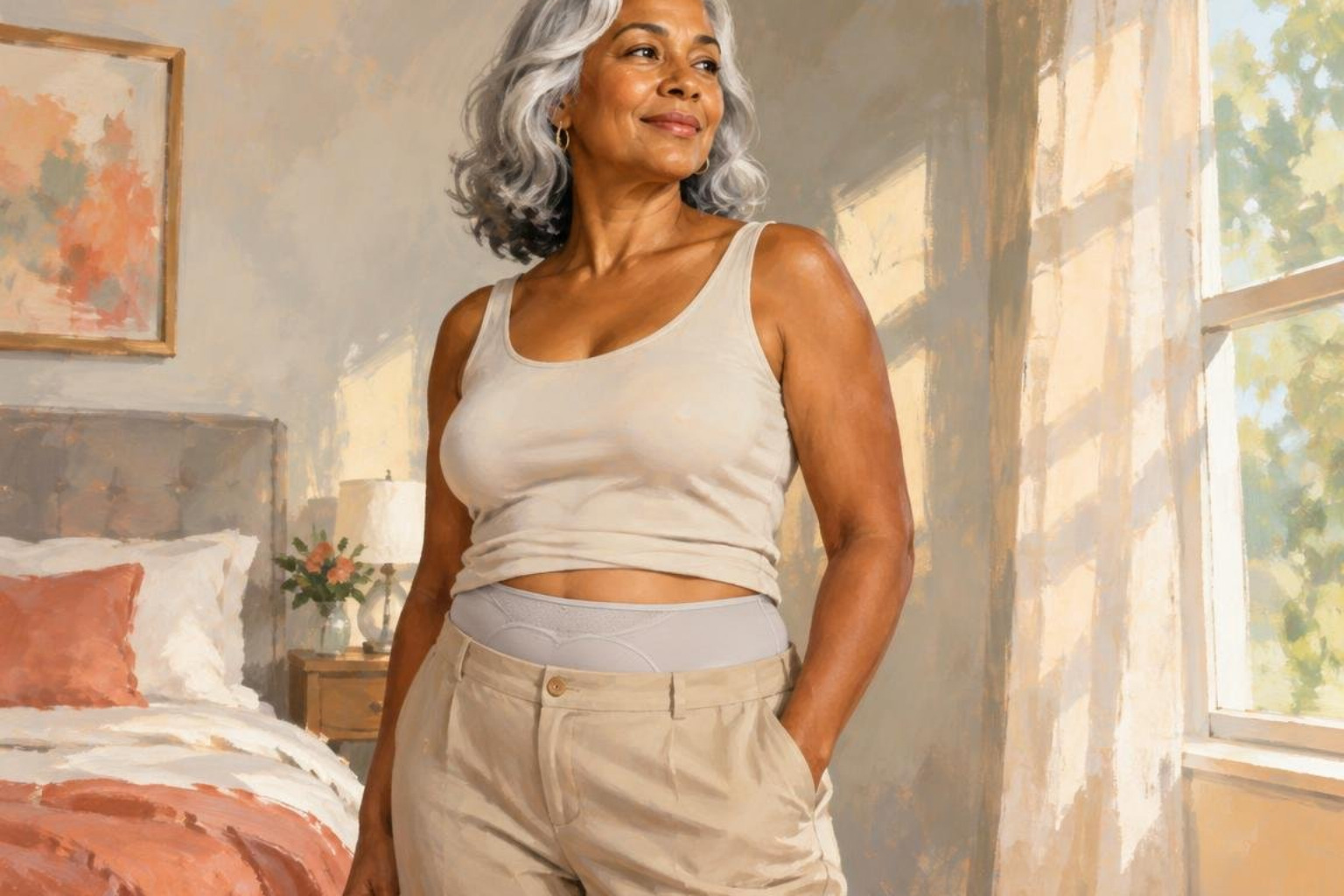
- Continence compatibility: Specialized wrap-around designs or snap-front briefs allow for easy bathroom access and fit comfortably over absorbent incontinence products.
Clinical Evidence and Overcoming Daily Adherence Barriers
Public health organizations, including the NIH osteoporosis overview, emphasize that preventing fractures requires addressing both bone density and fall impact. Clinical trials evaluating hip protectors show positive outcomes when the garments are worn consistently, particularly in residential care facilities and nursing homes where fall rates are elevated.
What Clinical Consensus Shows About Fracture Reduction
Research suggests hip protectors can reduce hip fractures when they are correctly positioned and worn at the moment of a sideways fall, especially in higher-risk care settings. The biggest real-world challenge is adherence: many people forget to wear them, find them too warm or bulky, or have trouble managing them during bathroom visits.
When care environments support regular use, the reduction in hip fracture rates is measurable. For community-dwelling seniors living at home, the key to success lies in choosing a garment style that matches personal dressing habits and daily routines.
Practical Solutions for Fit, Skin Health, and Continence Care
To address common comfort and fit concerns, consider these practical steps:
- Measure accurately: Measure around the widest part of the hips at the upper thigh level to ensure the pad sits squarely over the greater trochanter.
- Rotate garments: Keep at least three pairs on hand—one to wear, one in the wash, and one ready in the drawer.
- Protect skin integrity: Choose breathable, moisture-wicking materials to prevent friction, especially for individuals with sensitive skin.
- Select adaptive closures: For individuals with limited hand strength or mobility, choose wrap-around styles with hook-and-loop fasteners instead of tight pull-up briefs.
Comprehensive Fall Prevention: Combining Protection with Bone Health
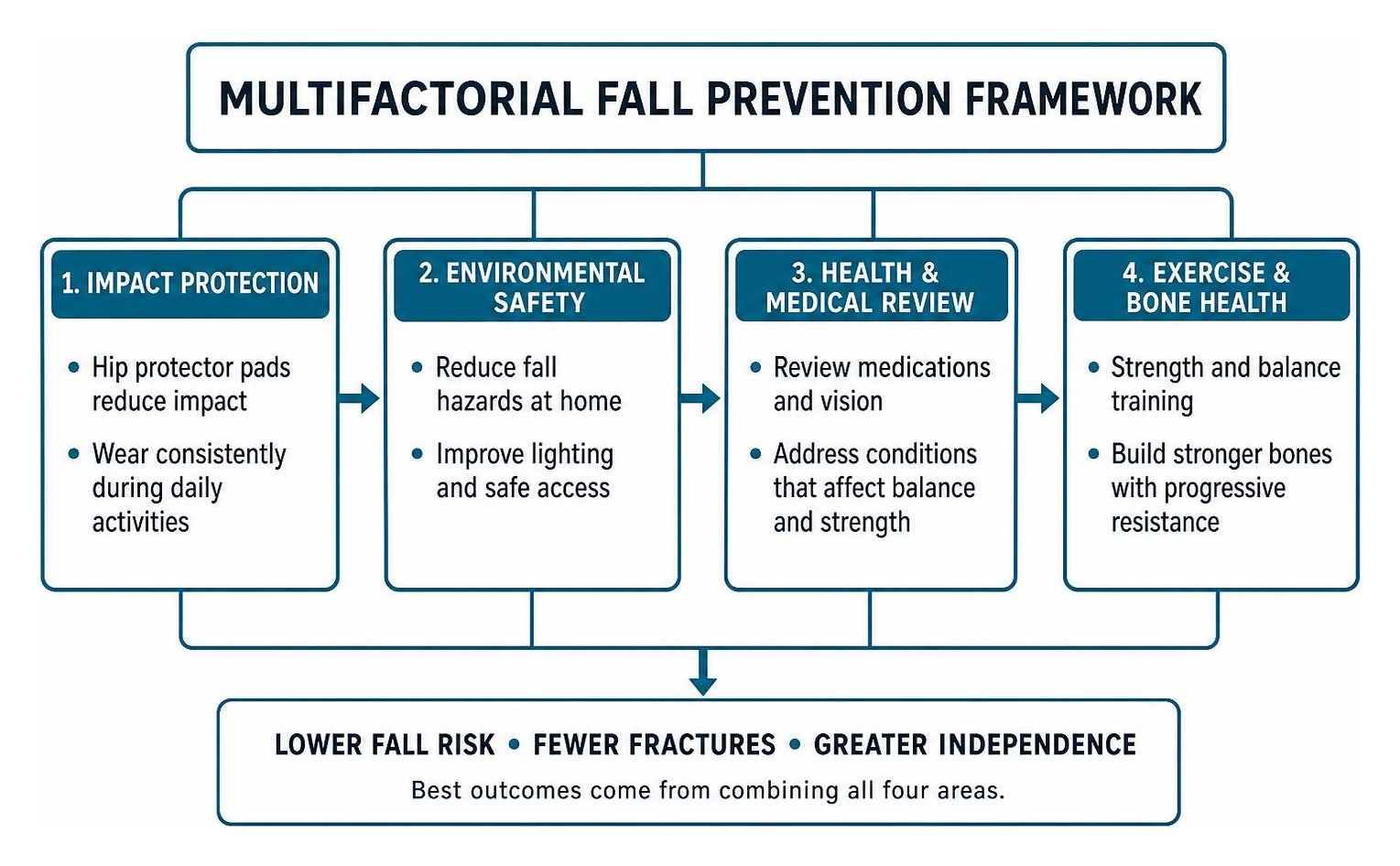
Hip protector pads serve as a passive shield, but they are just one part of a complete strategy to stay safe. A proactive approach combines physical impact protection with environmental changes, medical reviews, and targeted physical activity. Implementing fracture prevention strategies for seniors ensures that both fall risk and bone resilience are addressed together.
The Role of Targeted Exercise and Balance Training
Bone tissue responds to mechanical stress. While passive padding softens a fall, physical exercise strengthens the musculoskeletal system to help prevent the fall from happening in the first place.
Building stronger bones requires an osteogenic load—heavy resistance training around 75% to 85% of one-rep maximum with low repetitions and sets—to stimulate bone-building cells called osteoblasts. While walking and gentle movement support general cardiovascular health and mobility, they do not provide enough mechanical force to build new bone.
To improve stability and maintain bone strength, consider these exercise principles:
- Large compound movements: Focus on safe functional exercises that load the hips and spine, such as squats, lunges, and hip hinges, while avoiding loaded spinal flexion (bending the back forward under weight).
- Progressive resistance training: Incorporating structured strength training for bone health builds the leg and core power needed to recover from a trip.
- Static to dynamic balance: Practice balance exercises for osteoporosis starting with static stances (like a single-leg stand near a stable, braced support) before moving toward dynamic stepping patterns.
- Specialized movement routines: Integrating targeted fall prevention bone exercises helps train reaction time and coordination.
Groove Health is a Medicare covered bone health program for adults 65 and older that pairs each member with a physician and a physical therapist who designs a personalized exercise plan.
Home Hazard Modifications and Medication Reviews
In addition to exercise, environmental and medical adjustments significantly reduce fall hazards:
- Clear walking paths: Remove loose throw rugs, secure electrical cords, and keep high-traffic hallways clear of clutter.
- Improve lighting: Install bright, non-glare nightlights in hallways and bathrooms to assist with nighttime navigation.
- Add bathroom safety rails: Securely anchored grab bars near toilets and showers provide stability during transfers.
- Review medications: Have a doctor or pharmacist review prescriptions regularly, as sedatives, blood pressure medications, and certain sleep aids can cause dizziness.
- Check sensory health: Schedule regular vision and hearing exams, as sensory deficits directly impair balance and spatial awareness.
Frequently Asked Questions About Hip Protectors
Do hip protectors prevent all hip fractures from falls?
No device can prevent every fracture. While hip protectors significantly dampen impact force, a break can still occur if a fall happens at an unusual angle, if the impact force is exceptionally high, or if the pads have shifted out of place. Ensuring proper fit and positioning is essential for maximum protection.
Does Medicare cover the cost of hip protectors?
According to Medicare.gov, standard original Medicare (Part B) does not typically cover hip protector garments because they are classified as personal apparel rather than durable medical equipment. However, Medicare Part B does cover bone mass measurement tests (DEXA scans) once every 24 months for eligible individuals at zero out-of-pocket cost when the provider accepts assignment, though coverage specifics may vary by individual plan type.
Can hip protectors be worn comfortably overnight?
Yes. Many falls happen during nighttime trips to the bathroom. Soft foam hip protectors made with breathable fabrics are specifically designed to be worn in bed without causing discomfort for side sleepers.
Conclusion
Hip protector pads provide a valuable physical safeguard for older adults facing an increased risk of falls and hip fractures. By absorbing and redistributing the impact of a sideways fall away from the greater trochanter, these garments may help keep impact forces below the fracture threshold.
Achieving optimal results requires selecting a garment that balances protection with daily comfort. Breathable fabrics, accurate anatomical sizing, and easy-to-use fasteners make regular wear practical. Soft foam designs often provide an effective balance for round-the-clock use, including during sleep and nighttime bathroom visits.
Physical padding works best as part of a comprehensive strategy that pairs impact protection with personalized, home-based exercise plans to build bone strength, improve balance, and prevent fractures. For more foundational guidance on supporting skeletal strength, explore Groove's osteoporosis starter guide.
Works Cited
- Santesso N, Carrasco-Labra A, Brignardello-Petersen R. “Hip protectors for preventing hip fractures in older people.” Cochrane Database of Systematic Reviews, 2014.
- Korall AMB, Feldman F, Yang Y, et al. “Effectiveness of Hip Protectors to Reduce Risk for Hip Fracture from Falls in Long-Term Care.” Journal of the American Medical Directors Association, 2019.
This content is for informational purposes only and does not constitute medical advice. Consult a qualified healthcare professional for diagnosis and treatment. If you are on Medicare and interested in a personalized bone health program, you can check your eligibility at groovehealth.com.